
A Comprehensive Guide to Lifting Hook Types
Lifting hooks are not interchangeable. Each type serves a specific function in rigging, and choosing the wrong one risks load disengagement, equipment damage or injury. This guide breaks down the six main lifting hook types, their design features, typical applications and how to match them to your lifting task.
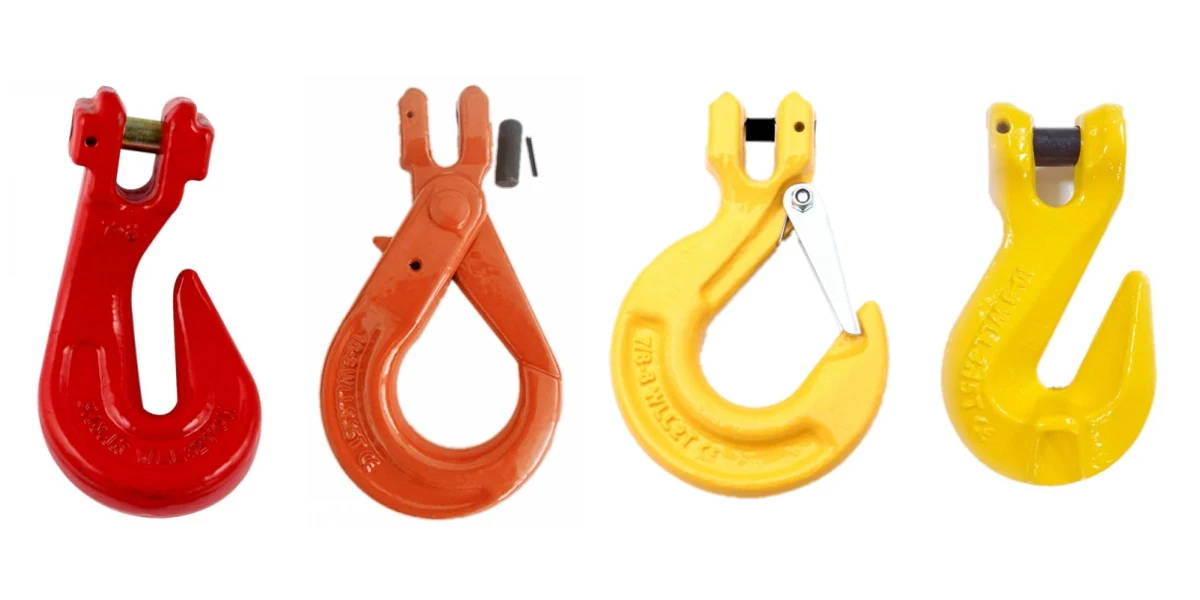
What Clevis Hooks Are For
Clevis hooks have a U-shaped body with a pin through the end, allowing them to connect directly to chains, slings or other rigging components. They are used in general lifting tasks where the load is stable and the connection point is fixed. Because the throat is open and the pin can be removed, they are not suitable for overhead lifting where the load might shift or the pin could fall out. They are common in material handling, equipment tie-down and temporary rigging setups where quick attachment and removal are needed.
When Swivel Hooks Make Sense
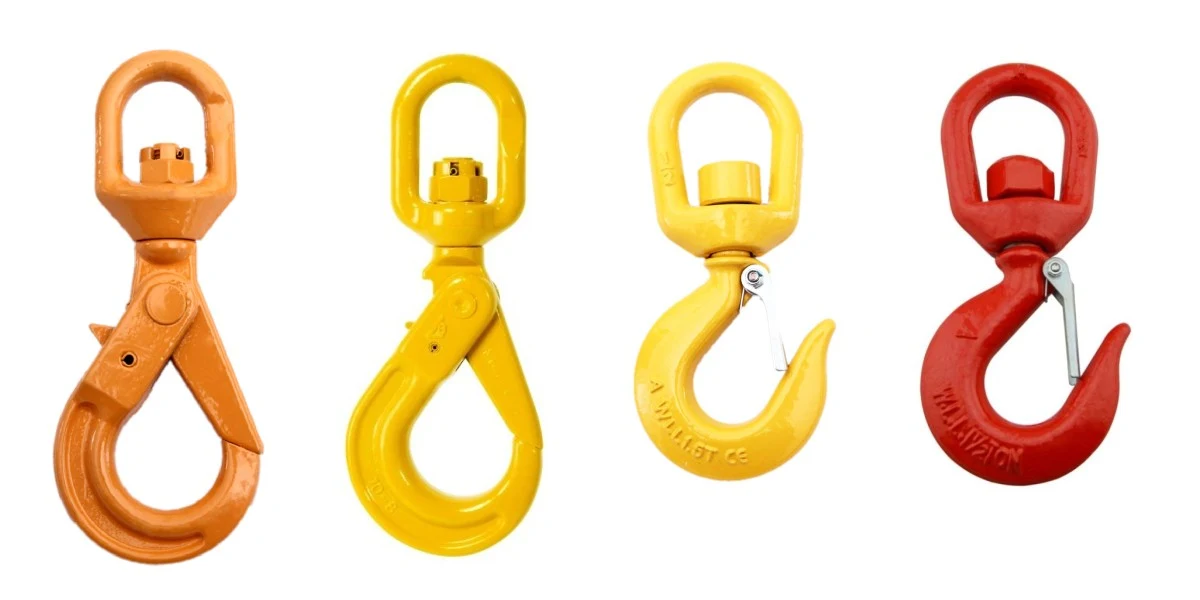
Swivel hooks feature a rotating mechanism at the top that allows the hook to pivot freely. This prevents twisting of the lifting sling or wire rope during lift, which is critical when moving loads around corners or through tight spaces. They are used in construction, offshore rigging and crane operations where load orientation must remain consistent. The swivel reduces stress on the sling and prevents rope tangles, but they are not designed for high shock loads or dynamic lifting. Always check the swivel's free rotation before use and inspect for wear on the pivot point.
Eye Hooks for Vertical Lifts
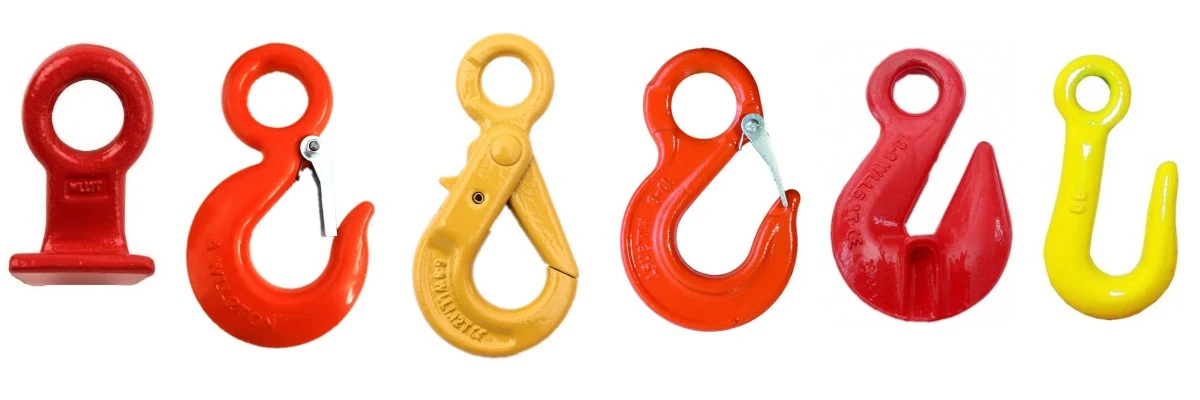
Eye hooks have a closed loop at the top, which is designed to be attached to a lifting point such as a crane hook, cable or chain. The closed design minimizes the risk of accidental disengagement and is ideal for vertical lifting applications. They are commonly used in maritime operations, shipyards and overhead crane systems. Eye hooks are not meant for side loading or lateral stress. Always ensure the load is centered and the hook is aligned with the lifting force to avoid bending or failure.
Grab Hooks for Quick Attachments
Grab hooks have a narrow opening on one side and a curved profile that allows them to grip chains, cables or other rigging hardware without additional connectors. They are used in towing, recovery, logging and forestry where fast, secure connections are needed. The design allows for one-handed operation and quick release. However, they are not rated for overhead lifting or high dynamic loads. The opening size must match the chain or cable diameter to prevent slippage. Always inspect the gripping surface for wear before use.
Sling Hooks for Synthetic and Wire Rope Slings
Sling hooks are designed with a wide throat opening to accommodate the thickness of synthetic webbing slings or wire rope slings. They prevent the sling from being pinched or damaged during lift. The wider throat also allows for easier positioning and alignment. These hooks are used in material handling, manufacturing and warehouse operations where slings are the primary lifting medium. Always ensure the sling is fully seated in the hook and the throat is not deformed. Do not use sling hooks with chains or cables unless specifically rated.
Clevis Self-Locking Hooks for Safety
Clevis self-locking hooks feature a latch that automatically closes and locks when engaged with a load. This prevents accidental disengagement during lifting, which is critical in overhead operations. The latch must be checked for free movement and proper closure before each use. These hooks are used in overhead crane systems, industrial lifting and rigging where safety is paramount. They are not suitable for side loading or high shock loads. Always verify the latch is fully closed and the pin is secure.
How to Match Hook Type to Task
The right hook depends on the lift type, load orientation, connection method and environment. Use clevis hooks for simple, stable connections. Swivel hooks for rotating or multi-angle lifts. Eye hooks for vertical lifts with a fixed attachment point. Grab hooks for fast, temporary connections in recovery or forestry. Sling hooks for synthetic or wire rope slings. Clevis self-locking hooks for overhead lifts where safety is critical. Never mix hook types without verifying compatibility. Always check the WLL, grade and finish against the load and application.
What to Check Before Use
Inspect every hook before use for cracks, deformation, wear on the throat or pin, and proper latch function. Check that the grade marking is legible and matches the load rating. Ensure the pin is secure and the swivel (if present) rotates freely. For self-locking hooks, confirm the latch closes fully and cannot be forced open. If the hook shows any sign of damage, do not use it. Keep a log of inspections and replace hooks according to the manufacturer's recommendations or after a known overload event.
Ordering note. Clevis hooks are for general lifting with chains or slings; not suitable for overhead use Swivel hooks prevent sling twist and are used in multi-angle lifting operations Eye hooks are for vertical lifts and fixed attachment points; avoid side loading Grab hooks allow quick, secure connection to chains or cables; not for overhead lifting Sling hooks have wide throats for synthetic or wire rope slin