
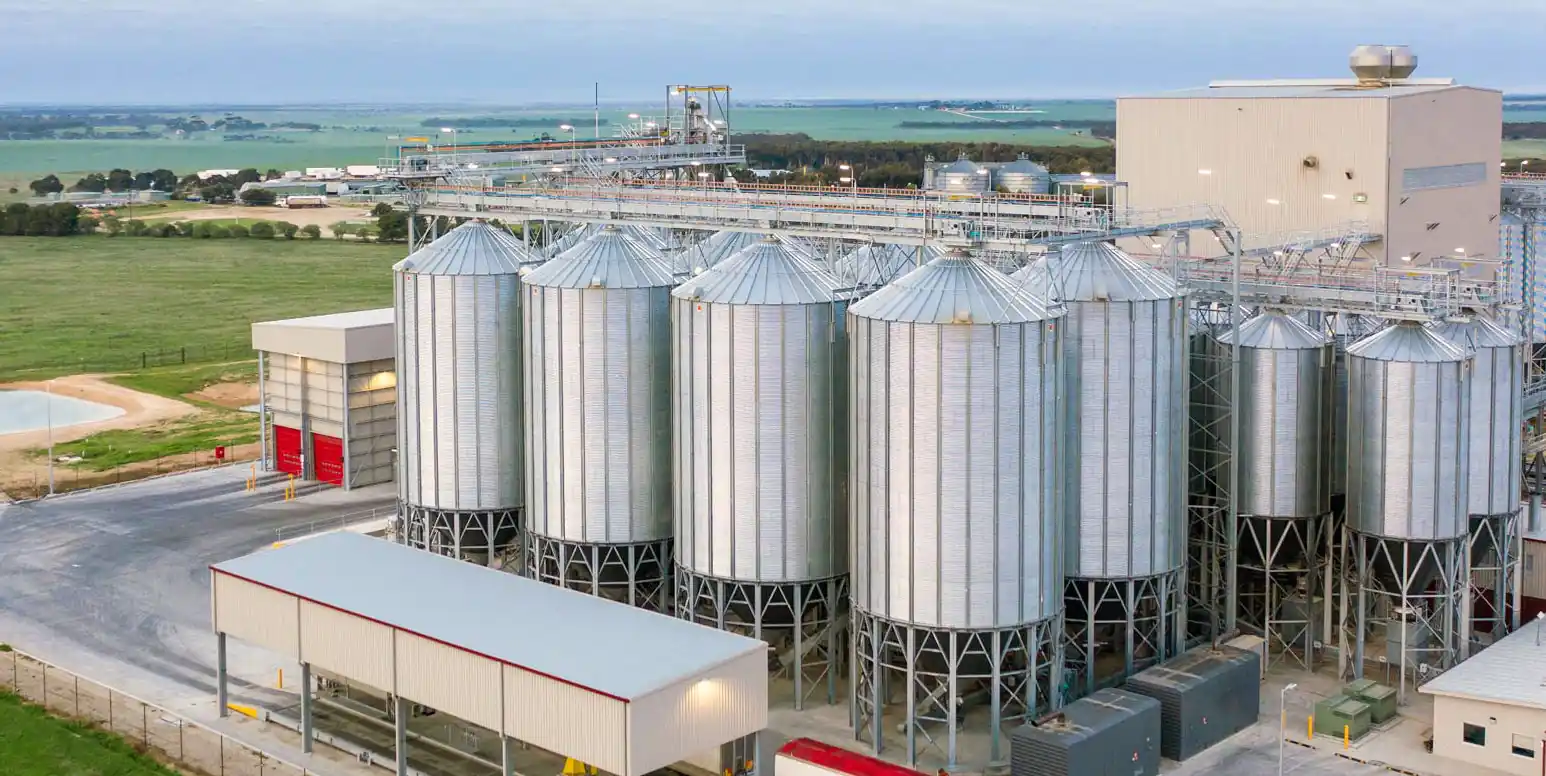
Grain Storage Silo Systems
A silo project is a civil job, a steel job and a handling job at once. TITAN takes it as one scope so the foundation, the shell and the conveying are decided together rather than by three suppliers who each assume the others got it right.
What Happens At Each Stage And What Usually Goes Wrong
Each stage below lists the problem projects actually run into, and what TITAN does about it.
Requirement Analysis
Problem: Storage volume is often quoted in tonnes without saying which crop, which bulk density and which turnover rate.
How we solve it: We start from crop, moisture, fill and discharge rates and the plot dimensions, then propose a battery layout.
Layout And Design
Problem: A battery that fits the plot may not fit the crane or the truck route.
How we solve it: Silos are laid out in linear, triangular, square, single row or multi row groups, with diameters from 2 m to 32 m and a height to diameter ratio between 1:1.1 and 1:2.
Foundation Decision
Problem: The wrong base makes complete discharge impossible for the life of the silo.
How we solve it: Under 12 m diameter a cement cone base discharges by gravity. Above 12 m a half cone or flat base is built and a sweeper auger clears the floor.
Fabrication
Problem: Corrosion at the seams is what ends a steel silo, not the plate thickness.
How we solve it: Hot dip galvanized plates at 275 to 600 g/m2 of zinc, structural steel S350GD, sealed bolt holes with aviation grade waterproof daub belts and galvanized washers.
Shipping
Problem: Freight on a welded tank can exceed the value of the steel inside it.
How we solve it: Bolted silos ship flat packed in containers, so you pay to move steel rather than air.
Erection Supervision
Problem: A local crew erecting its first silo learns on your project.
How we solve it: TITAN supervises the mechanical and electrical installation so the bolting pattern, sealing and ladder fitting follow one method.
Commissioning
Problem: Handover often stops at a running motor rather than a working system.
How we solve it: Mechanical and electrical commissioning includes remote instruction or site training for the operators who will run it.
After Sales
Problem: A silo bought abroad is only as good as the support two seasons later.
How we solve it: Spare parts and service reach the plant through more than 40 agents and branch offices.
Machines In This Solution
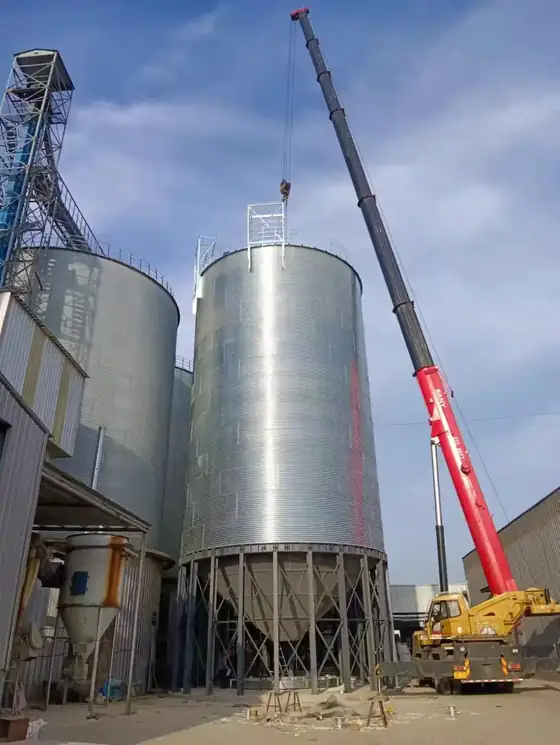
Galvanized Steel Hopper Bottom Rice Paddy Grain Silo
A hopper bottom silo empties itself.
View Specifications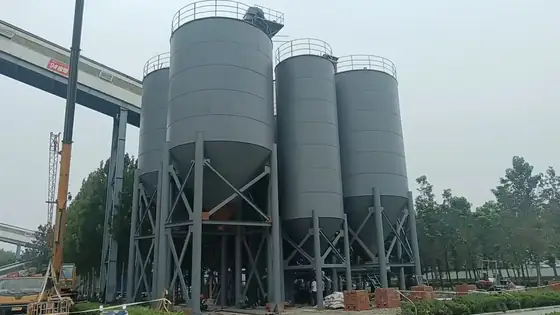
Welding Type Silo for Liquid Material Storage
Not every stored material suits a bolted shell.
View Specifications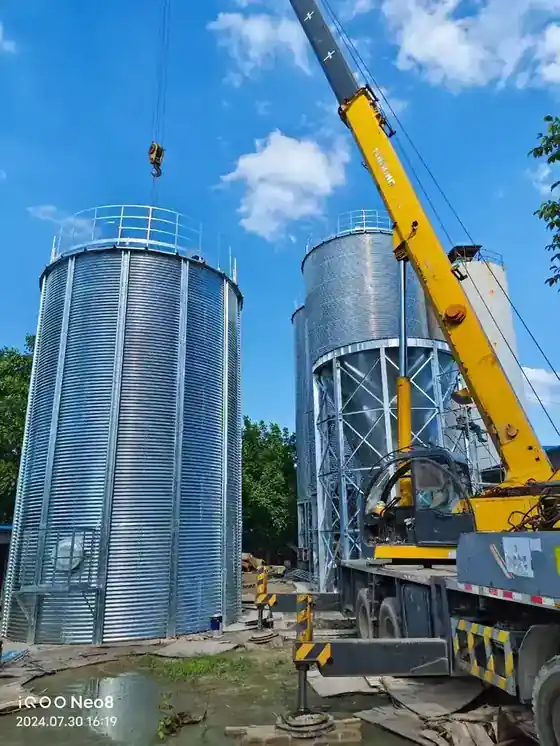
Cone Bottom Silo With Concrete Foundation
TITAN assembled hopper bottom grain storage silo is made of high quality hot dip galvanized steel plate pressed into a wavy shape by...
View Specifications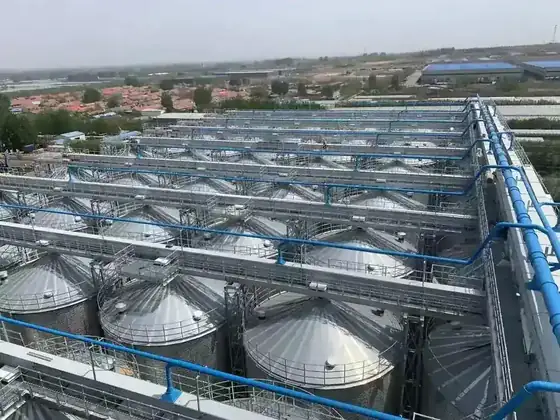
Flat Bottom Silos
Grain storage silos, also called grain storage bins, are the efficient and economical way to hold grain: they protect it from insects and...
View Specifications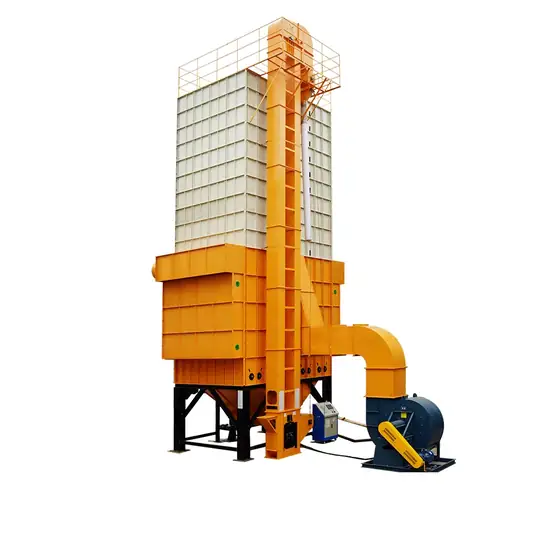
5T Series Batch Circulating Grain Dryer
Drying reduces grain moisture to a safe level for storage, and delays or incomplete drying cost both quality and weight.
View Specifications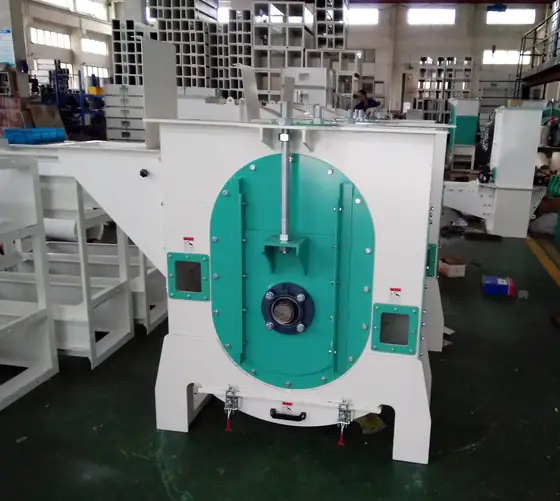
Bucket Elevators Conveyors And Gates
TITAN bucket elevators transport grain granules such as paddy, rice and wheat, and are also used for oil, food, feed and chemical elevation.
View SpecificationsGrain Storage Silo Systems Questions
What is included in a turnkey silo scope?
Design, fabrication, installation supervision, commissioning and after sales service, with the handling equipment around the silo quoted in the same package.
Can the silo be insulated for hot climates?
Yes. All TITAN steel silos can be designed and installed with a heat retaining layer.
How is grain kept in condition during storage?
Moisture and heat monitoring and control systems are available, together with broken grain reduction devices on the filling route.
Who prepares the concrete work?
Civil work is normally executed locally to our drawings and supervised during erection.
Scope Your Grain Storage Silo Systems Project
Send the capacity, the site and the crop. You get a scope proposal that names what is included and what is local work.