What Actually Differs Between The Two
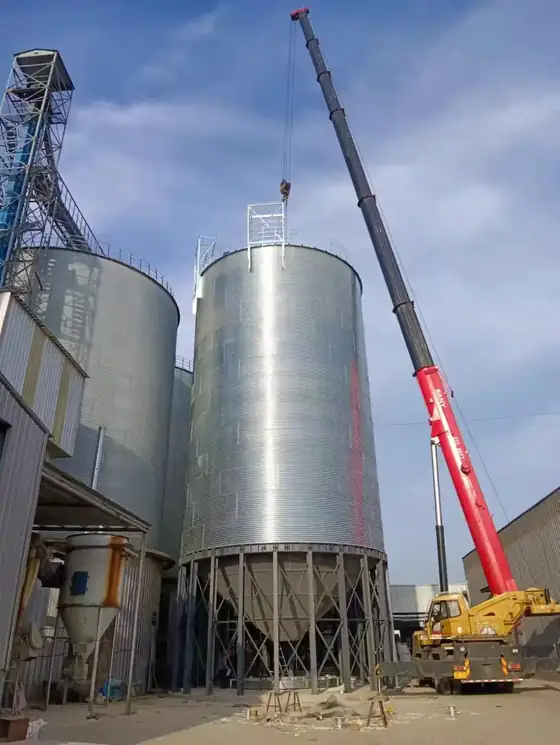
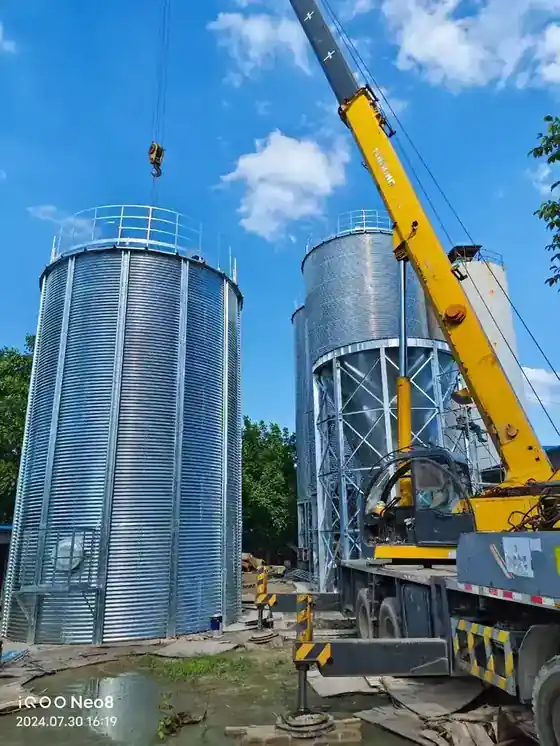
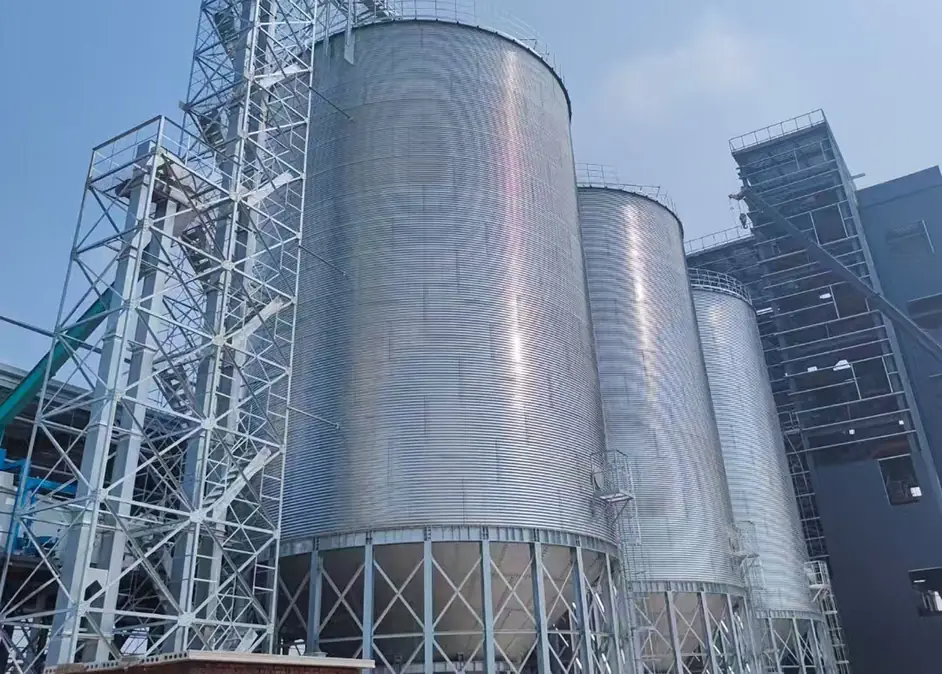
Both types use the same corrugated hot dip galvanized sheets, the same vertical stiffeners and the same bolted construction. The difference is underneath. A flat bottom silo sits on a slab and discharges through a centre outlet, with a sweeper auger clearing what gravity leaves behind. A hopper or cone bottom silo stands on a support structure and empties completely through the cone.
Capacity Is Where Flat Bottom Wins
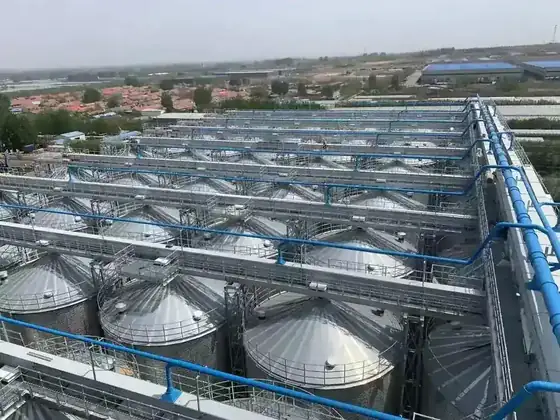
Flat bottom silos carry the large volumes. The TITAN flat bottom range covers 1500 t to 20000 t, and a single silo holds between 10 t and 15000 t depending on diameter and eave height. Diameters run from 2 m to 32 m, with the height to diameter ratio normally held between 1:1.1 and 1:2. If your requirement is measured in thousands of tonnes, this is the type that gets you there for the least steel per tonne stored.
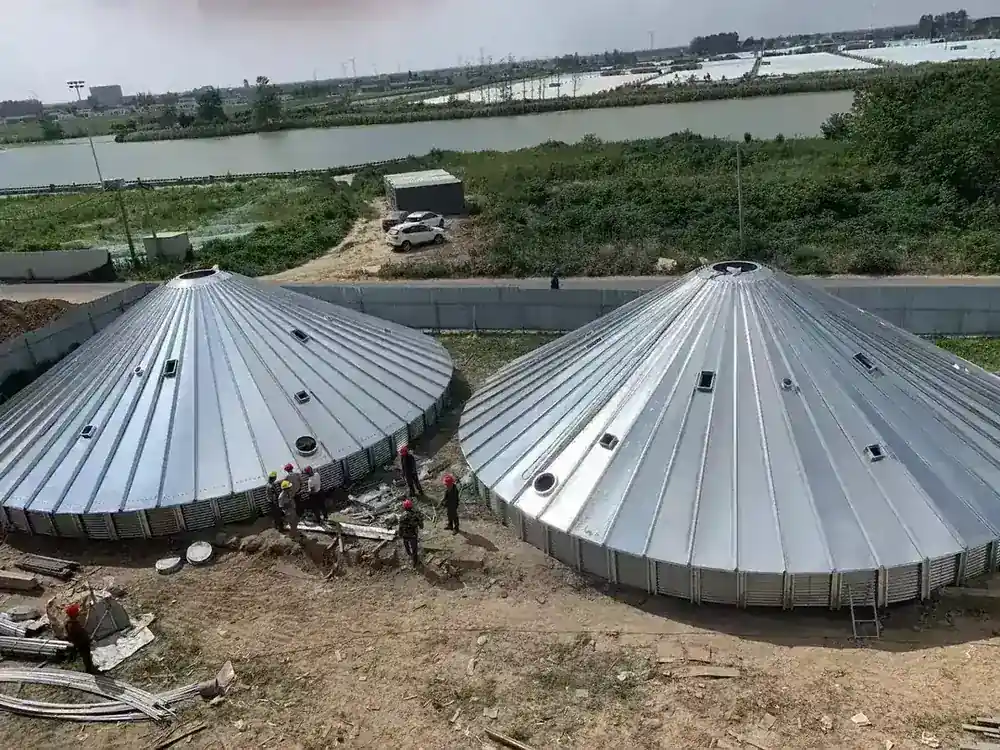
Large diameter flat bottom galvanized silos in a row at a grain storage site
Complete Discharge Is Where Cone Bottom Wins
A cone empties itself. That matters when the stored product changes through the year, when residue would cross contaminate the next batch, or when you want to load a truck directly underneath the silo. The trade off is the support structure and the extra height, and less capacity for the same plot area.
The 12 Metre Rule For Foundations
There is a practical dividing line at 12 m of bin diameter. Below it, a cement cone base can be built under a flat bottom silo so that stored product unloads automatically by gravity. Above 12 m, a half cone base or a flat base is built instead, and a spiral sweeper finishes the discharge, because a half cone base cannot empty the silo completely on its own. A cement base costs somewhere in the middle and takes a longer construction period, which needs to be in the project schedule from the start.
| Silo diameter | Base type | How it discharges |
|---|---|---|
| Under 12 m | Cement cone base | Automatic gravity discharge |
| Over 12 m | Half cone or flat base | Gravity flow, then spiral sweeper |
| Cone bottom silo | Support structure with cone | Complete gravity discharge |
What To Check Before You Commit
Ask for the zinc coating weight, not just the word galvanized. TITAN flat bottom bins use 275, 300 and 350 g/m2 hot dip galvanized plate, with structural steel S350GD and coating equivalent to 600 g/m2 of zinc on the shell. Ask how the bolt holes are sealed, because that is where water gets in. Ask whether ladders, guard rings and access doors are included per silo, and whether a heat retaining layer is available if you store in a hot climate.
Need this checked against your own numbers? Send your capacity, crop and site conditions and an engineer will come back with model numbers.
Ask An Engineer