Start From The Intake Peak Not The Average
Harvest does not arrive evenly. Size the dryer against the wettest week, because that is the week when undried grain sits in a heap and starts to heat. Take your peak daily intake in tonnes, divide by the batches you can realistically run in 24 hours, and that gives the batch size you need.
Work Out The Batch Time Honestly
A batch is not only drying time. In the TT 5H range, feeding takes 50 to 70 minutes and discharge takes 50 to 75 minutes depending on model, and those minutes are part of every cycle. Low temperature drying removes about 0.5 to 1 percent of moisture per hour, so paddy coming in at 24 percent and going to 14 percent needs roughly ten to twenty hours of drying time before you add the handling.
| Model | Capacity (t) | Power (kW) | Net weight (t) |
|---|---|---|---|
| TT 5H-10 | 5 to 10 | 8.5 | 2.3 |
| TT 5H-15 | 5 to 15 | 9.2 | 3.0 |
| TT 5H-20 | 7 to 20 | 13.15 | 3.7 |
| TT 5H-25 | 10 to 25 | 20.35 | 4.5 |
| TT 5H-30 | 10 to 30 | 20.35 | 5.0 |
Low Temperature Is A Quality Decision
Air temperature around 40 to 60 C with a high air volume dries the grain in a circulating pattern rather than cooking the outside of the kernel. The grain is heated briefly, then allowed to equalise, which is what keeps the broken rate down and the dehydration efficiency up. Pushing hotter air through the same machine buys hours and costs head rice.
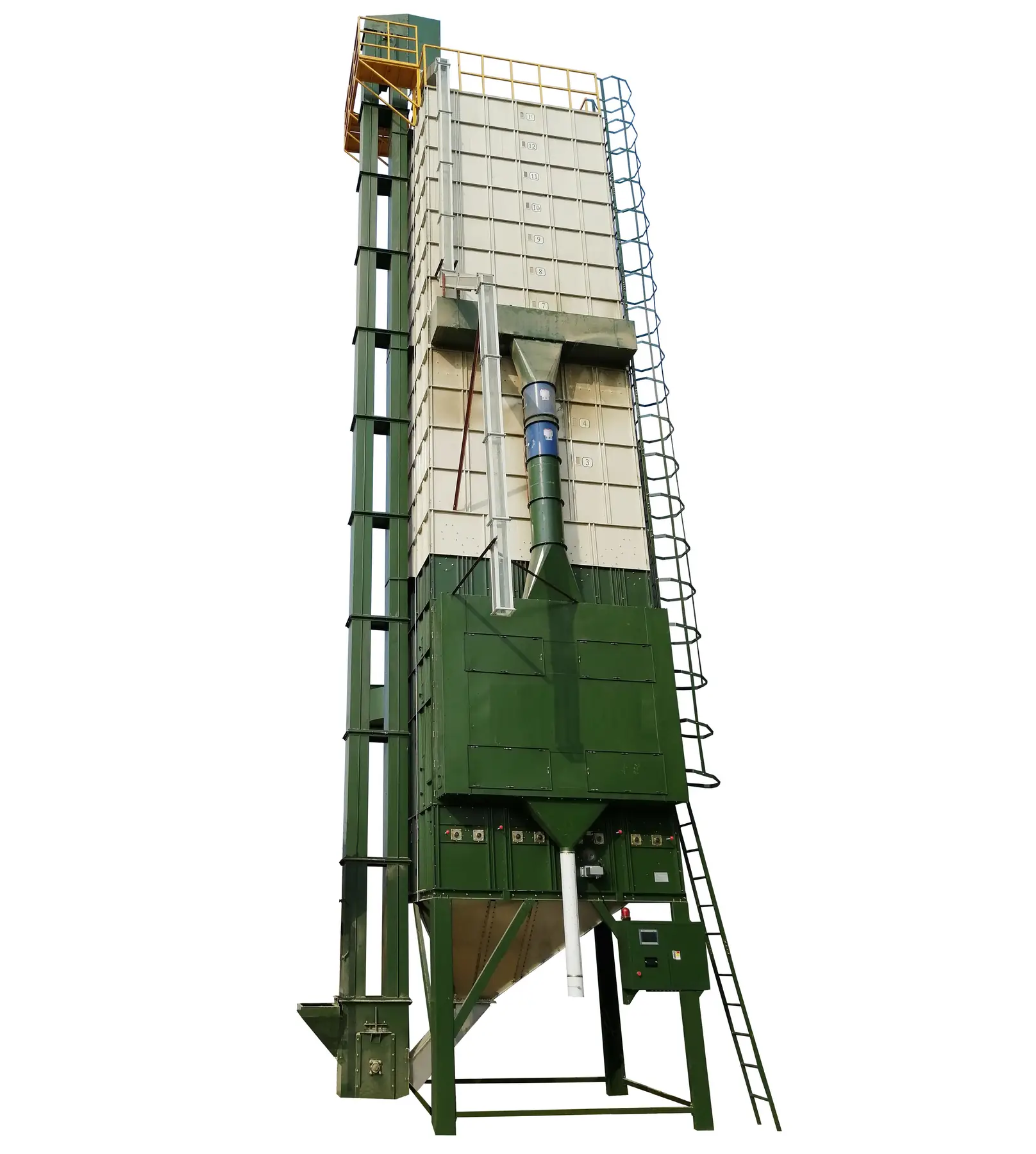
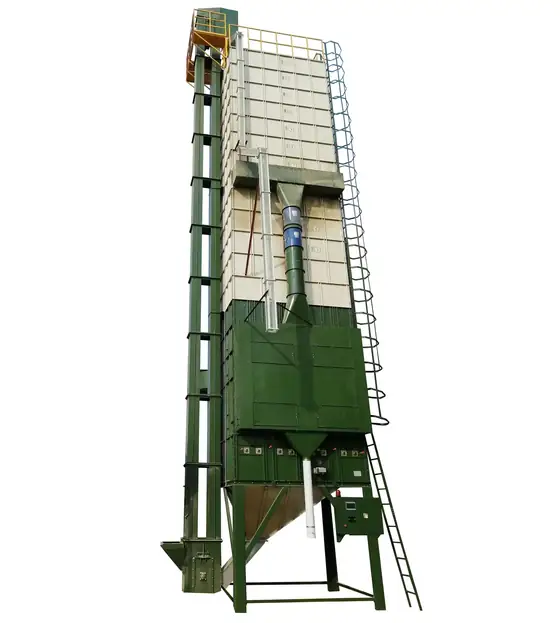
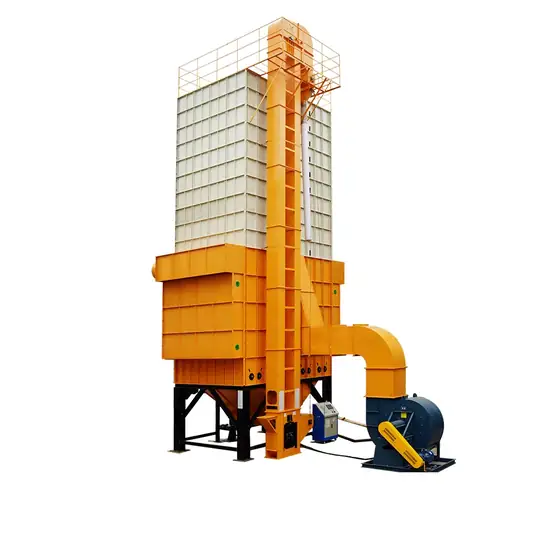
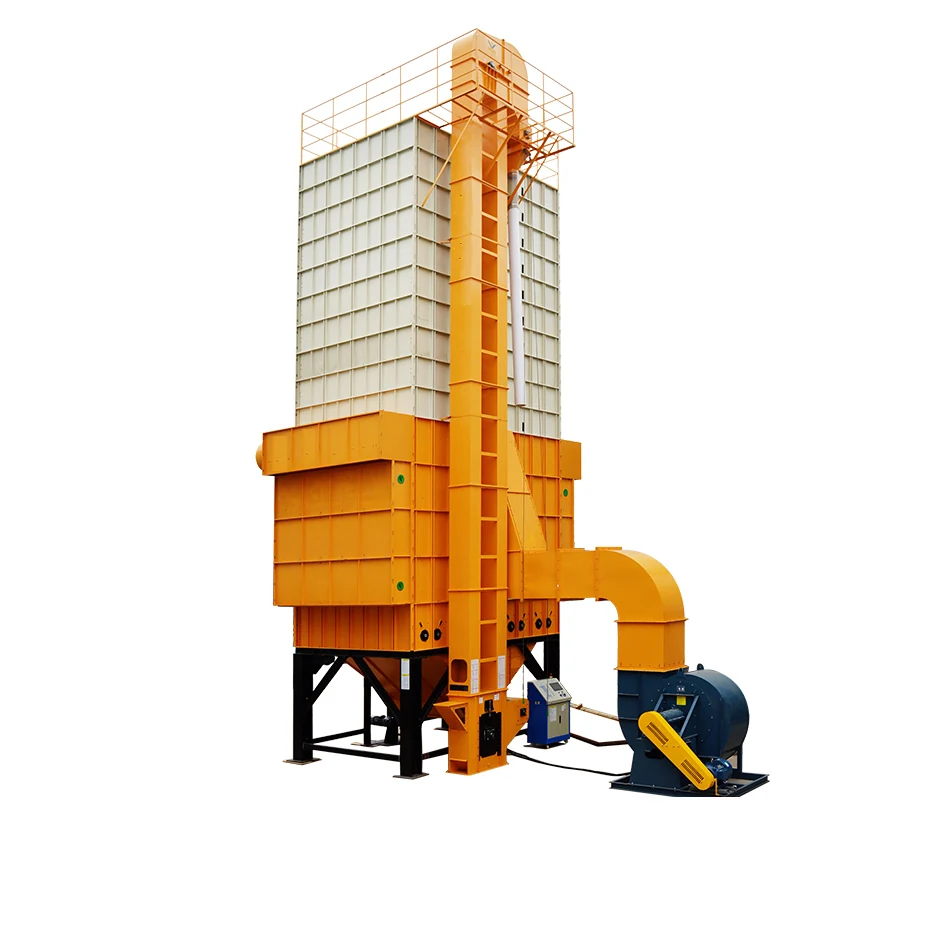
Low temperature circulating grain dryer installed with its biomass furnace
Choose The Fuel Before You Choose The Burner
The dryer accepts husk, straw, wood, peanut stalk, corn cob and other biomass waste, as well as coal, diesel, kerosene, natural gas and steam. In a rice mill the husk is already on site and already a disposal problem, so burning it is usually the cheapest heat available. Indirect heating keeps combustion products out of the grain and removes dust from it at the same time.
Do Not Forget What Feeds The Dryer
A dryer is only as fast as the elevator filling it. Bucket elevators running at low speed protect the grain from breakage, but they also set the fill and discharge time, so the conveying route has to be sized with the dryer rather than after it.
Need this checked against your own numbers? Send your capacity, crop and site conditions and an engineer will come back with model numbers.
Ask An Engineer