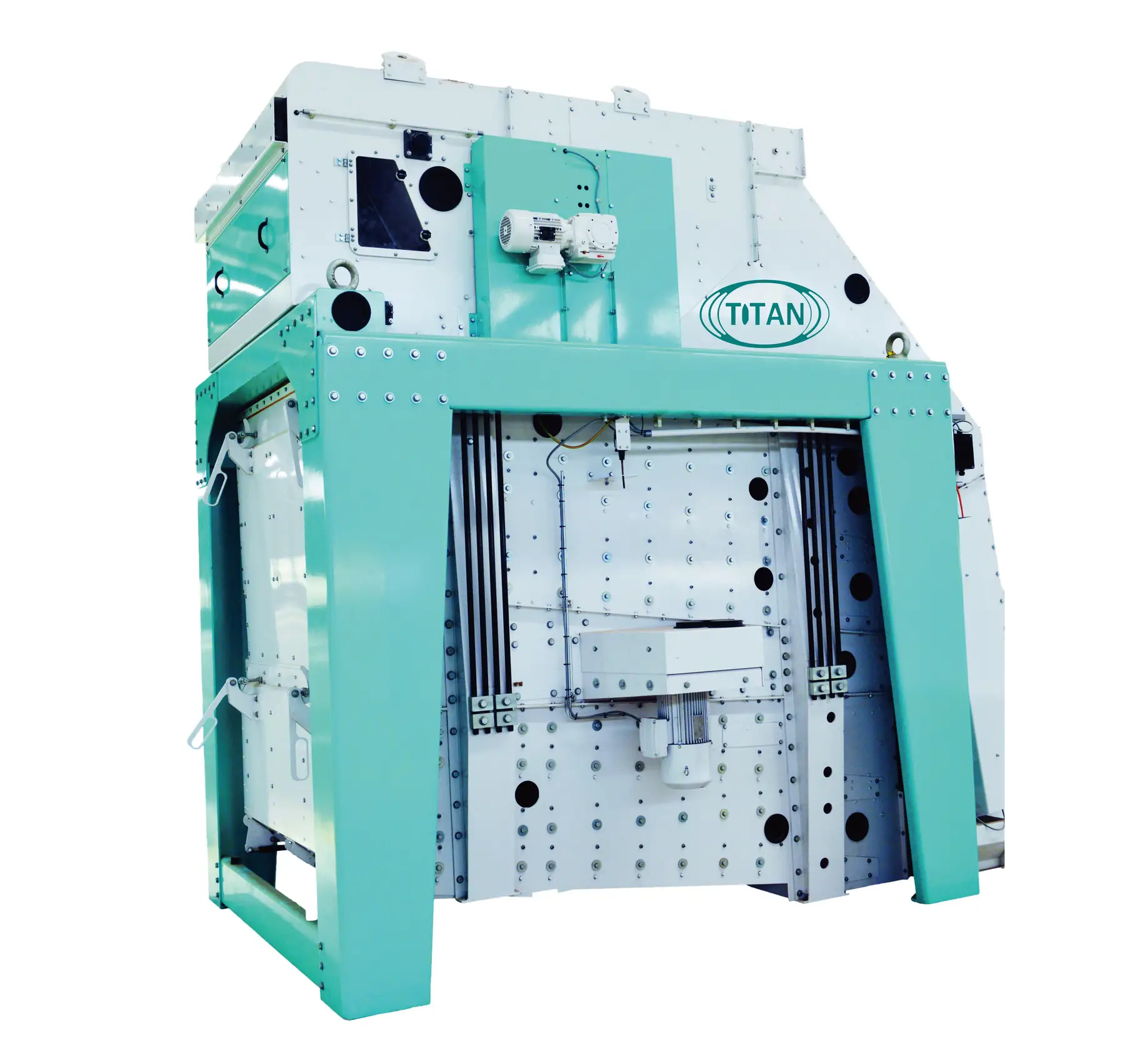
Three Things Have To Leave The Wheat
Coarse and light impurities, high density matter such as stones, pebbles and glass, and the dirt adhering to the kernel surface. Each needs a different physical principle, which is why the section has separate machines instead of one universal cleaner.
Destoning Is A Density Job
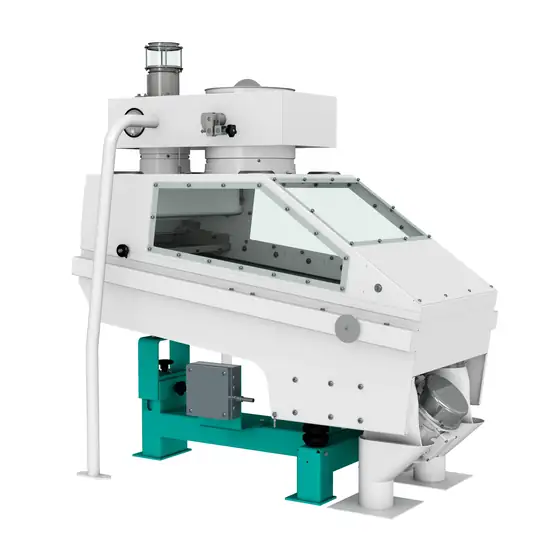
The MTSD destoner separates stones, pebbles, glass and other high density matter out of the grain stream. Throughput varies with the product and the degree of contamination: up to 22 t/h with soft wheat, up to 14.5 t/h with durum and up to 16.5 t/h with corn and maize. The same machine also handles rye, rice and soybeans.
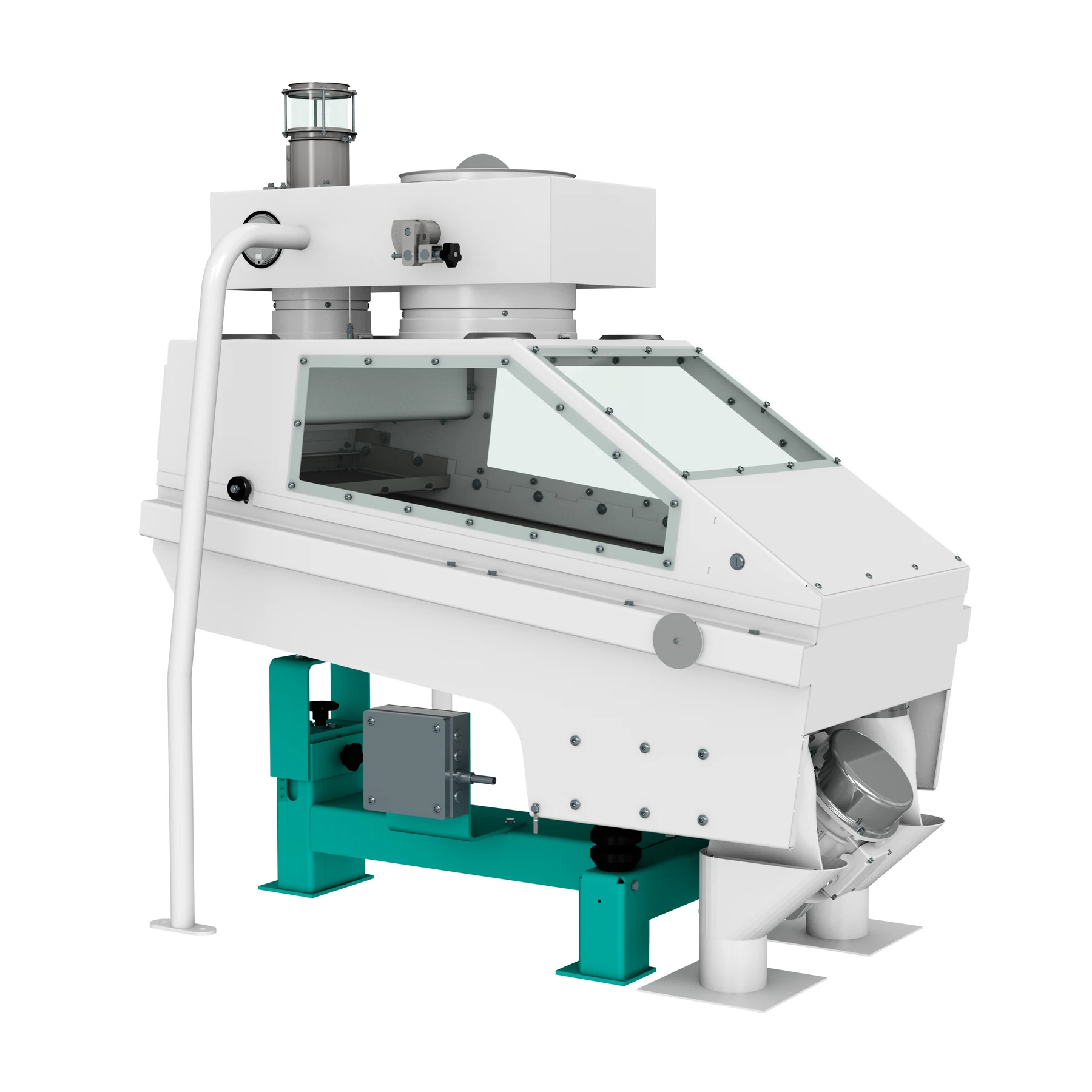
MTSD wheat destoner with adjustable deck and aspiration hood
Scouring Is A Surface Job
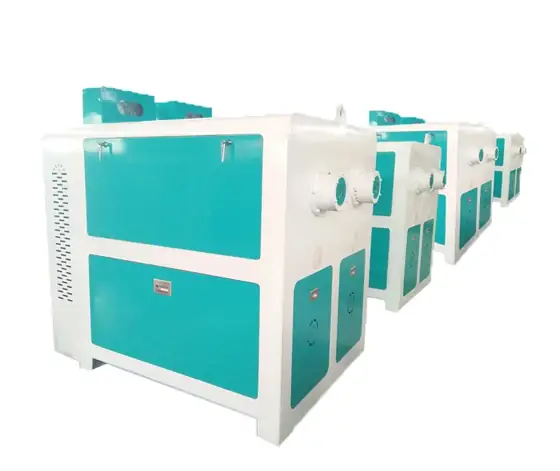
The horizontal scourer is used in the first and second cleaning sections for surface treatment of wheat, durum and rye. It removes dust, sand, earth lumps and small seeds, and it improves product sanitation by reducing the microbe count and the insect and insect fragment count. The scourer is equipped with an aspiration channel or an air recycling aspirator at the discharge to carry away the detached hull particles.
| Model | Motor | Air consumption | Capacity |
|---|---|---|---|
| TTS-200 | 15 kW | 500 m3/h | 9 TPH |
| TTS-250 | 18.5 kW | 600 m3/h | 11 TPH |
| TTS-400 | 15 kW x 2 | 800 m3/h | 18 TPH |
| TTS-600 | 18.5 kW x 2 | 1000 m3/h | 25 TPH |
Sieving Is A Size Job
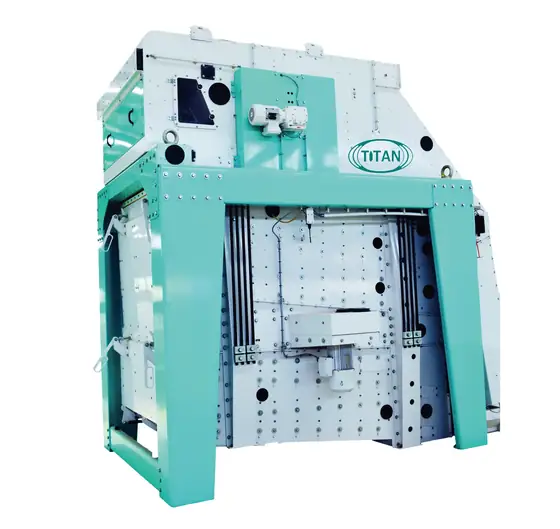
The multi deck cleaning sieve grades big and small impurities out of granular material. The inlet has a vibrating flap that distributes product evenly across the machine width, and inlet aspiration removes lightweight particles and dust before the sieve, which lowers the sieve load and raises cleaning quality. Sieve flaps give access to all screen layers quickly, which matters on a machine that gets opened often.
Size The Section Above The Mill
A cleaning section rated exactly at the mill capacity is at the limit on a clean harvest and below it on a dirty one. Choosing a scourer one size up, for example a TTS-400 at 18 TPH in front of a smaller mill, is the cheapest capacity insurance in the building.
Do Not Forget The Wheat Before It Gets There
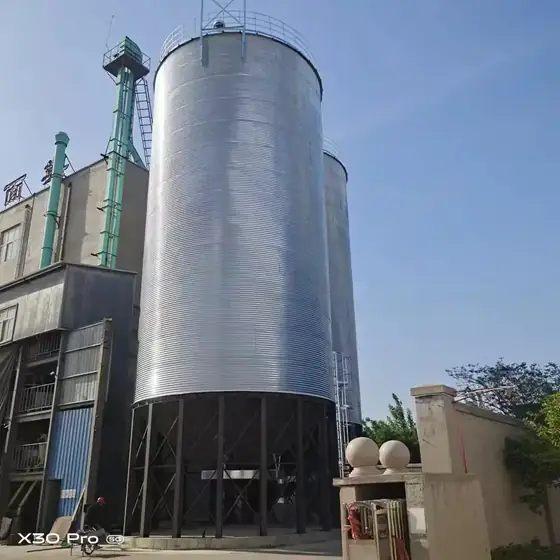
Wheat that swings in moisture makes tempering unpredictable. Galvanized storage silos with sealed roof joints and a waterproof shell hold the wheat at a stable moisture, so the cleaning section receives a consistent feed instead of whatever the weather delivered.
Need this checked against your own numbers? Send your capacity, crop and site conditions and an engineer will come back with model numbers.
Ask An Engineer