Most ceramic buyers focus exclusively on Fe2O3 when evaluating raw material whiteness — but TiO2 (titanium dioxide) is the critical second factor that many overlook. While TiO2 alone would not cause coloring in ceramics, its interaction with iron creates a synergistic effect that significantly amplifies the yellow-brown coloring from Fe2O3. Understanding this interaction is essential for specifying raw materials that actually deliver the whiteness you need.
The Iron-Titanium Synergy
In a ceramic glass phase containing both Fe2O3 and TiO2, the two oxides form a charge-transfer complex where electrons partially transfer between iron and titanium ions. This electronic interaction creates additional light absorption bands that neither oxide produces alone, resulting in intensified yellow-brown coloring. The practical impact is dramatic: a raw material with 0.10% Fe2O3 and 0.10% TiO2 fires noticeably more yellow than one with 0.10% Fe2O3 and 0.03% TiO2 — even though both meet a specification of "Fe2O3 below 0.15%." The first material would disappoint a buyer expecting white results based on the Fe2O3 number alone.
TiO2 Sources in Ceramic Raw Materials
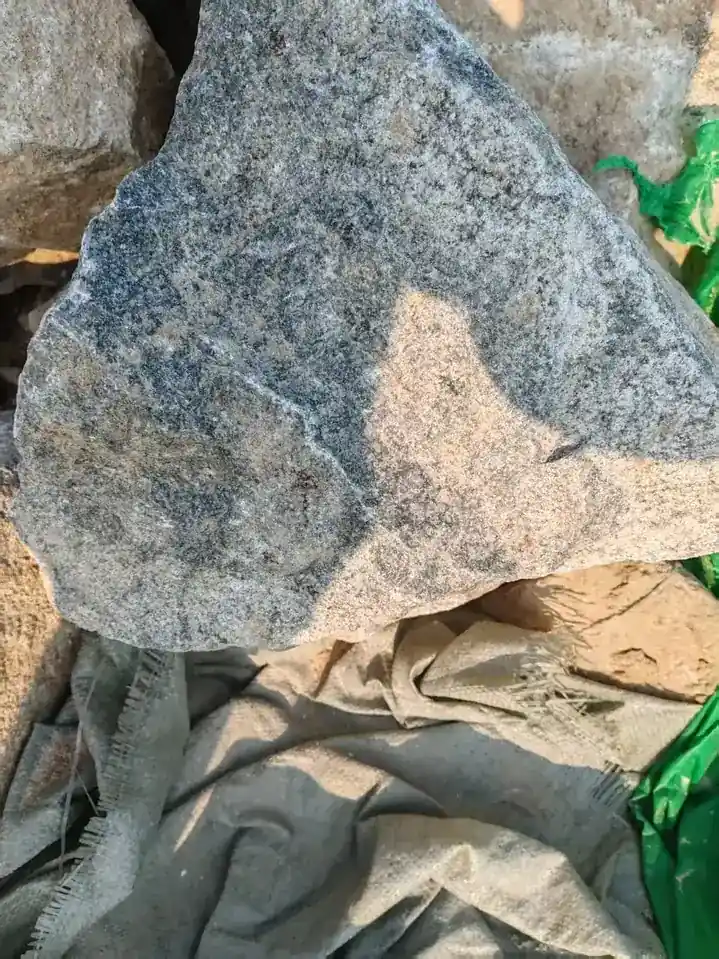
TiO2 in nepheline syenite and feldspar comes primarily from accessory titanium-bearing minerals in the ore — particularly ilmenite (FeTiO3), rutile (TiO2), titanite/sphene (CaTiSiO5), and titanium-substituted biotite mica. These minerals are found in small quantities in most igneous rock deposits. The degree to which they are removed during processing determines the final TiO2 content. In dry processing, many titanium minerals remain locked inside larger grains and pass through undetected. In wet processing with multi-stage magnetic separation, ilmenite and titanium-bearing biotite are captured by the magnetic separators (both contain iron and respond to magnetic fields), effectively reducing both Fe2O3 and TiO2 simultaneously. This is an inherent advantage of our wet process — it removes both coloring impurities in a single operation.
Our TiO2 Specifications
All our nepheline grades maintain TiO2 below 0.05%: K200 at 0.03%, K100 at 0.05%, and GP20 at 0.03%. Combined with their low Fe2O3 levels, this ensures the iron-titanium synergistic coloring effect is minimized. When evaluating alternative suppliers, always request both numbers — a supplier who reports Fe2O3 but not TiO2 may be hiding unfavorable titanium levels that will compromise your fired whiteness.
Specification Recommendations
For premium white products: specify Fe2O3 below 0.10% AND TiO2 below 0.05%. For standard white: Fe2O3 below 0.15% AND TiO2 below 0.08%. Always request BOTH values on every COA. Our products meet the premium specification across all grades.