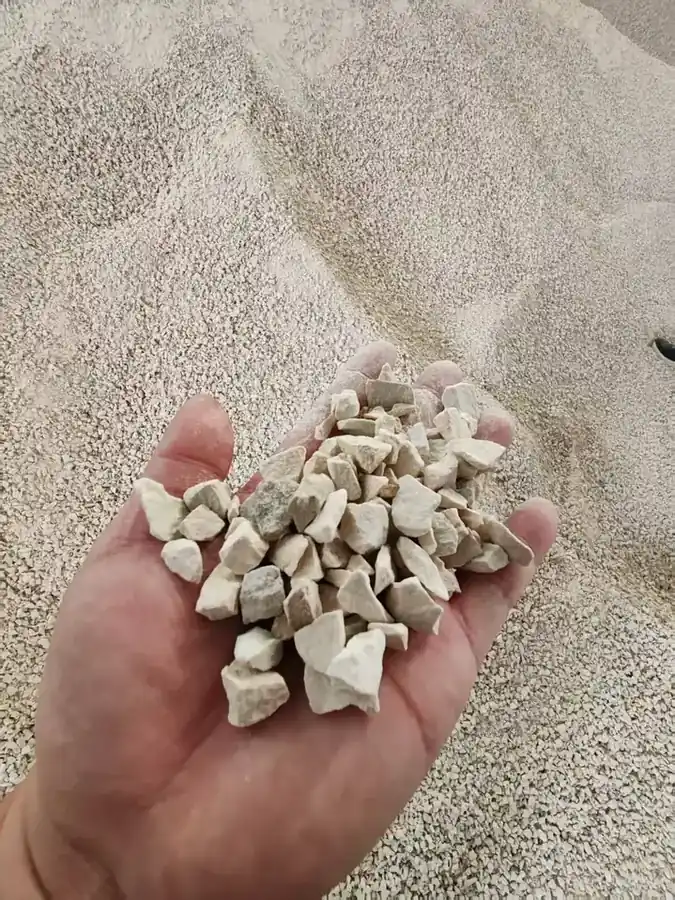
Crazing — a fine network of cracks in the ceramic glaze surface — is the most common glaze defect in ceramic production worldwide. It occurs when the thermal expansion of the glaze exceeds the thermal expansion of the body: as the kiln cools, the glaze contracts more than the body, putting the glaze under tensile stress until it cracks. While crazing has multiple contributing factors, flux material selection in both body and glaze is the primary lever for prevention.
The Expansion Mismatch Problem
Every ceramic material has a coefficient of thermal expansion (CTE) — the rate at which it expands when heated and contracts when cooled. For a craze-free ceramic product, the glaze CTE must be slightly lower than the body CTE, putting the glaze under slight compression (which strengthens it). When the glaze CTE exceeds the body CTE, the glaze is under tension — and glass under tension cracks.
The alkali oxides Na2O and K2O are the strongest expansion-increasing components in both bodies and glazes. Nepheline syenite, with its high total alkali (12-16%), increases CTE more than feldspar (8-14% alkali). This is beneficial in the body (raising body CTE to match the glaze) but can be problematic in the glaze (raising glaze CTE above the body). This is why experienced ceramicists often recommend: nepheline in the body, feldspar in the glaze .
How to Fix Crazing Through Flux Adjustment
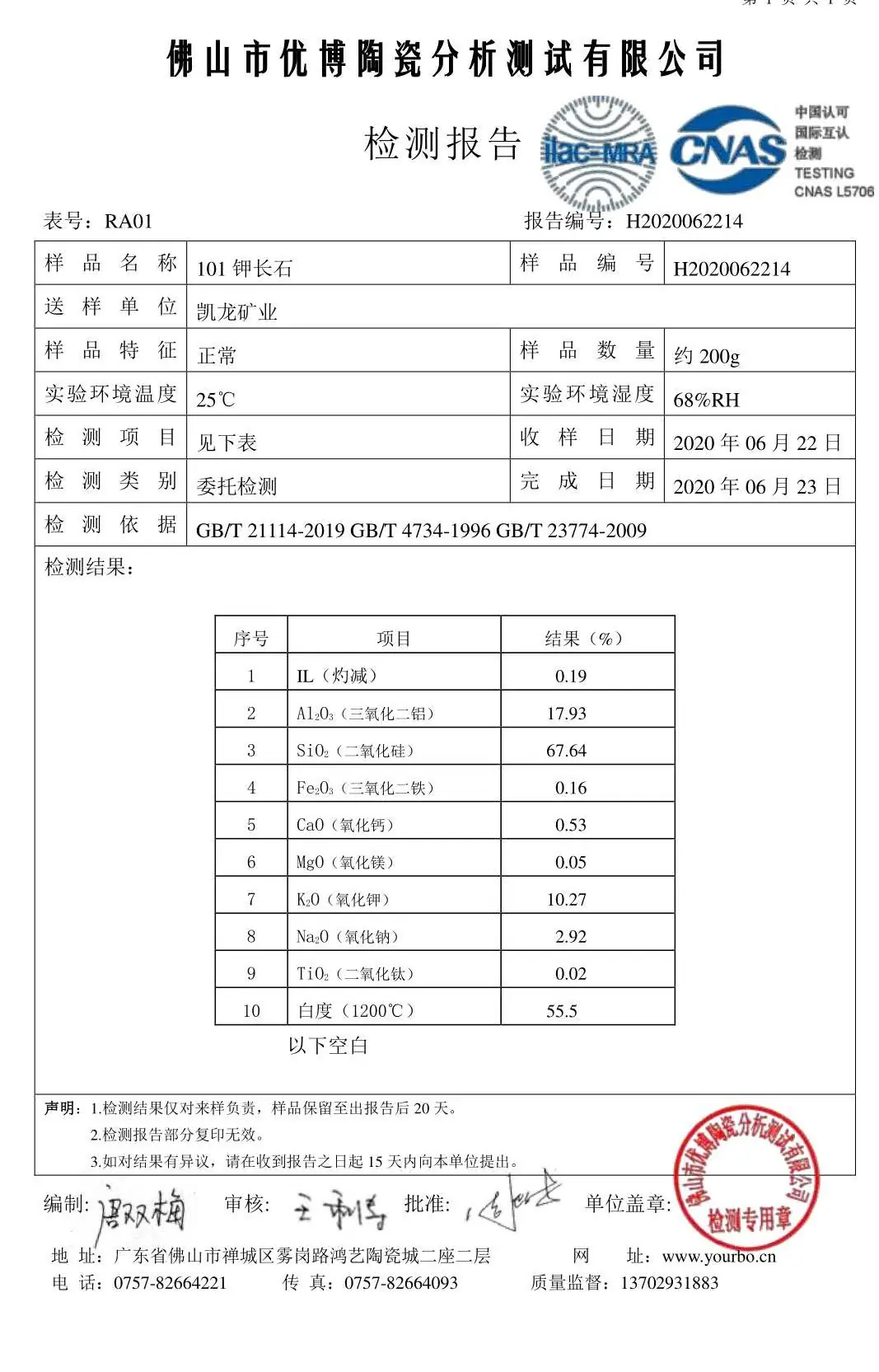
Strategy 1 — Reduce glaze expansion: Replace nepheline in the glaze with K-feldspar (our SY101). K-feldspar has lower total alkali and higher SiO2, producing a lower-expansion glass. This is usually the fastest fix. Replace nepheline with SY101 on a 1:1 weight basis as a starting point, then fine-tune.
Strategy 2 — Increase body expansion: Add more nepheline to the body formulation (increase by 3-5% by weight). The higher alkali from nepheline raises the body CTE, closing the mismatch gap from the body side. This approach has the added benefit of improving body vitrification and strength.
Strategy 3 — Both simultaneously: For severe crazing, adjust both body and glaze — increase nepheline in body while replacing nepheline with K-feldspar in glaze. This double correction converges the CTEs from both directions.
Testing Your Fix
After formulation adjustment, test for crazing using the autoclave test: fire test pieces, then subject them to 2 hours in an autoclave at 2 bar pressure. If no crazing appears, the fix is validated. Also test after 24-hour immersion in methylene blue solution — the dye penetrates any micro-cracks invisible to the naked eye, making them visible as blue lines. Aim for zero crazing under both tests before committing to production.