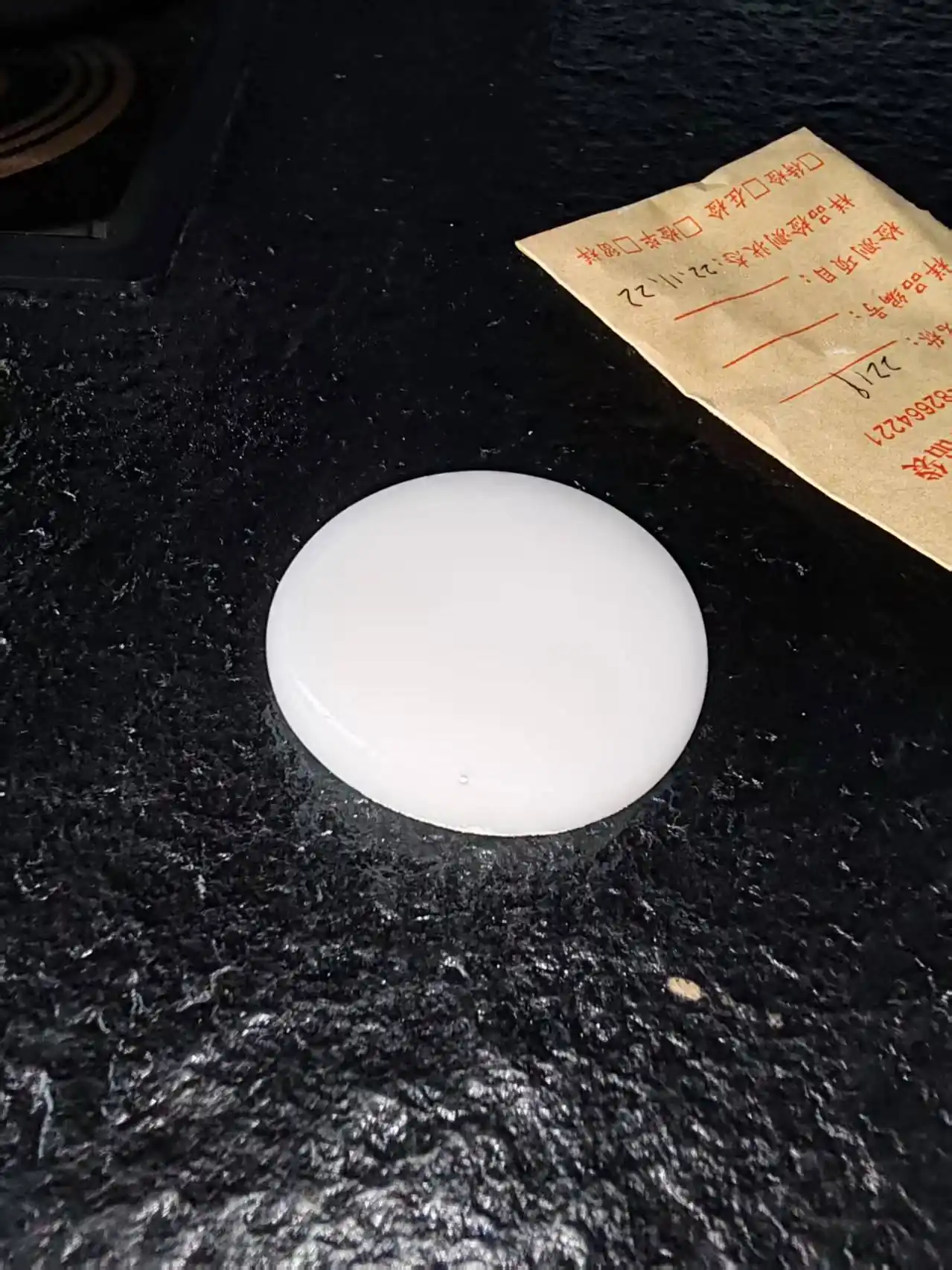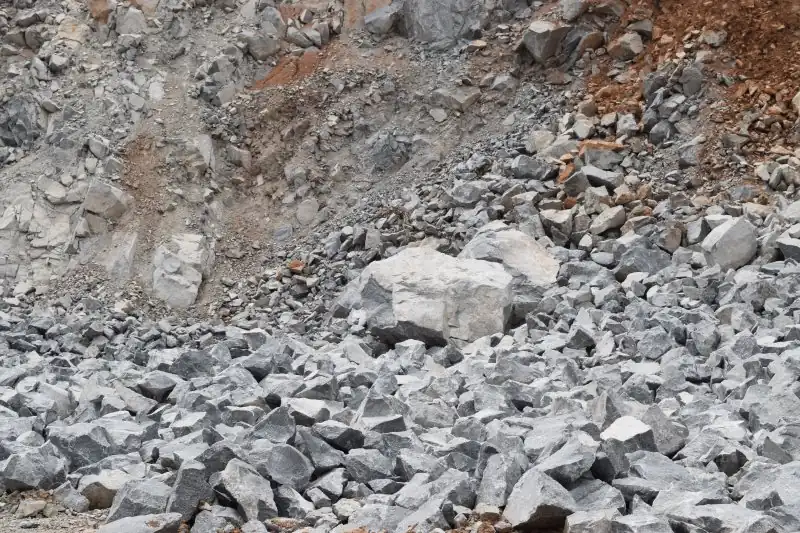
For procurement professionals sourcing ceramic raw materials, iron oxide (Fe2O3) content is the single most critical specification to evaluate. It determines fired product color, limits your achievable product range, and directly affects the market value of your finished ceramics. Yet many buyers focus too heavily on per-ton pricing while overlooking the Fe2O3 specification that ultimately controls product quality and profitability. This guide explains the technical and commercial relationship between iron content and ceramic quality.
The Science: How Iron Creates Color in Ceramics
Iron oxide (Fe2O3) is a transition metal oxide that absorbs specific wavelengths of visible light. In the oxidizing atmosphere used by most commercial ceramic kilns, Fe2O3 absorbs blue and violet wavelengths (400-500 nm) and transmits yellow, orange, and red wavelengths (550-700 nm). This selective absorption is what produces the characteristic yellow-to-brown coloring in iron-containing ceramics. The intensity of the color is roughly proportional to the Fe2O3 concentration, but the relationship is non-linear — the first 0.05-0.10% of iron produces a more noticeable color shift than subsequent increments. This means the difference between 0.08% and 0.15% Fe2O3 is more visually apparent than the difference between 0.50% and 0.57%.
In reduction firing (used in some specialized ceramics), the chemistry changes: Fe2O3 converts to FeO (ferrous oxide), which produces grey-to-blue colors instead of yellow-brown. This is why some ceramics fired in gas kilns with insufficient air supply develop an unintended grey tint — the reducing atmosphere at the ceramic surface converts iron to its ferrous form. For buyers, this means that Fe2O3 control is important regardless of your firing atmosphere.
Commercial Impact: How Iron Content Affects Your Product Value
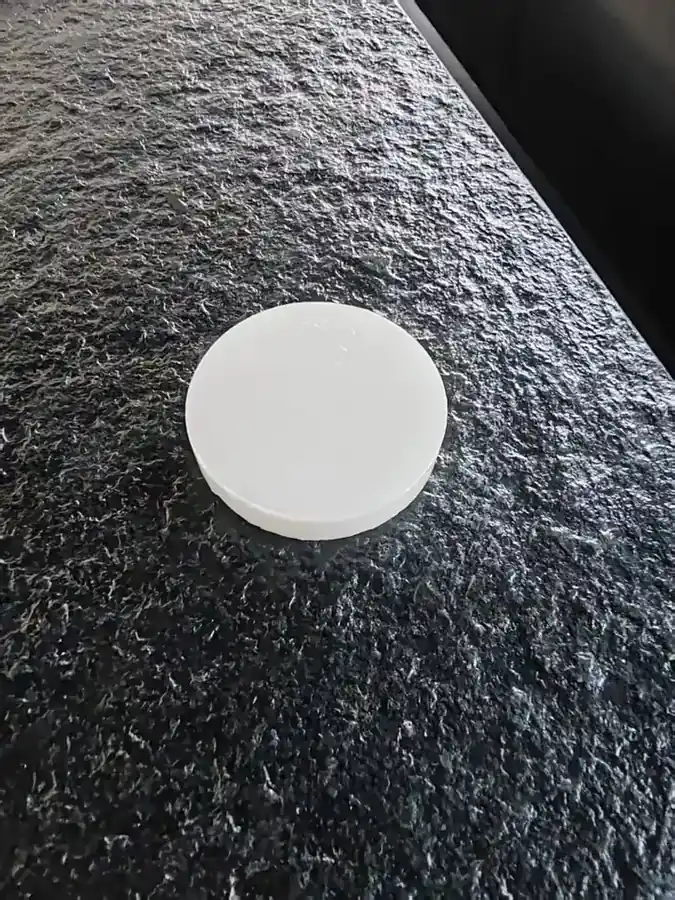
The commercial consequences of iron content extend beyond aesthetics. Here is how Fe2O3 in your raw materials translates to business outcomes:
Premium white products command higher prices. In every ceramic market — tiles, sanitary ware, tableware — whiter products sell at premium prices. A porcelain tile manufacturer whose body fires brilliant white can produce a wider range of products (including the high-margin white-body tiles) than a competitor whose body fires cream or yellow. The ability to produce premium white products starts with low-iron raw materials.
Glaze color accuracy depends on body color. A white body is neutral — it does not shift the color of any glaze applied to it. A yellowish body adds a warm tint to every glaze, making blue glazes appear greenish, white glazes appear cream, and pastel colors appear muddy. This limits your product design range and may require thicker, more expensive opaque glazes to mask the body color.
Consistency matters as much as average. If your raw material Fe2O3 varies from batch to batch (for example, between 0.10% and 0.25%), your fired product color will vary correspondingly. This batch-to-batch color variation is a quality defect that careful buyers will reject. Consistent low iron — meaning both low average AND low standard deviation — is the mark of a reliable supplier with controlled processing.
Fe2O3 Specification Targets by Product Type
Based on industry practice and our experience supplying ceramic manufacturers worldwide, here are recommended Fe2O3 targets for raw material procurement:
Fine porcelain and luxury tableware: Fe2O3 below 0.10%. Our K200 at 0.08% meets this requirement with margin. These products sell at the highest prices and demand the highest raw material quality.
White porcelain tiles and premium sanitary ware: Fe2O3 below 0.12%. Our K200 (0.08%) and K100 (0.12%) both serve this segment. White-body porcelain tiles are the fastest-growing segment in many markets.
Standard white tiles and general sanitary ware: Fe2O3 below 0.15%. Our K100 (0.12%) serves this cost-sensitive segment well, delivering good whiteness at competitive pricing.
General floor and wall tiles: Fe2O3 below 0.25%. At this level, the body will show slight cream coloring but is acceptable for products with opaque glazes. Many dry-processed feldspar products fall in this range.
The TiO2 Factor: Iron's Hidden Amplifier
Many buyers focus exclusively on Fe2O3 while overlooking titanium dioxide (TiO2) — a mistake that can lead to disappointing whiteness results despite acceptable Fe2O3 numbers. In ceramic matrices containing both iron and titanium, TiO2 acts as a color intensifier: it amplifies the yellow-brown coloring produced by Fe2O3. A raw material with 0.10% Fe2O3 and 0.10% TiO2 will fire noticeably more yellow than one with 0.10% Fe2O3 and 0.03% TiO2. Both materials meet a specification of "Fe2O3 below 0.15%," but the first material produces visibly inferior whiteness.
Our recommendation: always specify both Fe2O3 AND TiO2 limits in your purchase contracts. All Ceramic Minerals products maintain TiO2 below 0.05%, and this specification is verified on every COA.
How We Achieve Ultra-Low Iron
Our wet-process production line with multi-stage high-intensity magnetic separation is specifically engineered for iron removal. The process includes: primary crushing and wet grinding to liberate iron mineral particles trapped inside larger grains; first-stage magnetic separation at medium intensity to remove strongly magnetic minerals (magnetite); second-stage separation at higher intensity for moderately magnetic minerals; and third-stage separation at maximum intensity for weakly magnetic particles (biotite, hornblende, ilmenite). This progressive multi-stage approach, combined with the complete particle liberation that only wet processing achieves, produces our industry-leading Fe2O3 levels.