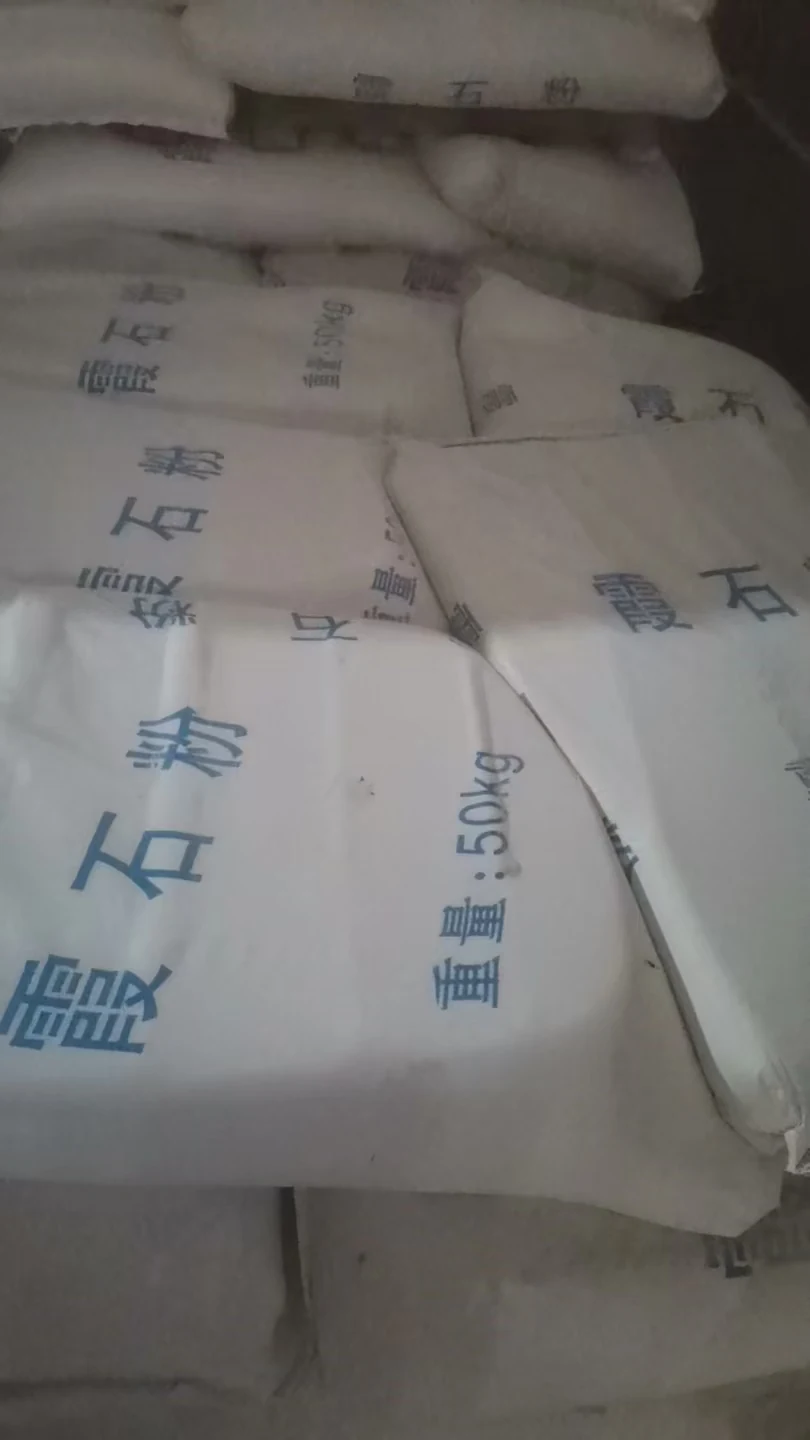
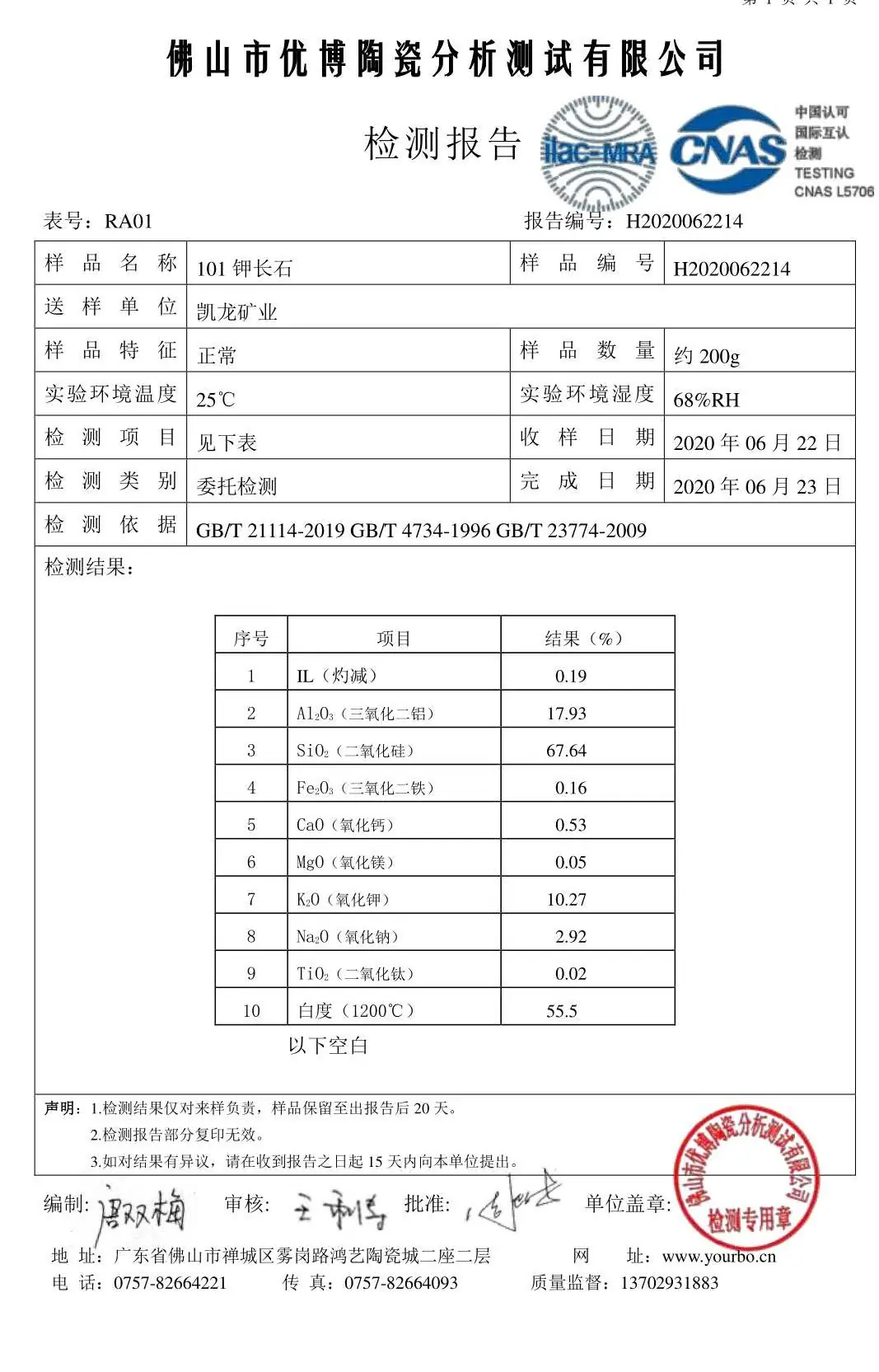
If your ceramic bodies or glazes fire to a yellow, cream, or brownish tint instead of the white color you expect, the most likely cause is excessive iron oxide (Fe2O3) in one or more of your raw materials — and the flux (feldspar or nepheline) is often the primary culprit. This guide explains how iron creates unwanted color, how to diagnose which raw material is the source, and how switching to a low-iron wet-processed flux solves the problem.
How Iron Creates Yellow/Brown Color
In the oxidizing atmosphere of most commercial kilns, Fe2O3 (ferric oxide) absorbs blue and violet wavelengths of light while transmitting yellow, orange, and red wavelengths. The result is the characteristic cream-to-brown coloring seen in iron-containing ceramics. The color intensity is roughly proportional to Fe2O3 concentration, but the relationship is non-linear — the first 0.05-0.10% of iron causes disproportionately large color shift. This means the difference between 0.08% Fe2O3 (our K200) and 0.25% Fe2O3 (typical dry-processed feldspar) is dramatically visible in fired ceramics.
The problem compounds when titanium dioxide (TiO2) is also present. TiO2 acts as a color intensifier — it amplifies the yellow-brown coloring from Fe2O3. A raw material with 0.15% Fe2O3 and 0.10% TiO2 fires significantly more yellow than one with 0.15% Fe2O3 and 0.03% TiO2. Always check both Fe2O3 AND TiO2 on your Certificate of Analysis.
Diagnosing the Source: Which Raw Material?
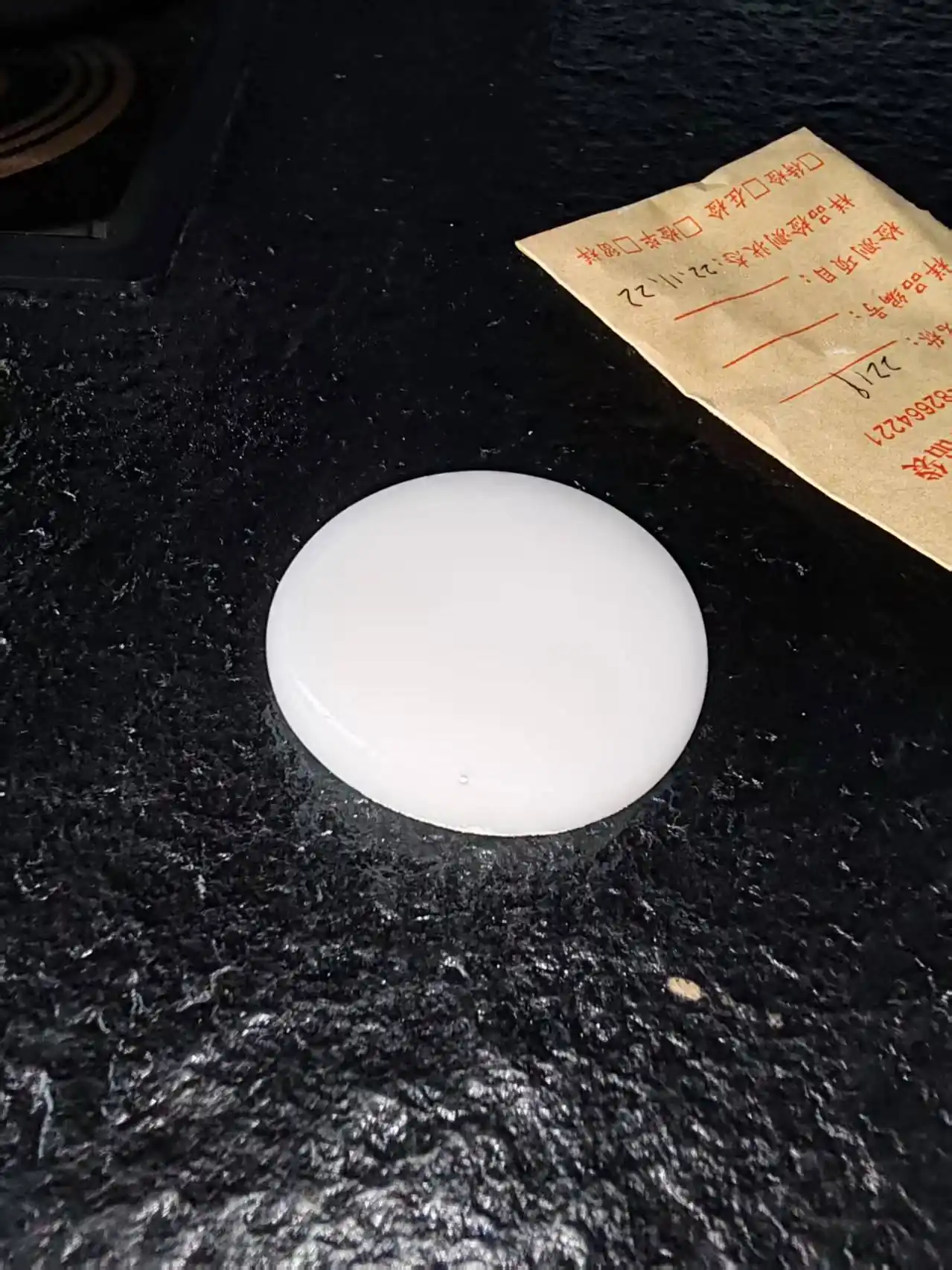
Your ceramic body contains multiple raw materials — clay, flux (feldspar/nepheline), quartz, and possibly talc, wollastonite, or other additives. Any of these could be contributing iron. To identify the culprit: press and fire individual discs of each raw material at your standard firing temperature and compare their whiteness. The material that fires most yellow is your primary iron source. In our experience, the flux material is the most common source of iron problems because: (1) feldspar/nepheline typically constitutes 15-30% of the body — a significant portion, (2) dry-processed feldspar from many sources contains 0.2-0.5% Fe2O3, and (3) batch-to-batch variation in Fe2O3 from poorly controlled sources causes inconsistent fired color that is difficult to manage.
The Solution: Switch to Wet-Processed Nepheline
The fastest and most effective solution is to replace your current flux with our wet-processed nepheline syenite. Our K200 grade achieves Fe2O3 of 0.08% — typically 2-5 times lower than dry-processed alternatives. The K200 also maintains TiO2 below 0.03%, eliminating the titanium amplification effect. The improvement is immediately visible: fire a test disc of K200 alongside your current feldspar and the whiteness difference is striking. For standard tile production where ultra-whiteness is less critical, K100 (Fe2O3 0.12%) provides a significant improvement over most feldspar at a more competitive price point.
Quantifying the Improvement
Request samples of K200 and K100 from us. Press and fire test discs alongside your current feldspar under identical conditions. Measure L*a*b* values with a spectrophotometer if available, or evaluate visually under standardized lighting. The typical improvement when switching from dry-processed feldspar (Fe2O3 0.25-0.40%) to K200 (Fe2O3 0.08%) is: L* increase of 3-8 points (significantly whiter), b* decrease of 2-5 points (less yellow), and a* decrease of 1-2 points (less red tint). These improvements are clearly visible to the naked eye and translate directly to higher product value.