
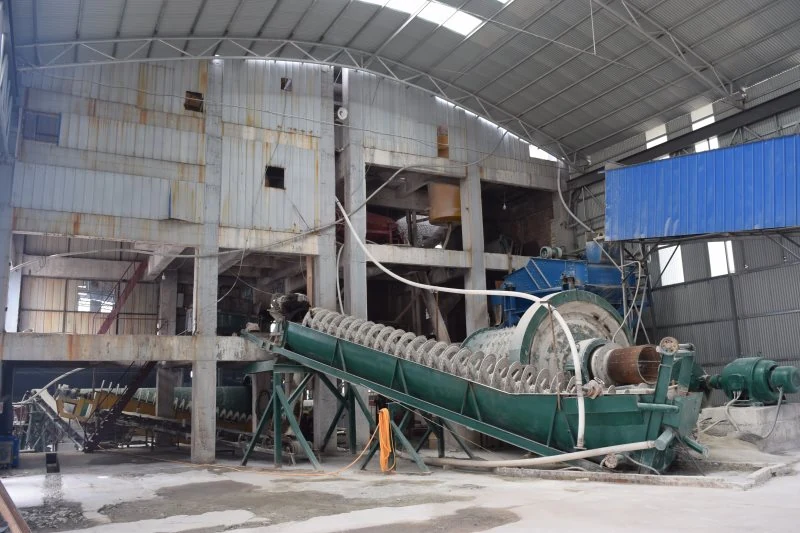
Wet Process Plant and Magnetic Separation Circuit
More than 40 million CNY has gone into the wet-process line, for one reason: wet processing reaches iron levels two to five times lower than dry processing from exactly the same ore.
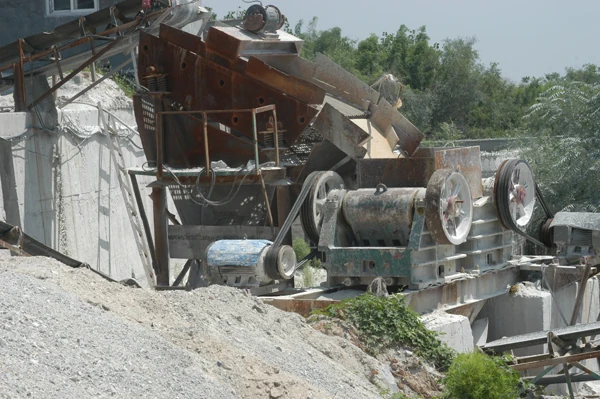
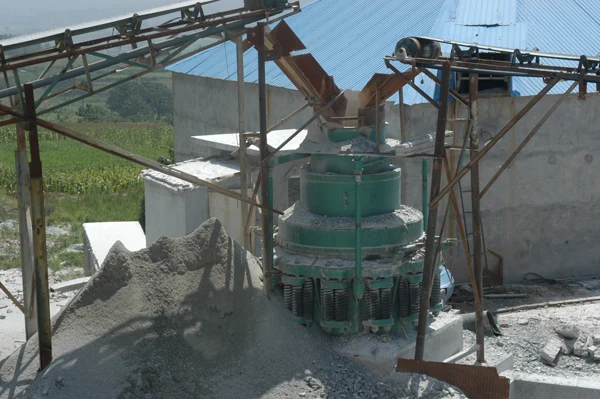
Crushing runs in two stages. The primary jaw crusher takes boulders up to 800 mm down to about 150 mm; the secondary cone crusher reduces that to 10-20 mm, which is the right feed size for wet milling.
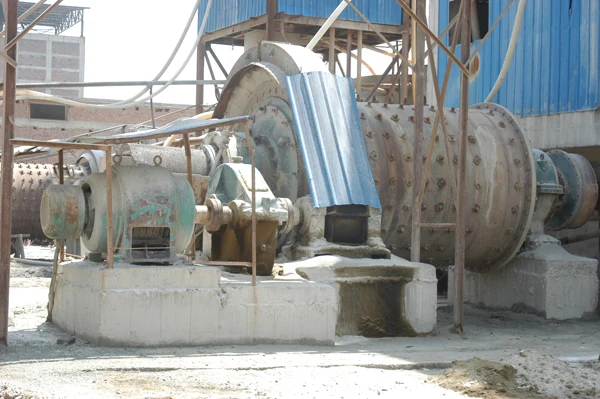
Crushed ore is mixed with water and fed to ball mills that grind the slurry to 100 mesh or 200 mesh depending on grade. Grinding wet is the critical step — water slurry liberates iron-bearing inclusions trapped inside larger grains and makes them available for magnetic capture. Dry grinding cannot do this, which is why dry-process material carries more iron.
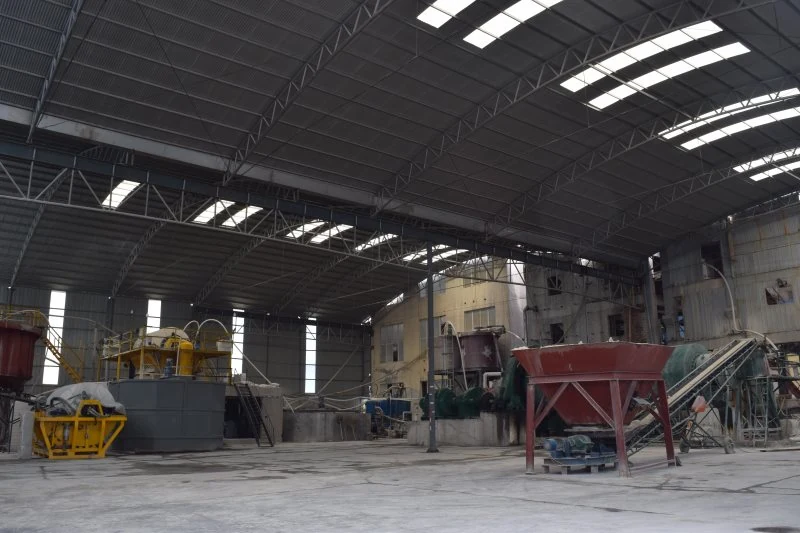
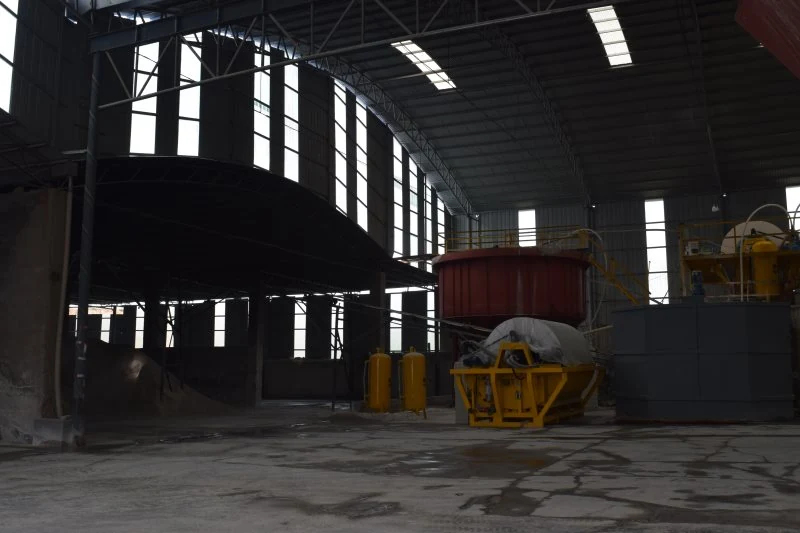
The ground slurry then passes three stages of high-intensity wet magnetic separation. The first stage captures strongly magnetic magnetite, the second takes moderately magnetic biotite, and the third runs at maximum intensity for weakly magnetic iron-bearing minerals. Fe2O3 falls from around 0.4% in the raw ore to 0.08% in the finished K200.
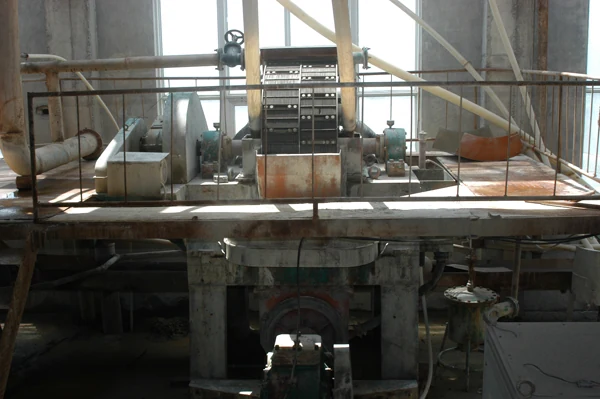
After separation, hydrocyclone classifiers set the particle size, thickeners and filter presses remove water, and rotary dryers bring moisture below 1.0%. Recovered water goes back into the grinding circuit in a closed loop.
Flotation cells run alongside the nepheline circuit for potassium feldspar beneficiation, producing the SY101 and TX101 concentrates.
Inside the processing plant
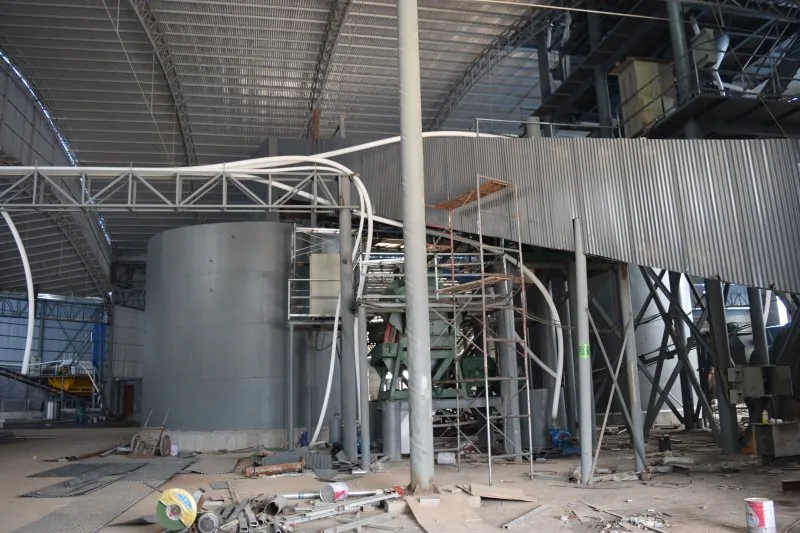
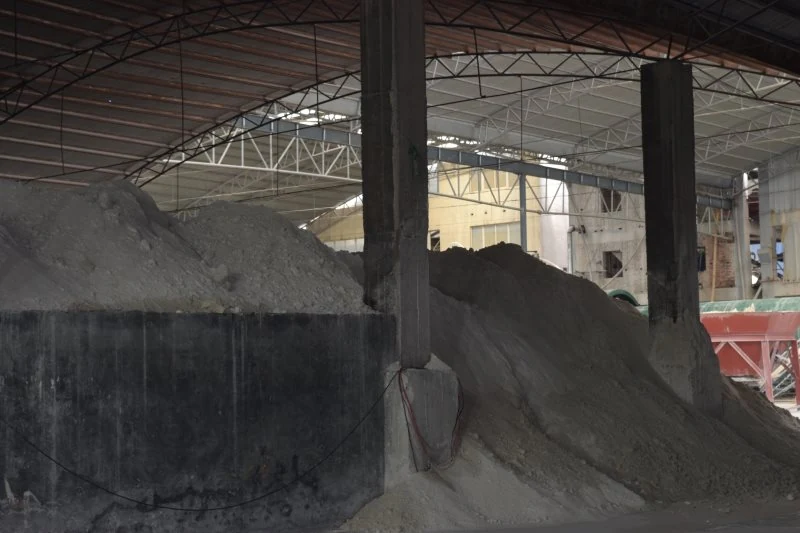
Other Areas
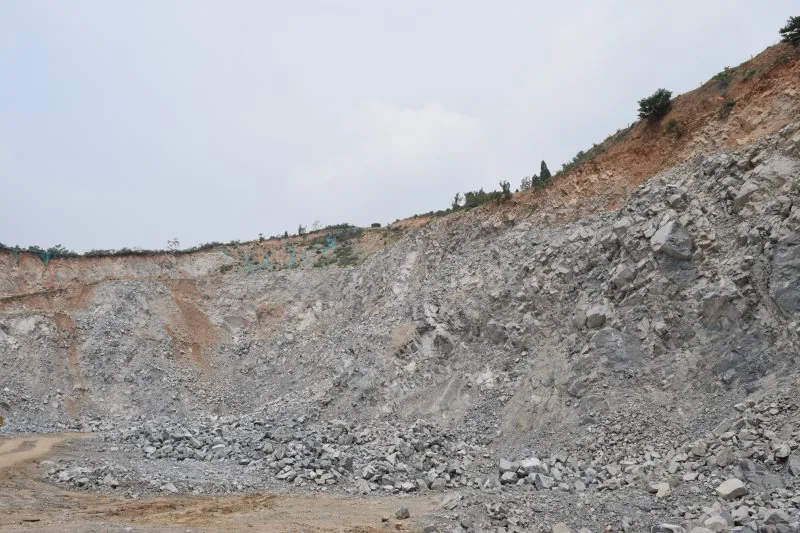
Mining and Quarry
Our quarry at Jiulongshan — Nine Dragon Mountain — in Shanying Town, Anyang County is one of China's larger nepheline syenite depo...
See this area →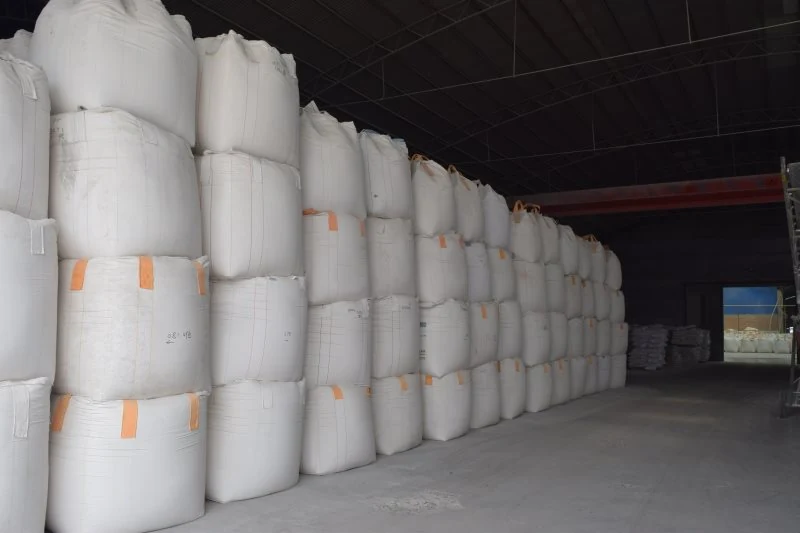
Warehouse and Packaging
Finished product is stored enclosed, on concrete, on raised areas, organised by grade and batch number on first-in-first-out rotat...
See this area →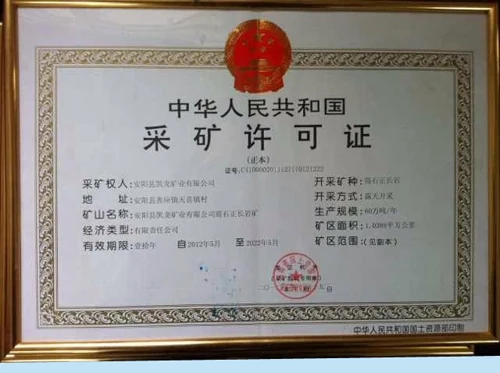
Certificates and Licences
Three government-issued documents and one independent laboratory relationship are what separate a mine-owning producer from a trad...
See this area →Questions About This Part of the Operation
Is the material independently tested?
In-house testing covers every batch. Critical export shipments are additionally verified by Foshan Youbo Ceramic Analysis & Testing Co., Ltd., an independent ceramic testing laboratory.
What quality documentation comes with a shipment?
A batch-specific Certificate of Analysis covering XRF chemistry, particle size, moisture and fired whiteness at 1200 degrees C. We send it for approval before loading, and originals travel with the shipping paperwork.
Can I visit the factory?
Yes. Please book at least three working days ahead. Airport pickup can be arranged from Zhengzhou (CGO) or from Anyang station.
How is the material packed?
1200 kg FIBC jumbo bags as standard, or 50 kg PP woven bags. Bags carry product name, grade, batch number and weight. Custom packaging and private labelling are available.
Ask About Anything You See Here
Photographs only go so far. Send a question and we will answer with detail, or book a visit.