
Mine-owned nepheline syenite and feldspar since 2007
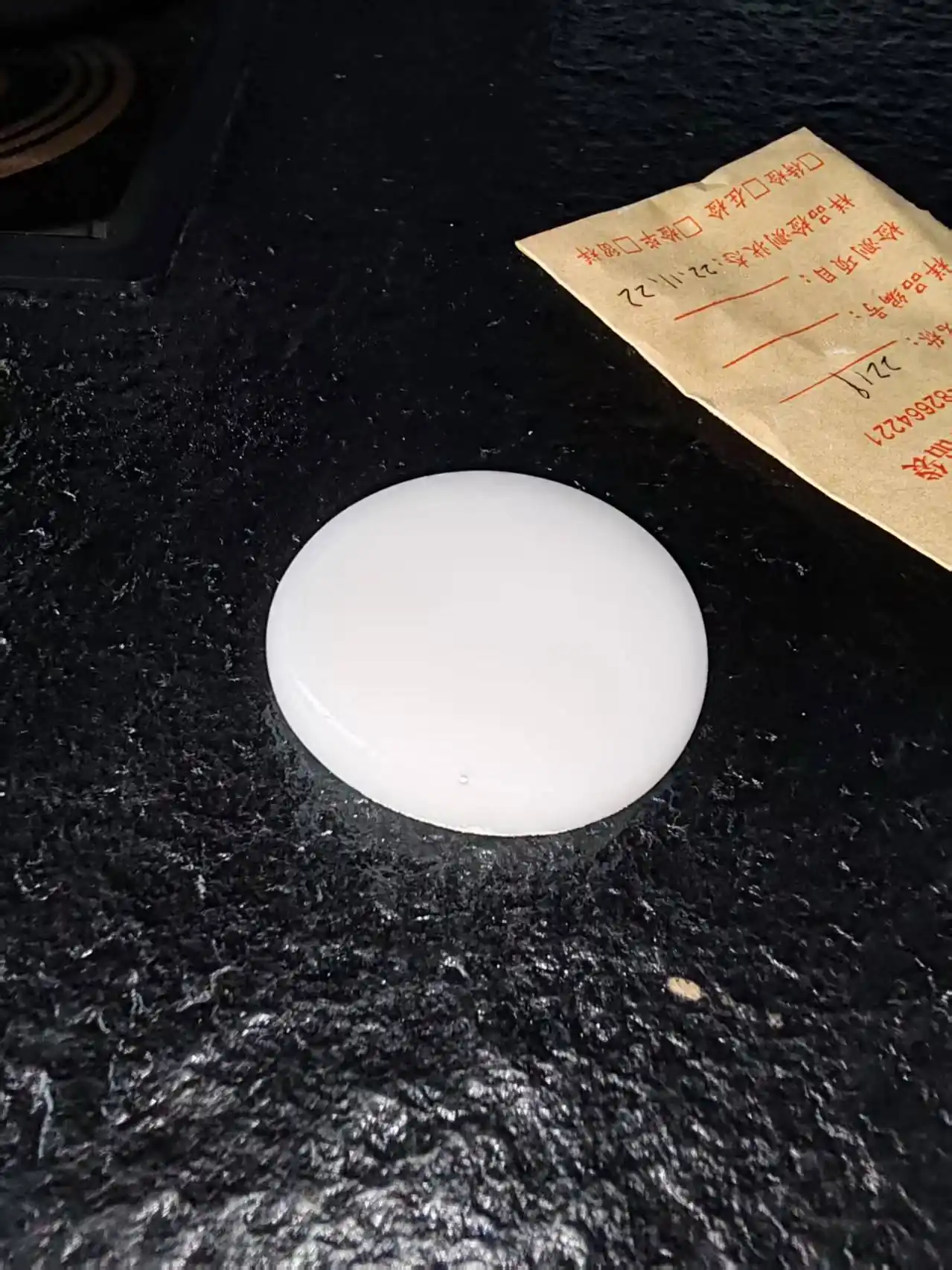
Fired whiteness test disc pressed from nepheline powder
Defect Troubleshooting

Glaze-Body Thermal Expansion Mismatch: Diagnosis and Correction

How to measure and correct thermal expansion mismatch between glaze and body using proper flux selection.

Glaze-body expansion mismatch is the root cause of both crazing (glaze expansion too high) and peeling/shivering (glaze expansion too low).

Understanding This Defect

The key insight is that flux materials are the primary tool for adjusting expansion in both body and glaze. Na2O and K2O increase expansion strongly; SiO2 decreases expansion; CaO has moderate effect. To raise body expansion: increase nepheline syenite (high Na2O+K2O). To lower glaze expansion: replace nepheline with K-feldspar (higher SiO2, lower total alkali) or increase quartz in the glaze. To raise glaze expansion: increase nepheline in the glaze (rarely recommended — better to raise body expansion instead).

Solution & Prevention
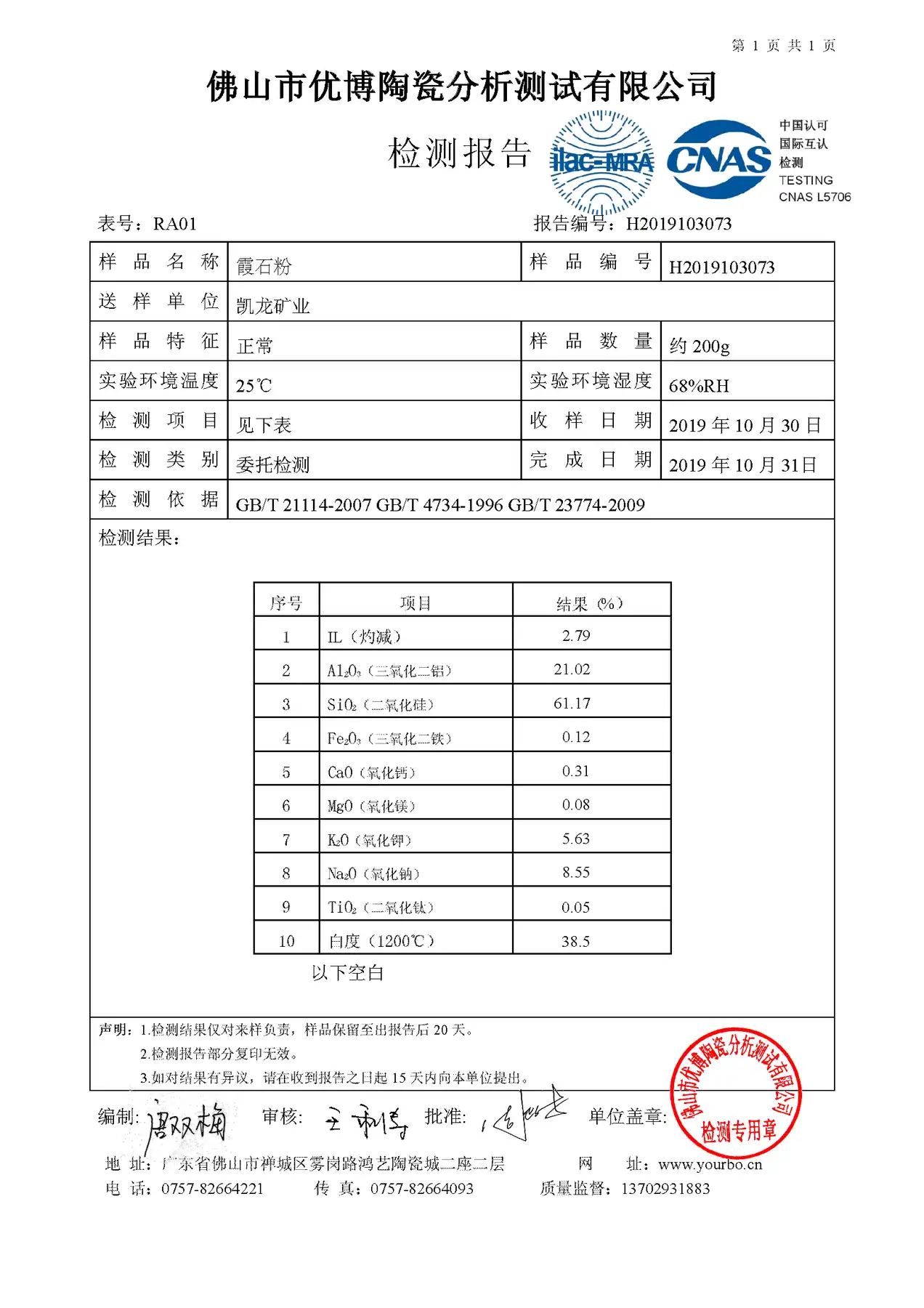
Third-party particle size distribution report for K100

The ideal combination for most tile production: nepheline (K100 or K200) in the body for efficient vitrification and raised body expansion, plus K-feldspar (SY101) in the glaze for controlled expansion and good surface quality. This body-nepheline/glaze-feldspar approach is used by leading tile manufacturers worldwide..
FAQ

Questions on This Topic

What does Glaze-Body Thermal Expansion Mismatch: Diagnosis and Correction cover?

Glaze-body expansion mismatch is the root cause of both crazing (glaze expansion too high) and peeling/shivering (glaze expansion too low).

What quality documentation comes with a shipment?

A batch-specific Certificate of Analysis covering XRF chemistry, particle size, moisture and fired whiteness at 1200 degrees C. We send it for approval before loading, and originals travel with the shipping paperwork.

What is the minimum order quantity?

One 20ft container, which is about 24 tons — roughly 20 FIBC jumbo bags. Samples of 1-5 kg per grade are available before that for laboratory evaluation.

Which ports do you ship from?

FOB Tianjin, Qingdao or Lianyungang, all within 6-8 hours by truck from the plant. CIF to your destination port is also quoted on request.

Take It From Reading to Testing

Send your current specification and the problem you are chasing. Samples follow within a week.