

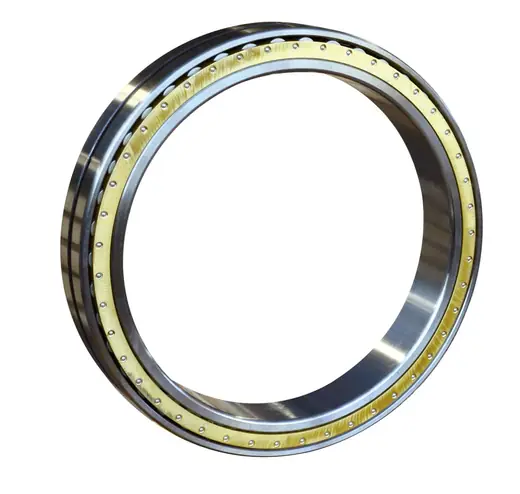
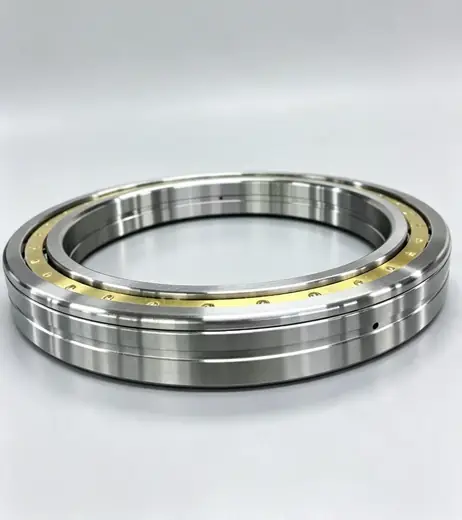
Full Complement Cylindrical Roller Bearings for Hydraulic Fracturing Pumps
Frac pump power ends run at low speed under enormous radial load, which is exactly where caged bearings run out of roller capacity. A full complement bearing fills the raceway with rollers, raising load rating so overhaul intervals stretch and non productive time on the pad falls.
- Designed for discharge pressure 100-150 MPa
- Crankshaft speed range 200-400 rpm
- Roller count close to theoretical maximum, typically above 95 percent
- Oil cleanliness requirement from NAS 7
Key Benefits
Why operators change the power end bearing specification.
Longer Overhaul Intervals
Higher dynamic capacity at the same envelope stretches the interval between power end rebuilds, which is where frac fleet cost is concentrated.
Less Non Productive Time
Fewer unplanned bearing failures on the pad means fewer pump swaps during a stage.
More Power Without New Housings
The extra capacity allows higher nominal pump power without enlarging housing bores, so existing power ends can be uprated.
Where It Is Used
Where these bearings run.
- Three plunger and five plunger frac pump power ends
- Ultra high pressure fracturing at 20,000 psi and above
- Electric drive frac pumps
- Other low speed high load reciprocating machinery
Who It Is For
- Oil service operators running frac fleets
- Frac pump OEMs specifying power section bearings
- Rebuild shops overhauling power ends
- Buyers comparing bearing cost against overhaul interval
Problems It Solves
- Cage deformation under pressure pulsation and shock
- Short bearing life at 200-400 rpm with very high radial load
- Unplanned pump failures during a stage
- Housing bore limits when pump power is increased
Technical Features
What makes the full complement design suitable here.
No Cage To Deform
A standard caged bearing carries roller count at about 60 to 70 percent of theoretical maximum and the cage is the part that fails first under pressure pulsation induced acceleration.
Maximum Roller Count
Full complement construction reaches roller count typically above 95 percent of theoretical maximum, which is where the load rating gain comes from.
Defined Lubrication Window
Oil cleanliness of at least NAS 7 is specified because contamination, not load, ends most bearing lives in this duty.
Specifications
Boundary dimensions follow the pump power end. The values below describe the operating duty the bearings are built for.
| Bearing Type | Full complement cylindrical roller bearing |
|---|---|
| Discharge Pressure Range | 100-150 MPa |
| Crankshaft Speed | 200-400 rpm |
| Roller Fill | Typically above 95 percent of theoretical maximum |
| Standard Caged Comparison | Roller count about 60-70 percent of theoretical maximum |
| Single Pump Flow | 1-2.5 m³/min |
| Oil Cleanliness | NAS 7 minimum |
Materials
- Bearing steel rings and rollers
- Ground and honed raceways
- Specified axial location features per series
Manufacturing Process
Duty Review
Pressure, speed, flow and housing dimensions are checked before the series is selected.
Ring Manufacturing
Rings are turned, heat treated and ground to the raceway geometry.
Roller Matching
Rollers are sorted so the full complement set shares load evenly.
Assembly And Inspection
The bearing is assembled, cleaned and checked for radial clearance before packing.
Quality Control
- Raceway hardness and geometry inspection
- Radial internal clearance measurement per bearing
- Roller diameter sorting records
- Cleanliness check before sealing the package
Customization Options
- Boundary dimensions to your power end housing
- Radial clearance class for your fit and temperature
- Axial location variant per the series required
- Packaging in sets per pump for field replacement
Use Guide
- Keep oil cleanliness at NAS 7 or better, it is the main life factor
- Respect the housing and shaft fits given for full complement bearings
- Replace as a complete set in the power end, not one position at a time
- Log running hours per stage so intervals can be tuned with data
How It Compares
Full complement against the caged bearings usually fitted.
| Standard caged cylindrical roller bearings | Roller count rises from about 60-70 percent to above 95 percent of theoretical maximum, and there is no cage to deform under pulsation. |
|---|---|
| Larger caged bearing in a bigger housing | Capacity is gained inside the existing bore, so the power end casting does not change. |
| More frequent rebuild intervals | A modest increase in component cost buys a longer interval, which is cheaper than the non productive time it replaces. |
Related Products
Cylindrical Roller Bearings for High Pressure Fracturing Pumps
Power end and connecting rod bearings for triplex and quintuplex frac pumps above 15,000 psi.
View Details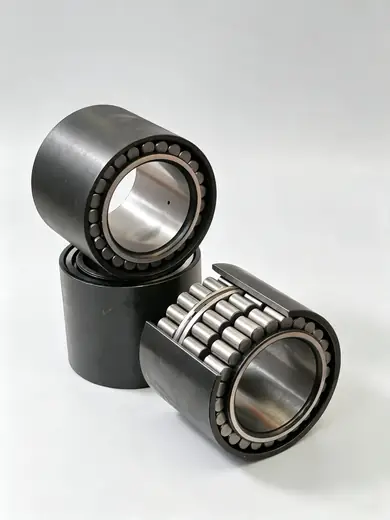
SL18 Series Bearings for Wind Energy
Full complement SL18 bearings for yaw and pitch systems with advanced sealing and traceability.
View Details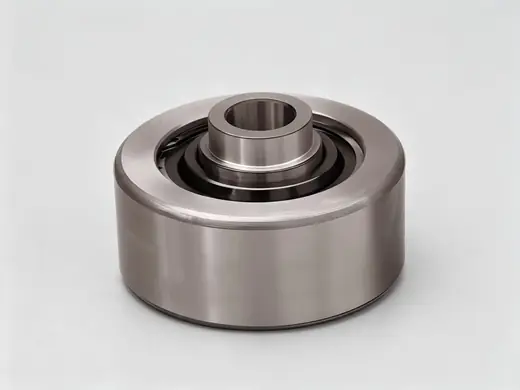
N28 Series Cylindrical Roller Wheels for Conveyor Chains
Through hardened conveyor chain rollers rated to 28 kN with precision ground running surface.
View DetailsFull Complement Cylindrical Roller Bearings 20-1200 mm
SL series full complement bearings from 20 mm to 1200 mm for high radial load duty.
View DetailsRelated Technical Articles

How Frac Pump Bearing Quality Keeps A Fracturing Job On The Design Curve
Displacement, pressure and uptime are one chain in hydraulic fracturing, and the power end bearing sits in the middle of it.
Read MoreRoller Wheels And Why Conveyor Performance Ends At The Last Component
Belt tracking, energy consumption and wear patterns all trace back to the roller wheel, not the belt.
Read MoreFull Complement Cylindrical Roller Bearings for Frac Pumps FAQ
Why do standard bearings fail in frac pumps?
The duty combines 100-150 MPa discharge pressure, 200-400 rpm low speed operation and sharp pressure pulsations. The cage sees high frequency alternating loads and peak shock, and cage deformation is the common failure.
How much more capacity does full complement give?
Roller count moves from about 60-70 percent of theoretical maximum in a caged bearing to typically above 95 percent, and the load rating rises with it.
What oil cleanliness is required?
NAS 7 as a minimum. Contamination control matters more than any other maintenance factor for this bearing type.
Can we uprate an existing pump?
In many cases yes. The higher capacity allows higher nominal pump power without enlarging housing bores, but we check the actual housing and shaft data first.
Do you supply to the pump drawing?
Yes. Send the boundary dimensions, clearance class and axial location requirement, or the bearing designation currently fitted.
Are these suitable for electric drive frac pumps?
Yes. Electric drive and ultra high pressure fracturing above 20,000 psi are where this bearing type is being specified most.
Match A Bearing To Your Power End
Send the current bearing designation or the housing dimensions and duty data, and we come back with a full complement equivalent.