
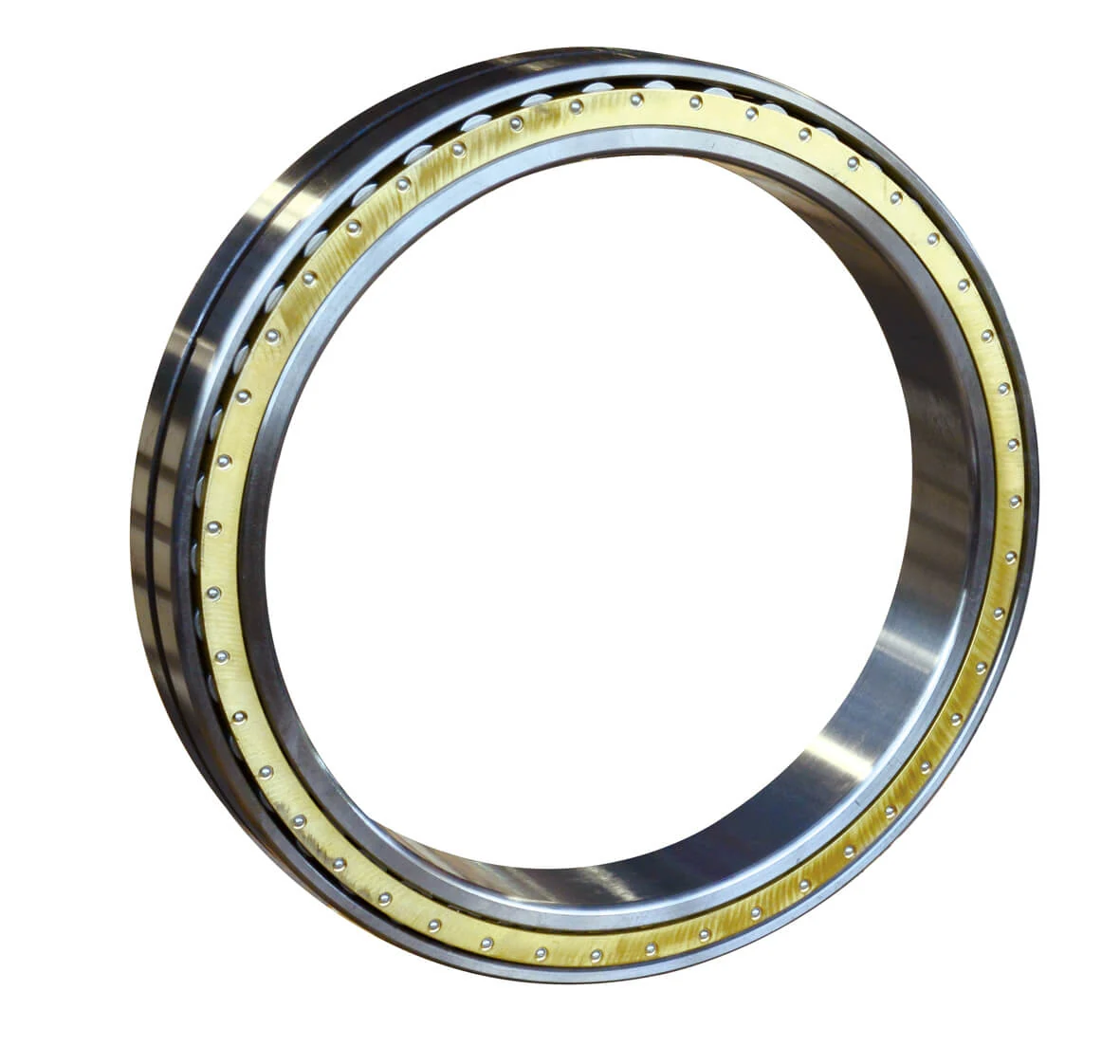
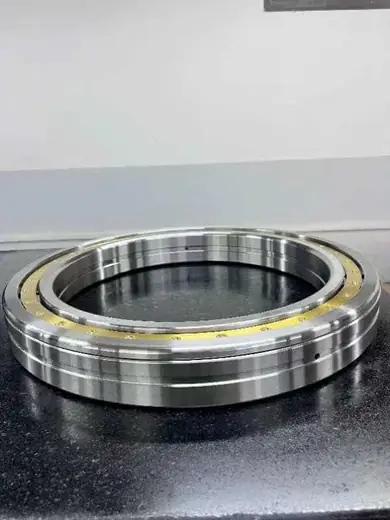
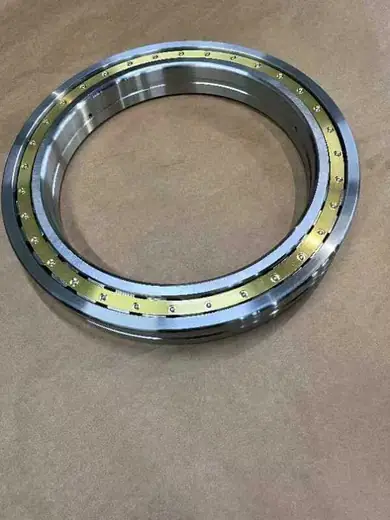
Cylindrical Roller Bearings for High Pressure Fracturing Pumps
Fracturing pumps run continuously above 15,000 psi, which is 103 MPa, at flow rates over 100 barrels per minute. High radial load capacity is the reason cylindrical roller bearings became the standard for power ends and connecting rod supports on triplex and quintuplex pumps.
- Service pressure above 15,000 psi or 103 MPa
- Flow rates over 100 barrels per minute
- For triplex and quintuplex pump designs
- Raceway hardness in the 62 HRC class
Key Benefits
What the bearing choice decides in a frac pump.
Radial Load Capacity First
High radial load capacity is the primary reason engineers select this bearing type for the power end, where plunger forces concentrate on the crankshaft.
Predictable Overhaul Planning
A bearing matched to the duty makes power end rebuild intervals something you plan rather than discover.
Fits Both Pump Architectures
The same bearing family covers triplex and quintuplex designs used across modern fracturing fleets.
Where It Is Used
Positions in the pump.
- Frac pump power end main bearings
- Connecting rod support bearings
- Triplex pump crankshaft support
- Quintuplex pump crankshaft support
Who It Is For
- Pressure pumping service companies
- Frac pump OEMs and rebuild shops
- Maintenance planners scheduling power end overhauls
- Buyers qualifying a second bearing source
Problems It Solves
- Bearing failures under sustained ultra high pressure duty
- Short life in connecting rod positions
- Unplanned pump downtime during a stage
- Single source dependency on bearing supply
Technical Features
Design points for oilfield service.
High Radial Load Rating
Line contact between roller and raceway carries the radial load that plunger reaction forces generate.
Hardened Raceways
Raceway hardness in the 62 HRC class resists the contact fatigue that this duty produces.
Built For Continuous Duty
The bearings are specified for continuous pumping rather than intermittent industrial service.
Specifications
Boundary dimensions follow the pump. The values below describe the service envelope.
| Service Pressure | Above 15,000 psi, 103 MPa |
|---|---|
| Flow Rate | Over 100 barrels per minute |
| Pump Types | Triplex and quintuplex fracturing pumps |
| Positions | Power end and connecting rod supports |
| Raceway Hardness | 62 HRC class |
| Bearing Type | Cylindrical roller bearing |
| Dimensions | To the pump housing drawing or existing designation |
Materials
- Bearing steel rings and rollers
- Hardened and ground raceways
- Selected cage or full complement construction per position
Manufacturing Process
Application Data
Pump type, position, pressure and speed are collected with the existing bearing designation.
Ring Manufacturing
Rings are turned, heat treated and ground to raceway geometry.
Roller Production
Rollers are ground and sorted so load sharing is even.
Assembly And Cleaning
The bearing is assembled, cleaned to oilfield standards and packed sealed.
Quality Control
- Raceway hardness verification
- Radial clearance measurement
- Roller geometry inspection
- Cleanliness check before packing
Customization Options
- Boundary dimensions to pump housing
- Clearance class for the installed fit and temperature
- Cage or full complement variant by position
- Batch marking for fleet traceability
Use Guide
- Follow the housing and shaft fit tolerances exactly
- Keep lubrication clean, contamination shortens life faster than load
- Replace bearings by set within the power end
- Record service hours per pump to refine intervals
How It Compares
Bearing options for the power end.
| Ball bearings | Line contact gives far higher radial load capacity than point contact for the same envelope. |
|---|---|
| Tapered roller bearings | Cylindrical rollers suit the pure radial loading of the power end without adding axial preload complexity. |
| Full complement version | Where roller count matters more than speed, the full complement variant raises capacity further. |
Related Products

Full Complement Cylindrical Roller Bearings for Frac Pumps
Cageless full complement bearings for frac pump power ends running at 100-150 MPa discharge pressure.
View Details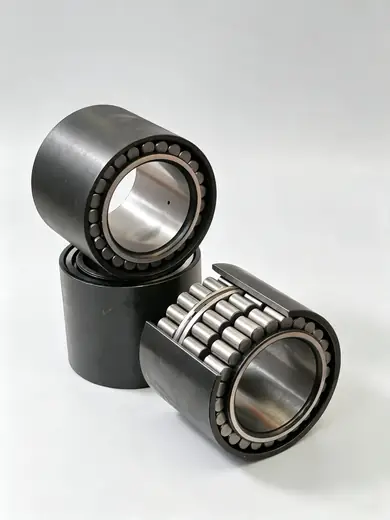
SL18 Series Bearings for Wind Energy
Full complement SL18 bearings for yaw and pitch systems with advanced sealing and traceability.
View Details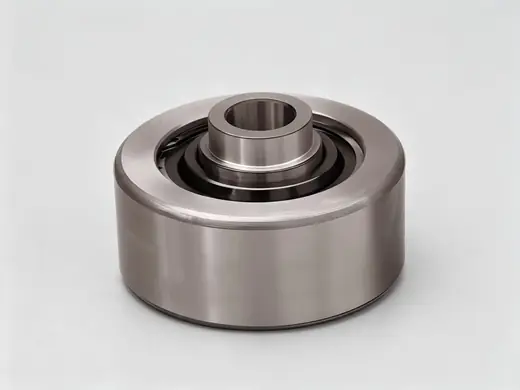
N28 Series Cylindrical Roller Wheels for Conveyor Chains
Through hardened conveyor chain rollers rated to 28 kN with precision ground running surface.
View Details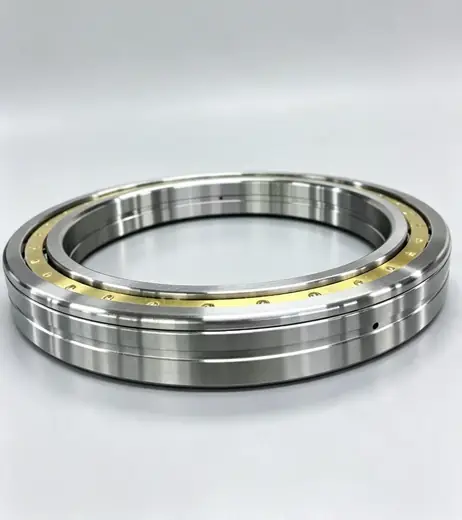
Full Complement Cylindrical Roller Bearings 20-1200 mm
SL series full complement bearings from 20 mm to 1200 mm for high radial load duty.
View DetailsRelated Technical Articles
How Frac Pump Bearing Quality Keeps A Fracturing Job On The Design Curve
Displacement, pressure and uptime are one chain in hydraulic fracturing, and the power end bearing sits in the middle of it.
Read MoreRoller Wheels And Why Conveyor Performance Ends At The Last Component
Belt tracking, energy consumption and wear patterns all trace back to the roller wheel, not the belt.
Read MoreCylindrical Roller Bearings for High Pressure Fracturing Pumps FAQ
Why are cylindrical roller bearings standard in frac pumps?
High radial load capacity. Fracturing duty means continuous pumping above 15,000 psi with flow over 100 barrels per minute, and the power end carries very large radial forces.
Do you cover both triplex and quintuplex pumps?
Yes, the same bearing family is used in power ends and connecting rod supports on both designs.
What raceway hardness do you supply?
Raceways are hardened into the 62 HRC class for contact fatigue resistance under this duty.
Can you match our current bearing designation?
Yes. Send the designation stamped on the bearing, or the housing and shaft dimensions with the clearance class.
Do you offer a full complement option?
Yes, for positions where extra roller count and load rating are more useful than high speed capability.
What do you need to quote?
Pump model and position, current bearing designation or boundary dimensions, operating pressure and speed, and annual quantity.
Qualify A Second Bearing Source
Send your bearing designation and pump data and we come back with an equivalent and a quotation.