

How Frac Pump Bearing Quality Keeps A Fracturing Job On The Design Curve
Displacement, pressure and uptime are one chain in hydraulic fracturing, and the power end bearing sits in the middle of it.
The Component In The Middle Of The Chain
A fracturing job succeeds by delivering the right displacement, holding target pressure and placing proppant at the designed concentration without interruption. Those parameters are not independent. They form a chain, and a break anywhere in it changes the fracture geometry.
The frac pump bearing sits at the centre of that chain. When it performs reliably the treatment curve stays smooth. When it fails, the whole operation deviates from the design.
Displacement Stability
Displacement is the single most critical parameter. A drop from 10 m³/min to 8 m³/min changes net pressure, fracture width and proppant transport, often permanently damaging the stimulated volume.
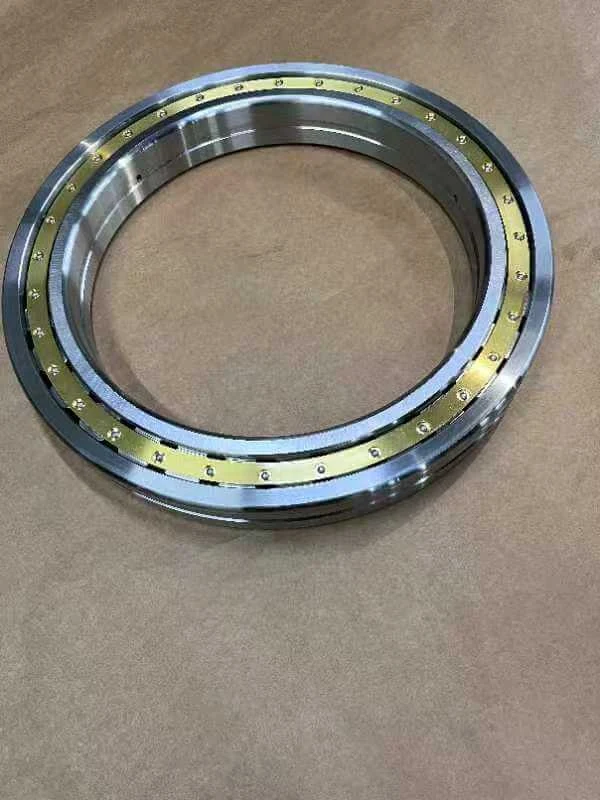
The bearing ensures that each rotation of the pump shaft transmits power without parasitic losses or irregular motion. A bearing with no mechanical play holds alignment under extreme load, so output matches the design curve.
Pressure Charts You Can Trust
Pressure charts tell engineers what is happening in the formation, but only if the equipment is not adding noise of its own. Worn or misaligned bearings generate pulsations and uneven torque, and those fluctuations have nothing to do with the reservoir.
False signals lead to poor decisions, such as adjusting sand ratios or starting a diversion based on an equipment artefact. A bearing running with tight clearances and good roller geometry suppresses mechanical vibration so the pressure curve reflects downhole conditions only.
Why The Cage Is Usually The Problem
Frac pump duty combines discharge pressure of 100 to 150 MPa with crankshaft speed of only 200 to 400 rpm and sharp pressure pulsations from reciprocating plunger motion. That is low speed, very high radial load, with high frequency alternating stress.
A standard caged bearing carries roller count at roughly 60 to 70 percent of theoretical maximum, and the cage is the part that deforms under pulsation induced acceleration. Full complement construction raises roller count to typically above 95 percent and removes the cage from the failure path.
- Discharge pressure 100-150 MPa in modern fleets
- Crankshaft speed 200-400 rpm, a low speed high load regime
- Single pump flow of 1 to 2.5 m³/min, more when pumps run synchronously
- Oil cleanliness of NAS 7 as a minimum requirement
What To Do About It
Two things change bearing life in this duty more than anything else. The first is construction: full complement bearings give a higher load rating inside the same housing bore, which also allows higher nominal pump power without enlarging the casting.
The second is contamination control. Oil cleanliness matters more than any other maintenance factor here, and no bearing specification survives dirty oil.
Products Mentioned In This Article

Full Complement Cylindrical Roller Bearings for Frac Pumps
Cageless full complement bearings for frac pump power ends running at 100-150 MPa discharge pressure.
View Details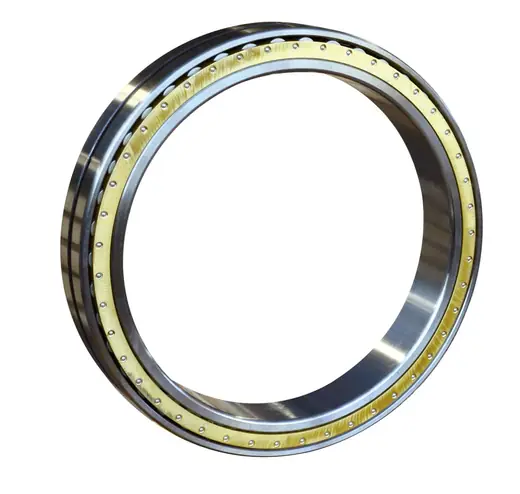
Cylindrical Roller Bearings for High Pressure Fracturing Pumps
Power end and connecting rod bearings for triplex and quintuplex frac pumps above 15,000 psi.
View Details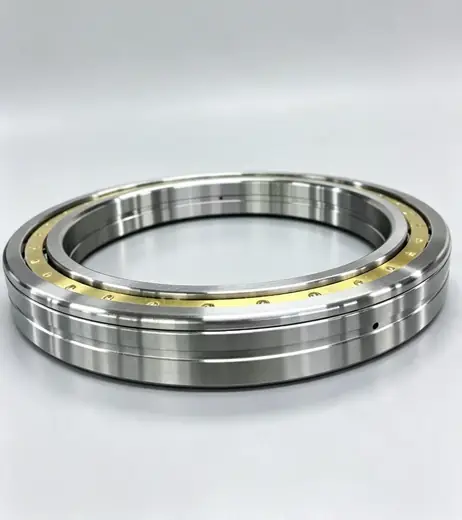
Full Complement Cylindrical Roller Bearings 20-1200 mm
SL series full complement bearings from 20 mm to 1200 mm for high radial load duty.
View DetailsReader Questions
Is a better bearing worth the extra component cost?
For a frac fleet the comparison is not bearing against bearing, it is component cost against non productive time on the pad. A modest increase in component cost buys longer overhaul intervals.
Can we uprate an existing pump this way?
Often yes. The higher load rating is gained inside the existing bore, so the power end casting does not need to change. We check the housing and shaft data first.
What oil cleanliness should we hold?
NAS 7 as a minimum. Contamination ends more bearing lives in this duty than load does.
Do you supply to our current bearing designation?
Yes. Send the designation stamped on the bearing or the boundary dimensions with the clearance class and we quote an equivalent.
Qualify A Bearing For Your Fleet
Send your bearing designation and power end data and our engineers reply within 24 hours.