Roller Wheels And Why Conveyor Performance Ends At The Last Component
Belt tracking, energy consumption and wear patterns all trace back to the roller wheel, not the belt.
The Overlooked Component
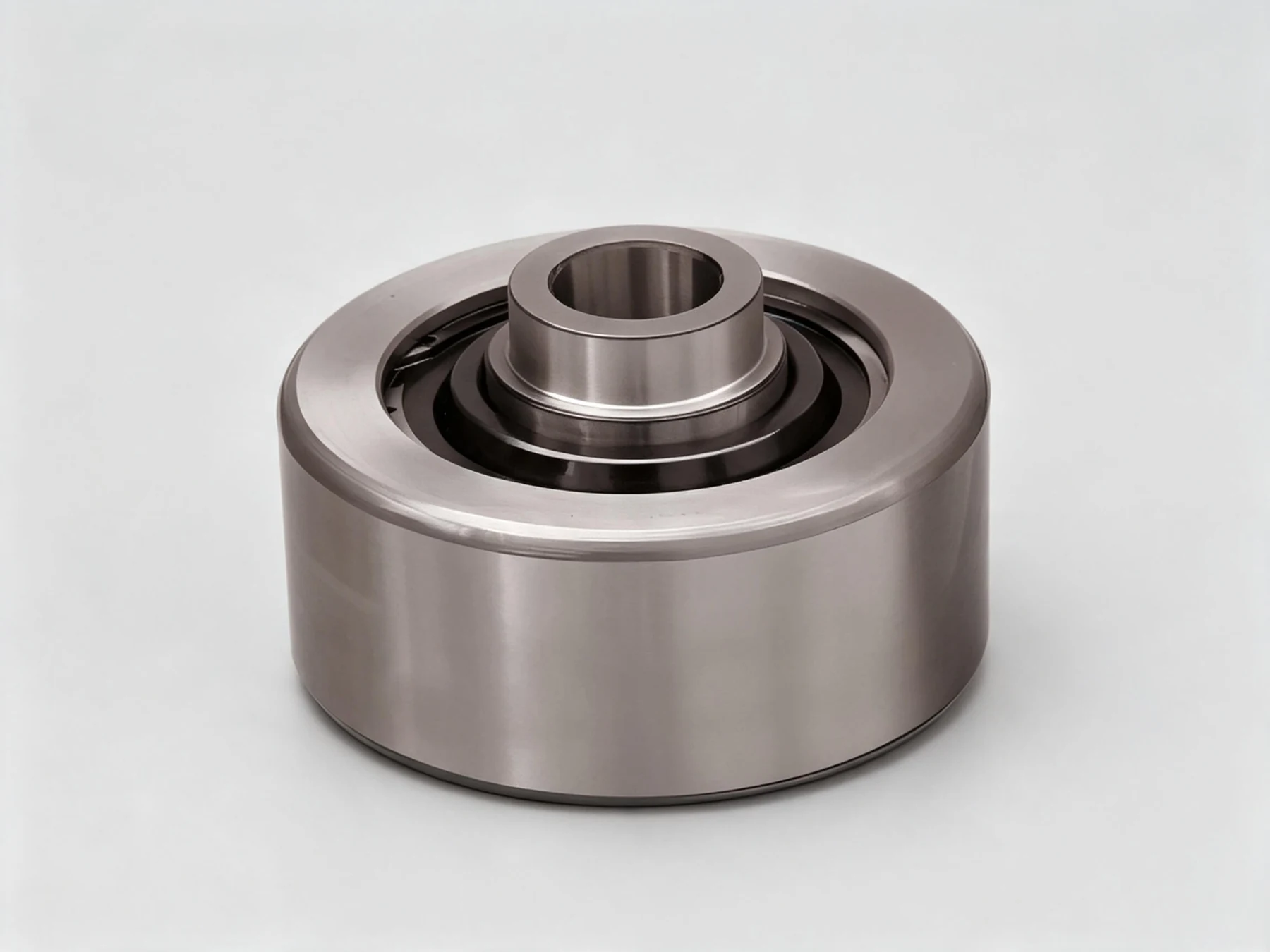
No high performance conveyor belt reaches its potential without the roller wheels underneath it. They support the belt, reduce friction and keep operation smooth under heavy load.
Roller wheels are not simple metal cylinders. They consist of precision machined shells, bearings, shafts and sealing systems, and their design directly affects belt tracking, energy consumption and wear patterns.
What Poor Rollers Cost
Worn or poorly designed roller wheels cause belt misalignment, excessive spillage and premature belt failure. Each of those turns into downtime and, in the case of spillage, into a safety issue as well.
In heavy industrial environments, underground mining with steel cable belts, cement plants and aggregate facilities with extreme abrasion and impact, roller quality directly determines the lifespan and operating cost of the whole conveying system.
Rolling Instead Of Sliding
Roller bearings roll on a support surface through cylinders, cones or spheres rather than sliding. That rolling action creates less friction, which means less heat generation, lower energy consumption and slower wear.
On a long conveyor that difference compounds. Drag added by deteriorating rollers is paid for in motor current every hour the line runs.
- Lower friction and heat than sliding contact
- Lower energy consumption across the conveyor length
- Longer service life in abrasive environments
- Easier maintenance when rollers are interchangeable
What To Specify
For chain conveyors in heavy plants, look at three things. Load rating against the real chain load, through hardening rather than a surface case so the roller does not deform, and sealing specified for the dust the plant actually produces.
The N28 series covers bore from 19.2 mm to 41.75 mm with outside diameter from 85 mm to 175 mm, dynamic ratings of 133 to 306 kN and static ratings of 174 to 426 kN, with a precision ground running surface.
Products Mentioned In This Article
N28 Series Cylindrical Roller Wheels for Conveyor Chains
Through hardened conveyor chain rollers rated to 28 kN with precision ground running surface.
View Details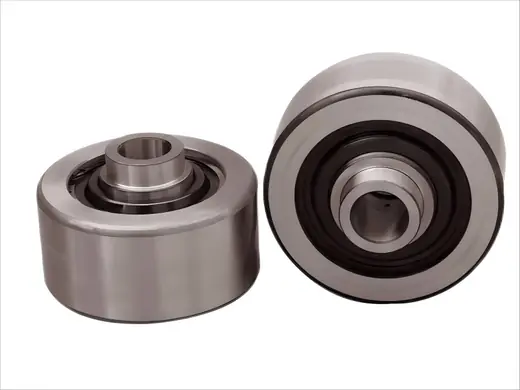
N28 Series Cylindrical Roller Wheel
Chain conveyor roller wheels, d 19.2-41.75 mm, D 85-175 mm, Cr 133-306 kN.
View Details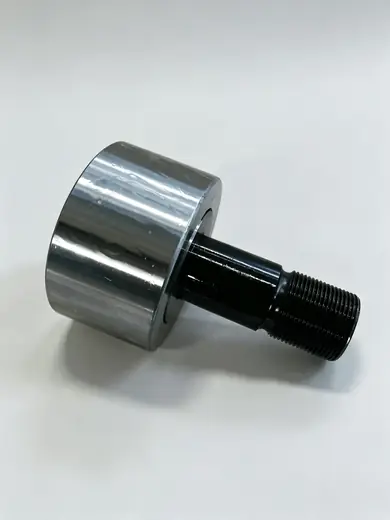
Bolt Type Cylindrical Roller Bearings NUKR 35
Stud type track roller bearings with thick walled outer ring for cam drives and conveyor systems.
View DetailsReader Questions
Why through hardened rather than case hardened?
Through hardening keeps the whole section hard, which resists deformation under sustained high load. A surface case can collapse underneath when the load is high enough.
How do I know the rollers are worn?
Rising drag and motor current, belt misalignment and spillage are the usual early signs, often before anything looks visibly wrong.
Can you match our existing rollers?
Yes. Send bore, outside diameter and a sample or designation, with the chain load and environment, and we quote the equivalent.
Should we replace rollers individually?
Replace by section. Mixing new and worn rollers along a chain produces uneven load sharing and the new ones wear faster.
Re Roller Your Conveyor
Send your roller dimensions and chain load and we come back with a size and quotation.