
Tension Control In Push Pull Pickling Lines Section By Section
Typical tension ranges for entry, pickling, rinse, dry and exit sections, and what each one is protecting.
Why Tension Control Decides Quality
Push pull pickling lines prepare steel strip by removing surface impurities through acid treatment. Effective tension control through the line is what keeps the strip running smoothly and the product quality consistent.
Tension ranges depend on steel type, thickness, width, acid bath conditions and the equipment itself, so the figures below are typical values to work from rather than settings to copy.
Entry And Pickling Sections
Entry tension typically runs between 50 and 150 N/mm², which is what keeps the strip entering the pickling section straight.
Pre pickle tension is maintained at 100 to 200 N/mm² to stabilise the strip before the acid bath and prevent slack or fluctuation. Inside the bath, in pickle tension is held between 80 and 150 N/mm² so the strip moves smoothly without wrinkling or breaking.
- Entry tension 50-150 N/mm²
- Pre pickle tension 100-200 N/mm²
- In pickle tension 80-150 N/mm²
- Rinse tension 100-200 N/mm²
- Dryer tension 120-220 N/mm²
- Exit tension 150-250 N/mm²
Rinse Dry And Exit
Rinse tension is maintained between 100 and 200 N/mm² to stabilise the strip during rinsing, and dryer tension is controlled at 120 to 220 N/mm² so the strip stays straight and does not deform while drying.
Exit tension runs between 150 and 250 N/mm², which is what allows smooth coiling or cutting while holding flatness and dimensional accuracy.
Where The Scale Breaker Fits
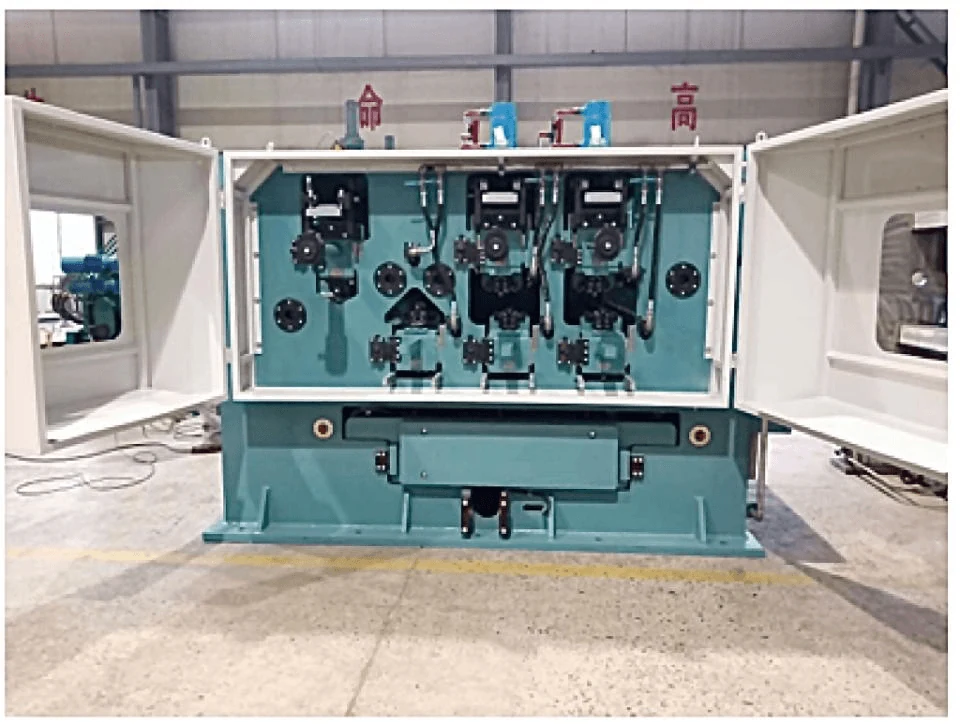
The scale breaker sits at the front of this sequence, and its elongation setting has to be coordinated with the tension profile rather than set in isolation.
If entry tension is unstable, elongation through the scale breaker varies coil to coil, and descaling consistency varies with it. Tension control and scale breaking are one system, not two.
Products Mentioned In This Article
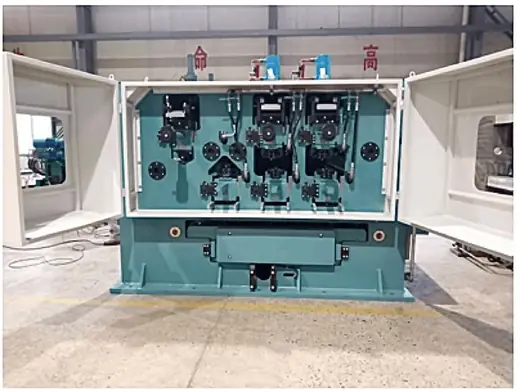
Scale Breaker for Push Pull Pickling Line 800-1350 mm
Tension leveler type scale breaker for push pull pickling lines handling 800-1350 mm hot rolled strip.
View Details
Scale Breaker for Pickling Lines
Pickling line scale breaker fracturing oxide by stretch and bend, saving acid and correcting shape.
View Details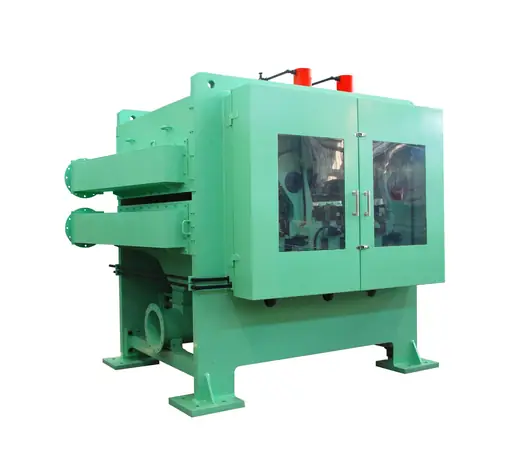
Scale Breaker in 1850 mm Pickling Lines
Wide line scale breaker for 1850 mm pickling lines, fracturing oxide and correcting hot rolled strip.
View Details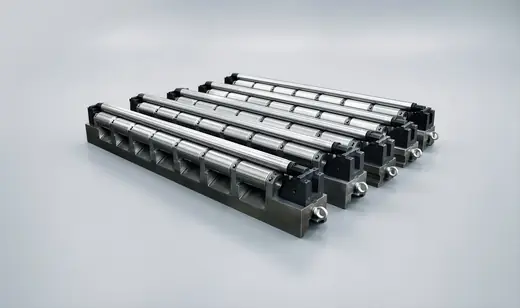
High Precision Scale Breaker Roll Cassettes for Pickling Lines
Entry section bending roll cassettes for pickling lines serving automotive and electrical steel.
View DetailsReader Questions
Are these tension values universal?
No. They are typical ranges. Actual values depend on steel type, thickness, width, acid bath conditions and your equipment setup.
Why is exit tension highest?
Exit tension of 150 to 250 N/mm² is what allows smooth coiling or cutting while maintaining flatness and dimensional accuracy.
What happens if in pickle tension is too low?
The strip can wrinkle or move unevenly through the bath. Too high and you risk breakage, which is why 80 to 150 N/mm² is the usual window.
How does this affect the scale breaker?
Unstable entry tension makes elongation vary coil to coil, so descaling consistency varies too. The two have to be set together.
Review Your Line Tension Profile
Send your line data and current tension settings and our engineers comment on the scale breaking section.