
Steatite Ceramic Parts
Ceramic Heating Strips and Insulator Rings
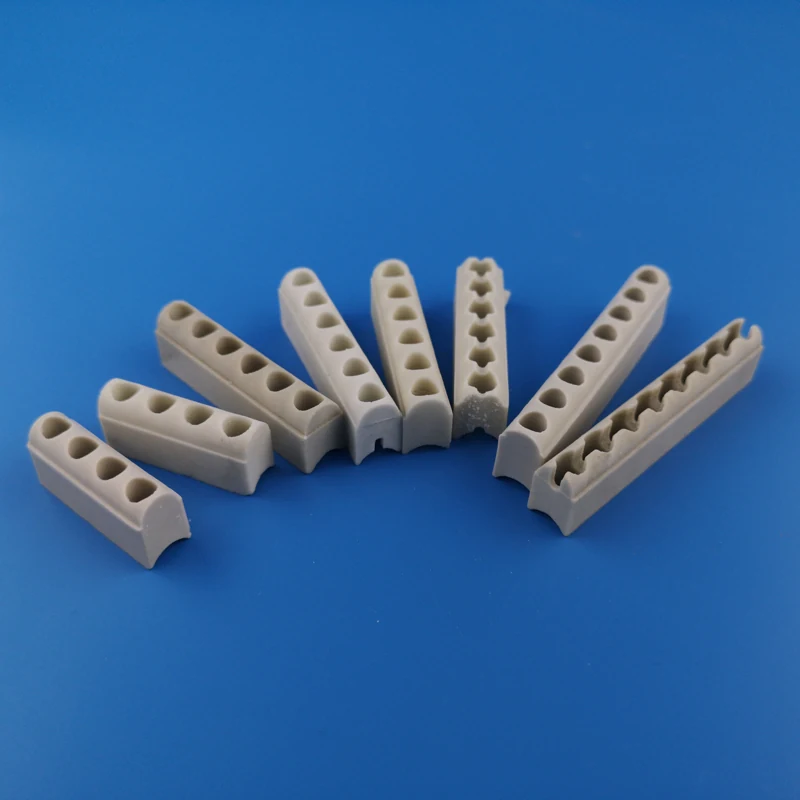
One to eight hole strips for flexible ceramic pad heaters
A ceramic heating strip is an electrothermal component sintered from high performance ceramic and normally combined with a resistance heating layer. The result carries heat where a metal element would oxidise away: strips operate stably between 1000 and 1800 degrees C with a maximum working temperature of 1650 degrees C, or 3000 degrees F, and are supplied in one to eight hole configurations for 30 V, 60 V and 80 V flexible ceramic pad heater assemblies.
Key Benefits
- Stable operation between 1000 and 1800 degrees C where metal elements fail
- Maximum working temperature of 1650 degrees C, equivalent to 3000 degrees F
- One to eight hole geometry so one part family covers several heater ratings
- Better corrosion resistance and longer service life than traditional metal heating elements
- Efficient thermal conductivity combined with thermal shock resistance
Problems It Solves
- Metal heating elements oxidising and failing early at high process temperature
- Heater pads that cannot follow a curved or irregular workpiece
- Short service life driving repeated heater replacement on production equipment
Who It Is For
- Heater manufacturers assembling flexible ceramic pad heaters
- Semiconductor equipment builders specifying heating stages
- Appliance and aerospace test equipment designers
Application Scenarios
30 V, 60 V and 80 V flexible ceramic pad heaters
Semiconductor wafer processing and CVD or PVD coating heating stages
High end electric ovens and infrared heating modules
Engine component testing and high temperature resistant sensors in aerospace
Technical Features
- Maximum working temperature 1650 degrees C, 3000 degrees F
- Stable operation in the 1000 to 1800 degrees C range
- One to eight hole strip geometry
- Supplied in white, grey and pink bodies
Manufacturing Process
Raw material preparation, forming, surface grinding, internal and external diameter grinding and precision CNC machining are all carried out in house.
Materials
- Zirconia ZrO2
Specifications
| Size | 1-8 hole |
|---|---|
| Colour | White, grey, pink |
| Maximum working temperature | 1650 degrees C, 3000 degrees F |
| Operating range | 1000 - 1800 degrees C |
| Application | 30V / 60V / 80V flexible ceramic pad heater |
Figures are taken from the published product specification. Values not listed are marked TBC and confirmed against your drawing before quotation.
Quality Control
- Hole pitch and strip dimensions checked against the drawing
- Insulation condition verified before packing
- Inspection report issued to your drawing on request
Certifications
No third party certification documents are published for this product. Every shipment is inspected to your drawing with an inspection report issued. Certification status is TBC and confirmed on request.
Customization Options
- Hole count from one to eight, pitch set by your drawing
- Strip length and cross section to suit your pad layout
- Colour selected from white, grey or pink
Comparison With Other Ceramics
Compared with a traditional metal heating element, the ceramic strip offers better corrosion resistance and a longer service life at the same duty. Compared with a steatite insulator, the heating strip is designed to carry the element rather than only to isolate it.
Use Guide
- Confirm the pad voltage, 30 V, 60 V or 80 V, before selecting the hole configuration
- Support the strip along its length so it is not loaded in bending when hot
- Allow expansion clearance at the ends of a strung strip assembly
Industries Using This Part
Related Application Notes
Related Guides
Industrial Ceramic Insulator Heating Ring Ceramic Strip FAQ
What is the maximum working temperature?
1650 degrees C, which is 3000 degrees F.
What hole configurations are available?
One to eight hole strips, with the pitch set by your drawing.
What voltages are these used at?
The strips are used in 30 V, 60 V and 80 V flexible ceramic pad heater assemblies.
How does the life compare with metal elements?
Ceramic heating strips offer better corrosion resistance and a longer service life than traditional metal heating elements.
Which industries use them?
Industrial heating, semiconductor manufacturing including wafer processing and CVD or PVD coating stages, laboratory equipment, high end appliances and aerospace testing.
Can you make a custom strip?
Yes, our main business is OEM and ODM. Send your drawing with the hole count and pitch.
Related Products
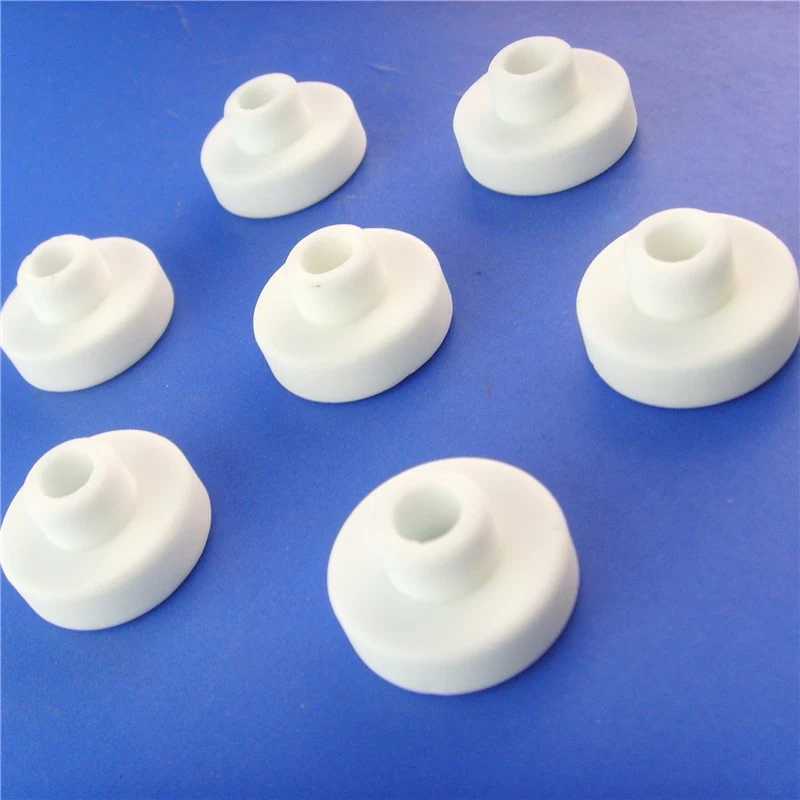 Steatite Ceramic PartsSteatite Ceramic Beads and BushingsTalc based insulators for element supports and terminal workView specifications
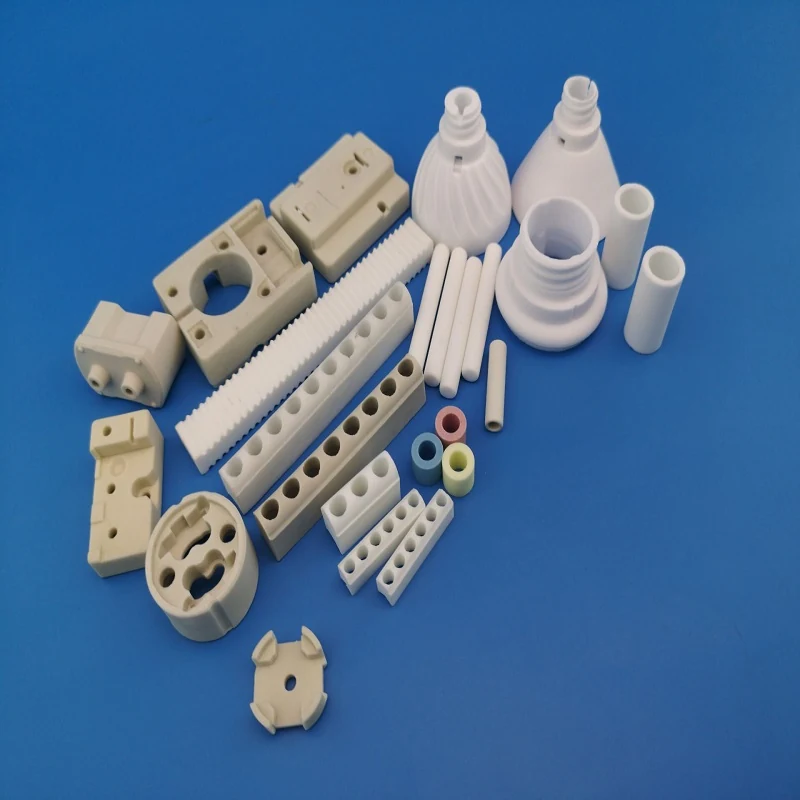 Steatite Ceramic PartsSteatite Ceramic InsulatorSticks strips channels and blocks rated for 1100 degree serviceView specifications
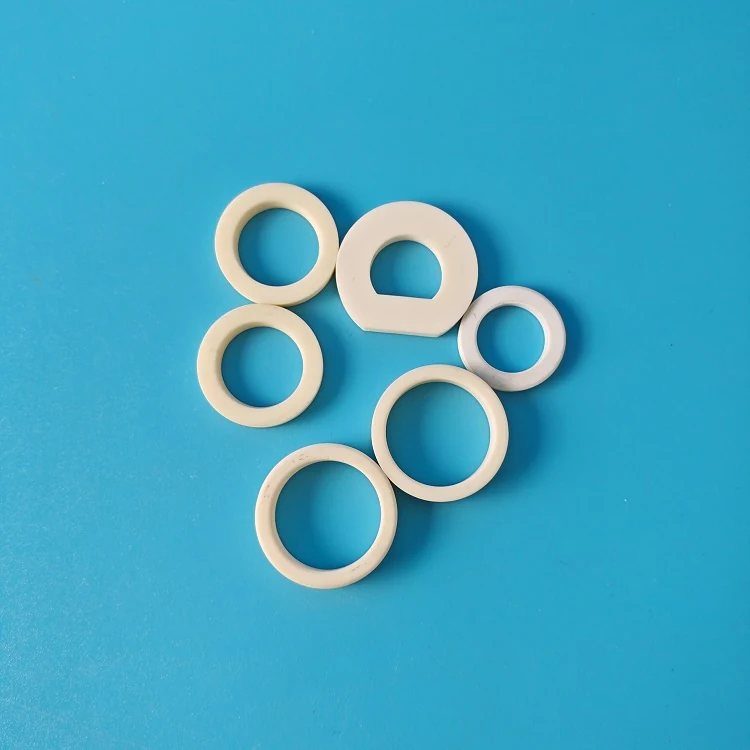 Al2O3 Alumina Ceramic Parts99% 95% Al2O3 Alumina Ceramic RingWear rings and insulating collars machined to your drawingView specifications
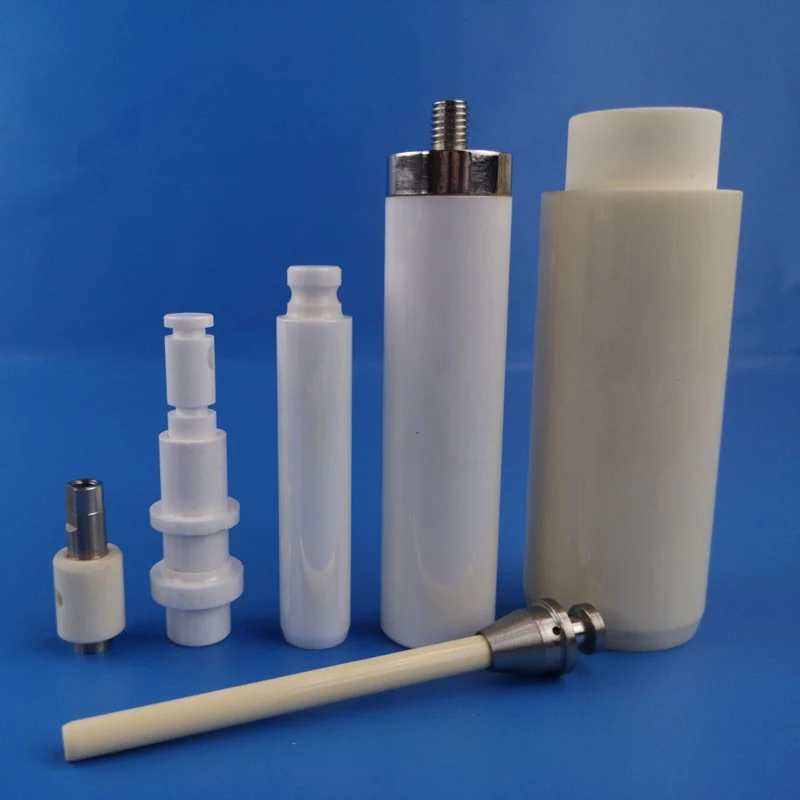 Zirconia Ceramic PartsZirconia Ceramic PlungersPlungers that keep their diameter in abrasive and corrosive dosing dutyView specifications
Request a Quote on Industrial Ceramic Insulator Heating Ring Ceramic Strip
Send a 2D or 3D drawing with the critical dimensions marked. Samples are free of charge and delivered in 4 to 7 working days.
Send a 2D or 3D drawing by WhatsApp or email. Samples in 4 to 7 working days.