Flatbed Transport Semi-trailer Three axles Hydraulic Flatbed Container Lowbed Heavy Truck Side Tipper Trailer
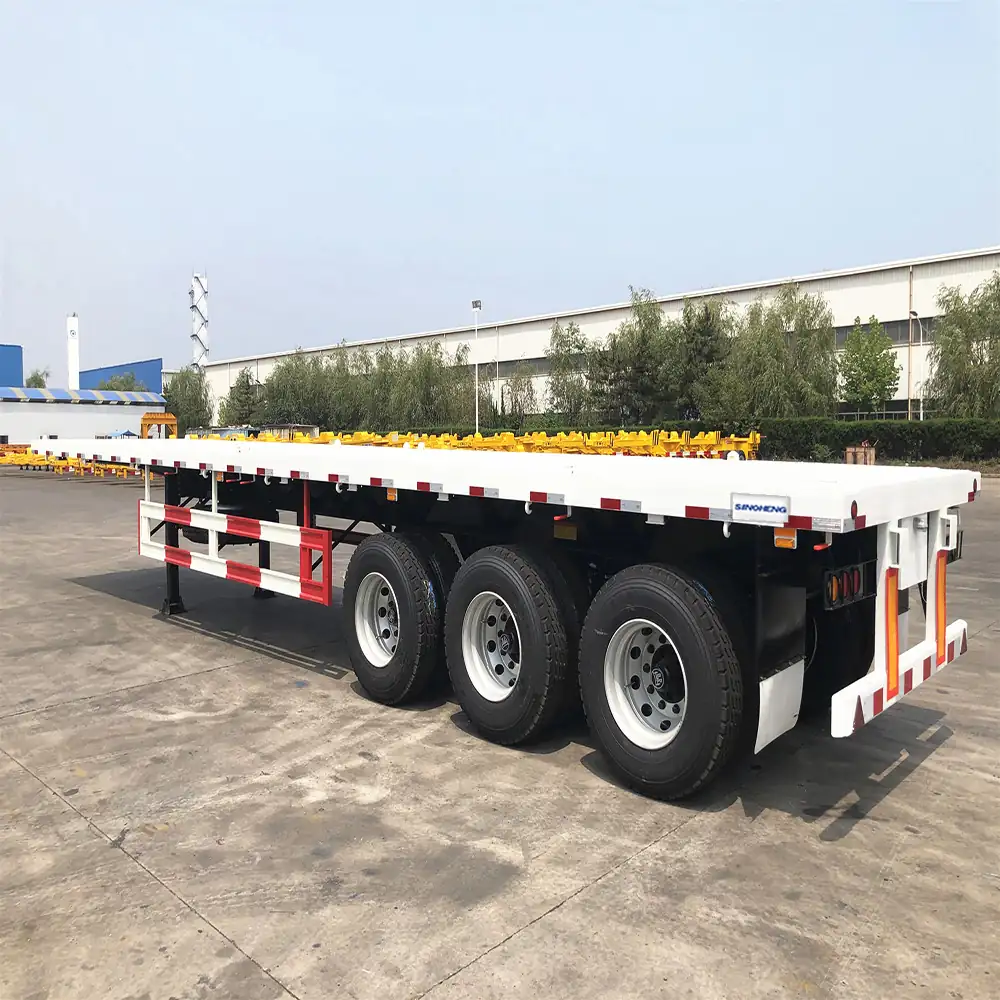
Three-axle flatbed, 12500*2500*1550mm, 34000kg payload at only 6000kg tare.
View Specification
Flatbed semi-trailers and lowbed trailers look similar: both are open platforms without walls. The difference is in the frame, and it decides what you can carry. This comparison sets out structure, application, performance and safety, so you can make the decision before rather than after you buy.
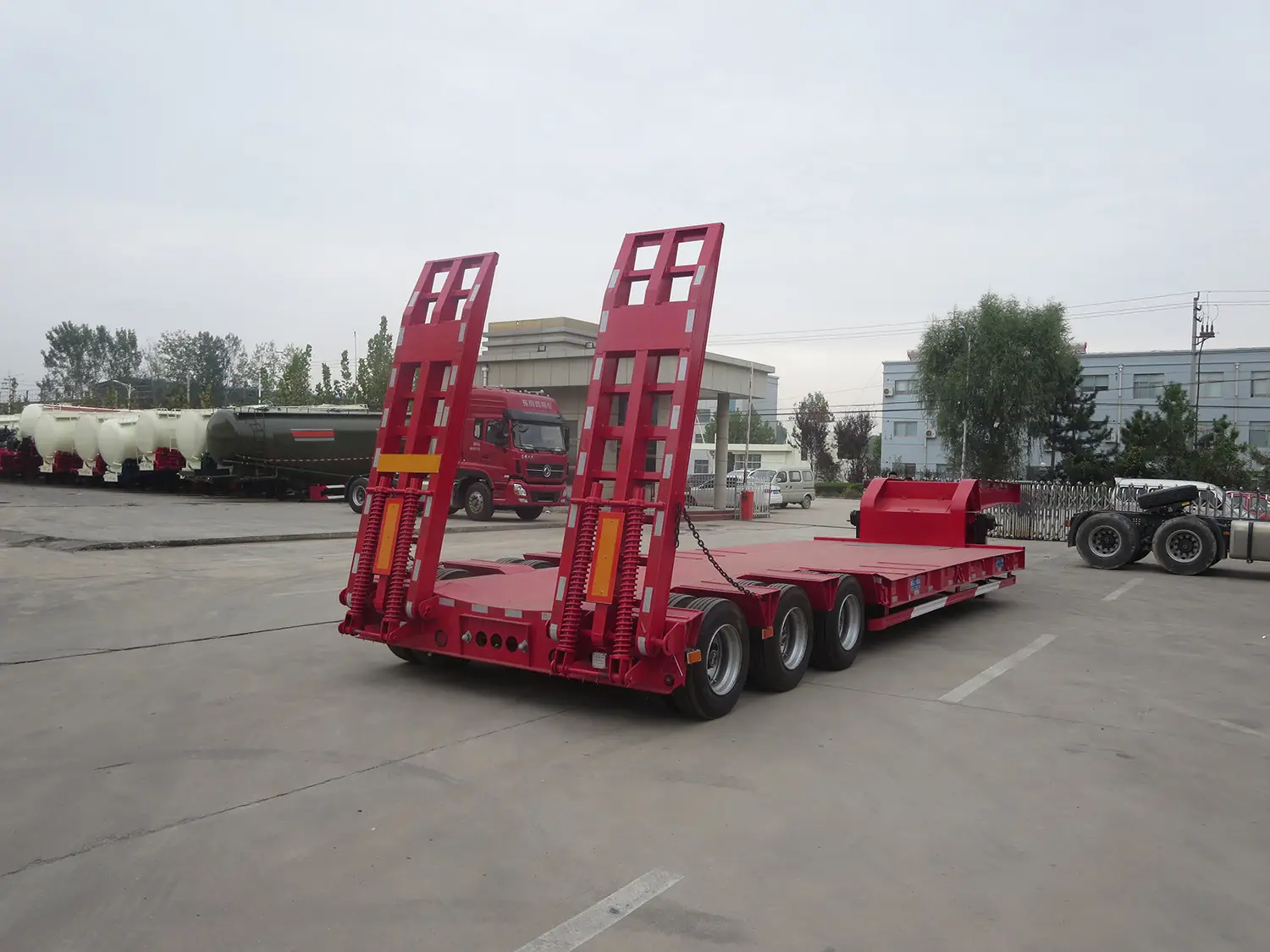
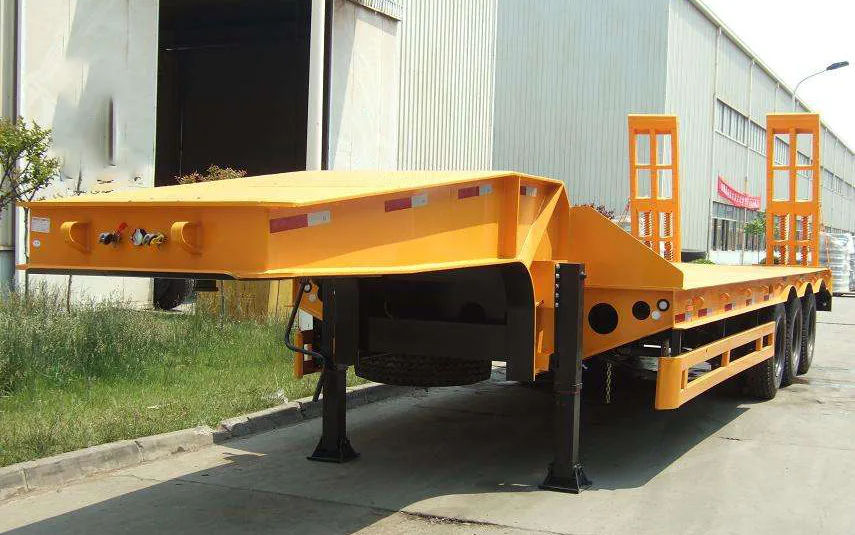
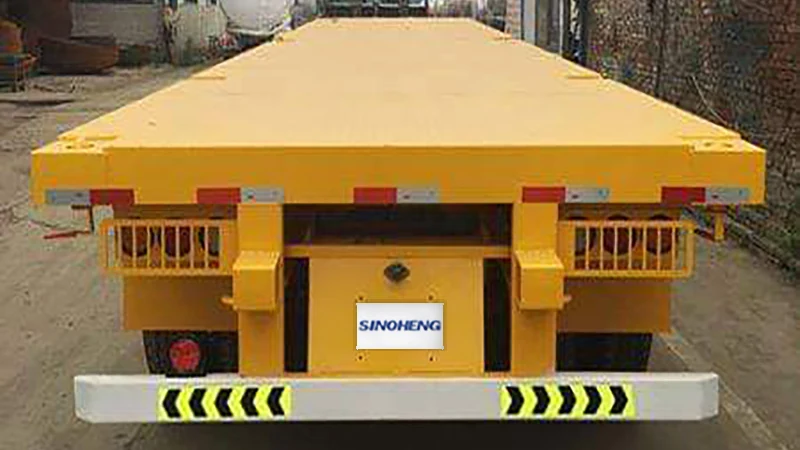
A flatbed is an open platform with no fixed sides or dividers, built with high-strength carbon steel main beams on a through-beam chassis with appropriately sized web plates. A lowbed has a recessed well-type frame: gooseneck at the front, a lowered cargo platform in the middle, and the wheel carriage at the rear. The lowered deck is what increases usable load space for oversized cargo, and it is the whole reason the family exists.
See Low Bed Truck Trailer models
The flatbed is the universal tool of global transport: high versatility, good road surface adaptability, suitable for long-distance work, and able to load and unload from any direction. The lowbed is for large, heavy and non-dismountable goods such as excavators, and it has stronger adaptability to complex road conditions because the load sits lower.
See Flatbed Semi Trailer models
A flatbed carries large, heavy cargo with strong load-bearing capacity and stays efficient and stable over long distances. A lowbed's low centre of gravity makes transporting tall cargo more stable, which matters most for oversized loads and on poor road surfaces where a high load would otherwise sway.
On a flatbed, the support beams on the upper part of the frame provide reinforcement that makes the deck relatively stable and safe. A lowbed is a relatively simpler design with a robust structure and usually has a longer service life than a flatbed, because there is less to fatigue.
On both families the key components come from leading brands: axles, suspensions, tyres and braking from FUWA, BPW and WABCO, which is what delivers reliable driving stability and braking. Flatbeds are available with 3, 4 or 5 axles in 40, 60 and 80 tonne capacities, and carry container locks for one 40 foot or two 20 foot boxes. Manufacturing includes robotic welding, anti-rust sandblasting and two-layer painting.
Measure your tallest load. If it clears every bridge, cable and gantry on your route sitting on a normal deck, a flatbed is lighter, cheaper and more versatile. If it does not, you need a lowbed, and the deck height you choose should be worked backwards from the lowest structure on the route rather than forwards from a catalogue.
Three-axle flatbed, 12500*2500*1550mm, 34000kg payload at only 6000kg tare.
View SpecificationLHL9374TDP with a 700mm deck height, long 8920mm wheelbase and four deck length options.
View SpecificationSelf-loading hydraulic platform trailer, 53000kg payload at 7000kg tare, 2, 3 or 4 axles.
View SpecificationHydraulic detachable gooseneck lowbed, 15600*3000*3140mm, 40 to 80 tonne payload with WABCO brakes.
View SpecificationFrom 6000kg tare with 34000kg payload, plus self-loading platforms
Deck heights 700-1100mm, ramp angles 13-35 degrees, up to 120 tonnes
A working comparison of the ten semi-trailer types we build most often, what each is actually for, and how to pick the one that matches your cargo and your roads.
How trailer pricing actually works, what moves the number, and reference FOB prices for a range of SINOHENG models.
Daily inspection, regular servicing and seasonal care, and why most premature trailer failures are maintenance problems rather than manufacturing defects.
A small one, yes. The limit is height rather than weight: a machine on a normal deck often ends up over the clearance limit for bridges and cables on the route.
Not inherently, but ground clearance under the low deck is less, so rough site accesses need more care. Where site ground is very uneven, a higher deck setting is usually the better choice.
The lowbed, generally. It is a simpler and more robust structure with less to fatigue.
If tall plant is more than a small share of your work, buy the lowbed. A flatbed cannot carry what a lowbed carries, but a lowbed can carry most of what a flatbed carries, less efficiently.
Send your operating conditions and we will turn the guidance above into a configured trailer and a price.