Flatbed Transport Semi-trailer Three axles Hydraulic Flatbed Container Lowbed Heavy Truck Side Tipper Trailer
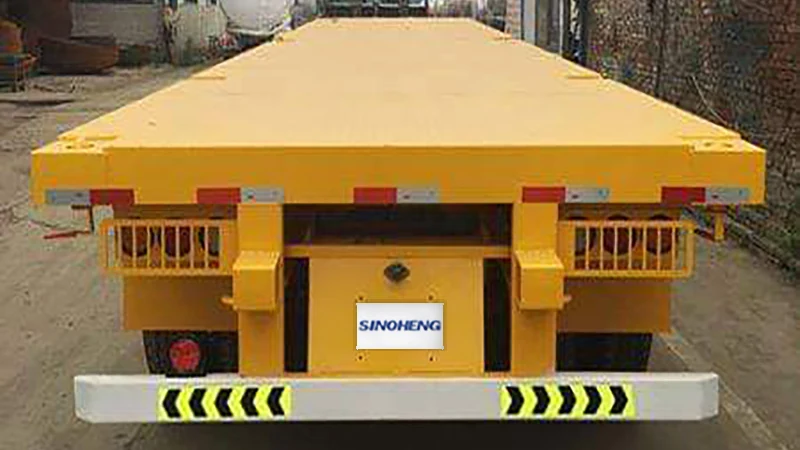
Three-axle flatbed, 12500*2500*1550mm, 34000kg payload at only 6000kg tare.
View Specification
Buyers usually arrive knowing what they want to carry, not which trailer family carries it. This guide sets out the ten most common semi-trailer types, the cargo each is designed around, and the structural feature that defines it. The comparison is the useful part: most purchasing mistakes come from choosing between two families that look similar in a photograph but solve different problems.
A continuous beam structure with open stake sides. Built for agricultural produce, baled feed and bagged goods that need containment and airflow at the same time. The stakes hold the load without trapping moisture, which is why an enclosed body spoils produce that a fence trailer carries fine. Loading and unloading is simple and the structure is light. Fence height is the decision that matters: low for bagged cargo where forklifts reach in, tall for livestock and bulky low-density freight.
See Fence Truck Trailer models
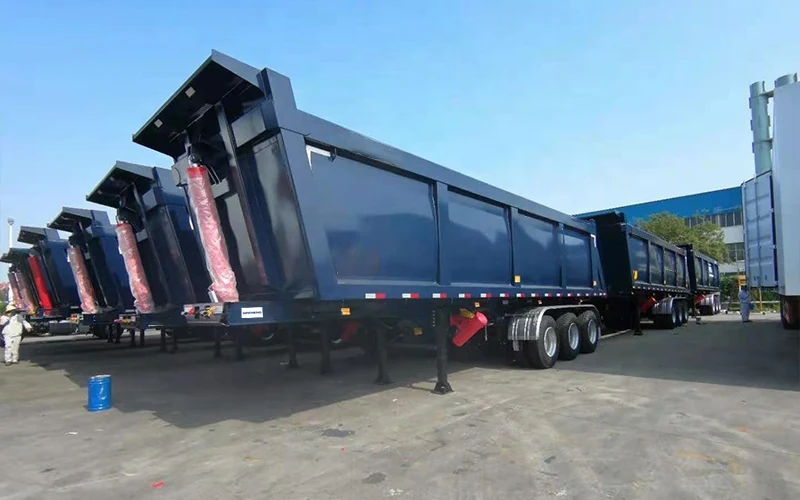
Available with rectangular and U-shaped bodies, and suited above all to bulk cargo handling. The body profile is the choice: a U shape has no corners for wet sand or sticky material to pack into, so it releases cleanly, while a rectangular body carries squared and mixed loads and takes rock impact well. Rear tipping is more stable on soft ground; side tipping places material along a road edge where there is no rear clearance.
An open platform with no fixed sides or partitions, so it can be loaded and unloaded from any direction. The chassis uses a through-beam structure with a moderate web height, balancing strength against weight. It is the most universal tool in global transport: high versatility, good road adaptability and suitable for long distance work. Container locks let one 40 foot or two 20 foot boxes be carried, and axle counts of 3, 4 or 5 cover load capacities of 40, 60 and 80 tonnes.
See Flatbed Semi Trailer models
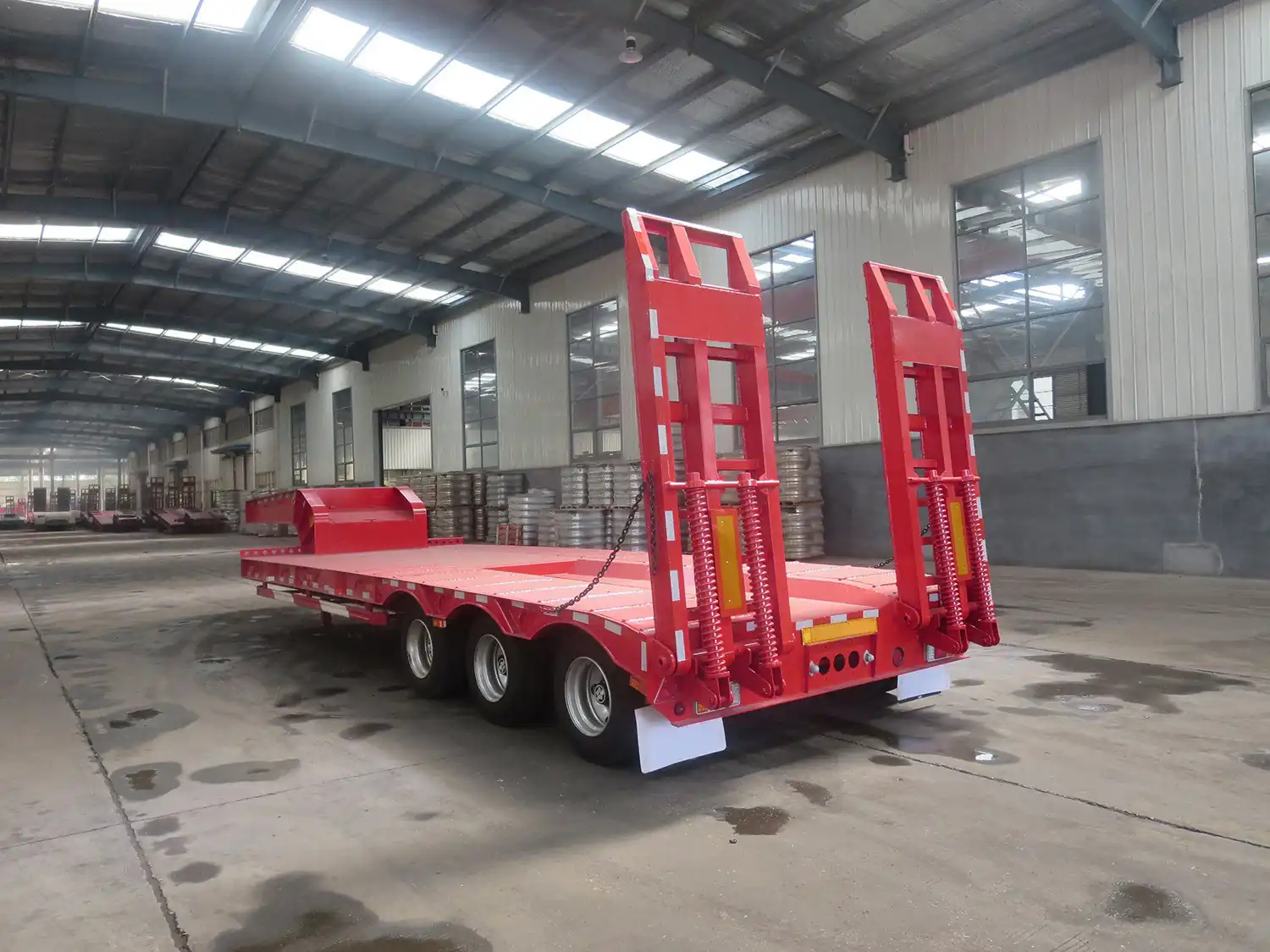
A drop-deck or well-type frame with a low centre of gravity: gooseneck at the front, the cargo platform in the middle at the lowest point of the frame, and the wheel carriage at the rear. Built for large, heavy, non-dismountable cargo such as excavators. The low deck makes tall loads stable and keeps them under height limits, and the structure is relatively simple, which usually gives it a longer service life than a flatbed.
See Low Bed Truck Trailer models
An enclosed tank body for long-distance transport of liquid cargo, with sealing performance, carrying capacity and safety as the defining requirements. Tank material is the main decision: aluminium alloy saves several tonnes of tare weight that becomes payload on every trip, while carbon steel costs less and can be repaired by any competent local workshop. Compartment and valve layout determines whether the tanker can serve a multi-drop route.
See Oil Tank Trailer Truck models
Typically a double-cone inclined horizontal tank using pneumatic conveying for rapid, low-residue unloading. Built for dry granular materials such as cement, flour and fly ash. The inclined floor is what lets powder run to the discharge outlet under gravity instead of bridging. Tank volume must be calculated from material density: a tank sized for cement runs part empty on fly ash.
See Cement Tank Trailer models
Most use a frame structure and support multimodal transport, carrying 20 and 40 foot containers or containerised cargo. Because the legal gross is fixed and the container weight is fixed, chassis tare weight is the number that decides earnings: every kilogram of trailer is a kilogram the box cannot legally carry. Tipping versions add hydraulics that tilt the container for gravity discharge of bulk.
See Container Tipping Trailer models
Front and rear walls with side curtains and a roof canopy, designed for multi-scenario transport. The wide range of applications and improved cargo security are the draw. The practical limitation is that curtains tear and stop sealing after a few seasons of forklift contact, which is why rigid drop sides and hydraulic wing panels are often the better long-term answer.
See Other Truck Trailer models
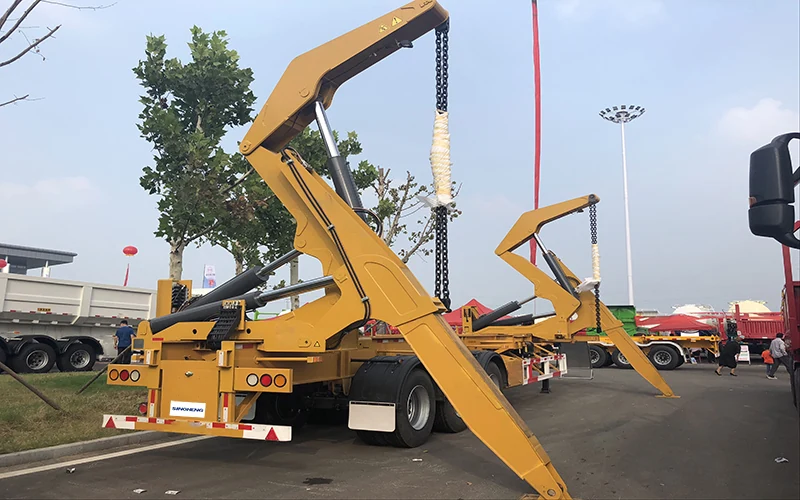
Enables rapid, flexible container loading and unloading independently, without relying on other equipment. That is the entire point: a site with no reach stacker or crane cannot otherwise receive a container at all. The onboard crane and stabilizers do the work, and on our build the hydraulic system also tips the container to 45-60 degrees so bulk cargo slides out under its own weight.
See Container Tipping Trailer models
A semi-trailer with removable or flip-up side panels, for steel, building materials, equipment, bagged goods and other irregular or oversized cargo. It performs well on loading and unloading speed, cargo compatibility and operational convenience, because a forklift can work from either side instead of queuing at a rear door.
Three-axle flatbed, 12500*2500*1550mm, 34000kg payload at only 6000kg tare.
View SpecificationLHL9383TDP three-axle lowbed, 38000kg gross, 33 degree departure angle and five deck height options.
View Specification38cbm U shape stone and sand tipper, 9800*2500*3800mm, 50 tonne payload on FUWA 16T axles.
View SpecificationSelf-loading container side lifter, 37000kg lifting capacity, Kubota-powered crane and 40000kg gross.
View SpecificationFrom 6000kg tare with 34000kg payload, plus self-loading platforms
Deck heights 700-1100mm, ramp angles 13-35 degrees, up to 120 tonnes
Rear, side and U-shape tipping bodies, 2 to 6 axles, 30 to 80 tonnes
Skeletal chassis from 5500kg tare, tipping chassis and 37000kg side lifters
Flatbeds and lowbeds both have open platforms and are easily confused. The structural difference decides which one your cargo can legally travel on.
How trailer pricing actually works, what moves the number, and reference FOB prices for a range of SINOHENG models.
Daily inspection, regular servicing and seasonal care, and why most premature trailer failures are maintenance problems rather than manufacturing defects.
Fence, dump, flatbed, lowbed and container trailers are the highest-volume families. Tank trailers follow, and side lifters and wing trailers are specialist tools that pay back only in the right operation.
The flatbed is an open platform at normal deck height, best for containers, steel and palletised freight. The lowbed has a dropped deck for tall machines that must stay under a height limit. We cover the comparison in detail in a separate article.
Partly. A sidewall trailer with container locking and a side tipping function covers bulk, containers and general cargo, though not as well as a dedicated unit does each job. For mixed contracts the utilisation is usually worth more than the specialisation.
Describe your cargo, your loading method and your worst road to us. The answer is usually obvious once those three things are on the table.
Send your operating conditions and we will turn the guidance above into a configured trailer and a price.