Low bed/Low Flatbed Three axles Semi Trailer China factory supplier
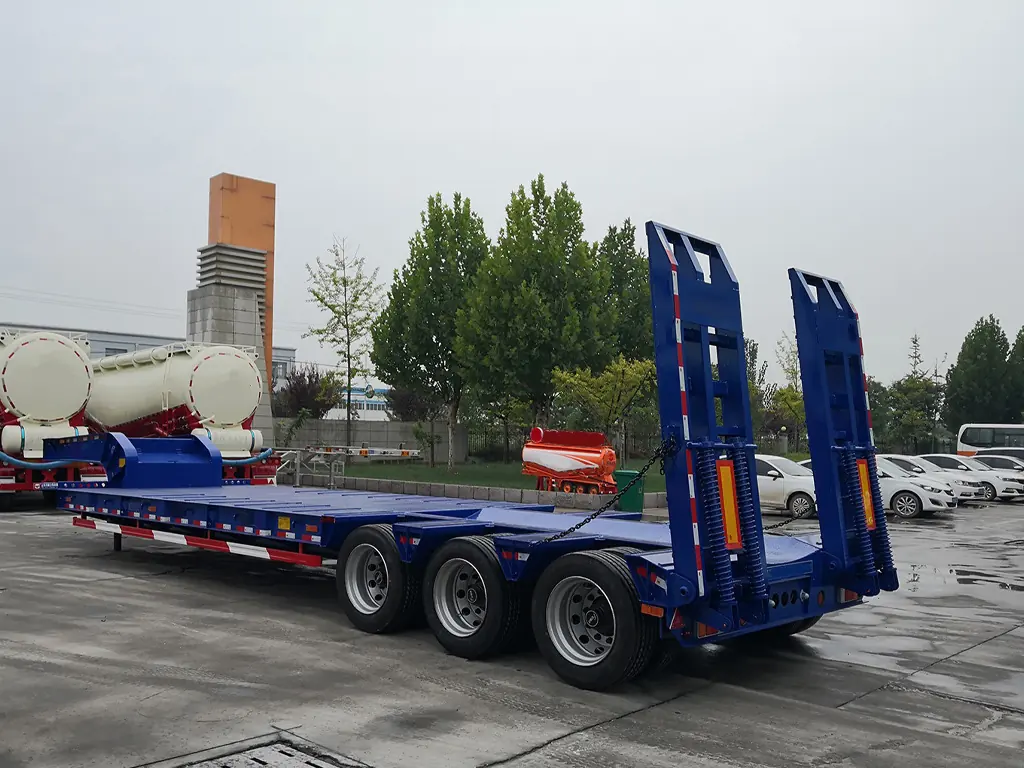
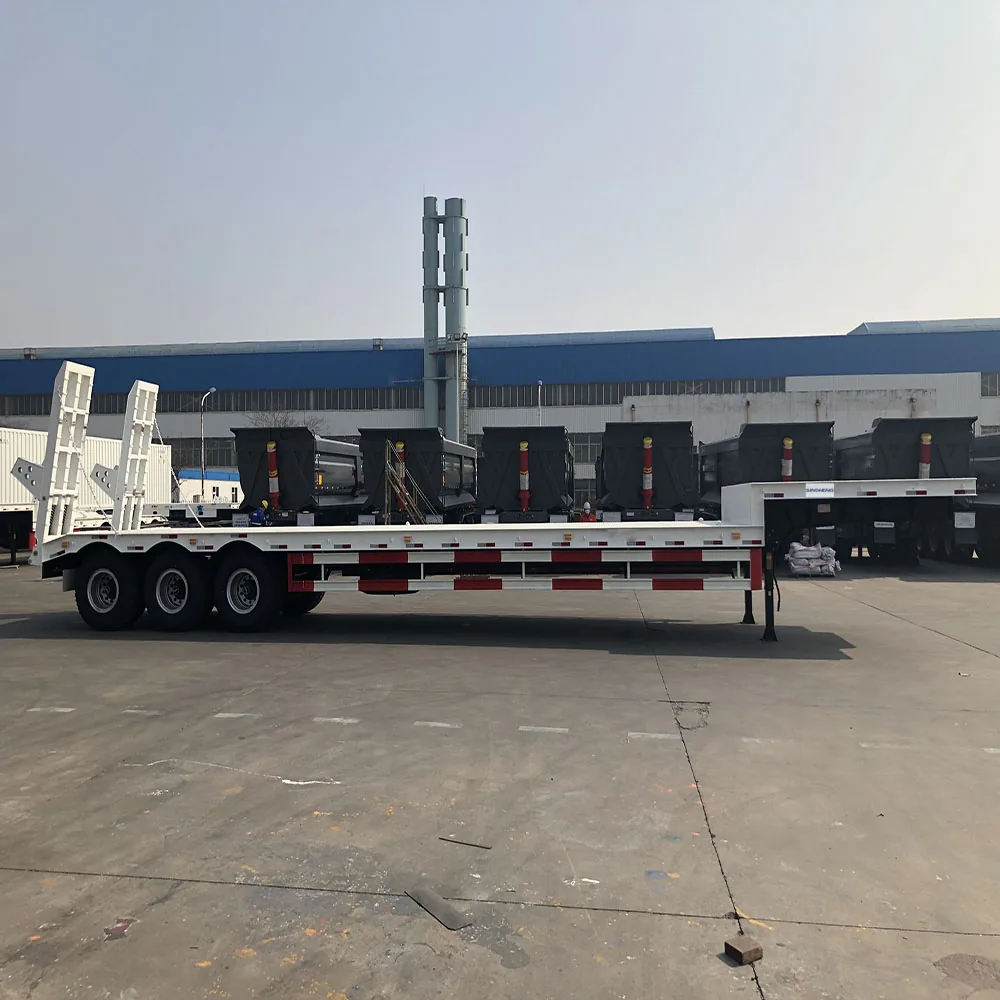
Three-axle lowbed, 13000x3000mm, 40000kg payload with CIMC 30T landing gear and polyurethane paint.
View Specification
In wet and rainy climates the chassis is the part most vulnerable to rainwater erosion and rust. Most operators understand that chassis protection matters, but choosing a workshop and judging the quality of the work are harder questions. Material and technique are the key, and both are visible if you know what to look at.
Ordinary chassis plastic sealing treatment generally uses only a single flexible resin material or an asphalt material. Professional chassis armour materials are composed of several products with different characteristics, applied by multi-layer spraying and covering to achieve multiple protective functions: high adhesion, high wear resistance, impact resistance through high elasticity, rust and corrosion prevention, and noise reduction.
Whether the vehicle is new or old, the first step is a comprehensive check of chassis condition, then cleaning away dirt, rust and grease layers. Compressed air is used to dry the chassis, and the body is properly masked. Parts that must be covered include the exhaust pipe, brake drum, brake, shock absorber, fuel tank pipeline, engine bottom, detachable bolts and, on four-wheel drive vehicles, the rear axle bolts.
Spraying is the most critical stage. The distance between the spray gun nozzle and the chassis surface should be kept at about 25 centimetres, moving slowly and evenly to ensure coating uniformity. Materials with high adsorption, high strength and high wear resistance are sprayed successively according to the process selected.
The number of times the chassis is sprayed ranges from four to twelve, with a drying interval of 15 to 30 minutes between each coat. A job completed in one or two passes has not had the drying time the material needs, and the coating will not perform as specified regardless of what was quoted.
After spraying is complete, the masking is removed and the vehicle restored. Once chassis armour work is properly done, driving safety and comfort improve and the protective functions are fully realised.
The same logic applies to how a trailer leaves the factory. Complete chassis sandblasting followed by primer and top coat, with polyurethane finishes available for hot and coastal climates, is the equivalent step at manufacture. Ask what preparation and how many coats, not just what colour.
Three-axle lowbed, 13000x3000mm, 40000kg payload with CIMC 30T landing gear and polyurethane paint.
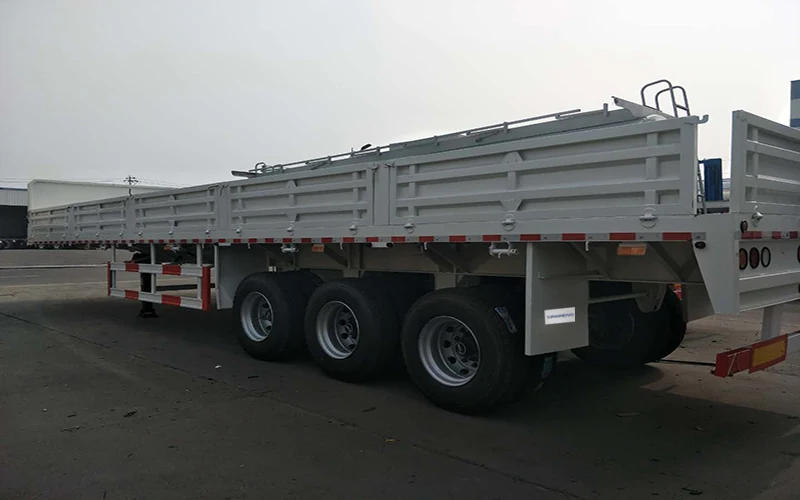
View SpecificationLHL9372TDP long-deck lowbed with HNABS4S/4M anti-lock braking and Q235 bolted side protection.
View SpecificationThree-axle cargo trailer for bagged cement and bulk goods, 33500kg payload at 6500kg tare.
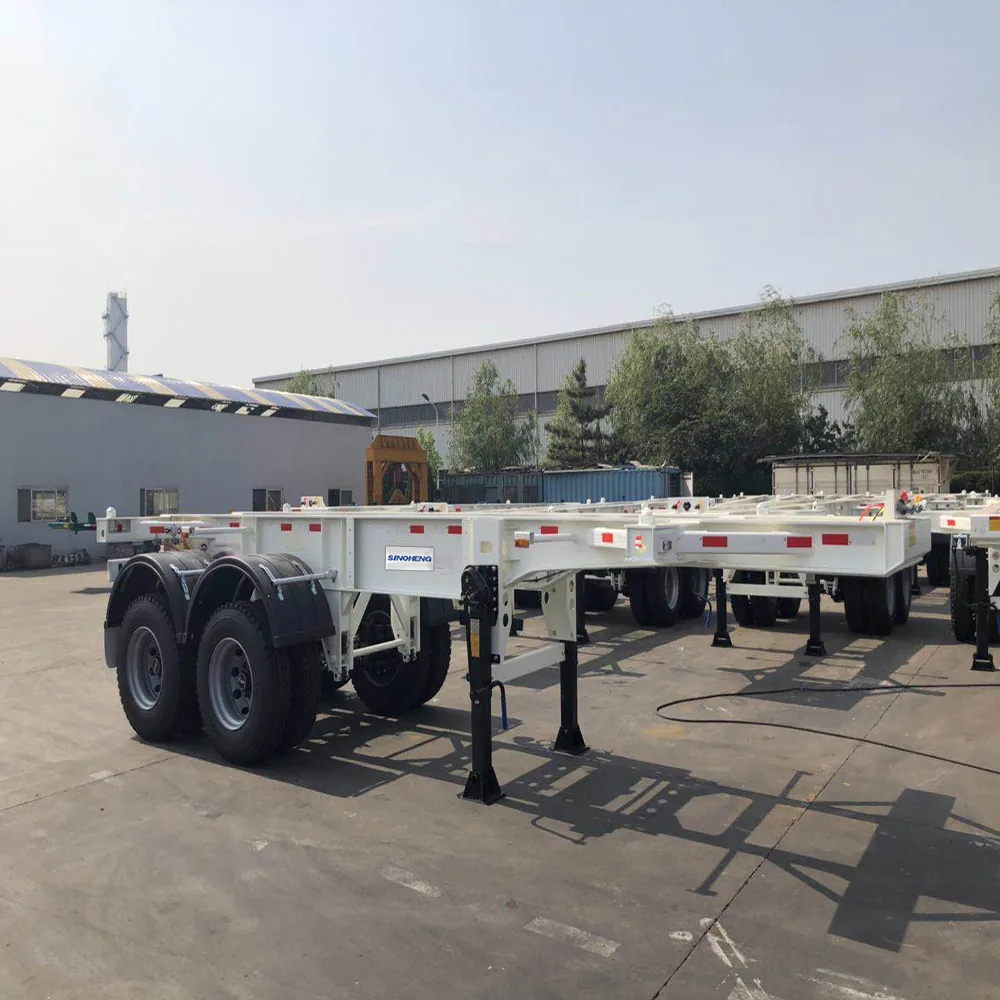
View SpecificationSkeletal container tipper, 54000kg payload at 5700kg tare with 2, 3 or 4 axle options.
View SpecificationDeck heights 700-1100mm, ramp angles 13-35 degrees, up to 120 tonnes
Side walls 600mm to 2850mm, drop sides, optional hydraulic side tipping
A working comparison of the ten semi-trailer types we build most often, what each is actually for, and how to pick the one that matches your cargo and your roads.
Flatbeds and lowbeds both have open platforms and are easily confused. The structural difference decides which one your cargo can legally travel on.
How trailer pricing actually works, what moves the number, and reference FOB prices for a range of SINOHENG models.
Four to twelve, with 15 to 30 minutes drying between each. A one or two pass job has not had the drying time the material requires.
Exhaust pipe, brake drum, brake, shock absorber, fuel tank pipeline, engine bottom, detachable bolts, and on four-wheel drive vehicles the rear axle bolts.
It is the basic level. Single flexible resin or asphalt materials give far less than a multi-layer system that combines adhesion, wear resistance, impact resistance, corrosion prevention and noise reduction.
Complete chassis sandblasting followed by primer and top coat in your specified colour, with polyurethane finishes available for hot and coastal climates.
Yes. Tell us the climate the trailer will work in and we will recommend and quote the appropriate system.
Send your operating conditions and we will turn the guidance above into a configured trailer and a price.