
Heat Treatment Of Crusher Wear Castings And Why 30 Seconds Matters
Solution treatment and quenching decide whether a manganese casting is tough or brittle. The controls that make the difference are simple and unforgiving.
What Solution Treatment Does
Austenitic manganese steel only works if the carbides are dissolved into solution and held there. That means heating the casting to temperature, holding it long enough for the section to equalise, and then cooling it fast enough that the carbides have no opportunity to re-precipitate at the grain boundaries.
A casting that cools slowly has carbides in the grain boundaries, and those boundaries are then brittle. The part will crack in service rather than work harden.
Uniform Heating
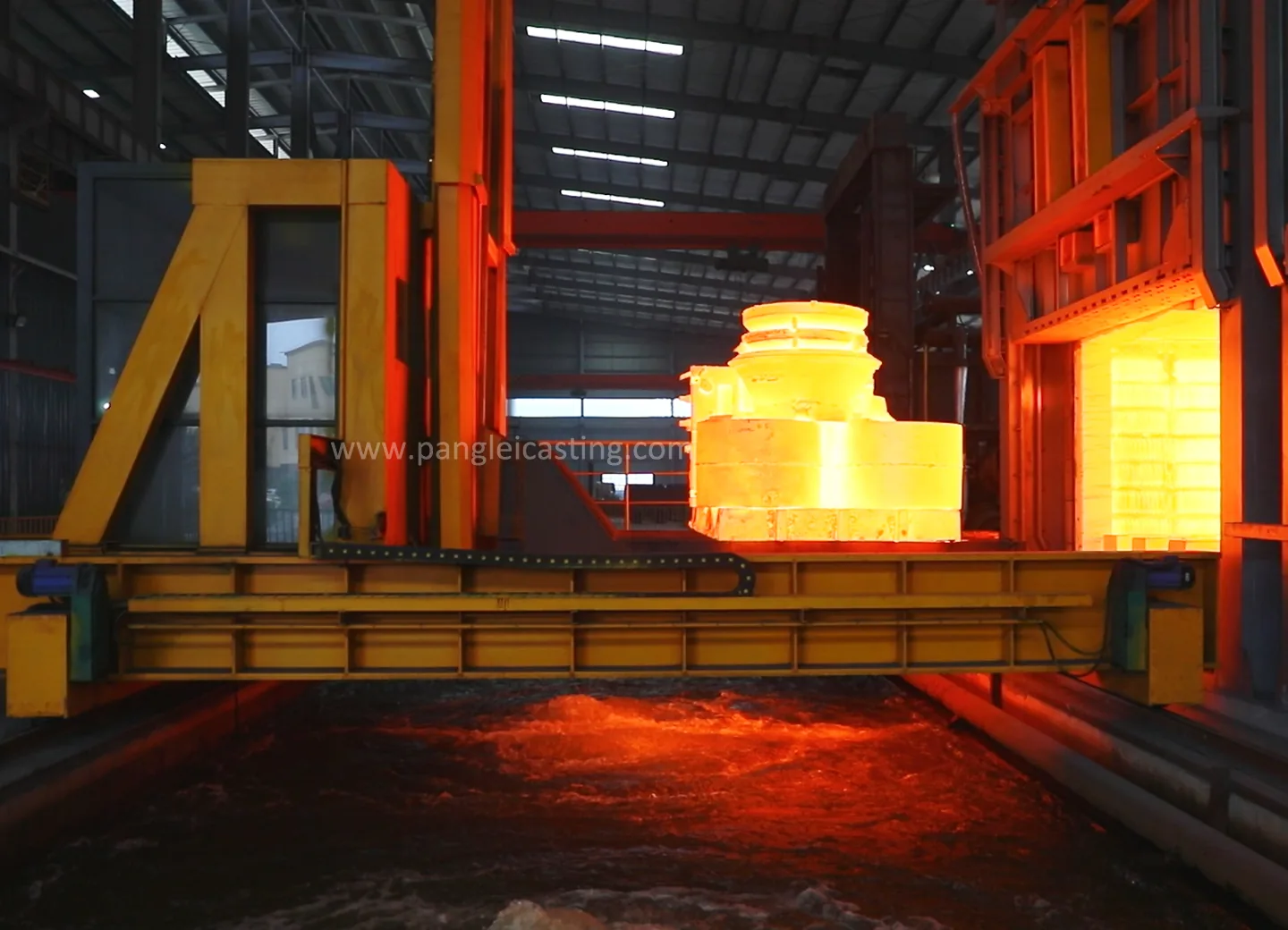
Castings are spaced in the furnace rather than stacked. The spacing exists so that every surface heats uniformly and, more importantly, so that every surface meets water freely at the quench.
A casting packed tightly against its neighbour has a face that heats late and quenches slowly. That face carries the defect through the whole service life.
The Thirty Second Rule
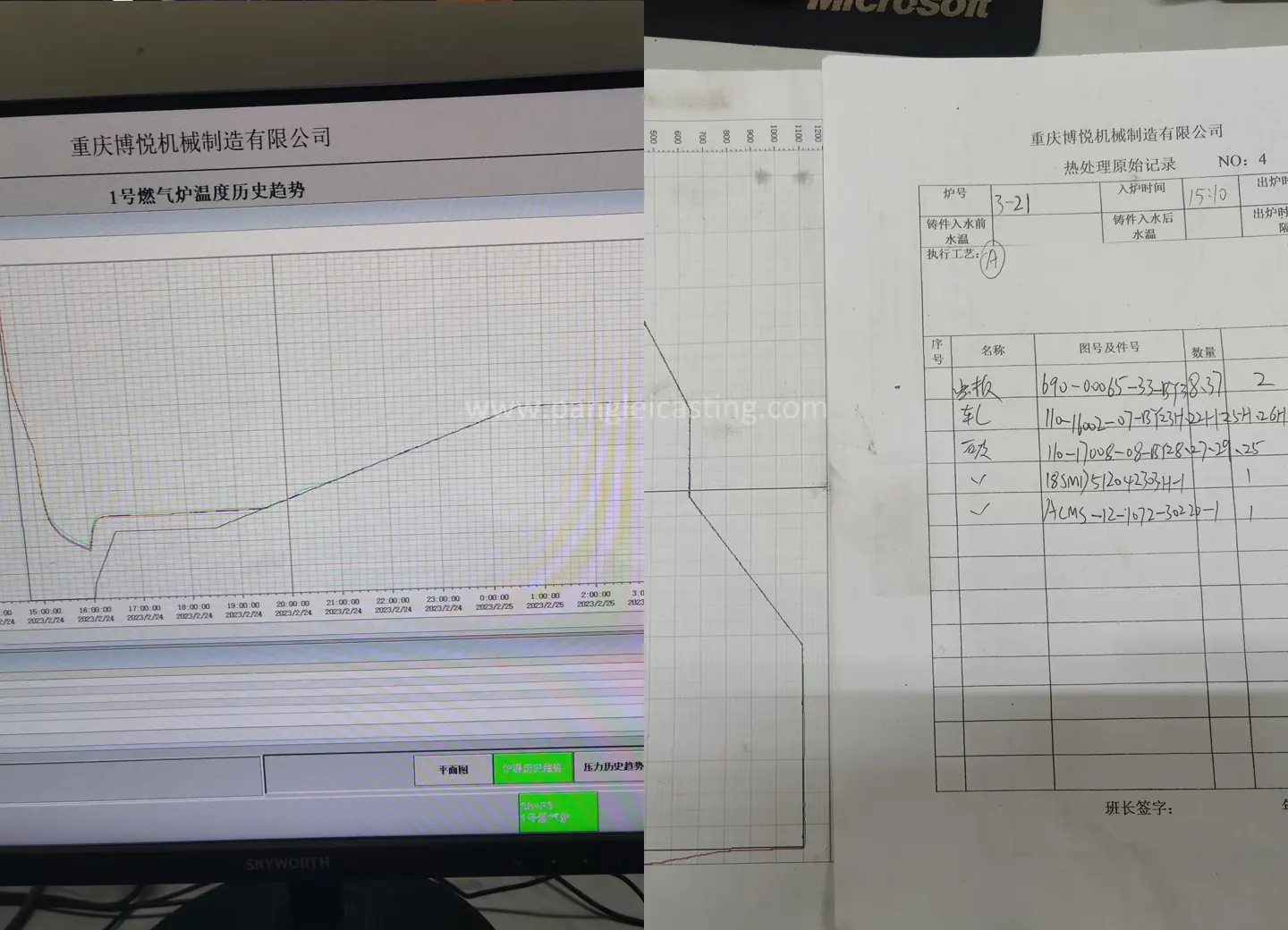
Quenching begins within 30 seconds of the casting being withdrawn from the oven. This is not a nominal figure — every second between furnace and water is a second of slow cooling at exactly the temperature range where carbides precipitate.
It is the single most demanding logistical requirement in a wear-parts foundry, and it dictates how the furnaces, the crane and the pool are laid out.
The Quench Pool
Our pool holds 2,000 m³ and has an underwater circulating and stirring system. The volume matters because a large casting entering a small pool raises the water temperature and slows its own quench.
The circulation matters because a static pool forms a vapour blanket against the casting surface, which insulates precisely where cooling needs to be fastest.
Heat Treatment Capacity
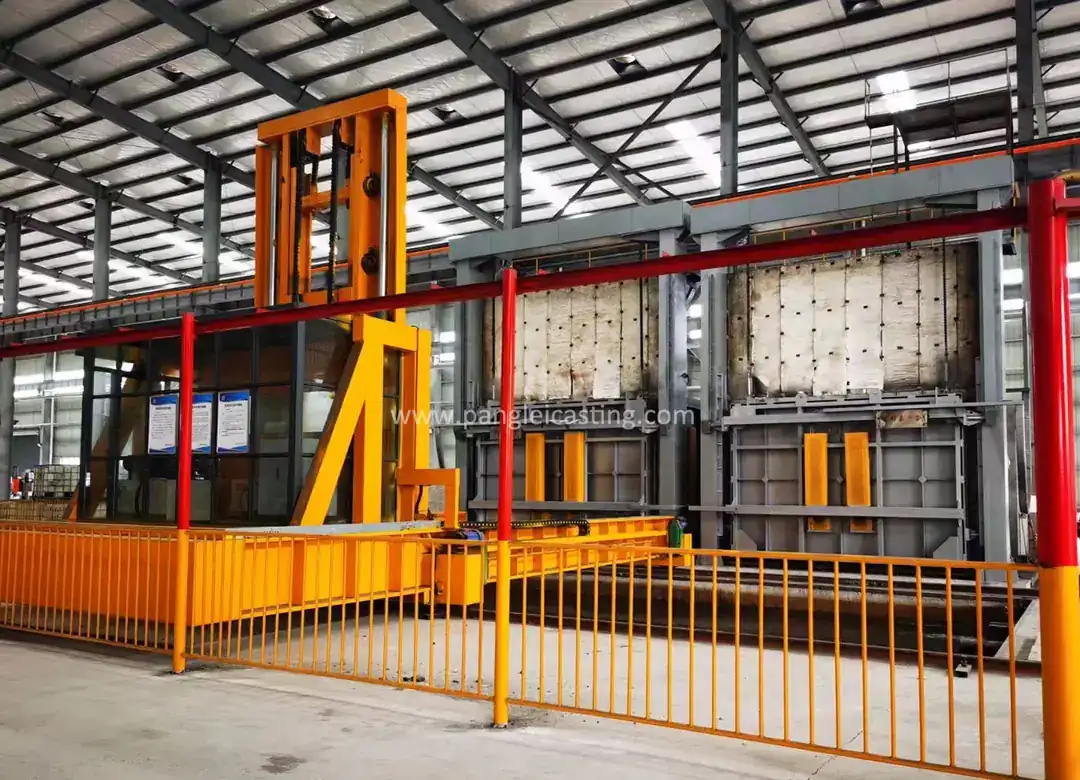
- Trolley heat treatment furnace 3 m × 3.5 m × 2 m, one set.
- Trolley heat treatment furnace 3 m × 2.5 m × 1.8 m, two sets.
- 2,000 m³ heat treatment pool with circulating and stirring system underwater.
- This is the capacity that makes single castings up to 10 tonnes possible — pouring a part that size is only half the problem.
Parts This Guide Applies To
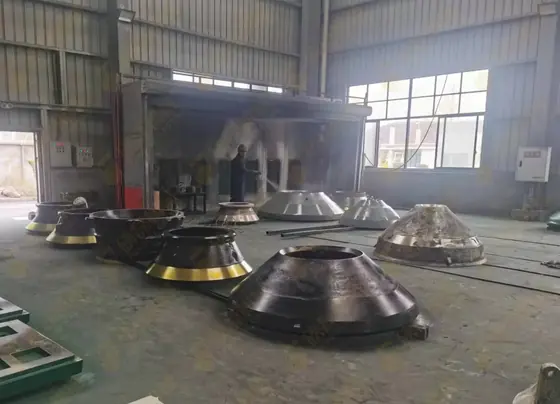
Bowl Liner And Concave
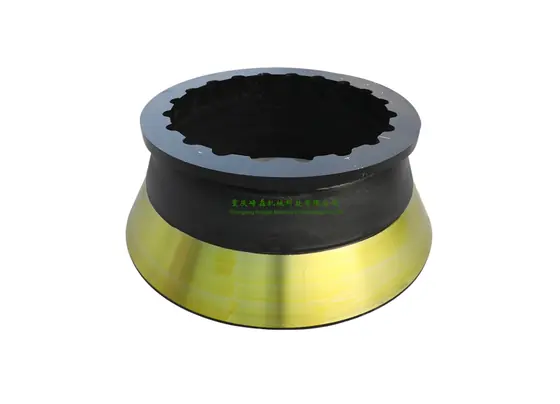
The fixed half of the cone crushing chamber, cast in seven manganese grades
View Part →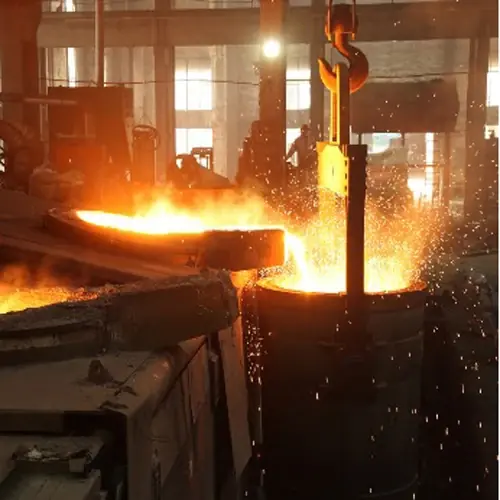
Grinding Roller
Mill grinding rollers supplied to the Chinese electric power industry
View Part →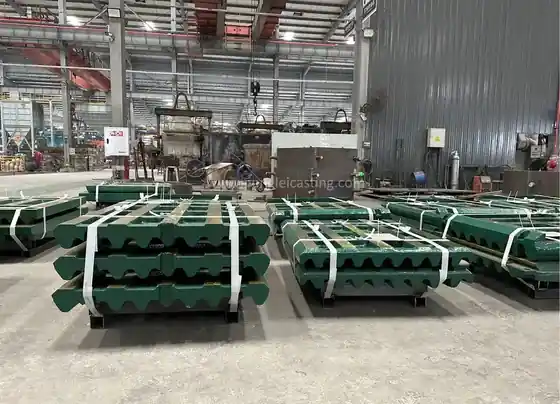
Fixed Jaw Plate
Stationary jaw dies in high manganese, from 600 × 400 machines up to a C200
View Part →Other Reading In The Knowledge Centre
Manganese Steel Grades For Crusher Wear Parts Explained
Mn13 through Mn22Cr3 — what the manganese and chromium content actually changes, and how to pick a grade from your feed rather than from a catalogue.
Read Guide →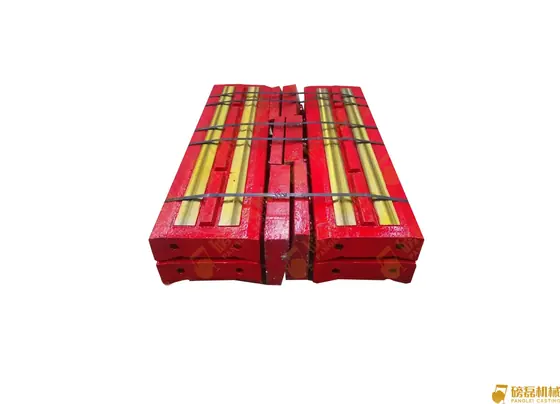
How To Choose Blow Bar Material For An Impact Crusher
Manganese, 20% chrome, 26% chrome, ceramic inserts or TIC — a decision that comes down to one question about your feed.
Read Guide →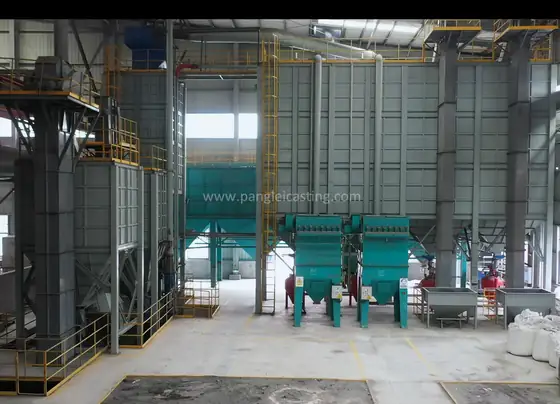
What Casting Process Simulation Changes Before The Mould Is Made
CPSS runs before sand is packed. It is the cheapest opportunity to find a shrinkage cavity — on screen rather than in a finished casting.
Read Guide →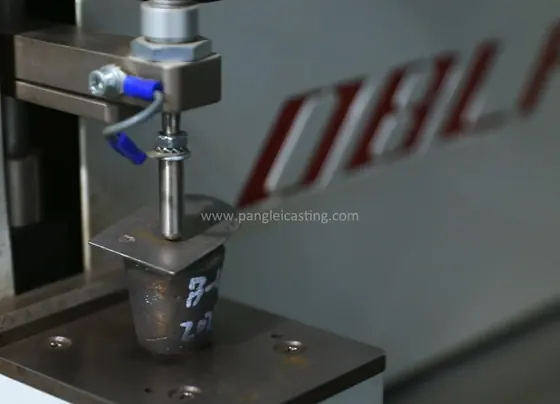
The Inspection Procedures Behind A Crusher Wear Casting
Which tests are standard, which are on request, and what each one actually tells you about the part you are buying.
Read Guide →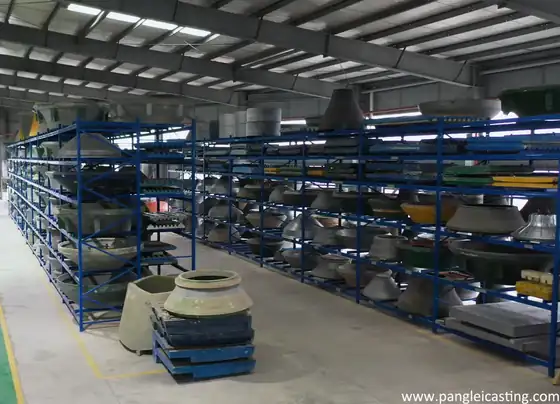
Reducing Crusher Downtime With Ready Made Patterns And Stocked Parts
Lead time on a wear part is mostly pattern time and scheduling. Both can be removed, and the difference is measured in days rather than weeks.
Read Guide →Questions About This Guide
Can a wear casting be re-heat-treated?
In principle yes, but it is rarely economic and the result depends entirely on the original casting quality. It is not a routine remedy.
Why does hardness testing not prove good heat treatment?
Because austenitic manganese steel is soft after correct heat treatment. Microstructure analysis is what shows whether the carbides went into solution.
What does the foundry record?
Chemical analysis on every heat, with samples retained for at least three years. Hardness, tensile, microstructure and NDT are carried out where specified.
Apply This To Your Own Machines
Send the machine, the feed description and the wear life you get now, and we will make a specific recommendation rather than a general one.