
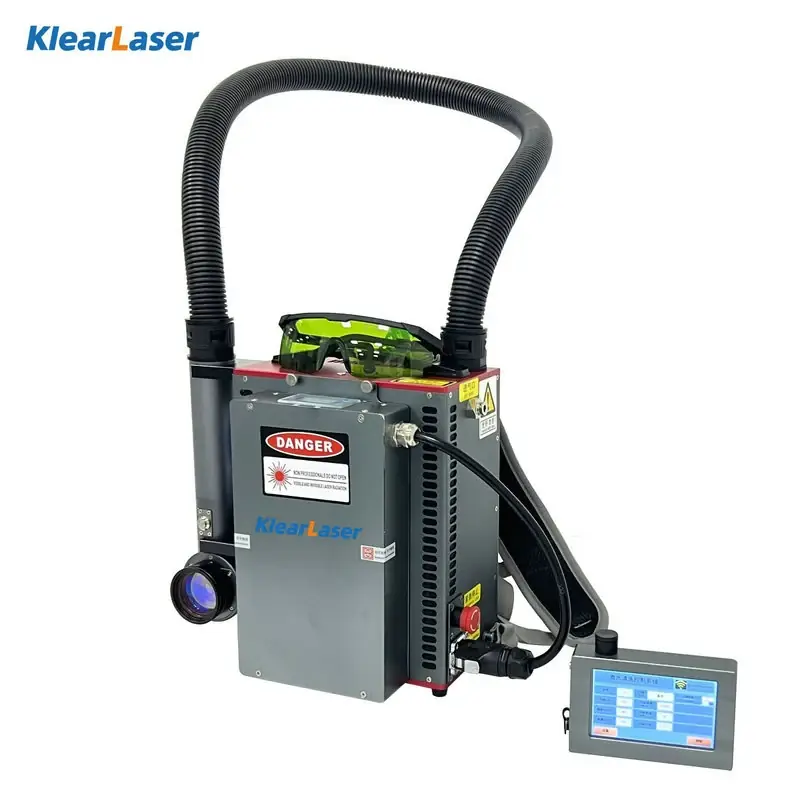
Backpack Series
Backpack Laser Cleaning Machine
100W–300WPulsed fibreAir-cooled
Rust and coating on a bridge girder, a transmission tower, a ship's inner hull or a scaffolded facade cannot be brought to a cleaning bay.
A maintenance bay needs one machine that covers most of the week's work: rust off incoming steel, residue out of a die, paint off a bracket, and occasionally the same job outside in the yard.
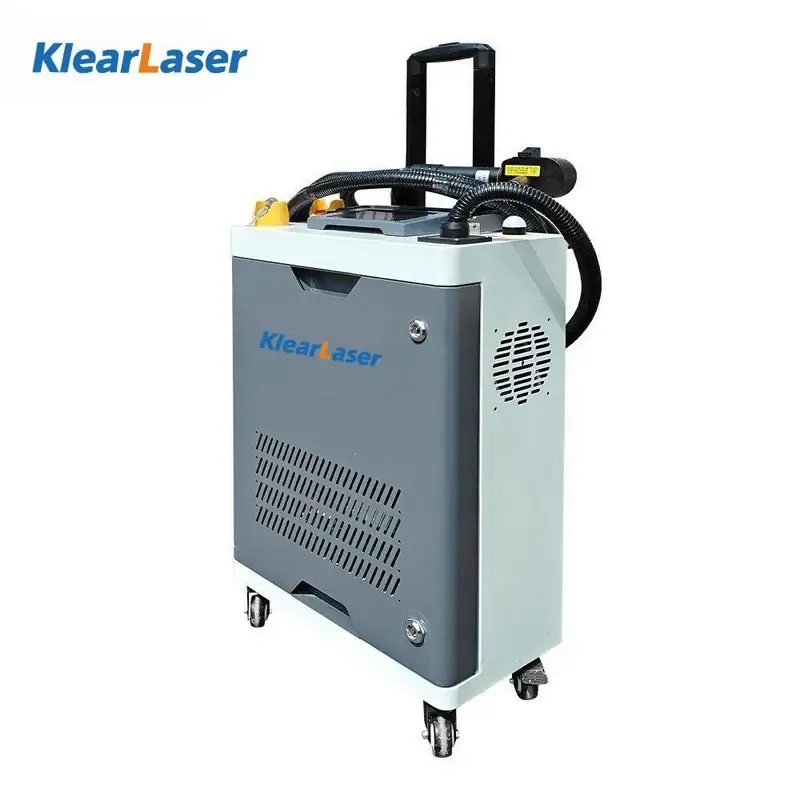
A maintenance bay needs one machine that covers most of the week's work: rust off incoming steel, residue out of a die, paint off a bracket, and occasionally the same job outside in the yard. A backpack is too small for sustained output; a fixed cabinet cannot leave the bay.
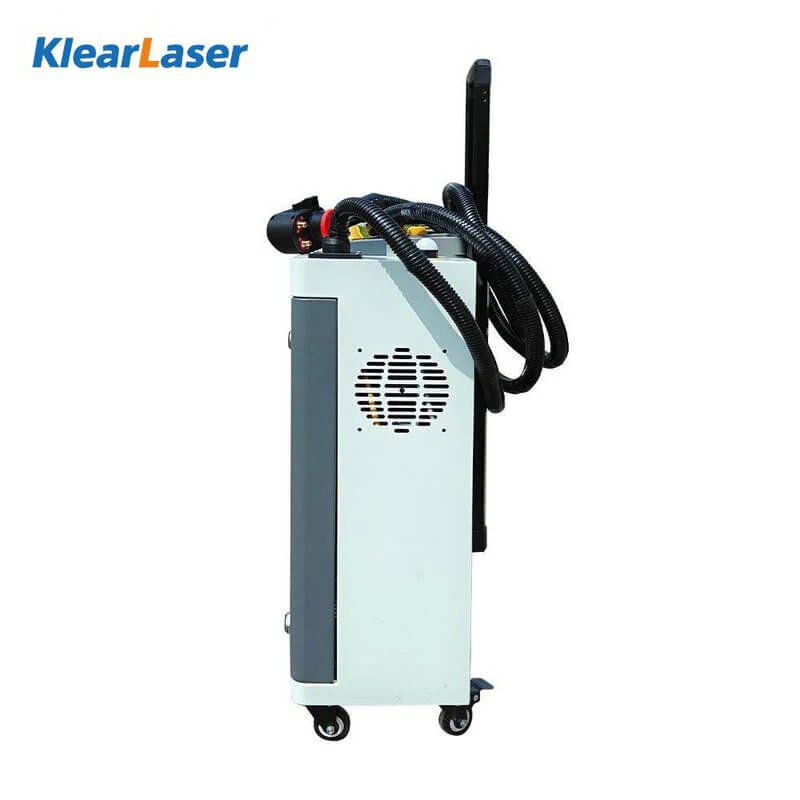
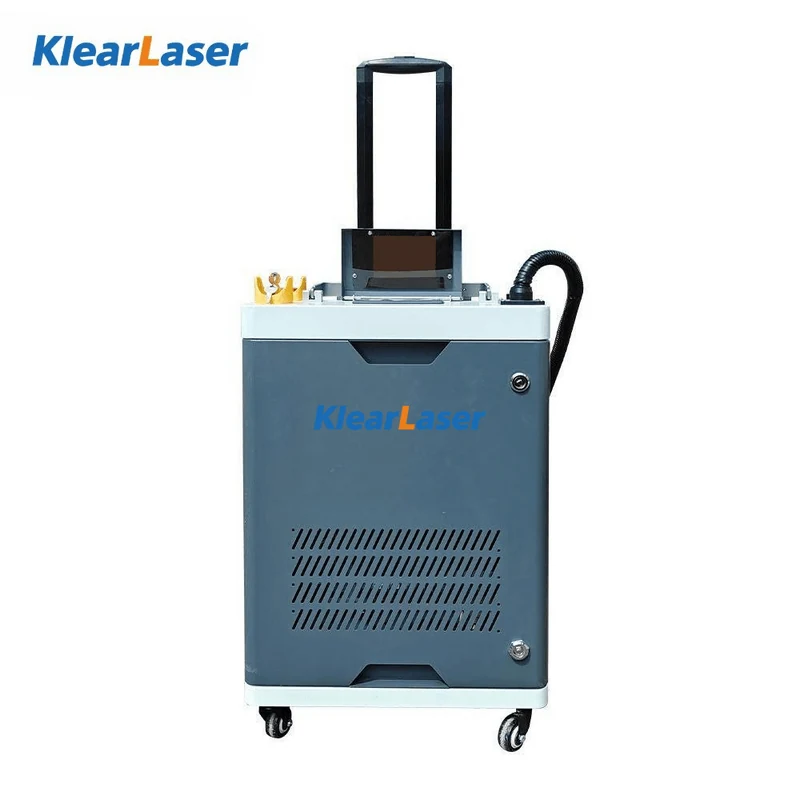
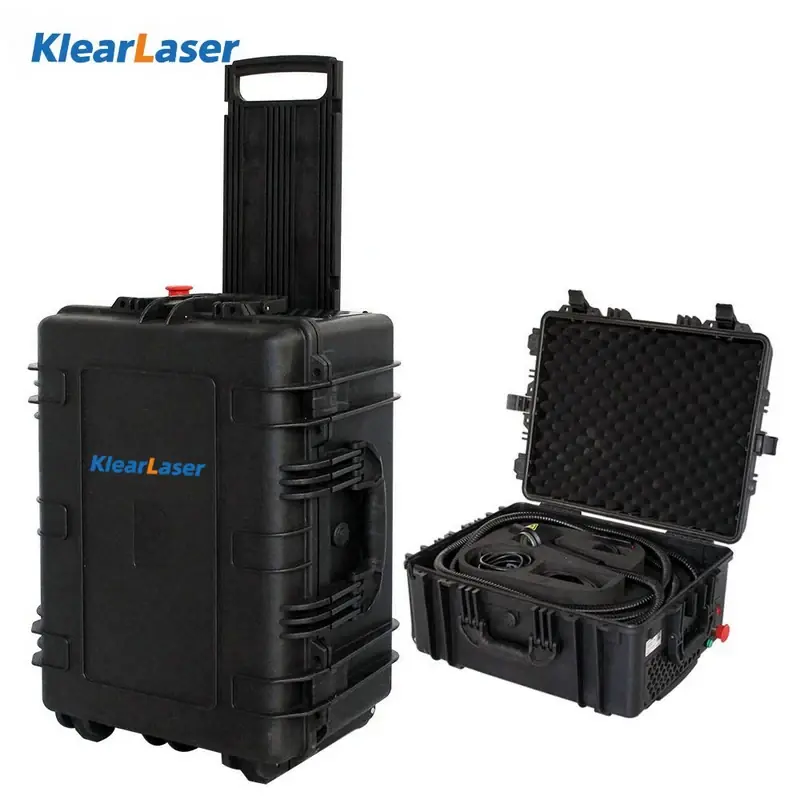
The trolley build is the compromise that stops being a compromise. At 45 kg on a pull rod and wheels, one person moves it between bays or loads it into a van. A 200–500 mm scan width — clearing up to 1200 mm — and a published 15–30 m²/h rate mean it makes real progress on panels and structures, and air cooling keeps installation to a single socket.
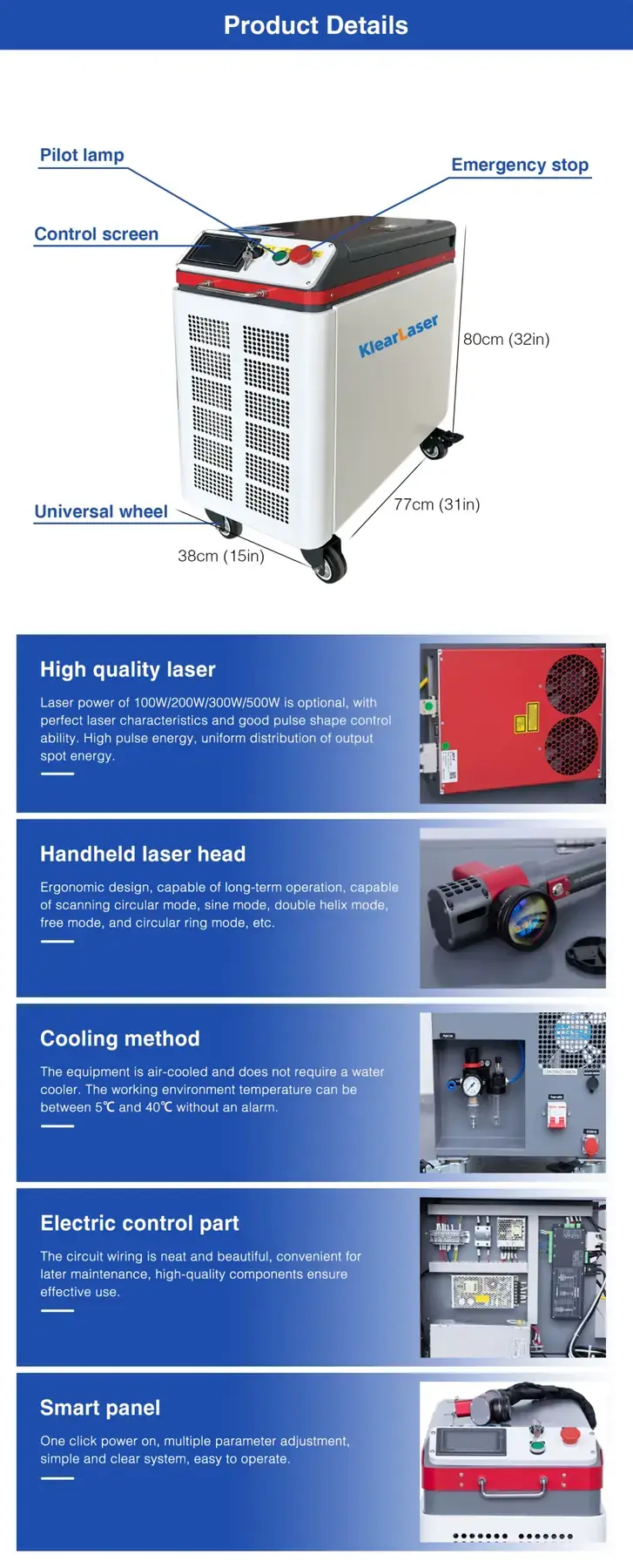
Published parameters for the trolley / pull-rod series.
| Parameter | Specification |
|---|---|
| Laser working mode | Pulsed fibre |
| Average laser power | 100W / 200W / 300W configurations |
| Cleaning speed | 15–30 m²/h |
| Cleaning width | 200–500 mm (clearing up to 1200 mm) |
| Cooling mode | Air cooling |
| Dimensions | 25 × 70 × 60 cm |
| Machine weight | 45 kg |
| Mode of operation | Handheld head, mobile host |
| Suitable substrates | Steel, stainless steel, metal moulds, carbon steel, aluminium, brass, titanium, copper |
Configurations outside the values shown are built to order. Confirm the exact specification with us before purchase.
Photographs of this model, its accessories and its packing.
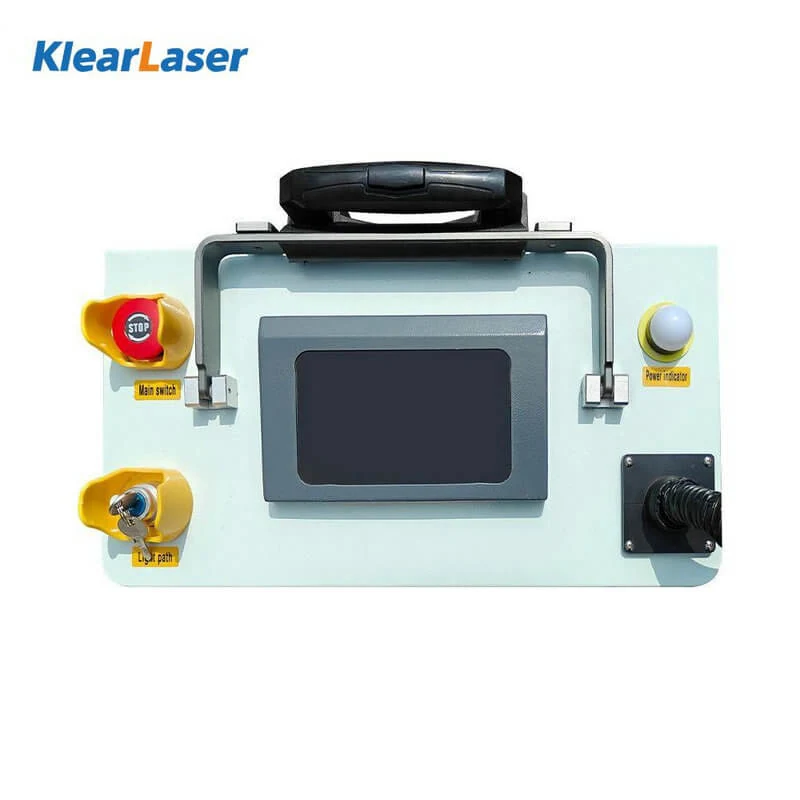
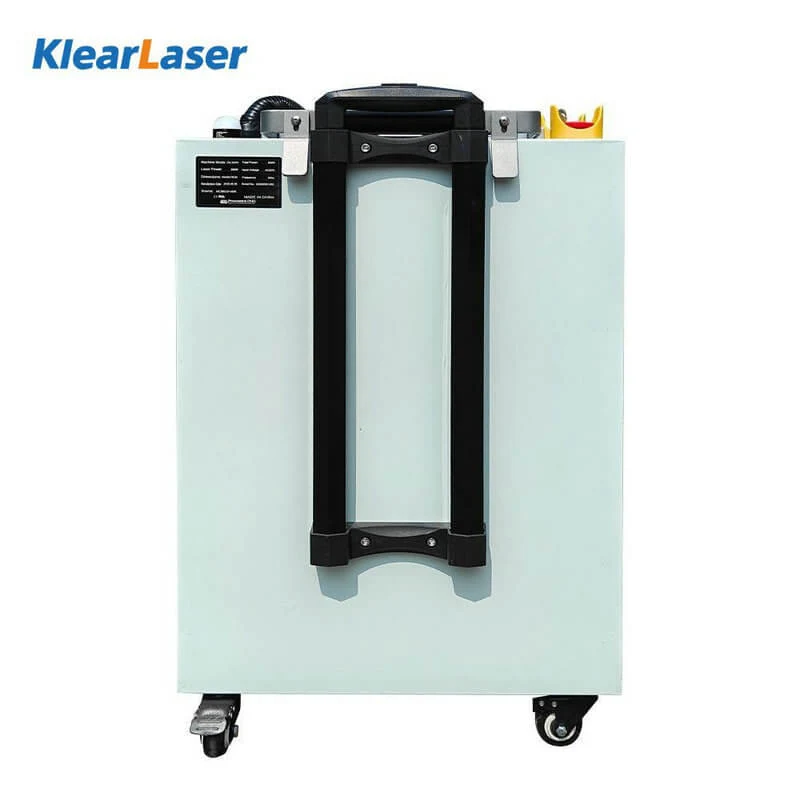
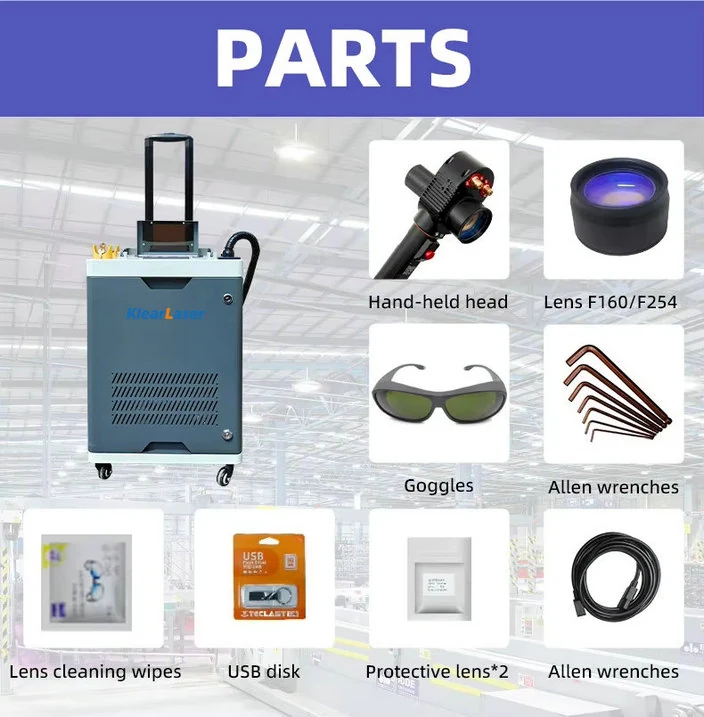
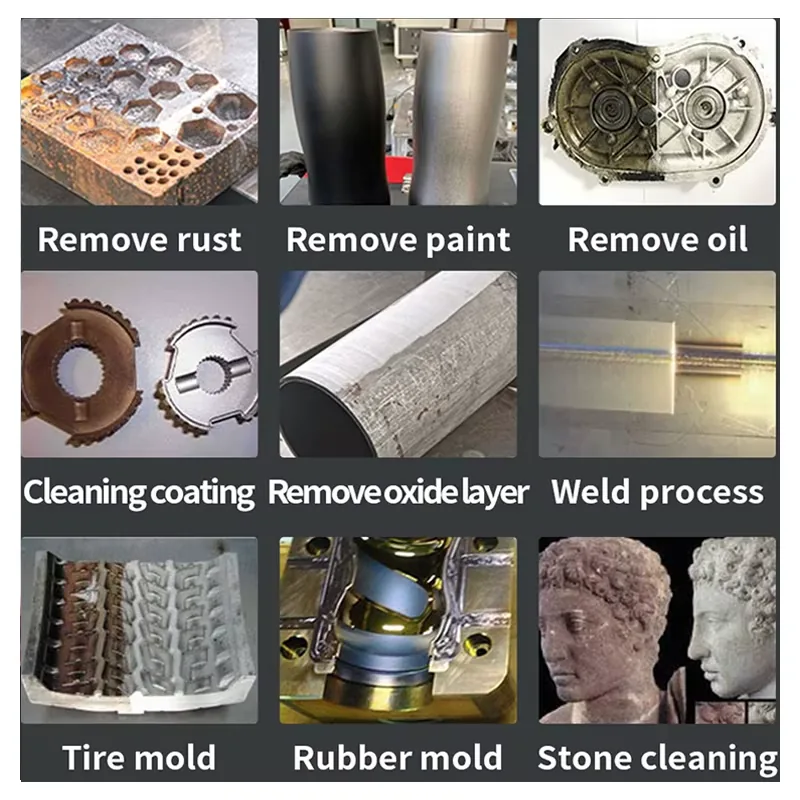
That is the published range for the series and it moves with contaminant thickness, required cleanliness and geometry. Heavy pitted rust sits at the bottom of the range; light oxide on flat plate at the top. A sample test gives you a number you can quote from.
Yes — that is one of the most common uses for this series. The process is non-contact, so cavities and textures are cleaned in place. Our injection-mould case study used a 300W machine from this series.
No. The trolley series is air-cooled and runs from a standard single-phase supply. Three-phase applies to the high-power cabinet machines.
Very little: keep the lens and protective glass clean and replace protective lenses roughly every 500–2000 hours depending on duty. Manuals and video guides are supplied.
Rust and coating on a bridge girder, a transmission tower, a ship's inner hull or a scaffolded facade cannot be brought to a cleaning bay.
Demonstrations, service calls and conservation work all share one constraint: the machine has to arrive intact, set up in minutes and leave no trace.
Between a portable cleaner and a full CW industrial system there is a gap: work that needs more than 500W of pulsed energy, all day, on parts where heat input still matters — hardened dies, machined castings, thin structural members, anything that will be measured after cleaning.
Ship us a sample, or send photographs and a description. We test on the machine we would recommend and send back before/after images, video and the parameters used — free.