
Laser cleaning specialists since 2012 · CE / FDA / ISO9001 [email protected]+86 15919744063

Laser cleaning in a mould shop

The saving is not in cleaning faster. It is in not pulling the tool.

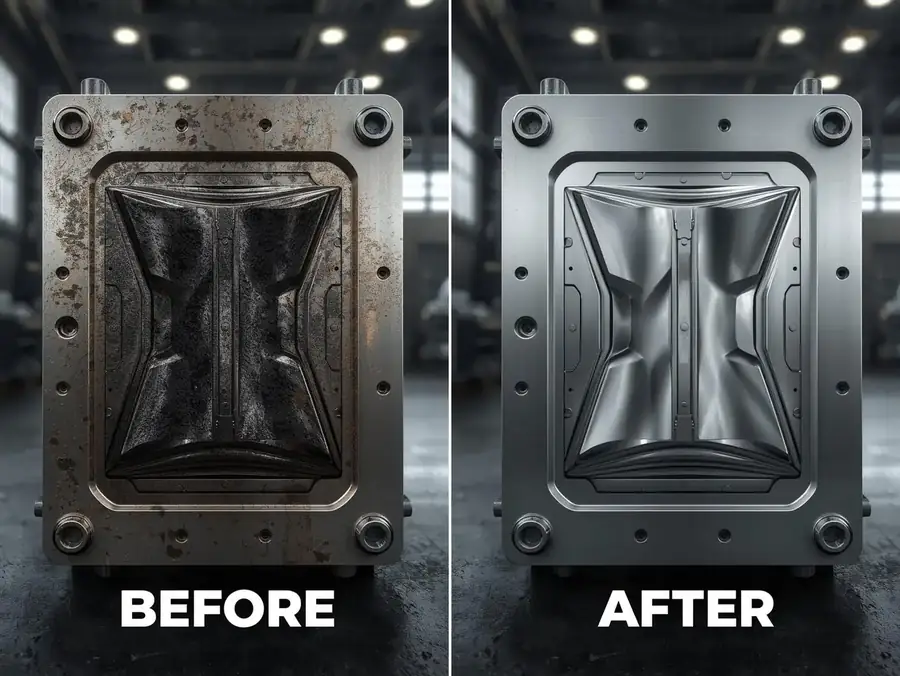
Injection mould cavity before and after laser cleaning

What mould cleaning normally costs

Residue, gas deposit and oxidation build up in cavities, vents and textures. The conventional answer is to pull the tool, clean it with solvent or abrasive, and reinstall. The press is down for all of it, and both cleaning methods slowly degrade the surface you are protecting.

Cleaning in place

Laser cleaning is non-contact and line-of-sight, so a handheld head reaches into an open tool on the press. In the injection moulding project documented in our case studies, downtime dropped by 65% and tool life more than doubled — the tool life gain comes from not abrading the surface every cycle.

Textured and etched surfaces

Bead-blasted, etched and grained tool surfaces are the hardest to clean conventionally because anything abrasive changes the texture. Pulsed laser cleaning removes deposit from inside the texture without reshaping it.

Vents and deep cavities

Deposit in vents is what causes short shots and burn marks. Because the process needs no medium and no contact, it works at the bottom of a deep cavity as well as on a flat face — one of the specific reasons mould shops adopt it.

Which machine

Mould work is pulsed work. A 200W–800W pulsed machine covers most tooling; our trolley series is the usual choice for a shop floor, the cabinet pulse series where the work is continuous or needs integrating.

Machines discussed in this guide

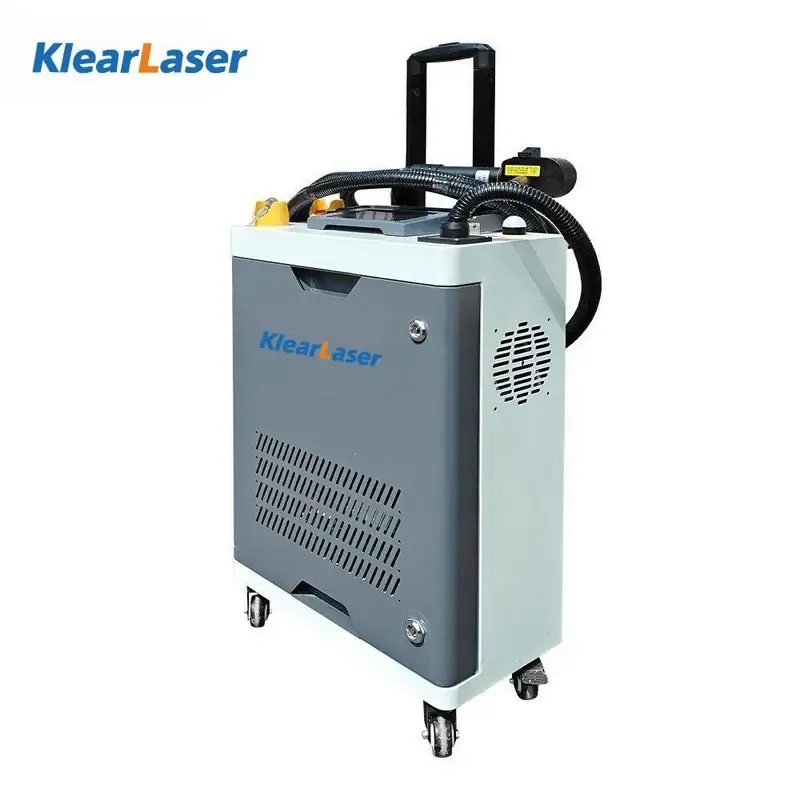
KlearLaser trolley laser cleaning machine with pull rod, castor wheels and coiled cleaning head cable
Trolley / Pull-Rod Series

Trolley Laser Cleaning Machine

100W–300WPulsed fibreAir-cooled

A maintenance bay needs one machine that covers most of the week's work: rust off incoming steel, residue out of a die, paint off a bracket, and occasionally the same job outside in the yard.
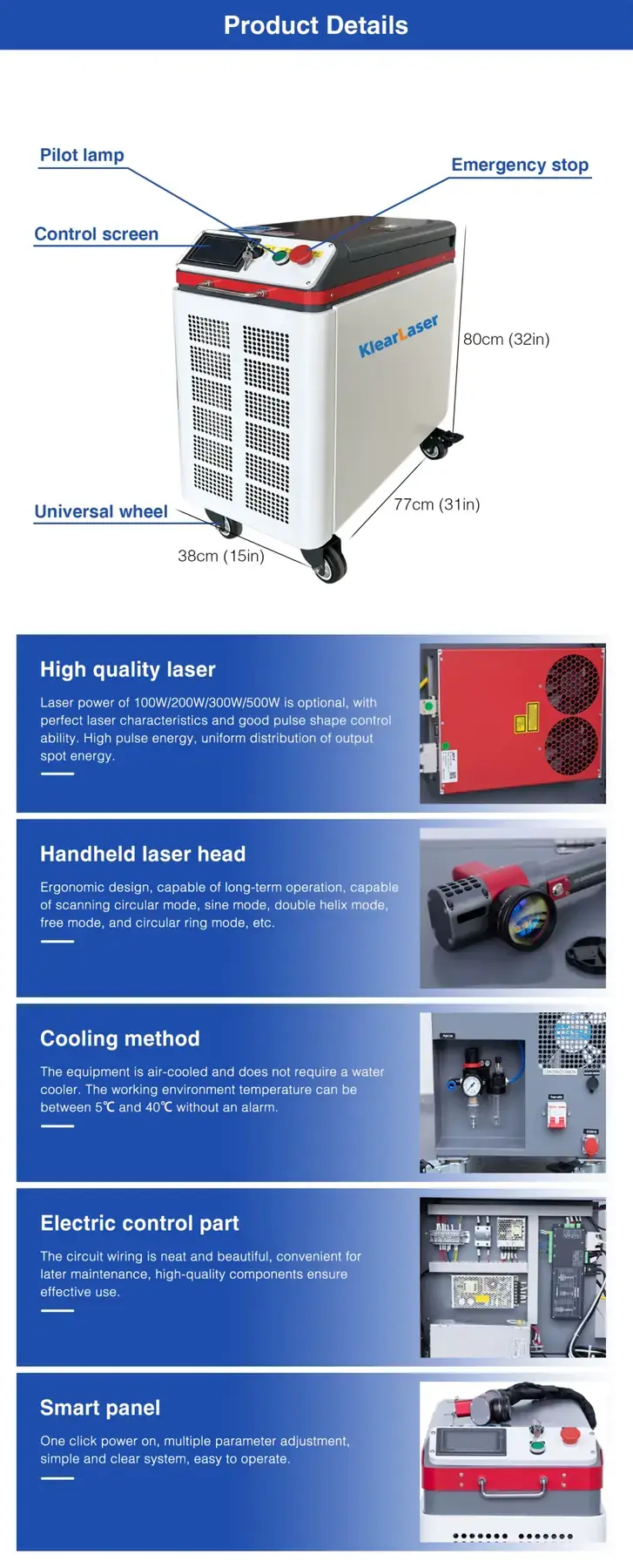
KlearLaser cabinet pulse laser cleaning machine, enclosed housing on castors
Cabinet / Industrial Series

Cabinet Pulse Laser Cleaning Machine

300W–1500WPulsed fibreAir or water cooled

Between a portable cleaner and a full CW industrial system there is a gap: work that needs more than 500W of pulsed energy, all day, on parts where heat input still matters — hardened dies, machined castings, thin structural members, anything that will be measured after cleaning.

Want this answered for your specific part?

Send the material, the contaminant and the area per part. You get a recommendation within 24 hours and a free test on your own sample.