Media is the real cost
Blasting consumes abrasive, and every kilogram bought becomes a kilogram of contaminated waste to store, move and dispose of. Laser cleaning has no consumable media at all; the only routine part is a protective lens, typically replaced every 500–2000 hours. That single difference reshapes the operating cost of a cleaning bay.
Substrate loss
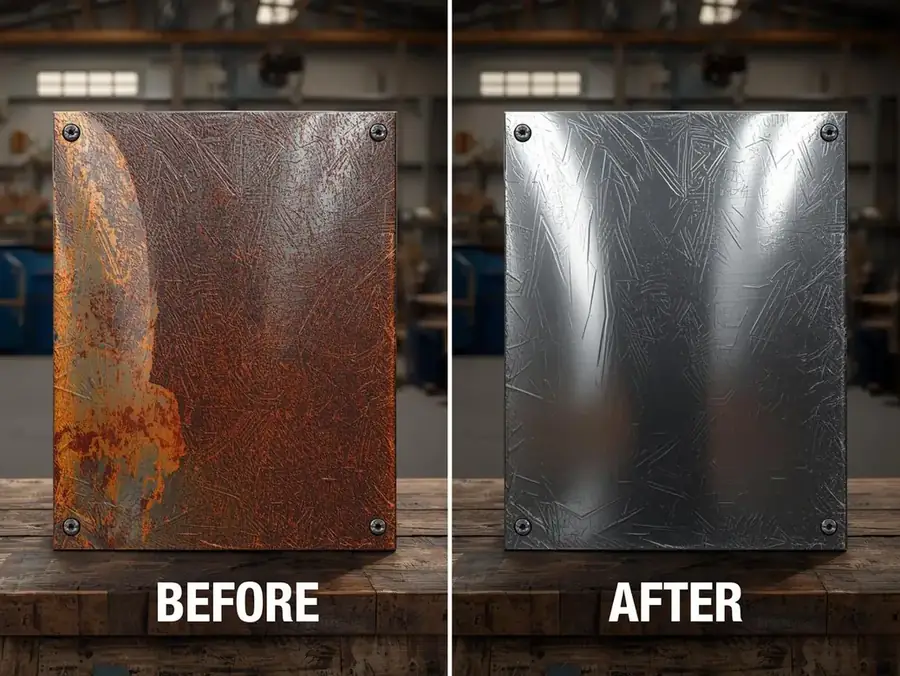
Abrasive removes contaminant and base material together. On thin sheet that means distortion; on tooling it means a dulled surface; on anything dimensional it means measurable loss. Laser cleaning is non-contact and non-abrasive — the reason it is accepted in mould shops, aerospace and conservation.
Dust and containment
A blasting operation generates airborne dust and usually requires containment, extraction and personal protective equipment appropriate to it. Laser cleaning produces particulate that can be captured at the head, which is why shipyards facing marine environmental rules are among the fastest adopters.
Where blasting still makes sense
Very large, very heavily corroded, low-value surfaces where capital cost dominates and substrate loss is irrelevant. Blasting equipment is cheaper to buy. The case for laser is built on running cost, waste handling and substrate integrity — and it strengthens the more hours per week the equipment runs.
Comparing them properly
Ask for a test on your own part, not a demonstration on a prepared coupon. We will clean your sample and send the result, including how long it took and at what settings.