
Suitcase Laser Cleaning Machine
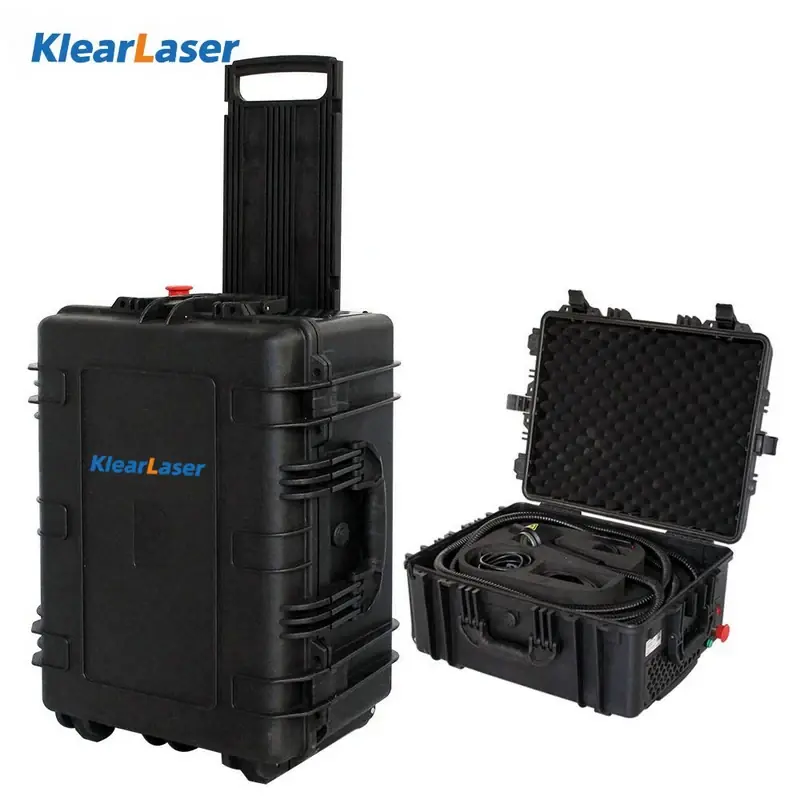
Demonstrations, service calls and conservation work all share one constraint: the machine has to arrive intact, set up in minutes and leave no trace.
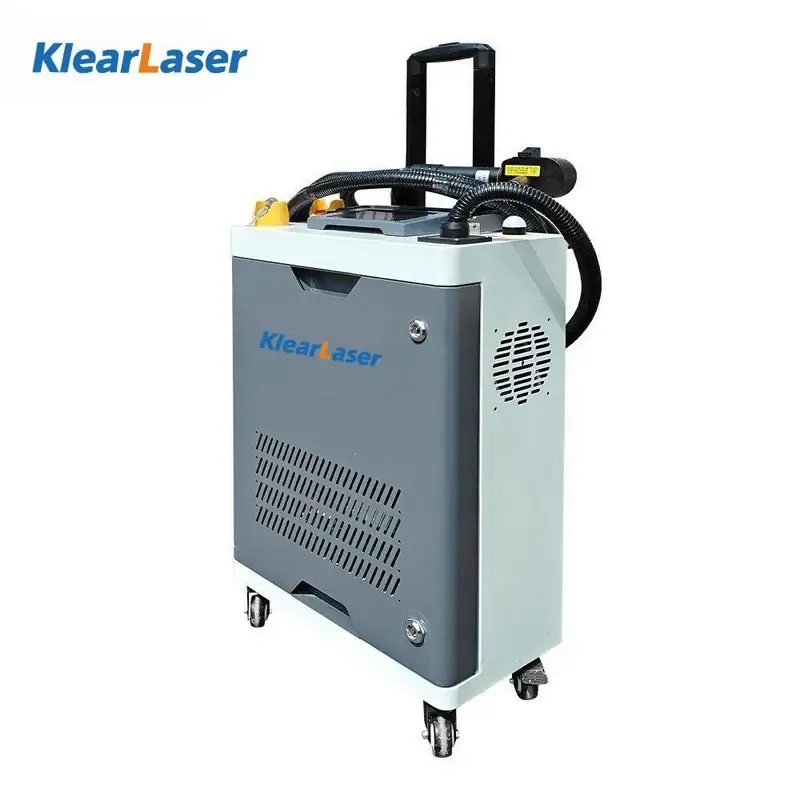
Rust and coating on a bridge girder, a transmission tower, a ship's inner hull or a scaffolded facade cannot be brought to a cleaning bay.

Rust and coating on a bridge girder, a transmission tower, a ship's inner hull or a scaffolded facade cannot be brought to a cleaning bay. Traditional answers — a blasting rig with containment, or a drum of stripper and a scraper — mean permits, waste handling and a crew. Most of the day is spent moving equipment, not cleaning.
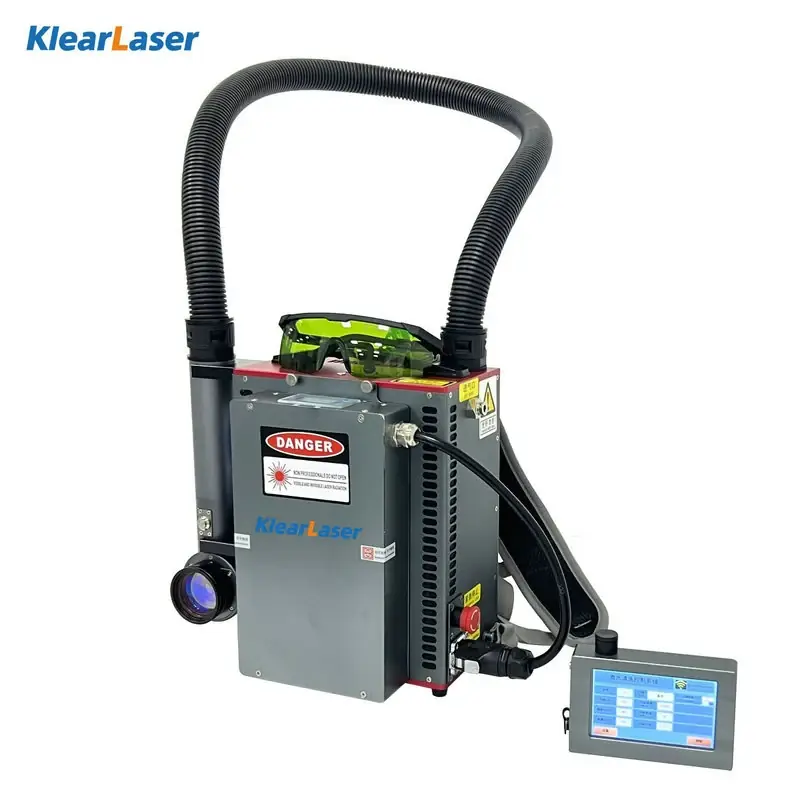
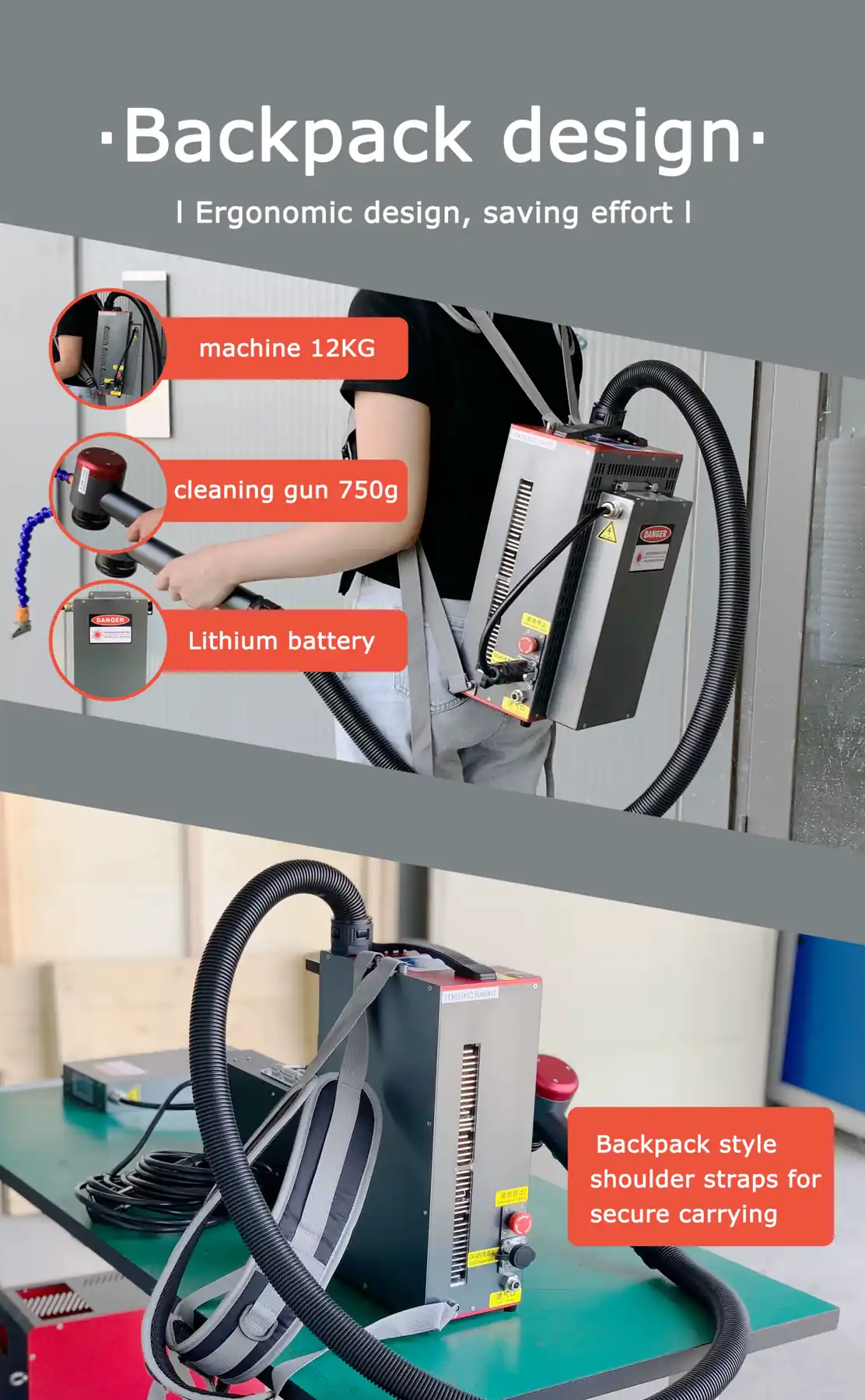
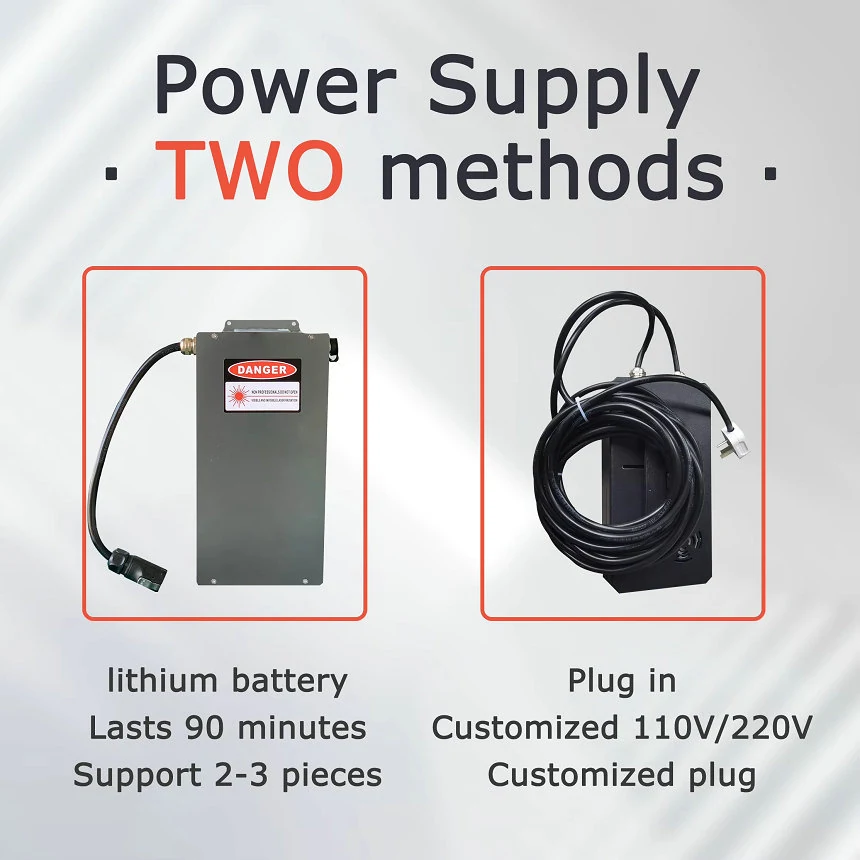
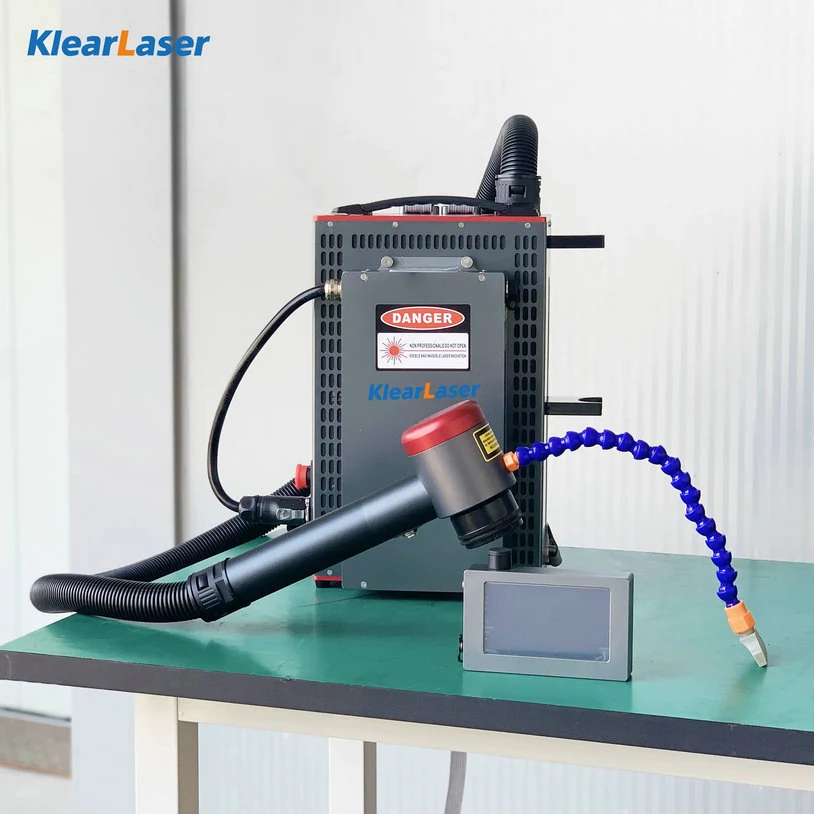
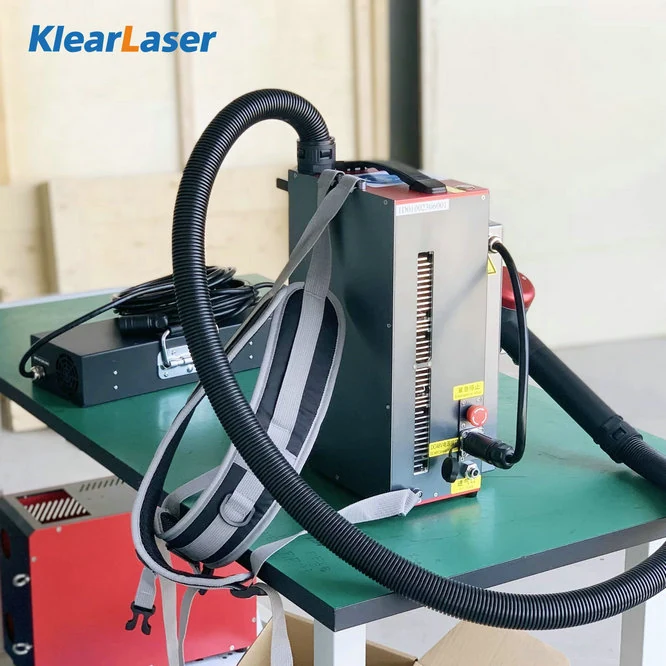
The backpack build reduces the whole system to what one person can wear. A 12–18 kg host carries the fibre source and air cooling; a cleaning head of under 0.75 kg does the work; a 1.5 m fibre cable keeps the head free in tight spaces. With the optional lithium battery a 100W unit runs 80–90 minutes with no cable and no generator, so the operator can climb, clean and move on.
Figures below are the manufacturer's published parameters for the 100W and 200W configurations.
| Parameter | 100W | 200W |
|---|---|---|
| Average laser power | ≥100W | ≥200W |
| Laser working mode | Pulse | Pulse |
| Pulse width | 150–190 ns | 15–500 ns |
| Maximum monopulse energy | 1.7 mJ | 2 mJ |
| Repeat frequency | 20–200 kHz (gradient adjustable) | 1–3000 kHz (gradient adjustable) |
| Power regulation range | 0–100% (gradient adjustable) | 0–100% (gradient adjustable) |
| Power instability | <5% | <5% |
| Scan range (L×W) | 0–100 mm continuously adjustable, 8 scanning modes | 0–145 mm continuously adjustable, 9 scanning modes |
| Scanning frequency | 10–300 Hz continuously adjustable | 10–300 Hz continuously adjustable |
| Field mirror focal length | Standard field mirror | 210 mm (optional 160 / 254 / 330 / 420 mm) |
| Depth of focus | About 5 mm | About 5 mm |
| Fibre length | 1.5 m | 1.5 m |
| Cooling mode | Air cooling | Air cooling |
| Supply voltage | AC220V ±10%, 50/60 Hz adapter (DC48V out); optional battery 80–90 min | AC220V ±10%, 50/60 Hz adapter (DC48V out); optional battery 80–90 min |
| Power consumption | ≤300W | ≤800W |
| Machine size | About 330×123×380 mm (330×168×380 mm with battery) | About 268×135×445 mm (268×191.5×445 mm with battery) |
| Machine weight | About 8.5 kg without battery / about 12 kg with battery | About 8.5 kg without battery / about 17 kg with battery |
| Weight with packing | About 20 kg without battery / about 25 kg with battery | About 20 kg without battery / about 30 kg with battery |
| Cleaning head weight | <0.75 kg | <0.75 kg |
| Mode of operation | Handheld | Handheld |
| Mode of control | Touch panel | Touch panel |
| Working temperature / humidity | 5°C–40°C, ≤80% RH | 5°C–40°C, ≤80% RH |
Configurations outside the values shown are built to order. Confirm the exact specification with us before purchase.
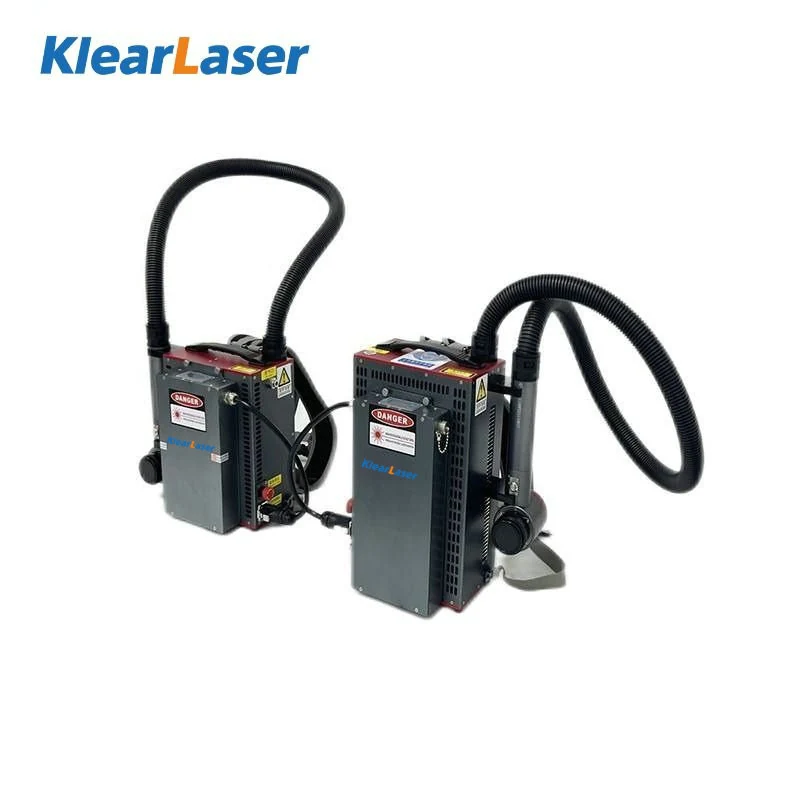
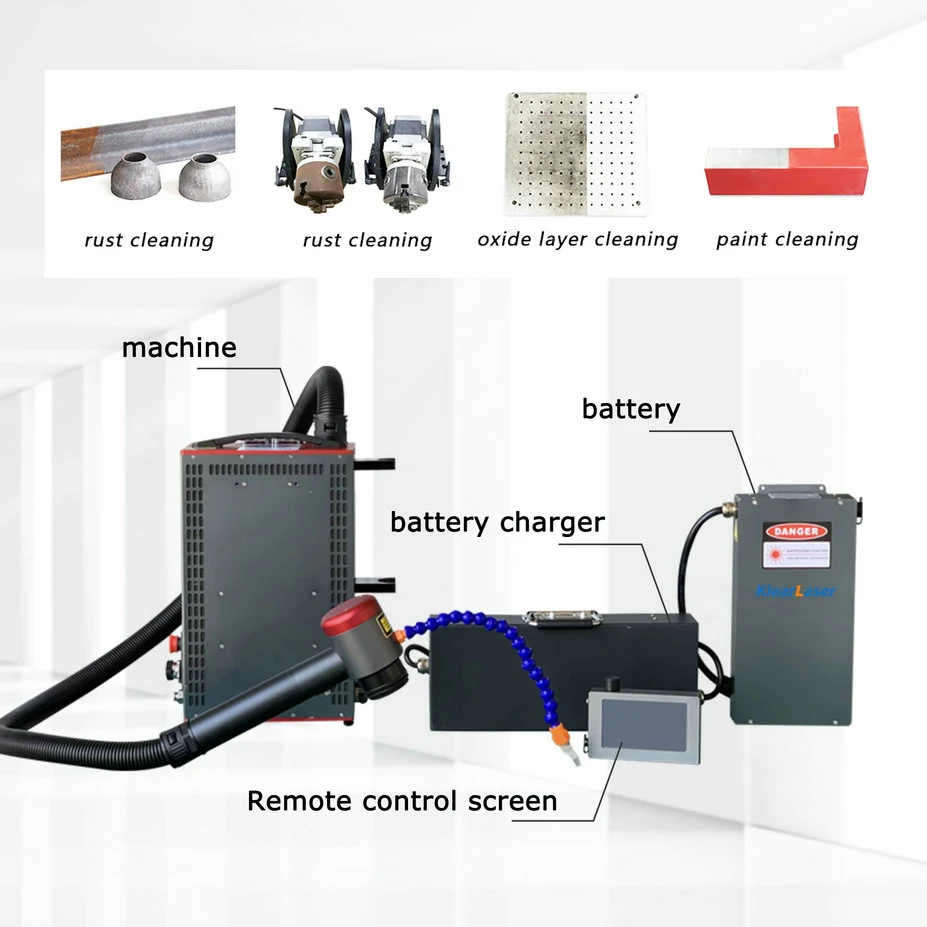
Photographs of this model, its accessories and its packing.


The published figure is 80–90 minutes of continuous work on a single pack at either 100W or 200W. Operators who work in bursts rather than continuously get considerably longer, and 2–3 packs can be carried and swapped.
Light rust and thin coatings are usually a 100W–300W job; heavy rust or large areas need 500W–1000W or more. Because the backpack tops out at 300W, tell us the material and coating thickness before you order — if it needs more, we will say so rather than sell you the wrong format.
Yes. The host is worn, the head is handheld at under 0.75 kg, and settings are on the touch panel. Remote video training is included free with every machine.
Pulsed cleaning puts very little heat into the substrate, which is why it is used on sheet, on electronics and on artefacts. Send us a sample and we will show you the result on your own material before you commit.
Demonstrations, service calls and conservation work all share one constraint: the machine has to arrive intact, set up in minutes and leave no trace.
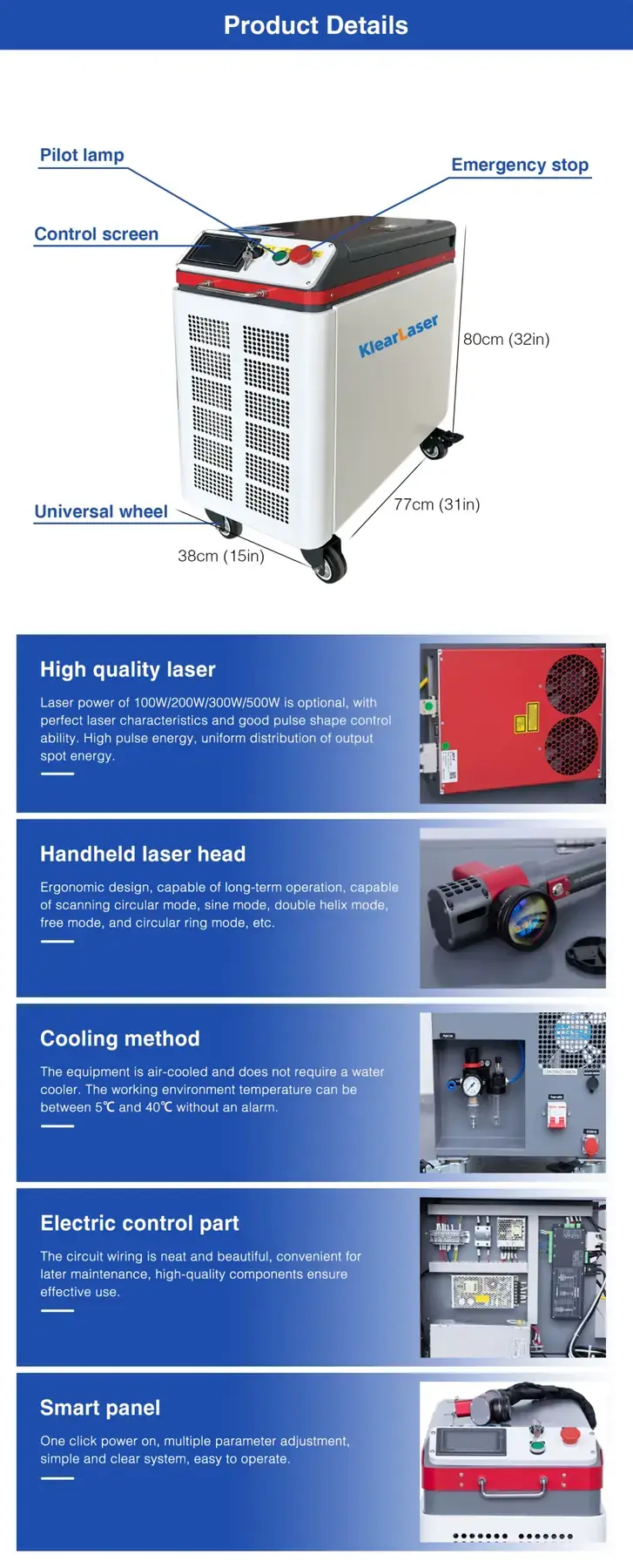
A maintenance bay needs one machine that covers most of the week's work: rust off incoming steel, residue out of a die, paint off a bracket, and occasionally the same job outside in the yard.
Between a portable cleaner and a full CW industrial system there is a gap: work that needs more than 500W of pulsed energy, all day, on parts where heat input still matters — hardened dies, machined castings, thin structural members, anything that will be measured after cleaning.
Ship us a sample, or send photographs and a description. We test on the machine we would recommend and send back before/after images, video and the parameters used — free.