
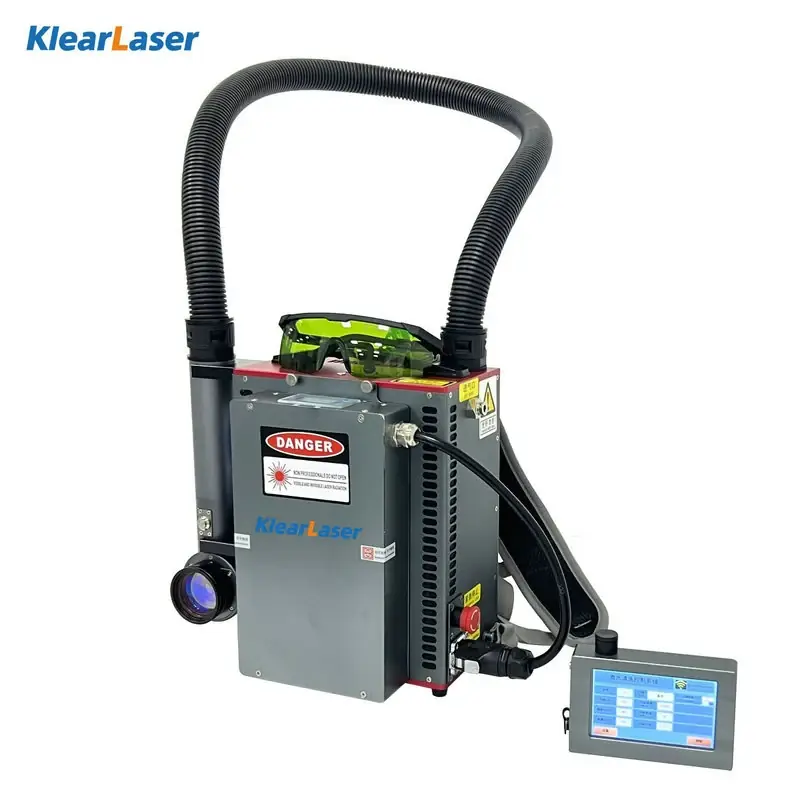
Backpack Series
Backpack Laser Cleaning Machine
100W–300WPulsed fibreAir-cooled
Rust and coating on a bridge girder, a transmission tower, a ship's inner hull or a scaffolded facade cannot be brought to a cleaning bay.
High capital cost, near-zero consumables. Whether that suits you depends entirely on hours per week.
The honest number, and it is modest. Our 100W backpack draws ≤300W and the 200W version ≤800W — less than a workshop heater. At the other end, a fully configured 6000W CW cabinet draws up to 25 kW on three-phase and does need to be planned into the supply.
Protective lenses, replaced every 500–2000 hours. That is the list. No abrasive media, no chemicals, no masking, no rinse water.
Usually the largest hidden saving. Contaminated blast media and spent stripper both carry collection and disposal costs, plus the administration around them. Dry laser cleaning replaces those with filter media from the extraction system.
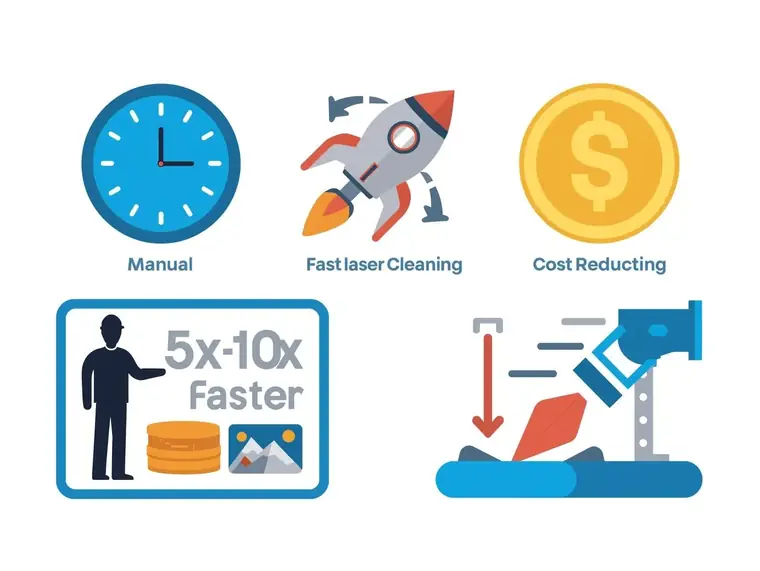
One operator, no masking, no rinse-and-dry cycle, and no waiting for dwell time. In the projects we have documented, cleaning time fell by 70% on automotive rust removal and 60% against traditional methods on aerospace coating stripping.
The machine costs more than a blast cabinet up front. Payback comes from consumables, disposal and labour, so it arrives quickly for equipment used daily and slowly for equipment used monthly. Tell us your hours per week and we will tell you honestly whether the numbers work.
Rust and coating on a bridge girder, a transmission tower, a ship's inner hull or a scaffolded facade cannot be brought to a cleaning bay.
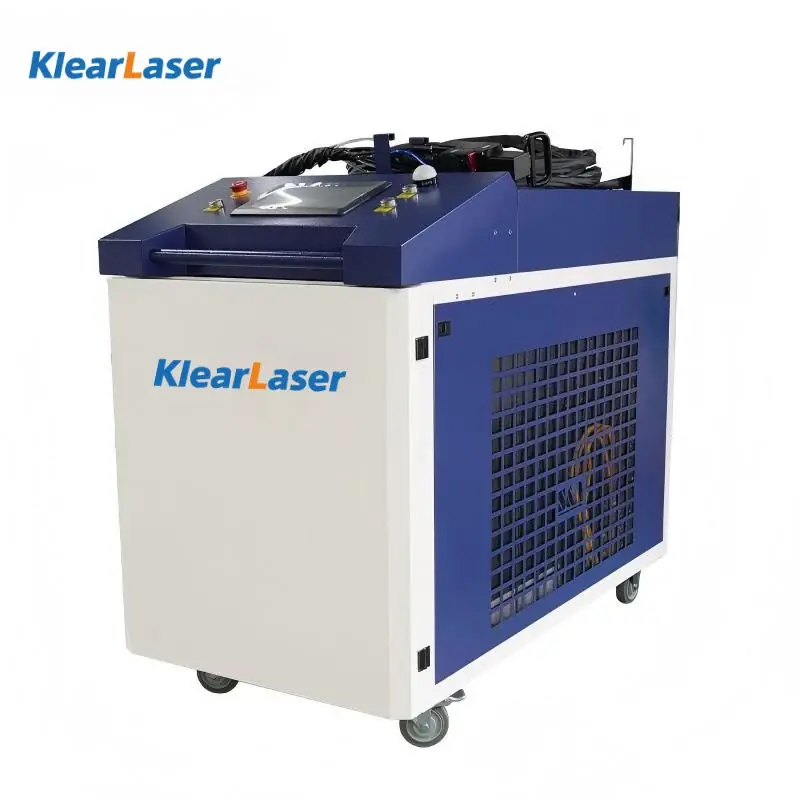
Hull plate, bridge steel, pipeline sections, wind-turbine towers: square metres, not square centimetres, covered in mill scale and heavy rust.
Send the material, the contaminant and the area per part. You get a recommendation within 24 hours and a free test on your own sample.