
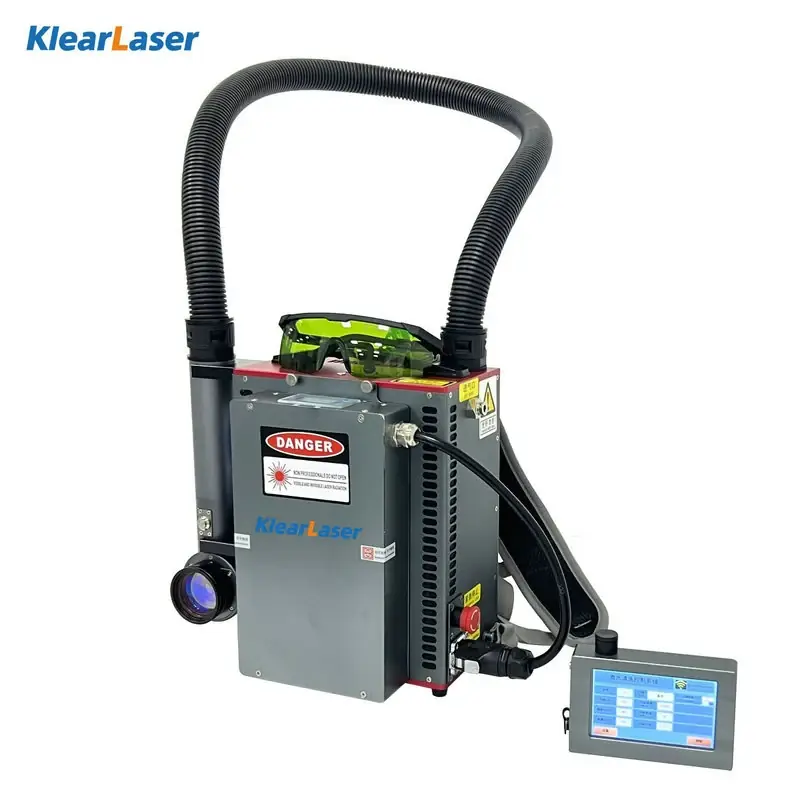
Backpack Series
Backpack Laser Cleaning Machine
100W–300WPulsed fibreAir-cooled
Rust and coating on a bridge girder, a transmission tower, a ship's inner hull or a scaffolded facade cannot be brought to a cleaning bay.
Demonstrations, service calls and conservation work all share one constraint: the machine has to arrive intact, set up in minutes and leave no trace.
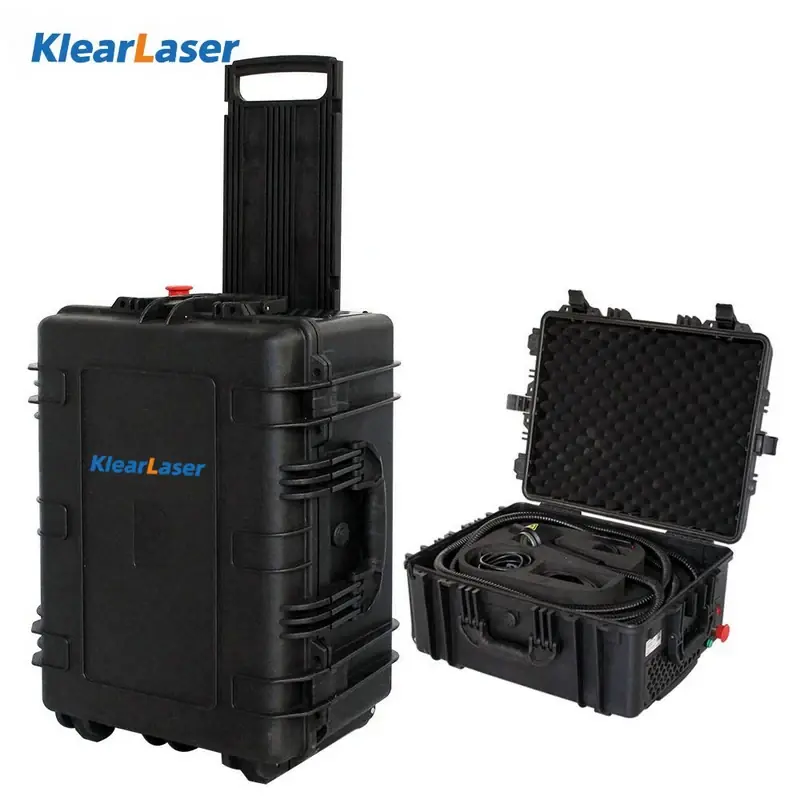
Demonstrations, service calls and conservation work all share one constraint: the machine has to arrive intact, set up in minutes and leave no trace. A trolley cabinet does not fit in a lift or a van aisle, and an unprotected host does not survive being freighted twice a month.
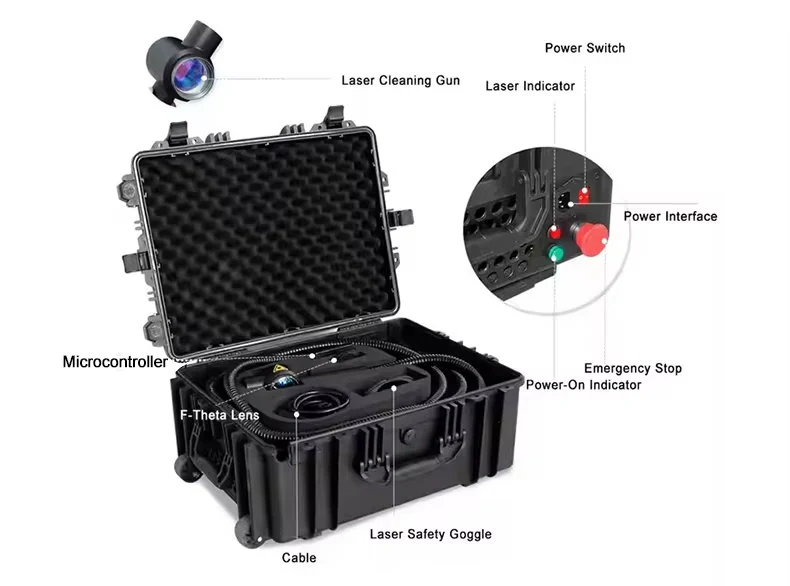
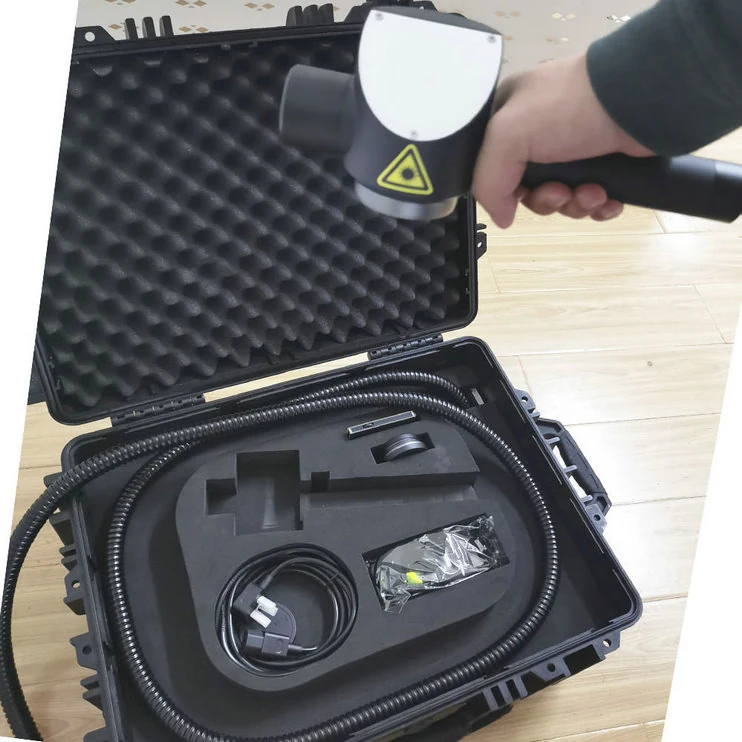
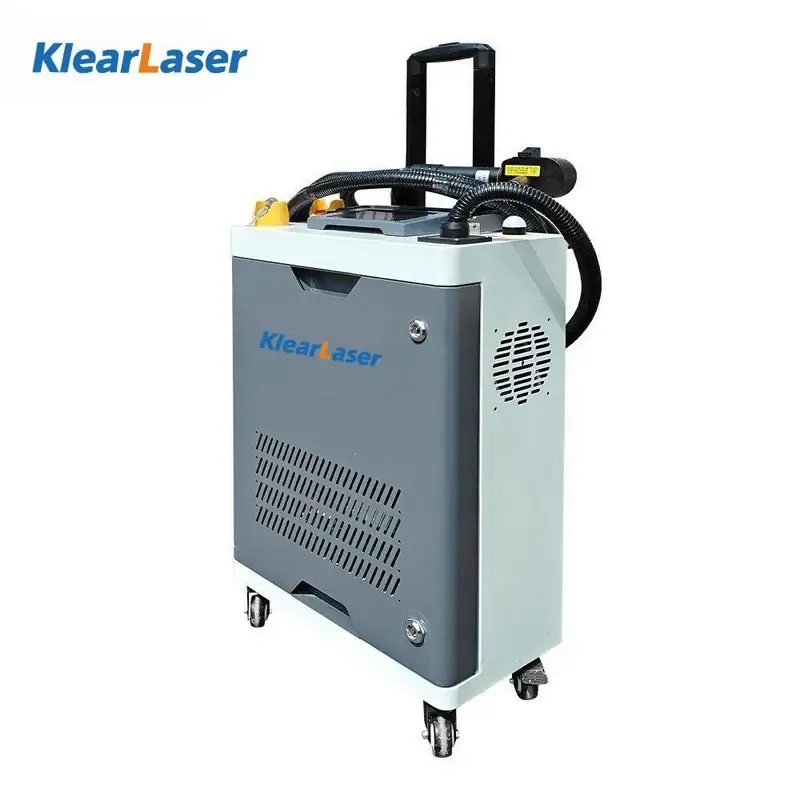
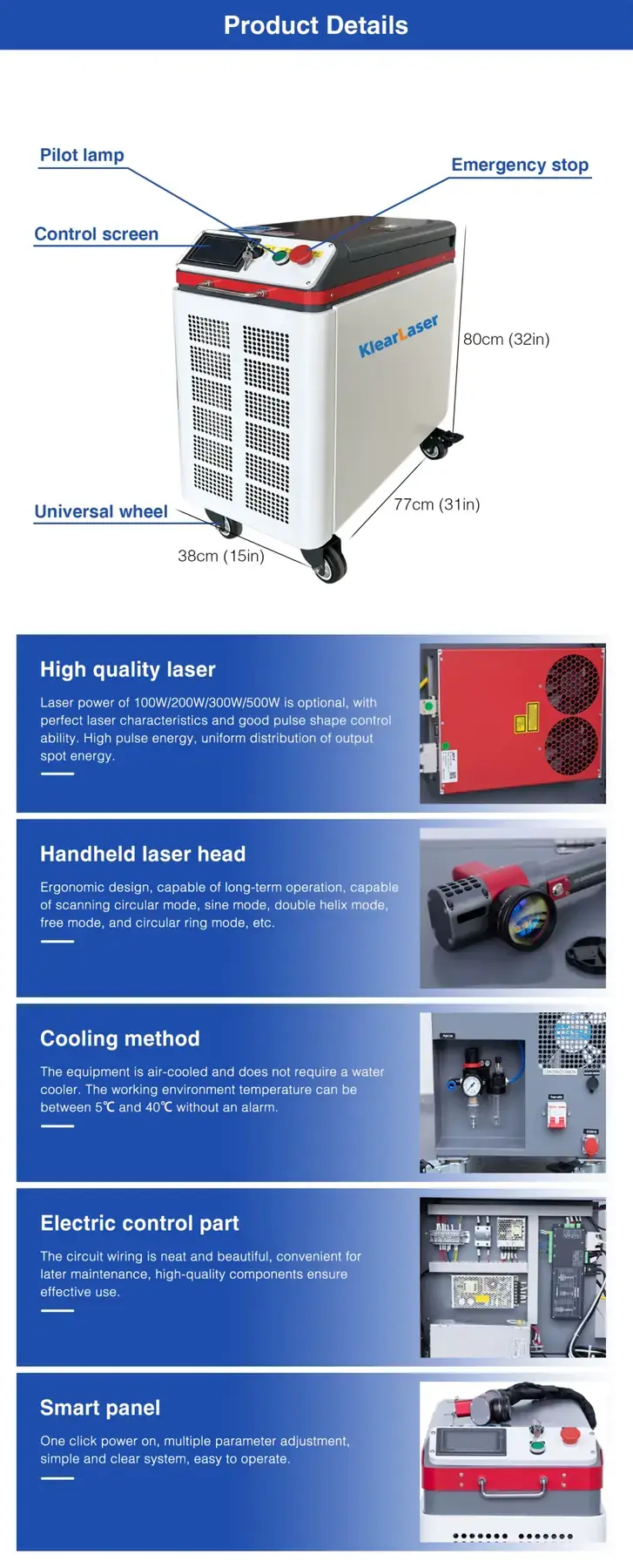
The suitcase build puts a 100W–500W pulsed system inside a hard shell with a handle and wheels. The case stays where you set it down while a 5 metre optical cable takes the 620 g head into a tank, a duct or behind a machine. Pulse width is adjustable across 10–500 ns and eight cleaning modes are selectable on the panel, so the same case handles a bronze patina in the morning and a coated steel flange in the afternoon.
Published parameters for the suitcase series as supplied by the manufacturer.
| Parameter | Specification |
|---|---|
| Laser working mode | Pulsed fibre, 1064 nm |
| Average laser power | 100W / 200W / 300W / 500W configurations |
| Laser source | JPT |
| Pulse width | 10–500 ns adjustable |
| Power instability | <2% |
| Cleaning modes | 8 scanning modes |
| Cleaning width | 110×110 mm (optional) |
| Optical cable length | 5 m |
| Cleaning head weight | 620 g (head only, excluding cable) |
| Cooling mode | Air cooling |
| Mode of operation | Handheld |
| Working temperature | 5°C–40°C |
| Working humidity | ≤80% RH |
| Enclosure | Hard-shell suitcase with handle and wheels |
Configurations outside the values shown are built to order. Confirm the exact specification with us before purchase.
Photographs of this model, its accessories and its packing.
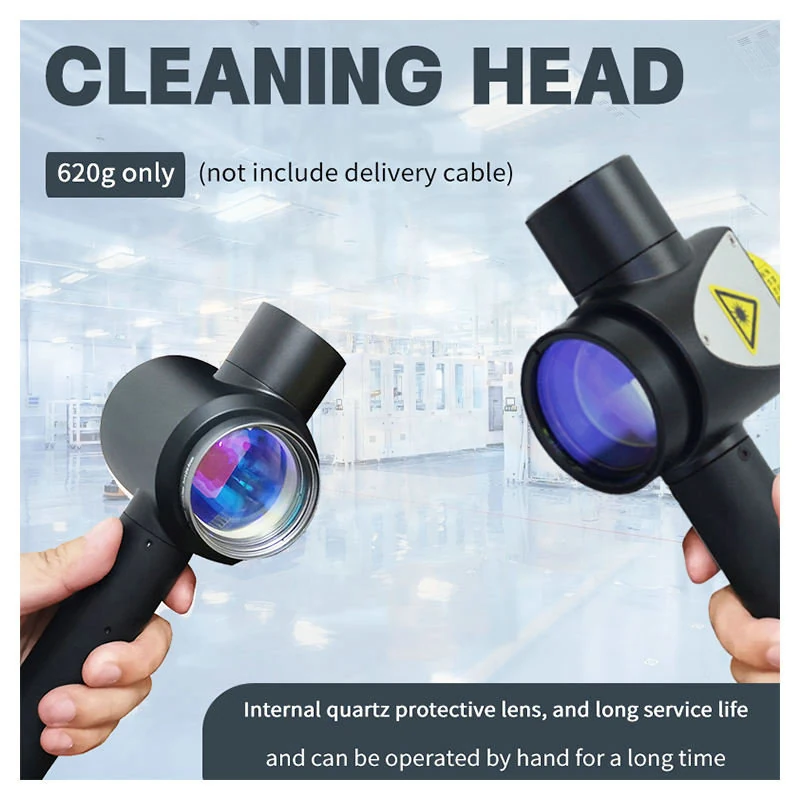
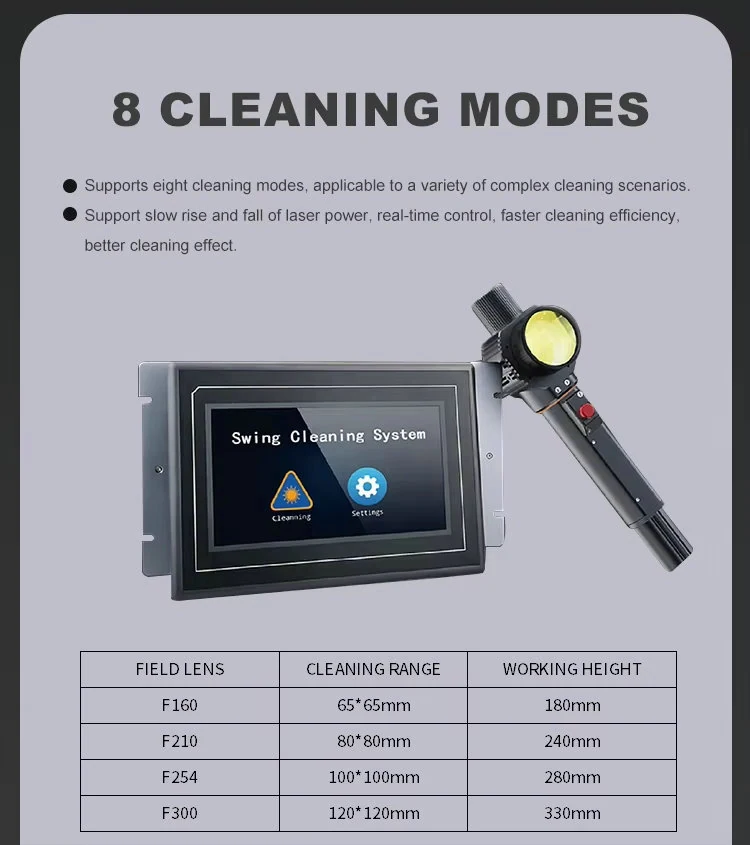
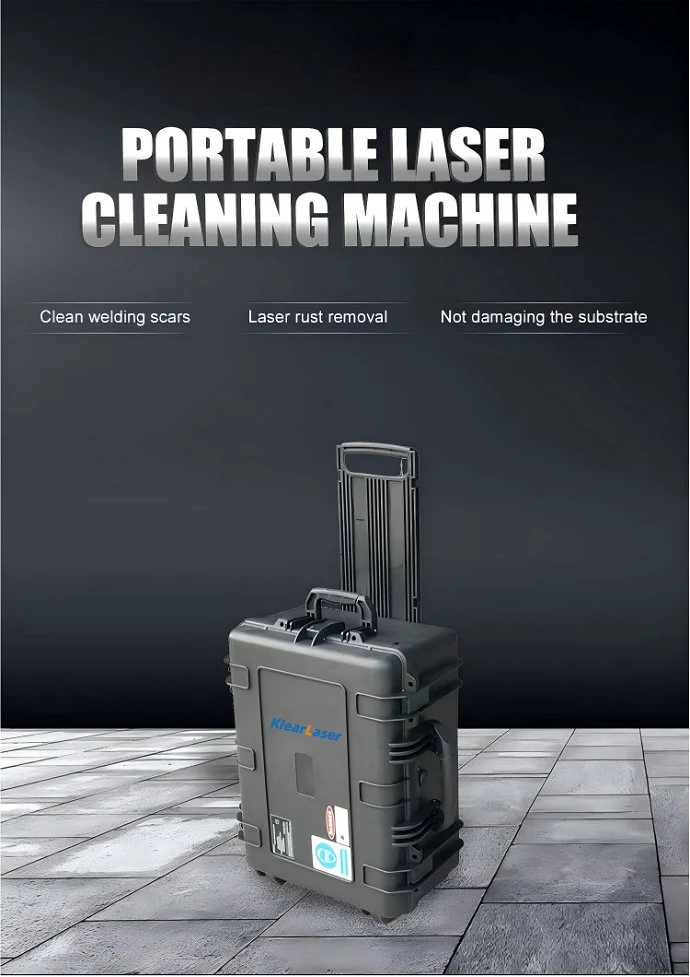
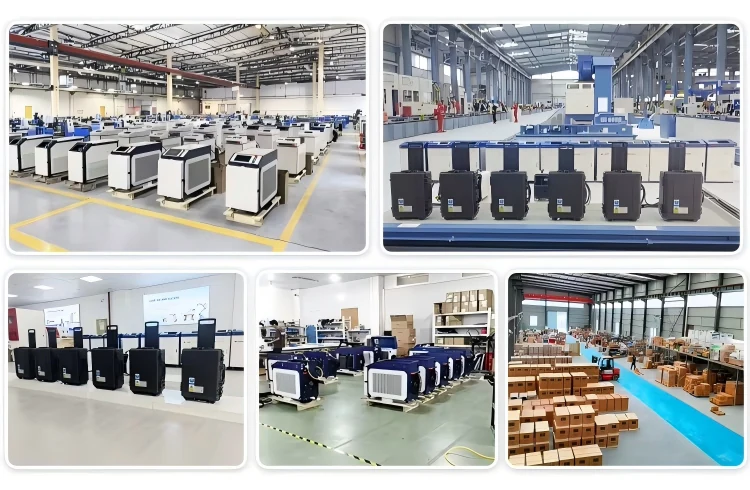
It is built as a hard case for exactly that kind of travel, but a fibre laser is a regulated shipment and airline and customs rules differ by route. Tell us where you are travelling and we will advise on documentation before you book.
Short pulses at high frequency remove thin layers gently — patina, flux residue, light oxide. Longer pulses deliver more energy per shot for thicker rust and paint. Being able to move across 10–500 ns is what lets one machine do both.
It depends on your working distance and the width you want to cover per pass. Send us the part geometry and we will specify it with the quote.
Same pulsed cleaning process, more available power (up to 500W) and a longer 5 m cable — but you are wheeling it rather than wearing it. If your work is at height, take the backpack.
Rust and coating on a bridge girder, a transmission tower, a ship's inner hull or a scaffolded facade cannot be brought to a cleaning bay.
A maintenance bay needs one machine that covers most of the week's work: rust off incoming steel, residue out of a die, paint off a bracket, and occasionally the same job outside in the yard.
Between a portable cleaner and a full CW industrial system there is a gap: work that needs more than 500W of pulsed energy, all day, on parts where heat input still matters — hardened dies, machined castings, thin structural members, anything that will be measured after cleaning.
Ship us a sample, or send photographs and a description. We test on the machine we would recommend and send back before/after images, video and the parameters used — free.