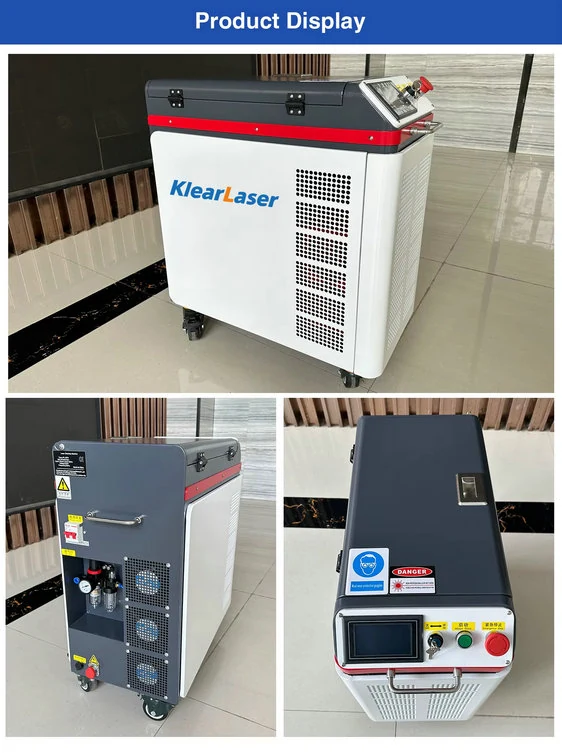
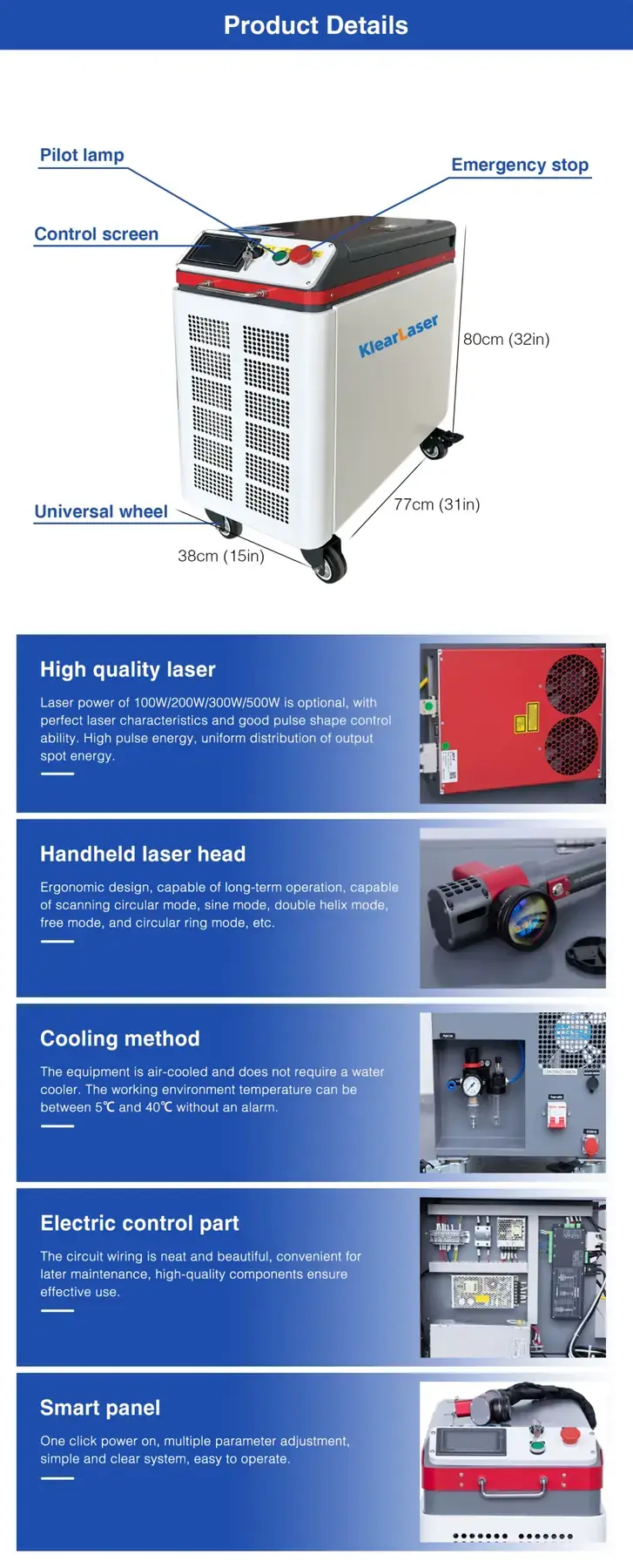
What actually differs
A pulsed source delivers energy in nanosecond bursts with long gaps between them. Peak power during a pulse is enormous, but average heat input stays low because the surface cools between shots. A continuous-wave source delivers a steady beam: more total energy per second, and more of it ending up as heat in the part.
Where pulsed wins
Anything where the substrate matters more than the schedule. Mould cavities and textured tool steel. Thin sheet that would warp. Bronze and stone where the patina is the object. Electronics where components sit millimetres away. Parts that get measured after cleaning. Our pulsed machines run 2–500 ns adjustable pulse widths precisely so the operator can dial energy down for a delicate layer and up for a stubborn one.
Where CW wins
Square metres of heavy rust and thick coating where throughput is the whole problem: hull plate, bridge steel, pipeline exteriors, structural sections. A 1000W–6000W CW machine removes mill scale at a rate no portable pulsed unit approaches. The substrate is thick enough that the additional heat is not a defect.
The honest rule of thumb
If the part is expensive, thin, textured or will be inspected, buy pulsed. If the part is large, thick and simply dirty, buy continuous wave. If you have both kinds of work — which most workshops do — a mid-power pulsed machine covers more of the range than a CW machine of the same price.
Do not decide from a spec sheet
Both modes look similar on paper and behave completely differently on your material. Send us a sample. We run it on the machine we would recommend and send back before/after photos, video and the parameters used, at no charge.