
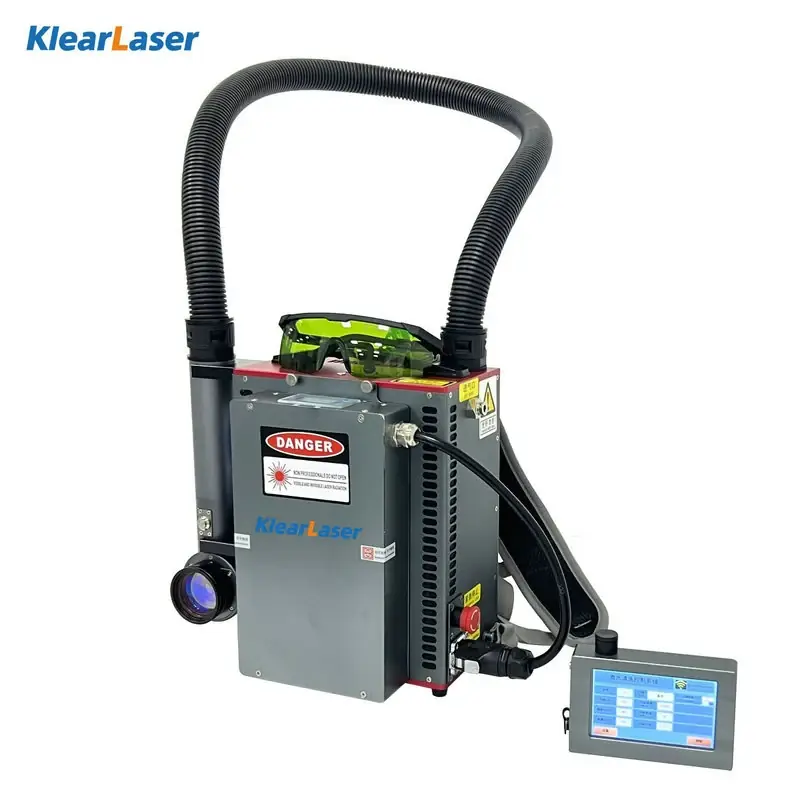
Backpack Series
Backpack Laser Cleaning Machine
100W–300WPulsed fibreAir-cooled
Rust and coating on a bridge girder, a transmission tower, a ship's inner hull or a scaffolded facade cannot be brought to a cleaning bay.
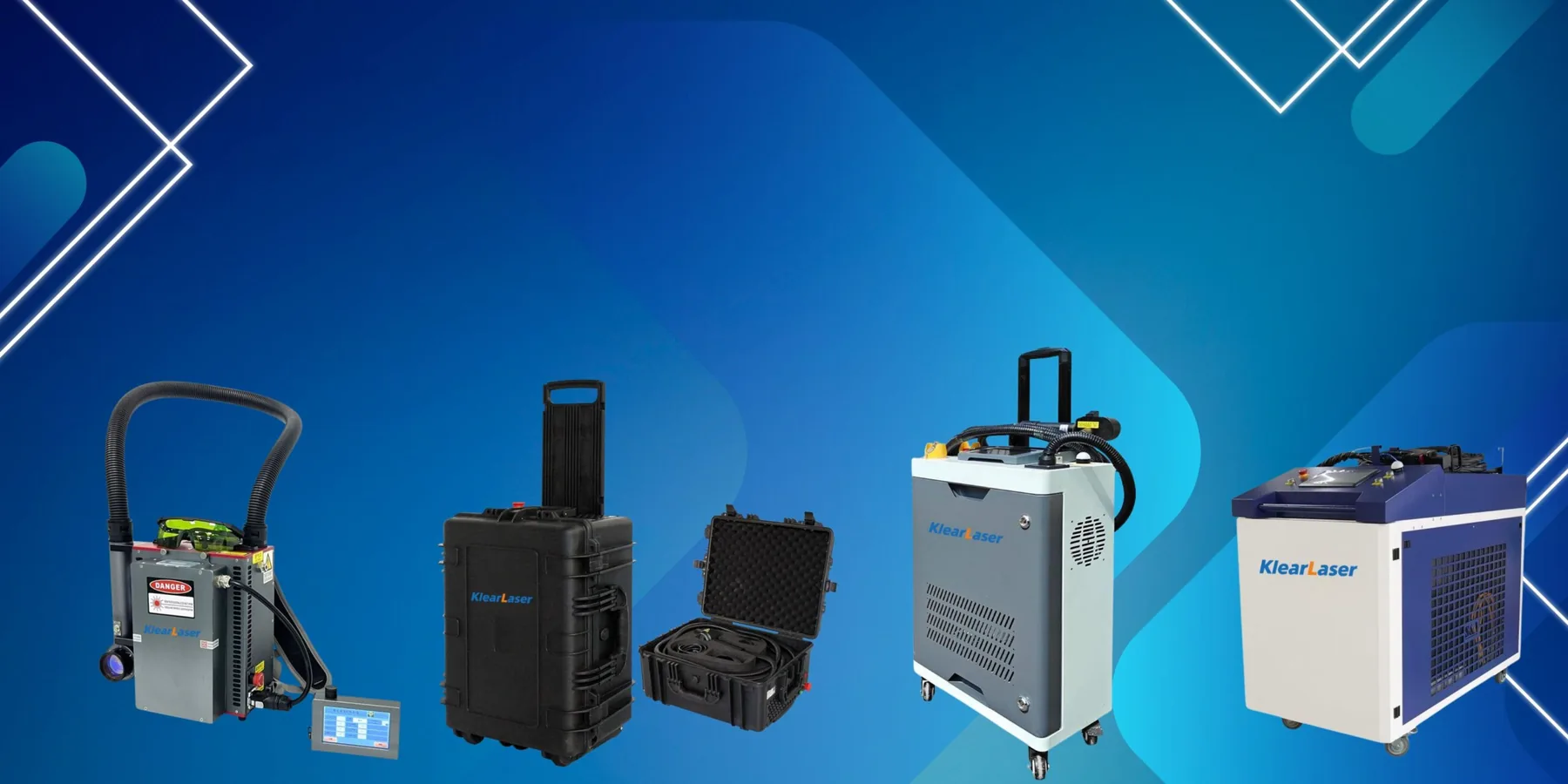
Five machines in four build formats. Every one is a fibre laser cleaner — what differs is how much power it delivers, in what mode, and how you get it to the part.
KlearLaser develops and manufactures pulsed and continuous-wave laser cleaning systems in our own facility, from compact handheld units to 6000W industrial machines. They remove rust, paint, oxides, coatings and oil from metal, stone, ceramics and composites without contact and without damaging the substrate.
Premium laser sources — Raycus, JPT or IPG — are paired with control software that exposes the parameters that matter: power, pulse width, frequency, scan pattern and width. Two guides answer the questions that decide most purchases: how much power you need and pulsed versus continuous wave.
A wearable 12–18 kg host for work that never happens twice in the same place: bridge steelwork, tower sections, ship interiors, restoration scaffolding.
Rust and coating on a bridge girder, a transmission tower, a ship's inner hull or a scaffolded facade cannot be brought to a cleaning bay.
A hard-shell case with wheels and a handle that survives a van, a lift and a customs inspection — then opens into a 500W pulsed cleaner.
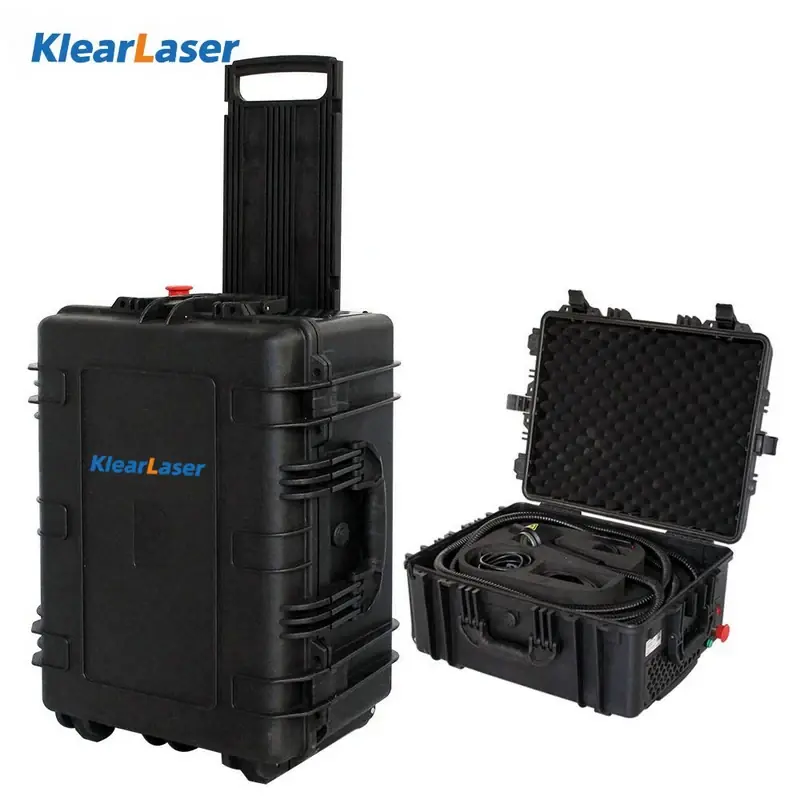
Demonstrations, service calls and conservation work all share one constraint: the machine has to arrive intact, set up in minutes and leave no trace.
Pull-rod and wheels, 45 kg, 15–30 m²/h. The workhorse format for a maintenance bay that also gets called out to the yard.
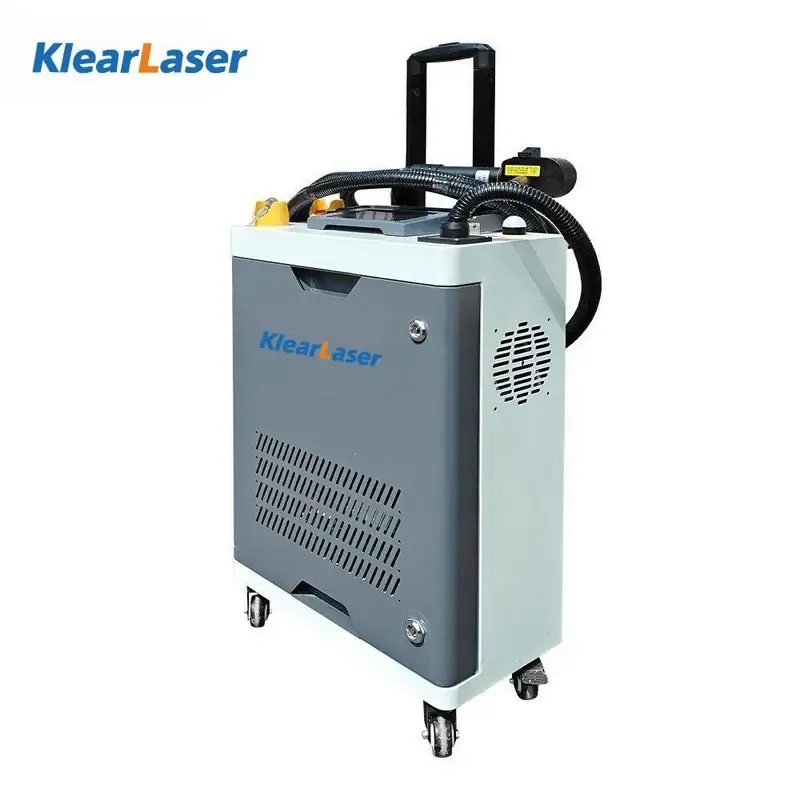
A maintenance bay needs one machine that covers most of the week's work: rust off incoming steel, residue out of a die, paint off a bracket, and occasionally the same job outside in the yard.
Enclosed cabinet housing built for 24/7 duty, in pulsed 300W–1500W and continuous-wave 1000W–6000W variants, with water cooling and production-line integration.
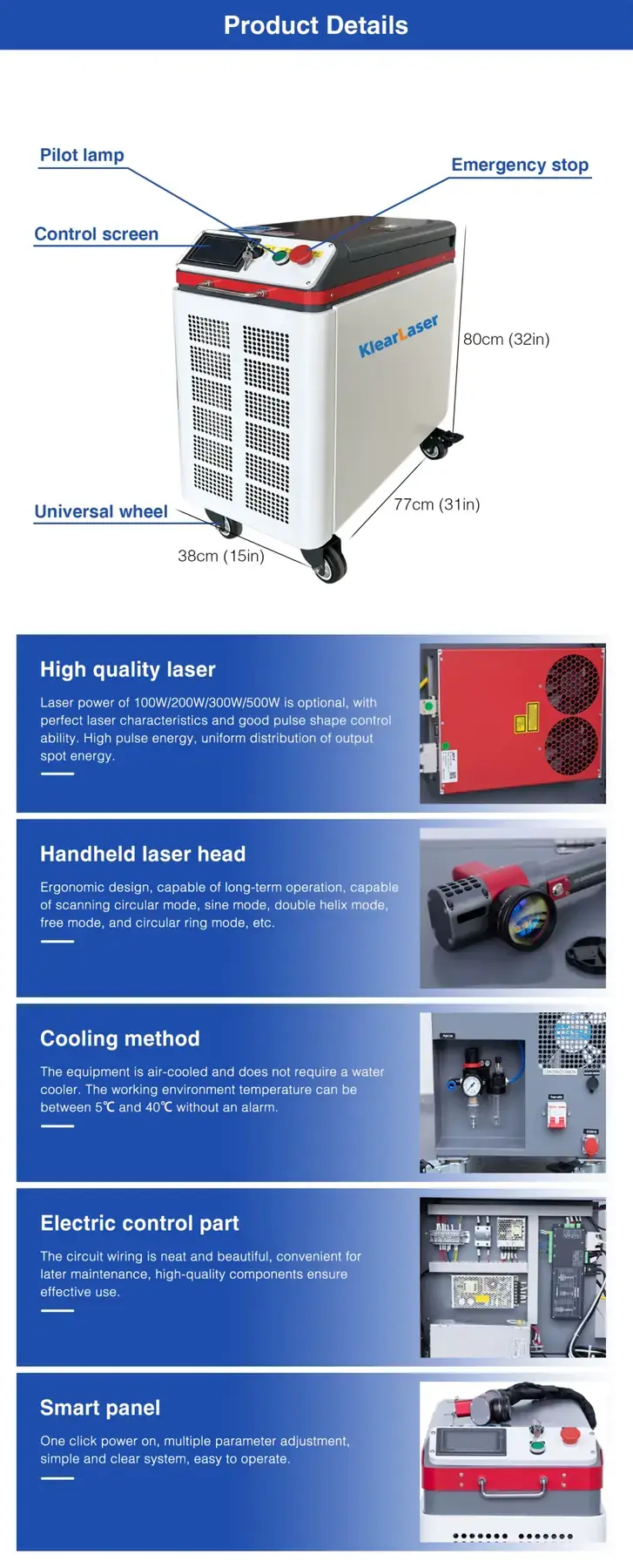
Between a portable cleaner and a full CW industrial system there is a gap: work that needs more than 500W of pulsed energy, all day, on parts where heat input still matters — hardened dies, machined castings, thin structural members, anything that will be measured after cleaning.
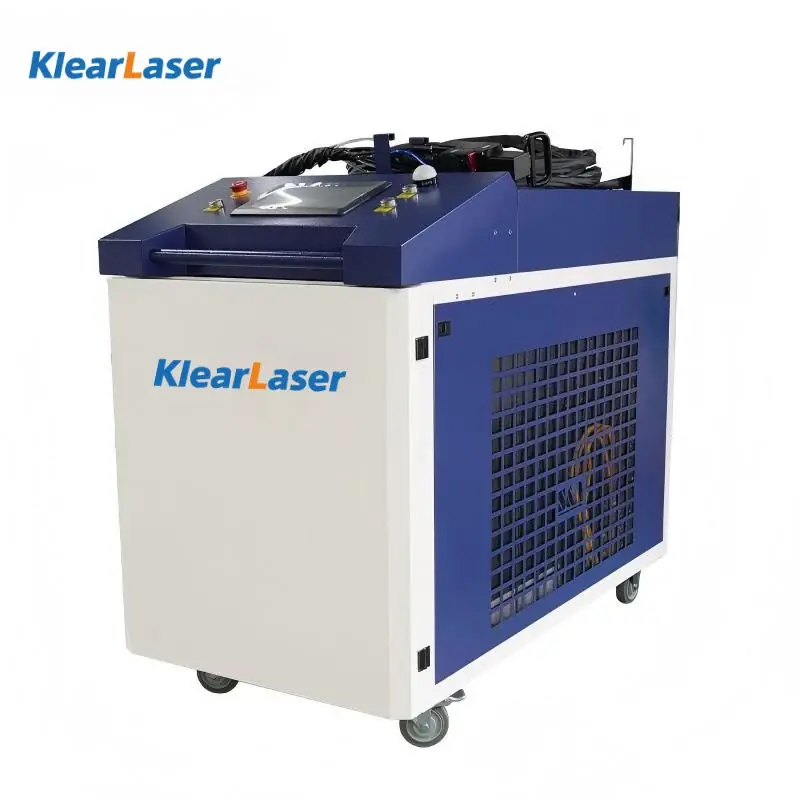
Hull plate, bridge steel, pipeline sections, wind-turbine towers: square metres, not square centimetres, covered in mill scale and heavy rust.
Tell us the material, the contaminant and where the cleaning happens. We will name a machine and explain why — and run a free test on your sample first.