
Trolley Laser Cleaning Machine
A maintenance bay needs one machine that covers most of the week's work: rust off incoming steel, residue out of a die, paint off a bracket, and occasionally the same job outside in the yard.
Short version: keep the glass clean, watch the cooling, replace one consumable.

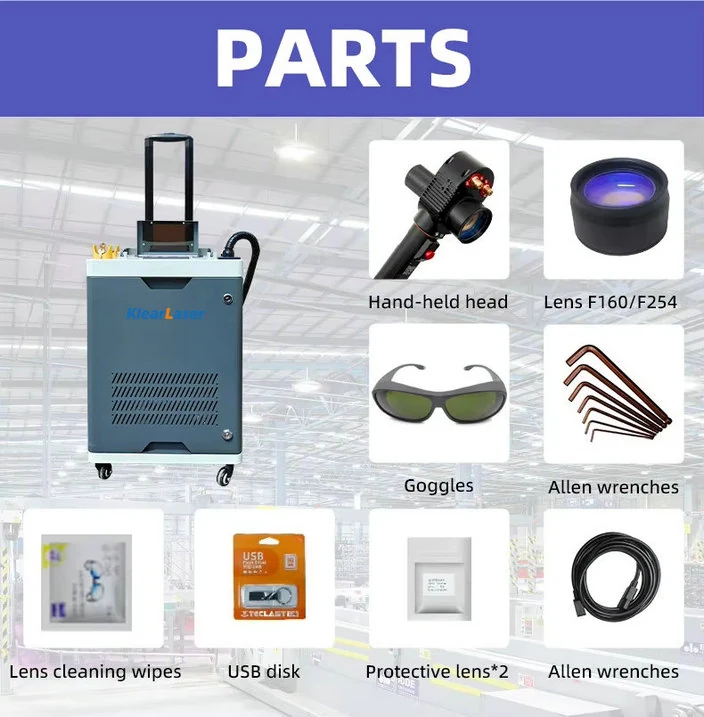
The only routine consumable. It sits in front of the focusing optics and takes the spatter. Replace it roughly every 500–2000 hours depending on how dirty your work is. A scorched or pitted protective lens is the single most common cause of 'the machine has lost power'.
Clean the lens and protective glass with the supplied wipes. On water-cooled machines check the chiller level and temperature. Look at the fibre cable for tight bends or crush damage — fibre damage is expensive and entirely preventable.
Air-cooled machines need clear intakes and a sensible ambient; our portable series are rated 5°C–40°C and up to 80% relative humidity. Water-cooled cabinet machines need the coolant maintained and the circuit kept clean. Most thermal faults trace back to a blocked filter or a neglected chiller.
There is no media to load, no chemical to mix, no waste drum to book a collection for, and no consumable abrasive to buy. That is the point of the technology, and it is why operating cost stays flat as hours accumulate.
Machines ship with manuals and video guides, remote video training is included, and support runs on a 24-hour response commitment. Core components including the laser source and fibre carry a 1–2 year warranty.
A maintenance bay needs one machine that covers most of the week's work: rust off incoming steel, residue out of a die, paint off a bracket, and occasionally the same job outside in the yard.
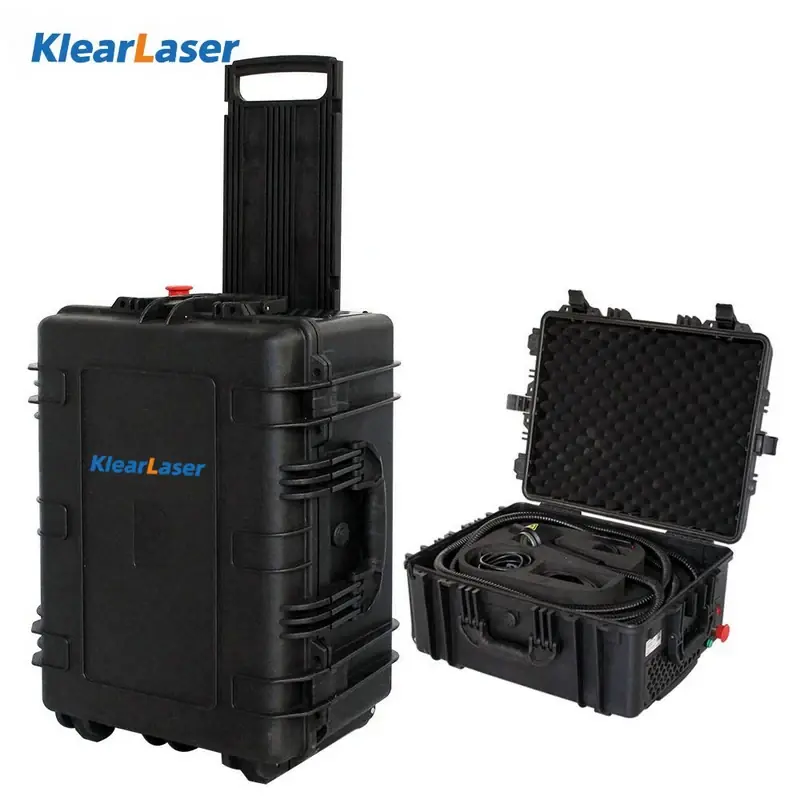
Demonstrations, service calls and conservation work all share one constraint: the machine has to arrive intact, set up in minutes and leave no trace.
Send the material, the contaminant and the area per part. You get a recommendation within 24 hours and a free test on your own sample.