
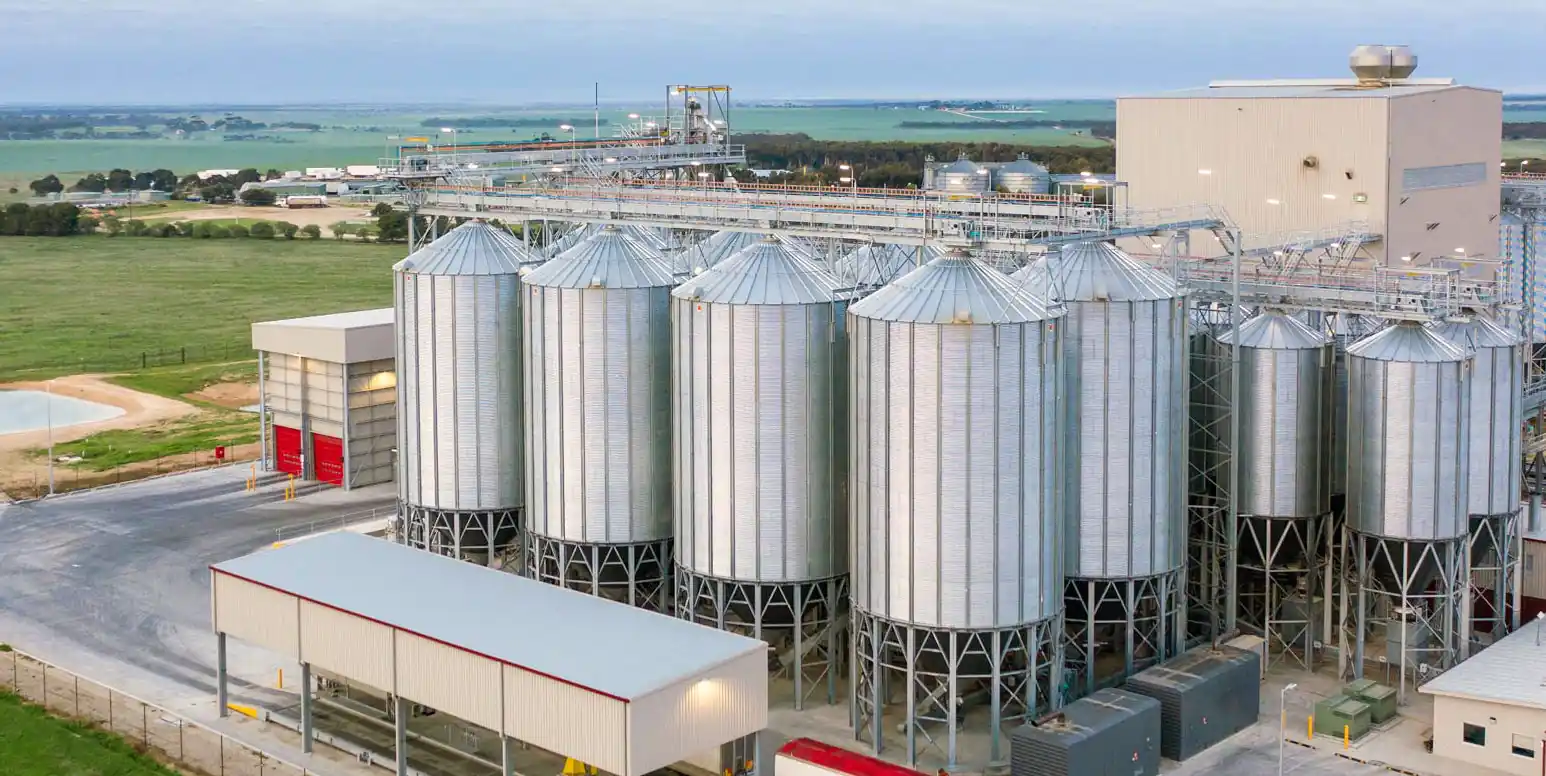
Storage Silo for Wheat Flour Milling
Wheat storage built for a mill rather than for a trader.

What This Machine Does
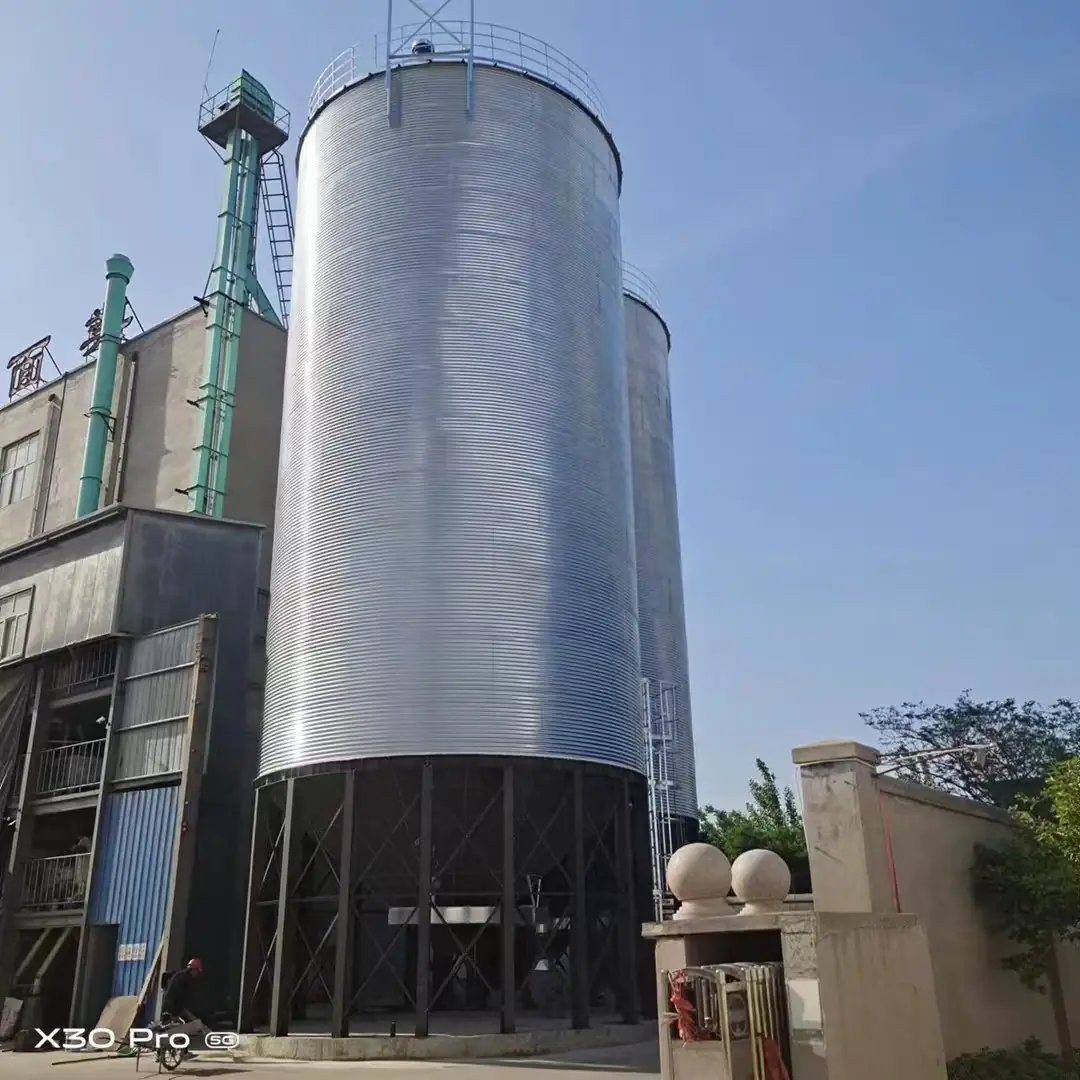
Wheat storage built for a mill rather than for a trader. The silo holds wheat at a stable moisture so tempering behaves predictably, and the conveying route into the cleaning section is planned with the silo instead of improvised afterwards.
Key Benefits
- Stable storage moisture so the tempering step produces consistent results
- Sealed shell and roof that keep rain and condensation out of the raw wheat
- Conveying planned into the cleaning section at the same time as the silo
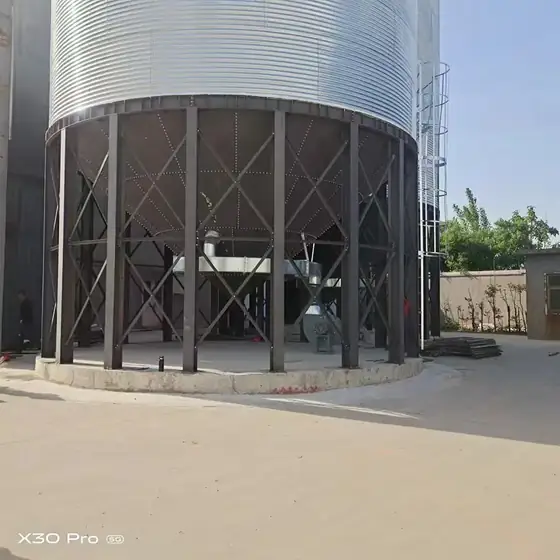
- Bolted construction erected next to an existing mill without heavy civil work
- Battery layout that separates wheat types or qualities
Problems It Solves
- Wheat bought at different moistures makes tempering unpredictable
- Flat storage next to a mill costs building area the plant needs for process equipment
- Deliveries have to be milled immediately because there is nowhere to hold them
- Wheat qualities get mixed and the flour specification drifts
Who It Is For
- Flour mills buying wheat in bulk
- Semolina and durum processors
- Mills adding storage to smooth out supply
- Grain processors feeding a cleaning section
Application Scenarios
- Raw wheat storage in front of a flour mill
- Separate storage for soft wheat, durum and rye
- Buffer storage that lets the mill buy on price rather than on need
- Finished product silos where the mill stores bulk flour
Technical Features
- Corrugated hot dip galvanized sheets bolted with sealed connecting holes
- Trapezoidal roof geometry with a sealed connection to the sidewall
- Filling via bucket elevator, flow pipe or pneumatic pipeline
- Repair door, access door, outside ladder and guard rings per silo
- Sweeper auger option for complete discharge on flat bottom designs
Storage Silo for Wheat Flour Milling Model Table
Figures below are taken from the TITAN model sheets. Where a figure depends on the crop or the contamination level it is stated that way rather than averaged.
| Item | Specification |
|---|---|
| Construction | Bolted corrugated hot dip galvanized sheets with vertical stiffeners |
| Zinc coating | 275 g/m2, 300 g/m2 and 350 g/m2 plate, shell coating equivalent to 600 g/m2 |
| Steel grade | Structural galvanized steel S350GD |
| Diameter range | 2 m to 32 m, larger on request |
| Height to diameter ratio | Between 1:1.1 and 1:2 |
| Capacity per silo | 10 t to 15000 t |
| Battery capacity | 1500 t to 20000 t for flat bottom groups |
| Fittings | Repair door, outside ladder with guard rings, access door, sweeper |
How This Machine Is Built
Quality Control
- Zinc coating weight specified on the plate, not left as a general galvanized claim
- Connecting holes sealed with age resistant and waterproof daub belts of aviation grade
- High strength bolts used with round galvanized steel washers at every joint
- Roof to sidewall connection sealed to keep stored product away from moisture
- Erection supervised through the bolting sequence by TITAN engineers
Materials And Wear Parts
- Hot dip galvanized steel plate
- Structural galvanized steel S350GD
- High strength bolts
- Waterproof sealing belt
Customisation Options
- Silo count set by the number of wheat qualities to keep apart
- Heat retaining layer for hot climates
- Moisture and heat monitoring inside each silo
- Discharge routing into the cleaning section
- Base type chosen against the 12 m diameter rule
Use Guide
- Plan the number of silos around the wheat qualities you must keep separate
- Route the discharge into the destoner and scourer at the section capacity
- Keep the roof seals inspected, because wheat picks up moisture fastest at the top
- Record temperature through the storage season
- Empty and inspect before a new harvest is received
How It Compares With The Alternatives
| Warehouse storage at the mill | Frees the building for process equipment and removes the loader from the intake route. |
|---|---|
| Buying wheat week by week | Storage lets the mill buy on price and mill on schedule instead of milling what just arrived. |
| Concrete silo | Erected from a shipped kit in a fraction of the civil programme. |
Storage Silo for Wheat Flour Milling Questions
How much wheat storage should a mill hold?
It follows the milling rate and the buying pattern. Start from the days of milling you want to cover and convert that into tonnes at the wheat bulk density.
Can one silo hold different wheat types?
Not at the same time. Keep qualities in separate silos, which is why batteries are normally specified with several smaller silos rather than one large one.
Does the silo connect directly to the cleaning section?
Yes. Bucket elevators, chain conveyors and gates are quoted with the silo so the route into the destoner and scourer is sized correctly.
What protects the wheat from moisture?
Hot dip galvanized plate, a sealed trapezoidal roof and waterproof daub belts at every connecting hole.
Can the silo be installed beside an existing mill?
Yes. Bolted silos are erected on a prepared foundation next to the existing building, and the conveying is routed into the current intake.
What is the delivery scope?
Design, fabrication, installation supervision, commissioning and after sales service.
Related Machines
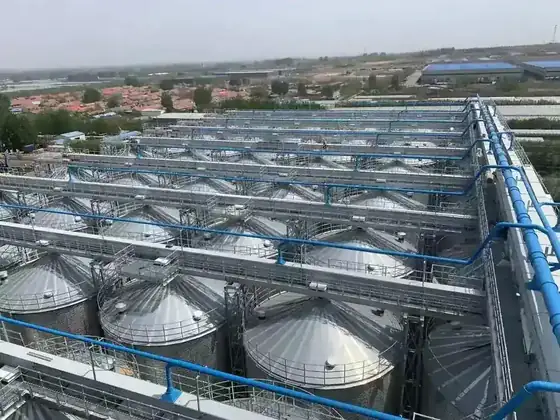
Flat Bottom Silos
Grain storage silos, also called grain storage bins, are the efficient and economical way to hold grain: they protect it from insects and...
View Specifications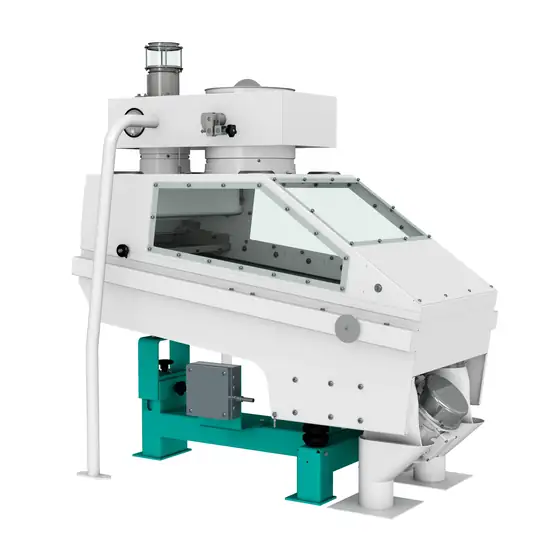
MTSD Wheat Grain Destoner
The MTSD destoner separates stones, pebbles, glass and other high density matter from the grain stream in a flour mill.
View Specifications
Bucket Elevators Conveyors And Gates
TITAN bucket elevators transport grain granules such as paddy, rice and wheat, and are also used for oil, food, feed and chemical elevation.
View SpecificationsRequest A Quotation For The Storage Silo for Wheat Flour Milling
Tell us your capacity, crop and power supply. You get model selection, dimensions and the wear parts list.