
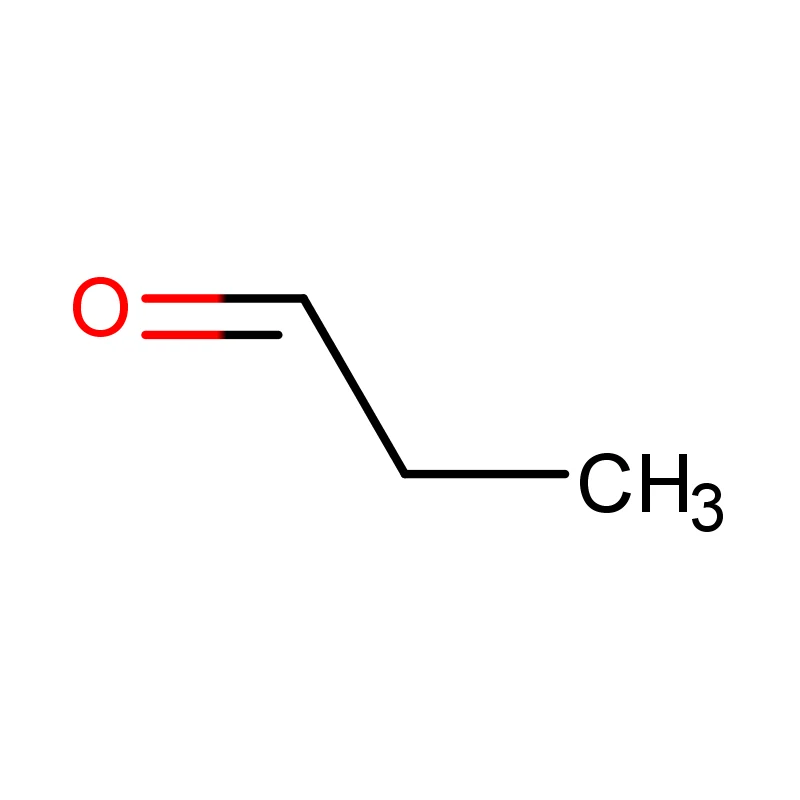
Propionaldehyde
Propionaldehyde is recognised as a basic raw material of the fine chemical industry. It feeds n-propanol, propionic acid, dimethylol propionic acid for waterborne polyurethane, methyl methacrylate for plexiglass and trimethylol ethane for resins, and it is the main raw material for acetone oxime used in water treatment. Supplied at 99.50% minimum aldehyde content.
What You Get With This Grade
- Aldehyde content 99.50% minimum by mass with moisture at 0.20% maximum
- Acid as propionic acid held to 0.10% maximum, the ageing indicator for this aldehyde
- Density band 0.790-0.800 g/cm³ at 20 °C for volumetric batching
- Supplied with 1-propanol, the alcohol it produces, from the same supplier
Technical features
- Colourless transparent liquid with no visible impurities
- Widely used in medicine, paint, plastics, spices, rubber, food and feed industries
- Recognised as a basic raw material of the fine chemical industry
- Industrially produced predominantly by low-pressure oxo synthesis
Where Propionaldehyde Is Used
n-Propanol and propionic acid
The raw material for n-propanol and for the preservative raw material propionic acid.
Waterborne polyurethane
Feeds dimethylol propionic acid, the waterborne polyurethane raw material.
Plexiglass and resins
Feeds the plexiglass monomer methyl methacrylate and the resin raw material trimethylol ethane.
Water treatment
The main raw material for acetone oxime used as a water treatment agent.
Polymer processing aids
A polymerisation inhibitor in polyethylene production, an accelerator for synthetic resins and rubber, an anti-ageing agent, and used as antifreeze, lubricant and dehydrating agent.
Buyers This Grade Is Built For
- Alcohol and acid producers running hydrogenation or oxidation from the aldehyde
- Waterborne polyurethane raw material manufacturers
- Acrylic monomer producers
- Water treatment chemical manufacturers making acetone oxime
What It Stops Going Wrong
- Propionic acid content in the aldehyde signals oxidation and reduces yield
- Moisture above 0.20% carries into the downstream reaction
- Buying the aldehyde and the alcohol separately splits a single production step across two suppliers
- An aldehyde without a density band cannot be batched volumetrically with confidence
Quality Index for Propionaldehyde
| CAS number | 123-38-6 |
|---|---|
| Molecular formula | C3H6O |
| Molecular weight | 58.08 |
| Appearance | Colourless transparent liquid with no visible impurities |
| Density at 20 °C | 0.790-0.800 g/cm³ |
| Aldehyde content | 99.50% minimum mass fraction |
| Moisture content | 0.20% maximum mass fraction |
| Acid as propionic acid | 0.10% maximum |
How It Ships and How to Store It
Packing
- Galvanised iron drum or ISO tank, 165 kg net per drum
- Can be packaged according to user requirements
Storage and transport
- Store as a flammable liquid away from ignition sources
- Keep sealed and cool so the acid content does not climb in storage
How the Lot Is Released
Appearance, density, aldehyde content, moisture and acid content are checked against the technical index before release.
What We Can Change
165 kg drum or ISO tank, packed according to user requirements.
Against the Alternatives
Propionaldehyde is the three-carbon aldehyde; valeraldehyde is the five-carbon one. Propionaldehyde heads toward n-propanol, propionic acid and methyl methacrylate; valeraldehyde heads toward pentanol, valeric acid and flavour work. We supply both, and also 1-propanol, the alcohol propionaldehyde produces.
Handling Propionaldehyde on Your Site
Written for the person who receives the drum, not for a brochure.
- Check the propionic acid figure on arrival as the oxidation indicator
- Use the 0.790-0.800 g/cm³ density band for volumetric batching
- Keep drums sealed and cool in store
- Handle as a flammable liquid
Propionaldehyde FAQ
What aldehyde content do you supply?
99.50% minimum by mass fraction, with moisture at 0.20% maximum and acid as propionic acid at 0.10% maximum.
What is the density?
0.790-0.800 g/cm³ at 20 °C.
What does propionaldehyde produce?
n-Propanol, propionic acid, dimethylol propionic acid for waterborne polyurethane, methyl methacrylate, trimethylol ethane and acetone oxime for water treatment.
How is propionaldehyde made industrially?
Predominantly by low-pressure oxo synthesis, which became the main production method after large-scale installation in the 1970s.
What other roles does it have?
It is a polymerisation inhibitor in polyethylene production, an accelerator for synthetic resins and rubber, an anti-ageing agent, and it is used as antifreeze, lubricant and dehydrating agent.
Do you supply n-propanol too?
Yes, 1-propanol is in the same product family and can be quoted on the same offer.
Related Products
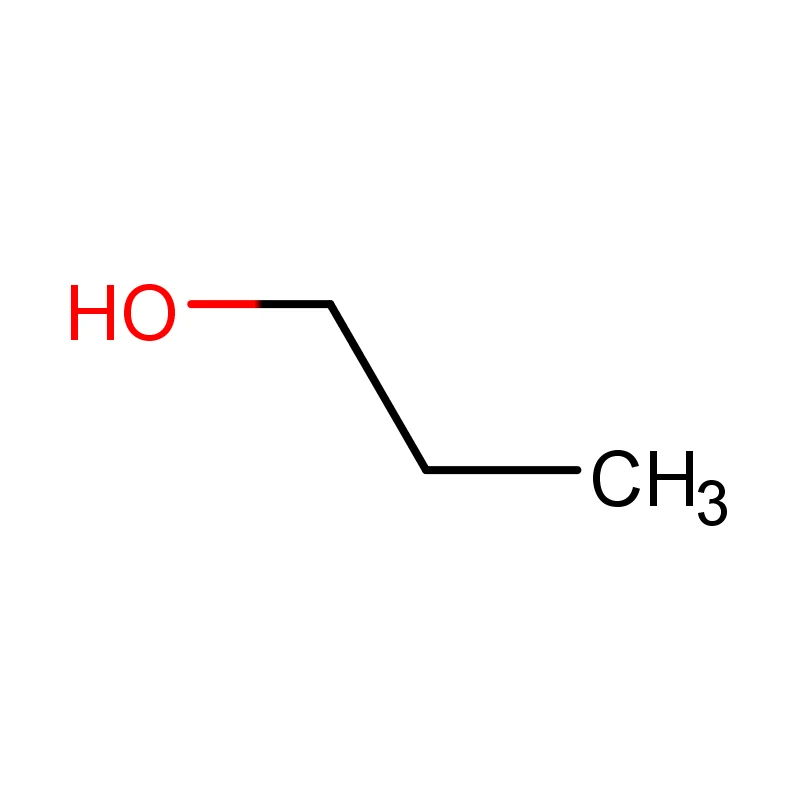
1-Propanol
CAS 71-23-8 · C3H8O
1-Propanol is the main raw material for n-propyl acetate, the green food printing ink solvent, and for n-propylamine, di-n-propylamine, bromopropane...
View specification →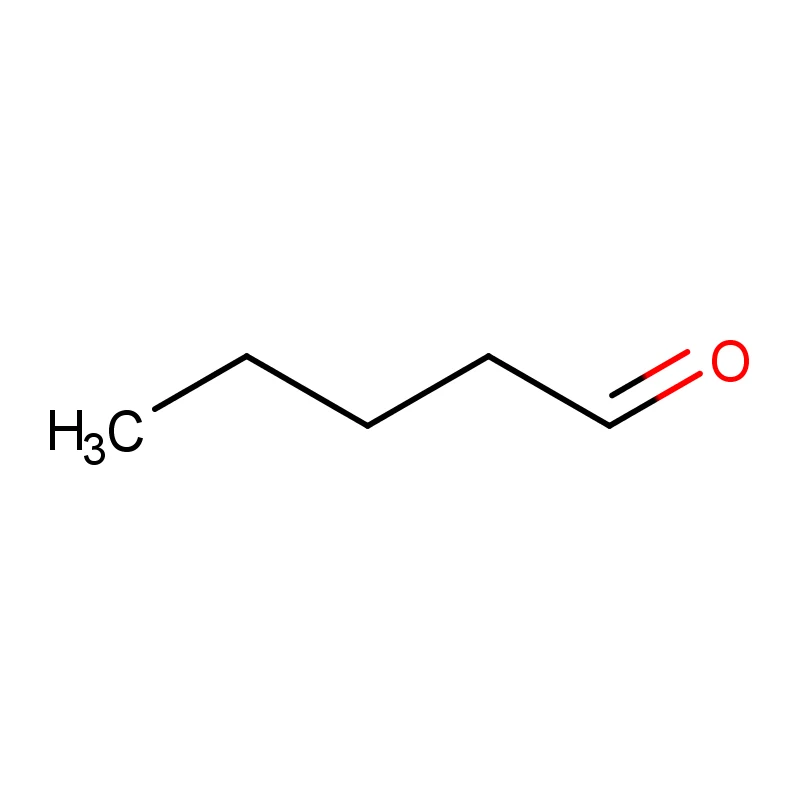
Valeraldehyde
CAS 110-62-3 · C5H10O
Valeraldehyde is a colourless liquid with a pungent odour, a five-carbon chain carrying an aldehyde group.
View specification →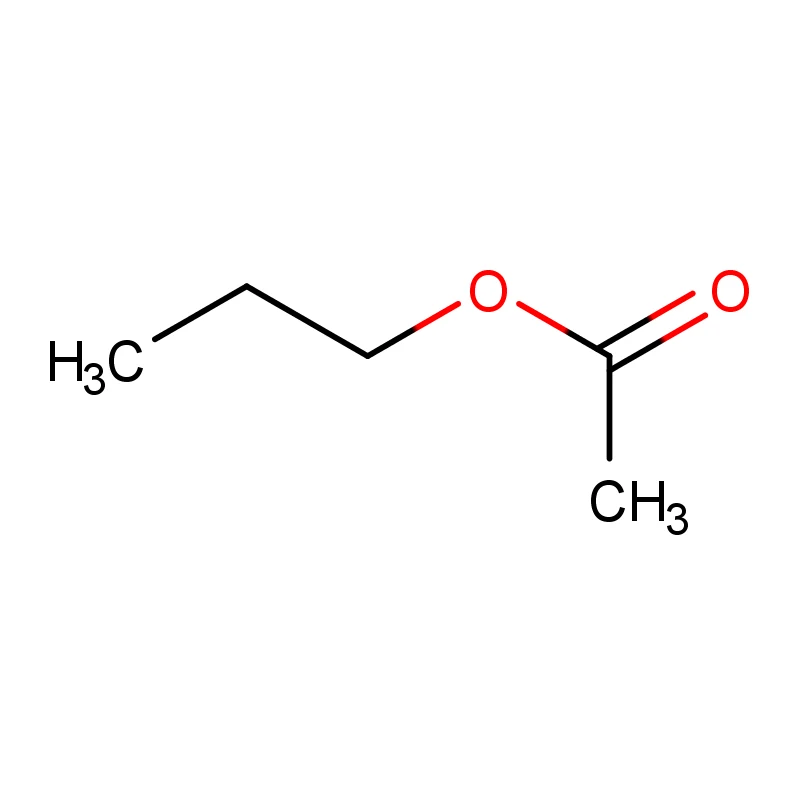
Propyl Acetate
CAS 109-60-4 · C5H10O2
Propyl acetate is a coating and ink solvent, a drug extractant and a fragrance solvent, and industrially it is used as an azeotrope for acetic acid...
View specification →Where This Product Fits
Pharmaceutical and Agrochemical Intermediates
Named Intermediates for API and Crop Protection Routes
IndustryFlavours Fragrances and Food Additives
Aroma Chemicals and Food Grade Esters With Stated Isomer Ratios
Process GuideProduction Methods and Main Applications of Propionaldehyde
Low-pressure oxo synthesis became the dominant propionaldehyde route from the 1970s and today accounts for the overwhelming share of capacity.
Request a Quotation for Propionaldehyde
Tell us the grade, the tonnage and the packing your site can unload. We reply within 24 hours with the current quality index.