
Vitrification is the process by which ceramic raw materials form a glass phase during firing, progressively filling the open pores between mineral grains and creating a dense, strong, non-porous ceramic body.
Technical Details
The degree of vitrification directly determines your product water absorption, mechanical strength, frost resistance, and stain resistance. Porcelain tiles (water absorption below 0.5%) are fully vitrified — virtually all porosity has been eliminated. Standard floor tiles (1-3% absorption) are substantially vitrified. Wall tiles (6-15% absorption) are partially vitrified. Earthenware (above 15%) is minimally vitrified. The vitrification process requires flux materials to create the glass phase.
Practical Application
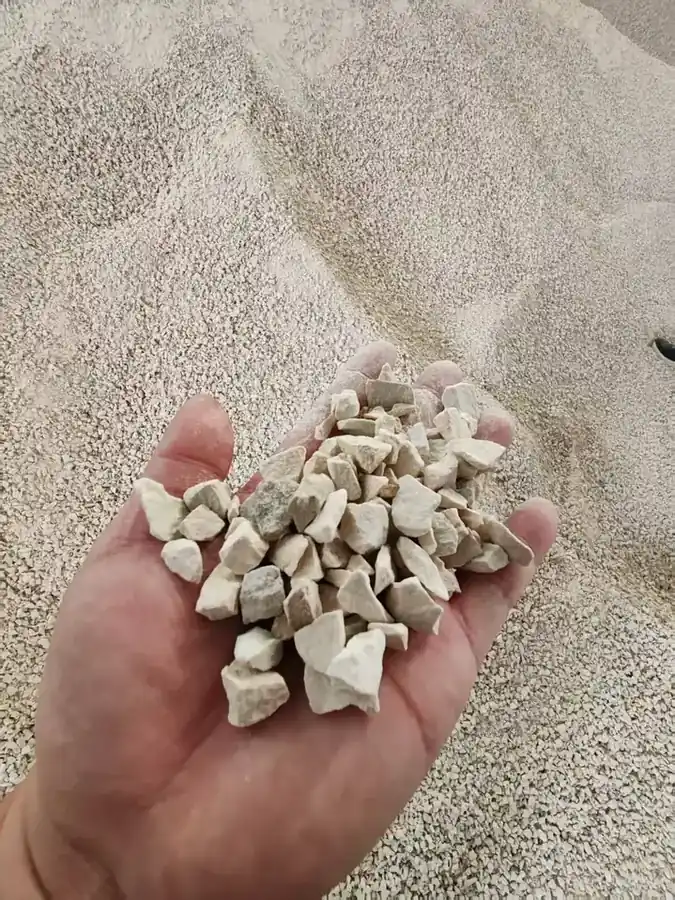
At firing temperature, the flux oxides (Na2O, K2O from nepheline/feldspar) react with SiO2 and Al2O3 to form a liquid glass. This glass fills the spaces between solid grains, and as more glass forms, porosity decreases and the body densifies. Nepheline syenite accelerates vitrification because it provides more flux per ton and its alumina-rich composition creates a glass phase at lower temperatures. For manufacturers targeting specific absorption levels, nepheline content is the primary control variable: more nepheline lowers absorption (more vitrification), less nepheline raises absorption (less vitrification). Our technical team can help you calculate the optimal nepheline percentage for your target absorption specification..