Most procurement managers compare nepheline and feldspar on per-ton price — and often choose feldspar because it looks cheaper on the quotation. This analysis goes deeper, calculating the total cost of ownership including all factors that affect your actual production economics. The conclusion may surprise you: nepheline is frequently the lower-cost option when all factors are included.
Factor 1: Formulation Efficiency (Weight Savings)
Nepheline provides 20-30% more alkali flux per ton than feldspar. This means you use approximately 15-20% less nepheline by weight to achieve the same ceramic result. If feldspar costs USD 100/ton and nepheline costs USD 120/ton, but you use 20% less nepheline per batch, the effective cost per batch is USD 96 for nepheline vs USD 100 for feldspar — nepheline is actually cheaper per batch despite the higher per-ton price.
Factor 2: Energy Savings (30-50°C Lower Firing)
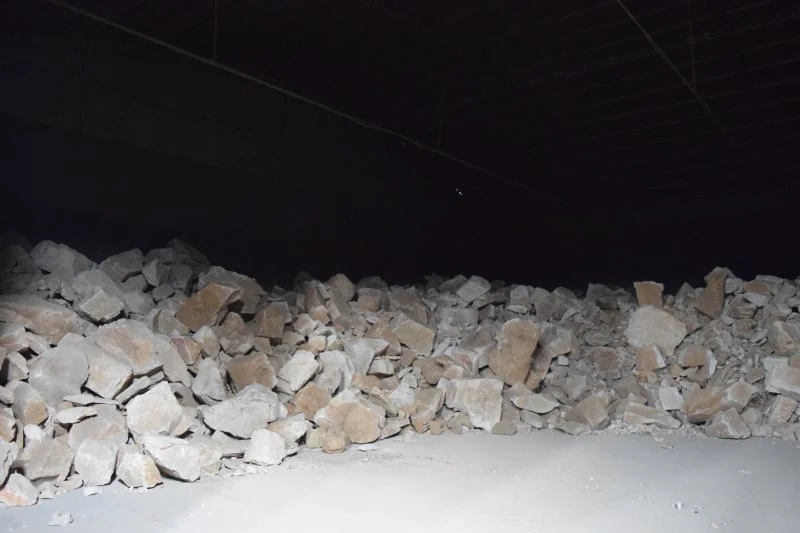
Nepheline vitrifies at 30-50 degrees C lower than feldspar. Gas consumption for a roller kiln is approximately proportional to temperature above ambient. A 40 degree C reduction from 1200 to 1160 degrees C saves approximately 7% of gas consumption. For a factory spending USD 3 million annually on gas, that is USD 210,000 savings per year. This single factor often exceeds the total annual raw material cost difference.
Factor 3: Reject Rate Reduction
Nepheline wider firing range (20-40 degrees C wider than feldspar) reduces temperature-sensitivity defects: fewer warped tiles, fewer under-fired edges, fewer over-fired center tiles. A typical 2% reject rate reduction on 10 million sqm annual production (average selling price USD 5/sqm) saves USD 1,000,000 in lost product value. Even a 0.5% improvement saves USD 250,000.
Factor 4: Product Upgrade (White Body Premium)
If switching to K200 enables you to produce white-body porcelain tiles instead of cream-body tiles, the product selling price premium typically ranges from USD 0.50-2.00 per square meter. On 5 million sqm of premium production, even USD 0.50 premium = USD 2.5 million additional revenue annually.
Total Savings Summary
| Factor | Annual Impact (10M sqm factory) |
|---|---|
| Weight savings (15-20% less material) | USD 30,000-60,000 |
| Energy savings (7% gas reduction) | USD 150,000-350,000 |
| Reject rate improvement (0.5-2%) | USD 250,000-1,000,000 |
| Total annual savings | USD 430,000-1,410,000 |
These savings far exceed any per-ton price premium for nepheline. The real question is not whether nepheline is more expensive per ton — it is whether your total production cost is lower with nepheline. For the vast majority of ceramic manufacturers, it is.