
Mine-owned nepheline syenite and feldspar since 2007
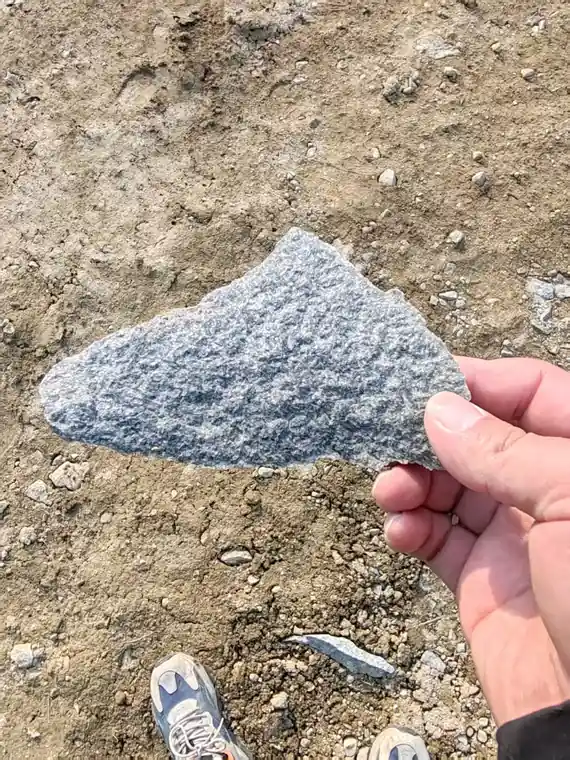
Hand-held sample of nepheline syenite fines
Material and Supplier Comparisons

Nepheline Syenite vs Calcium Carbonate (CaCO3) in Ceramics

Comparing nepheline and calcium carbonate as ceramic body materials: different roles, different mechanisms.

Calcium carbonate (CaCO3, limestone, whiting) is used in some ceramic bodies — particularly earthenware and wall tiles — as a flux and porosity modifier.

Detailed Comparison

It decomposes at 850-900 degrees C to release CO2 gas and form CaO, which then acts as a flux at higher temperatures. Nepheline and CaCO3 serve fundamentally different functions: nepheline is a primary vitrification flux for producing dense, strong bodies; CaCO3 creates controlled open porosity in wall tiles and contributes CaO for specific glass phase properties. They are complementary, not competing materials. In wall tile bodies, a typical formulation uses 10-15% nepheline (K100) for primary fluxing plus 5-10% CaCO3 for porosity control and expansion adjustment. In porcelain bodies, CaCO3 is avoided (the gas release at 850 degrees C can cause defects in dense bodies) and nepheline at 25-30% handles all vitrification.

Analysis & Recommendation
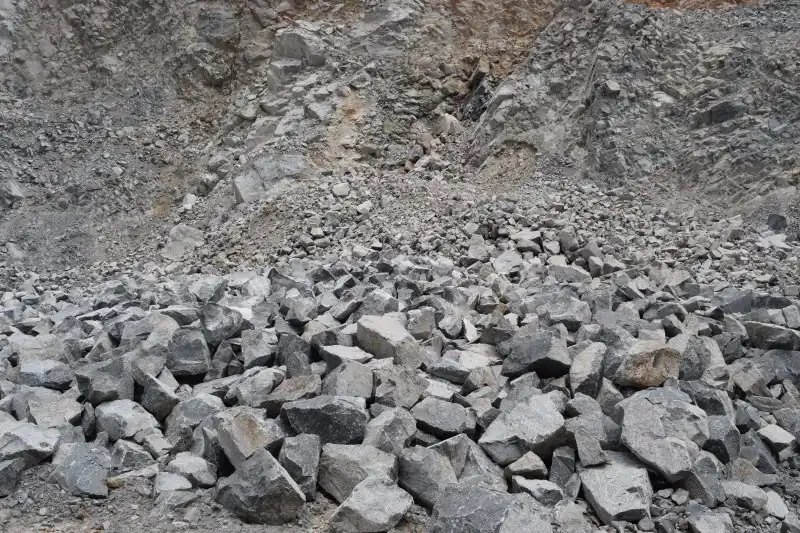
Coarse crushed ore stockpile at the crushing station

Our GP20 grade already contains 5.34% CaO naturally — for applications where CaO contribution is desired, GP20 provides both alkali flux and CaO from a single material without the gas generation problem of CaCO3..
FAQ

Questions on This Topic

What does Nepheline Syenite vs Calcium Carbonate (CaCO3) in Ceramics cover?

Calcium carbonate (CaCO3, limestone, whiting) is used in some ceramic bodies — particularly earthenware and wall tiles — as a flux and porosity modifier.

Is the material independently tested?

In-house testing covers every batch. Critical export shipments are additionally verified by Foshan Youbo Ceramic Analysis & Testing Co., Ltd., an independent ceramic testing laboratory.

What is the minimum order quantity?

One 20ft container, which is about 24 tons — roughly 20 FIBC jumbo bags. Samples of 1-5 kg per grade are available before that for laboratory evaluation.

What quality documentation comes with a shipment?

A batch-specific Certificate of Analysis covering XRF chemistry, particle size, moisture and fired whiteness at 1200 degrees C. We send it for approval before loading, and originals travel with the shipping paperwork.

Take It From Reading to Testing

Send your current specification and the problem you are chasing. Samples follow within a week.