Low mechanical strength (measured as modulus of rupture / MOR) in fired tiles is usually caused by under-vitrification — insufficient glass phase to bond the ceramic particles together into a strong matrix.
Understanding This Defect
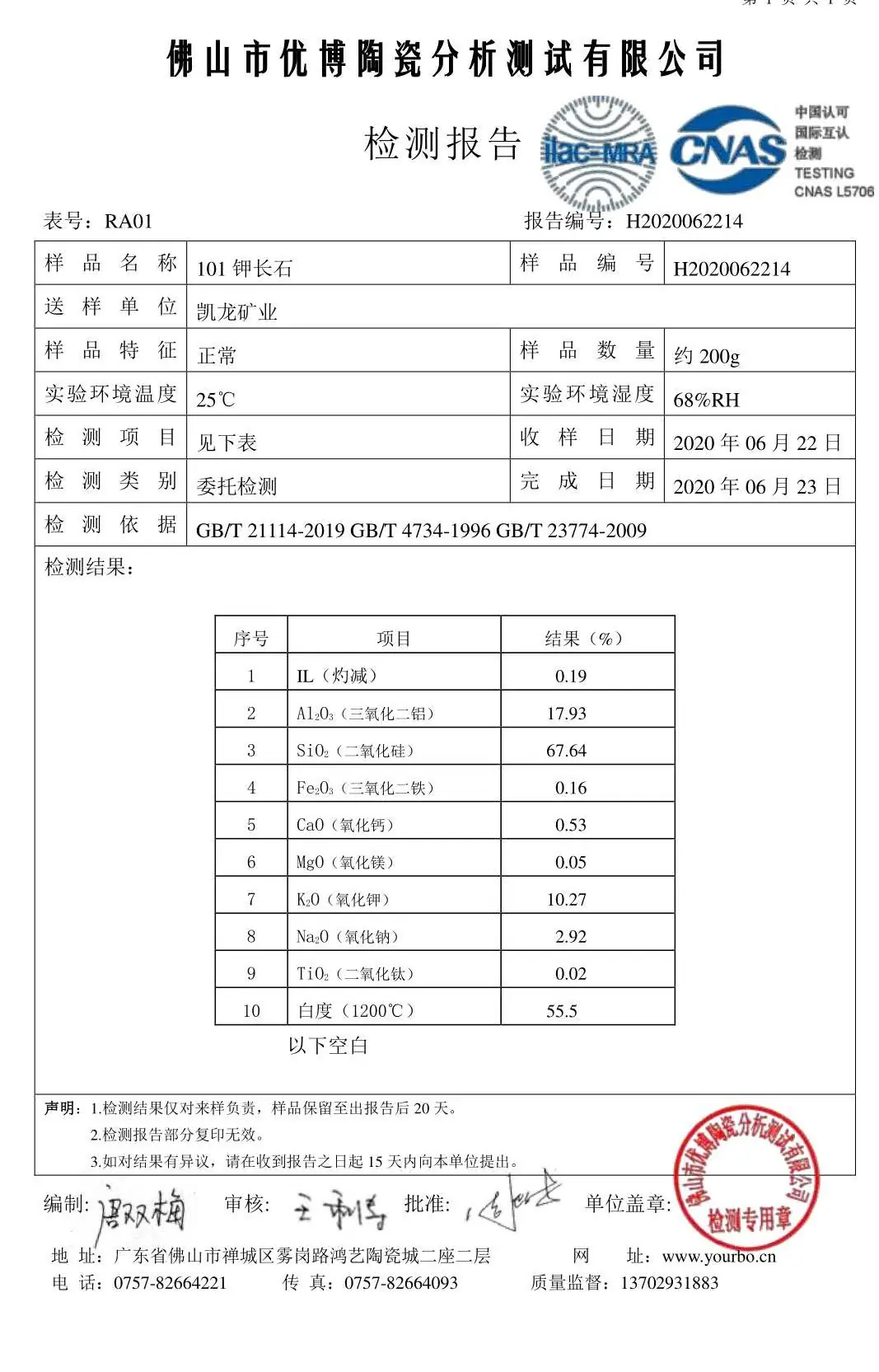
The glass phase acts as the glue that holds clay, quartz, and other particles together. Too little flux produces too little glass, resulting in a weak, porous body. Solutions: increase nepheline content by 3-5% to boost glass phase formation; switch from feldspar to nepheline for more flux per unit weight; switch from K100 to K200 for faster reactivity in fast-firing kilns; or increase firing temperature by 10-20 degrees C. Note that nepheline also improves strength through a second mechanism: its high Al2O3 content (20-24% vs 17-19% for feldspar) produces a higher-alumina glass phase that is inherently stronger and harder. Independent testing consistently shows 10-20% higher MOR when nepheline replaces equivalent feldspar in the same formulation..
Solution & Prevention