
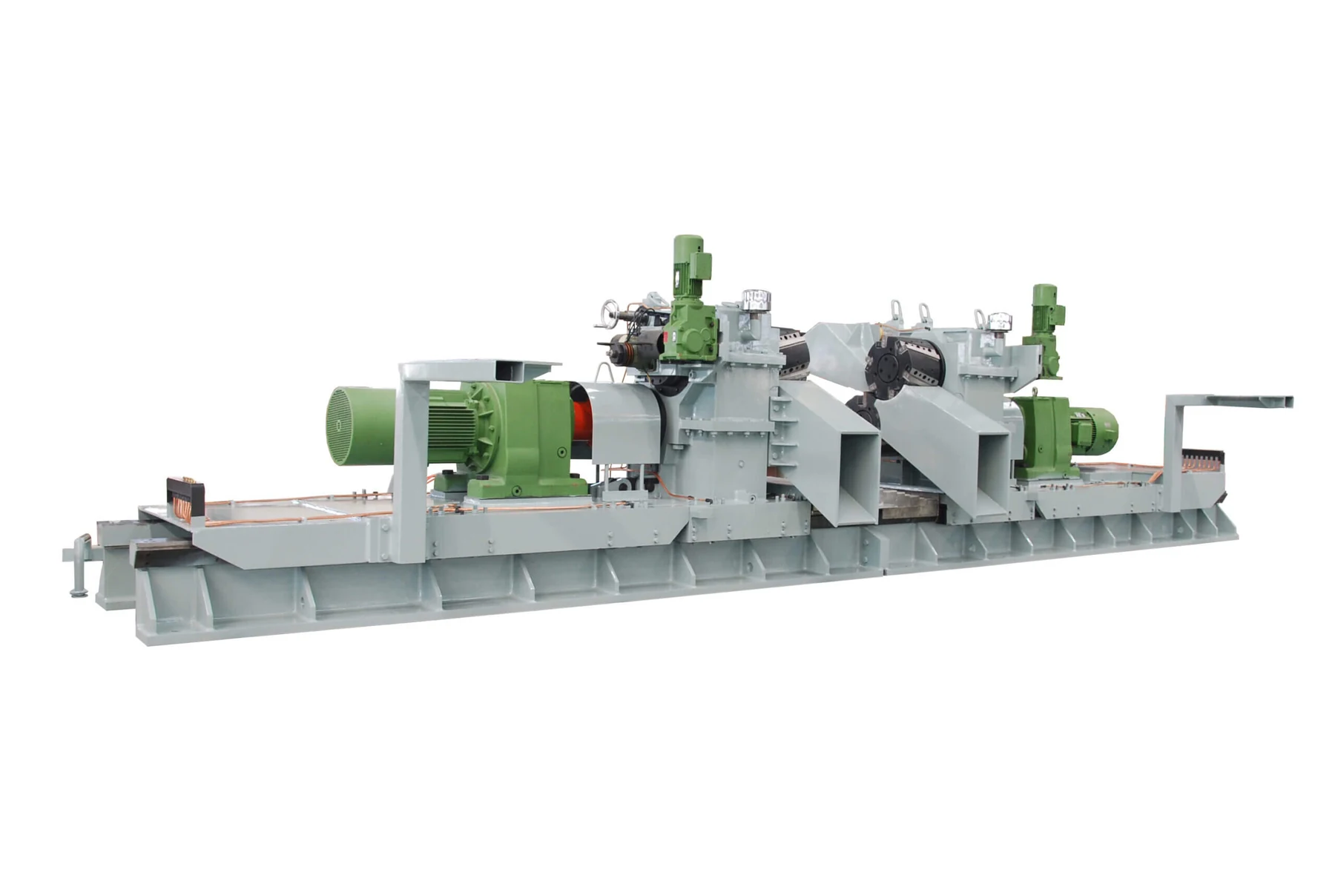
Edge Trimmer Shearing Principles For Metallurgical Strip Lines
Side clearance and overlap are the two settings that decide whether you get a clean shear or a burr.
Why Edges Have To Go
After hot rolling and cold rolling, strip frequently carries micro cracks, burrs and irregular contour defects along both side edges. Left in place, those flaws expand under tension in leveling, annealing and galvanizing.
The end of that sequence is unexpected strip breakage, an unplanned line shutdown and the production loss that comes with it. Trimming is cheaper than any of those.
How The Cut Actually Happens
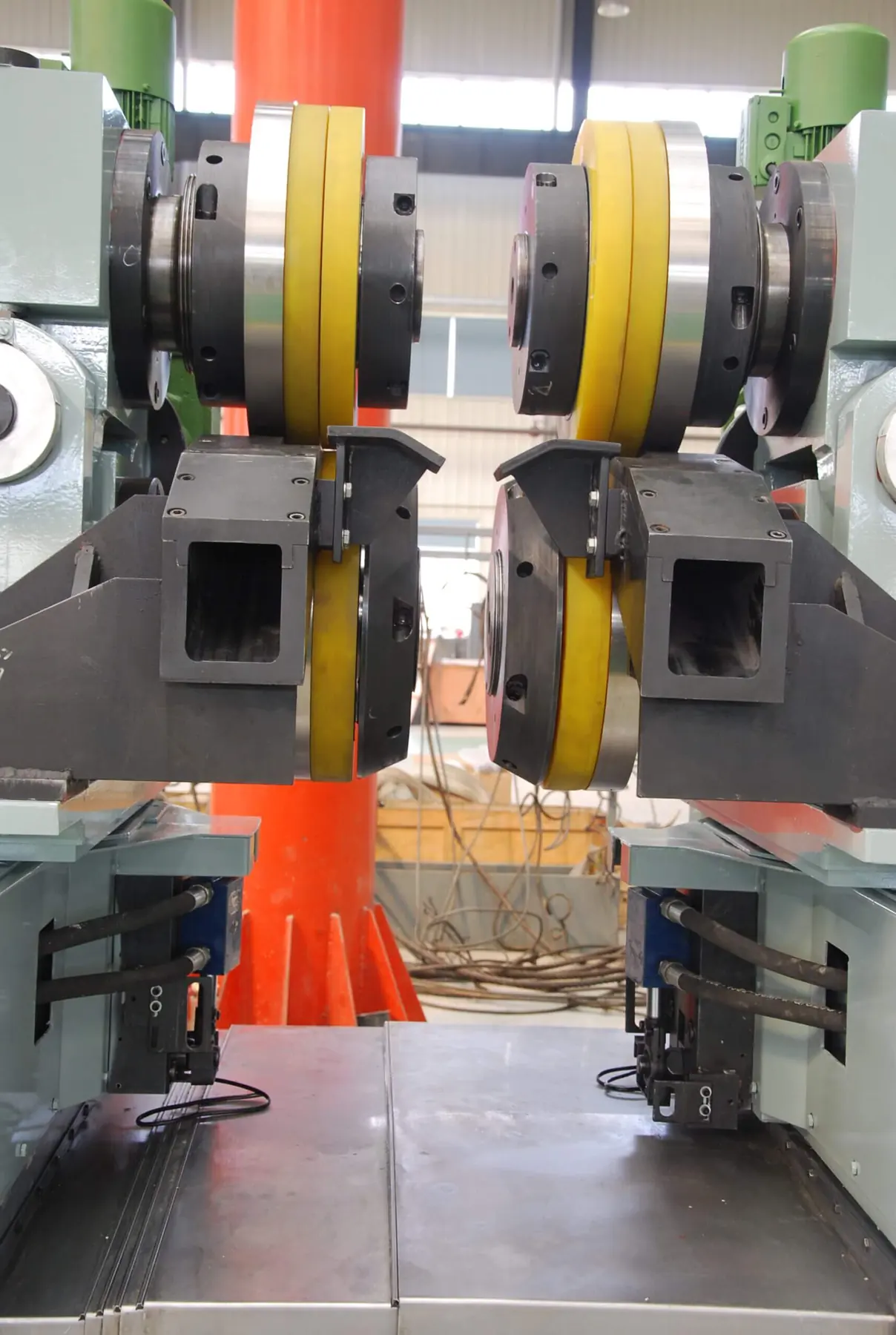
Two sets of vertically installed, horizontally displaceable circular blades shear the strip. Side clearance, the horizontal gap, and overlap, the vertical engagement depth, are set according to strip thickness and tensile strength.
As the strip passes the shear point, shear stress acts on the contact zone. The contact area yields plastic deformation and, as blade penetration depth rises, deformation accumulates until it exceeds the fracture limit. The edge then fractures and separates.
- Set side clearance and overlap from strip thickness and tensile strength
- Strip is fed at line speed into the shear zone
- Local plastic deformation builds with blade penetration
- Material fractures when deformation passes the threshold
What Wrong Settings Look Like
Accurate adjustment of overlap and side clearance is decisive. Improper parameters produce burrs, tearing at the edge, or overloading of the blade assemblies themselves.
If you are chasing edge quality problems, check those two settings against the gauge and grade actually running before looking anywhere else.
Why The Structure Matters
A double head cantilever rotary hybrid power shear layout allows blade replacement, inspection and daily maintenance without disassembling large frame components. On a line where blade changes are frequent that is the difference between a short stop and a long one.
The hybrid power configuration delivers stable shear torque for high strength carbon steel, silicon steel and alloy strip. Blades are double edged with end face grinding for shear face flatness and hydraulic nut locking for fast secure changes.
Products Mentioned In This Article
Edge Trimming Unit for Slitting Lines
Double head cantilever rotary trimmer with servo cylinder width adjustment for thin strip.
View Details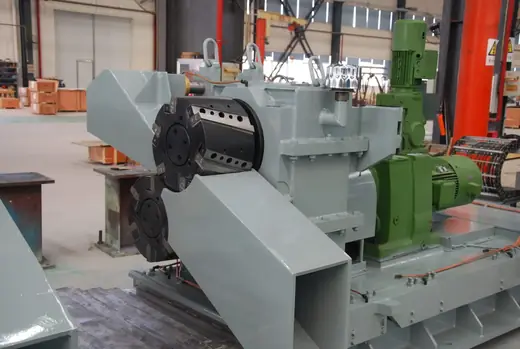
Edge Trimmer for HiB Silicon Steel Pickling Lines
Pickling line edge trimmer for 1.2-3.0 mm HiB silicon steel with servo width control.
View Details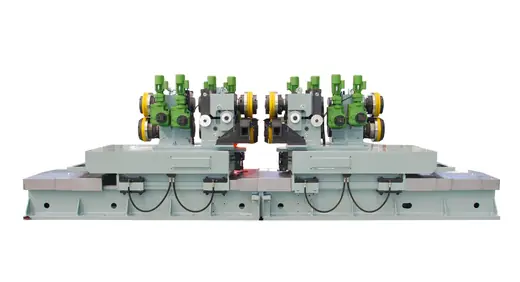
Side Trimmer With 3-50 mm Trimmed Width
Slitting line side trimmer removing 3 to 50 mm from each edge to renew strip width.
View Details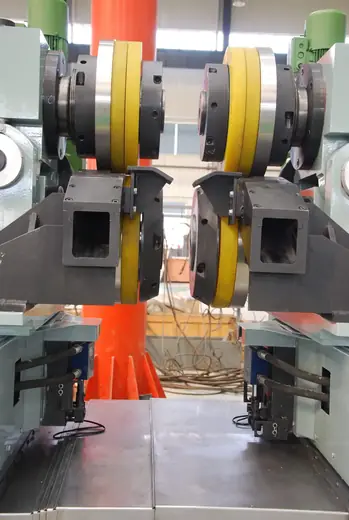
Circle Shear for 0.15 mm Strip Slitting Lines
Rotary circle shear trimming edges on very thin strip down to 0.15 mm thickness.
View DetailsReader Questions
Why are we getting burrs on the trimmed edge?
Almost always side clearance or overlap set for a different thickness or grade than the one running. Both have to be set from actual strip thickness and tensile strength.
How often do blades need regrinding?
It depends on material and gauge. Blades are double edged with end face grinding so they can be turned and reground rather than replaced each time.
What happens if we skip trimming?
Edge micro cracks expand under tension in leveling, annealing and galvanizing, and eventually the strip breaks, which stops the line.
Can the same trimmer handle silicon steel?
The hybrid power configuration is specified for high strength carbon steel, silicon steel and alloy strip, with blade specification matched to the grade.
Sort Out Edge Quality
Send your strip grade, gauge and trimmed width and we advise on blade and setting specification.