


Pinpoint Side Submarine And Valve Gates Compared
All four gate types appear in this catalogue. Where each one belongs, what it leaves on the part, and what it costs in mould construction.
The gate decides more than where the plastic enters
Gate position sets where the weld lines land, how evenly the part packs, whether anybody has to trim it afterwards and which face carries a visible witness. It is close to unchangeable once the cavity is cut: moving a gate means welding and recutting steel. That is why gate selection sits in the design review rather than in the trial.
Side gate
The simplest option. The runner meets the part at its edge on a two plate mould, leaving a small witness on that edge. It is cheap to build, easy to maintain and the default for any part that has an edge nobody looks at. The trade is that the part fills from one side, so on a wide part the far side packs last and can sink. Both PP cover plate tools in this catalogue are side gated, with the witness on the edge the hinge covers.
Pinpoint gate
A pinpoint gate breaks off by itself as the mould opens, leaving a small round witness rather than a trimmed stub. It lets the feed land in the middle of a part instead of at an edge, which fills large flat parts far more evenly. The cost is a three plate mould base, because the runner has to be stripped on its own plate. Three of the sanitary and electronic tools in this catalogue use pinpoint gating for exactly that reason.
Submarine gate
A submarine or tunnel gate runs under the parting line and shears off during ejection. The part therefore leaves the press finished, with no degating operation at all, which on a plated or cosmetic part removes a whole handling step where damage happens. It needs somewhere on a non cosmetic face to sit and enough room beneath the parting line to run, so thin flat parts often cannot take one. The automotive tool and the six slide shower head tool in this catalogue both use it.
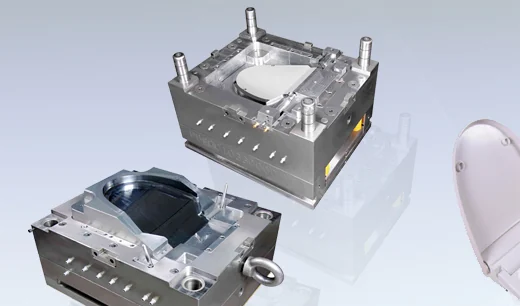
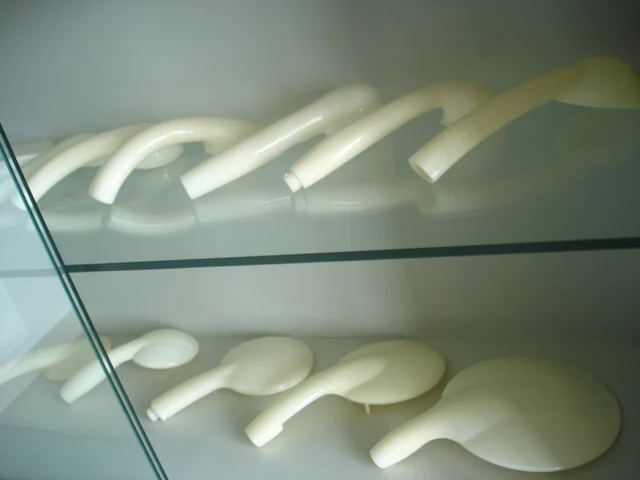
Submarine gated shower head mould
Valve gate
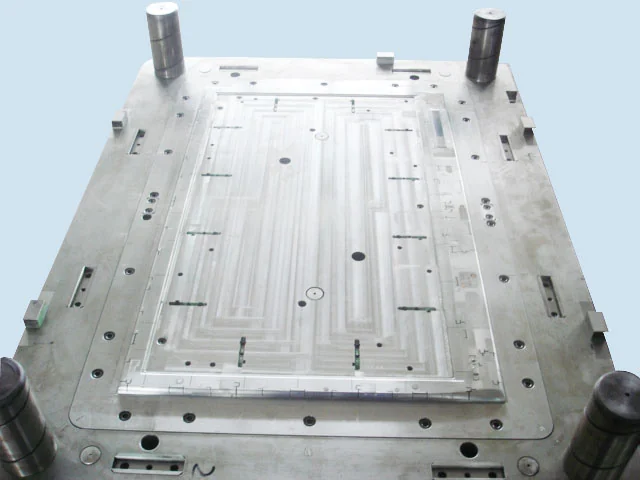
A valve gate is a hot runner nozzle with a pin that opens and closes mechanically rather than waiting for the plastic to freeze. It gives a clean circular gate mark, no runner to regrind, and control over when each gate opens, which is how a very wide part gets filled from several points in sequence. It is the most expensive option and adds a heated manifold to maintain. One tool in the archived catalogue uses it.
In This Guide
Products Referenced In This Guide
Moulds For Sanitary Ware Parts
ABS Shower Head Mould With Two Cavities And Six Slides
The most complex tool in the archived catalogue
Product materials ABSMould material DAIDO NAK80
Moulds For Electronic And Audiovisual Parts
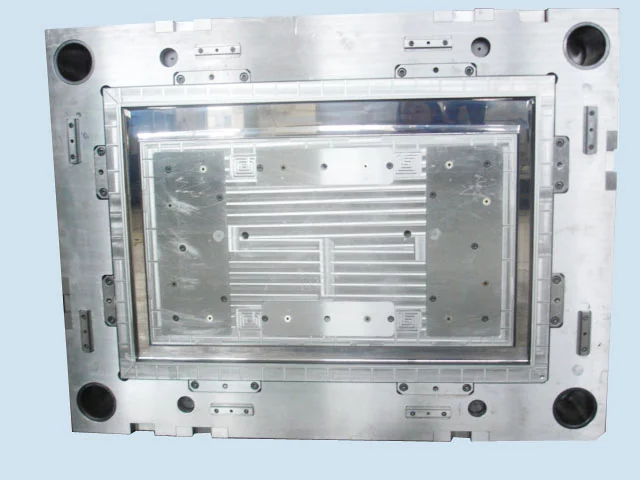
Hot Runner Mould With Valve Gate
The only hot runner tool in the archived catalogue
Product materials PC/ABSMould material SKD61
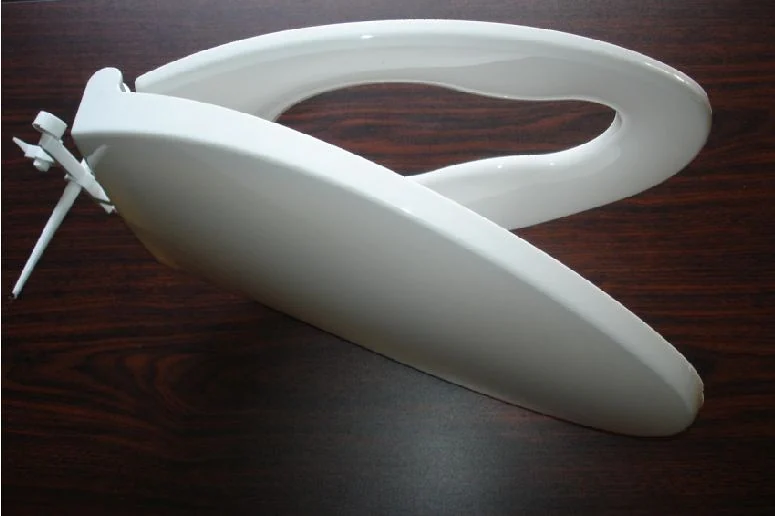
Moulds For Sanitary Ware Parts
PP Cover Plate Mould With NAK80 Cavity Steel
Pre-hardened NAK80 on a large flat polypropylene part
Product materials PPMould material DAIDO NAK80

Moulds For Sanitary Ware Parts
ABS Sanitary Part Mould With Submarine Gate
The simplest tool here, and the cheapest to keep running
Product materials ABSCavity 1 x 1
Related Reading
Comparison Article
Hot Runner Or Cold Runner For Your Injection Mould
When the extra tool cost of a hot runner pays for itself, and when it is money spent on a manifold you then have to maintain.

Buying Guide
How Cycle Time Decides The Price Of A Moulded Part
The cycles in this catalogue run from 40 to 100 seconds. What drives that spread, and why it matters more than the tool price.
Industry
Sanitary Ware
Shower heads, hand showers, cisterns, toilet seats and cover plates moulded in ABS and PP
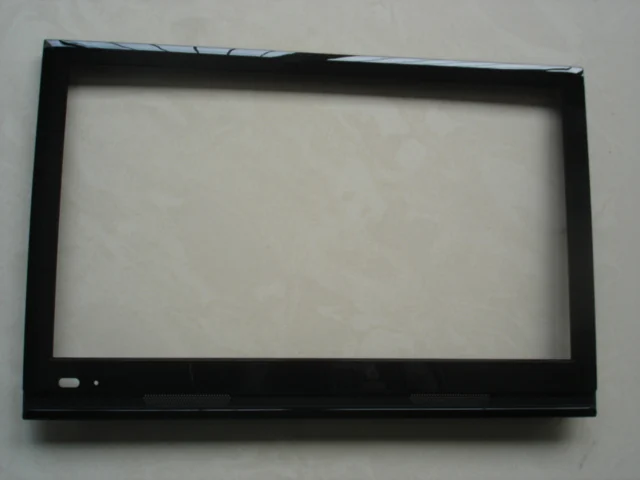
Industry
Electronics And Audiovisual
Television front shells, enclosures and electronic housings in PC and PC ABS
Questions On This Topic
Follow up questions this guide raises.
Which gate leaves the smallest mark?
A valve gate, because the pin closes flush and leaves a clean circle. A pinpoint gate is next. A side gate leaves the largest witness but puts it on an edge.
Can a gate be moved after the mould is built?
Technically yes, by welding the old gate closed and cutting a new one. It is expensive, it leaves a weld in the cavity and it is the change most worth avoiding by settling the gate at design review.
Why not always use a hot runner?
Cost and maintenance. A hot runner adds a heated manifold, controllers and a failure mode that a cold runner does not have. On a small part with a short flow path the runner weight it saves is not worth it.
Apply This To Your Own Part
General guidance only goes so far. Send the model and the moulding grade and we will tell you what it means for your tool.