




How Cycle Time Decides The Price Of A Moulded Part
The cycles in this catalogue run from 40 to 100 seconds. What drives that spread, and why it matters more than the tool price.
Press time is most of the piece price
On a typical industrial moulding, the machine hour rate multiplied by the cycle is a larger share of the piece price than the material, and far larger than the amortised tool. A part that cycles in 50 seconds instead of 100 halves that share. Over a programme of several hundred thousand parts, the difference dwarfs anything you negotiated on the tool.
Wall thickness sets the cycle, not the mould maker
The heaviest section of the part has to cool enough to eject without distorting, and cooling time scales roughly with the square of that thickness. This is why the cycles in this catalogue vary so much for tools of similar complexity: the 40 second appliance tool and the 100 second shower body tool are not differently built, they are differently shaped parts.
What the mould maker does control
Cooling layout, which decides whether the part cools evenly or has a hot spot that sets the whole cycle. Slide count and sequence, since every slide has to clear before ejection. And gate type, since a hot runner removes a runner that would otherwise have to cool. Those three are worth real money and are settled at design review.
Questions to ask at quotation
Ask whether the quoted cycle was measured on a trial or estimated. Ask what the heaviest section of the part is and whether it can be cored out. Ask what the cycle would be with an extra impression. Suppliers who have actually trialled a similar tool answer all three quickly, and the answers tell you more than the tool price does.
In This Guide
Products Referenced In This Guide
Moulds For Home Appliance Parts
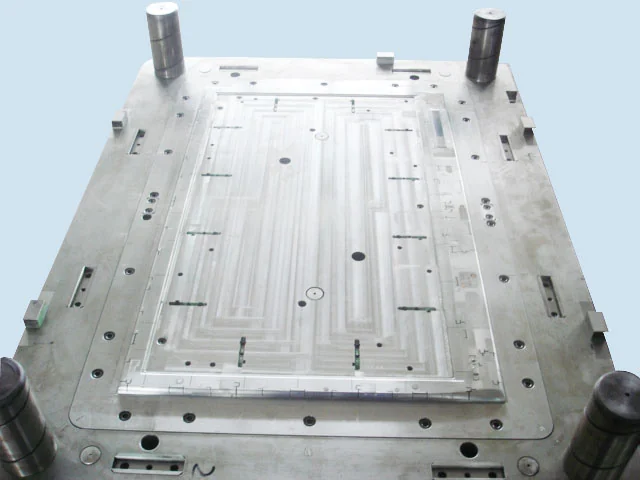
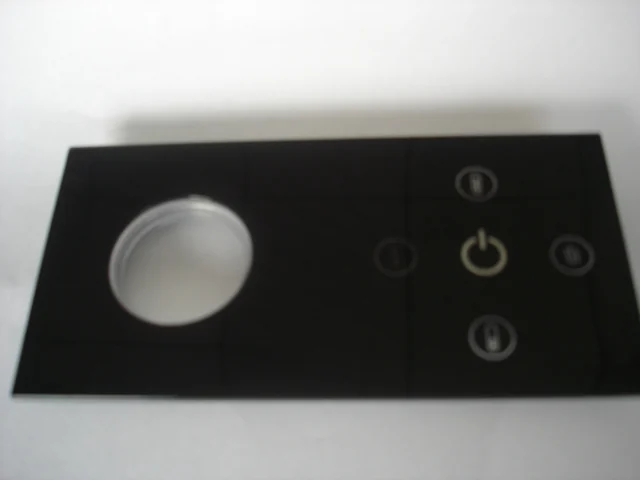
PC Home Appliance Mould With Two Cavities
The fastest cycle in the whole archived catalogue
Product materials PCMould material S136 quenching
Moulds For Sanitary Ware Parts
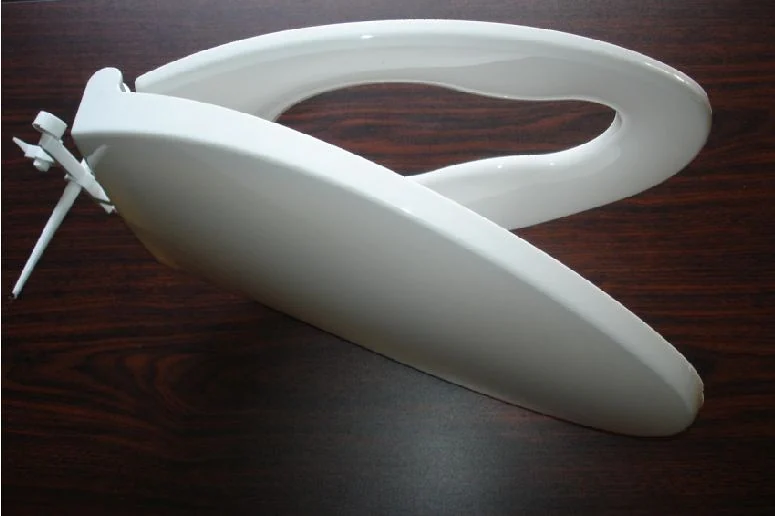
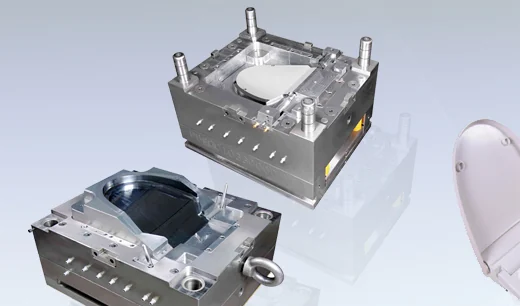
ABS Sanitary Part Mould With Two Cavities And Four Slides
The highest output sanitary tool in the archive
Product materials ABSMould material S136 quenching
Moulds For Sanitary Ware Parts
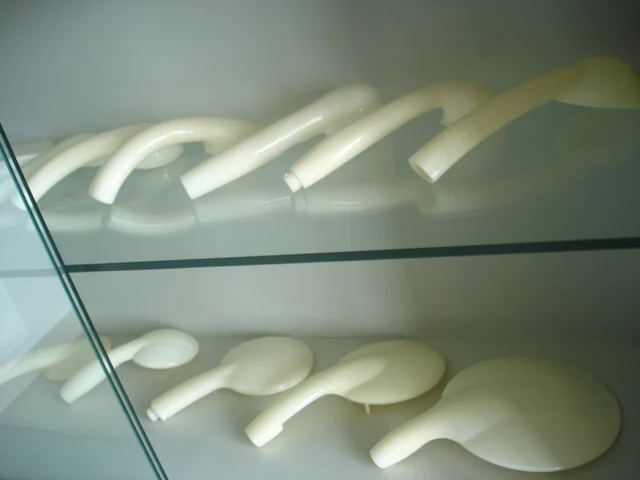
ABS Shower Body Mould With S136 Cavity Steel
A heavy section part cooled for what it actually is
Product materials ABSMould material S136 quenching
Moulds For Electronic And Audiovisual Parts
Hot Runner Mould With Valve Gate
The only hot runner tool in the archived catalogue
Product materials PC/ABSMould material SKD61
Related Reading
Buying Guide
Single Cavity Multi Cavity Or Family Mould
Impression count is most of the tool price and most of the piece price. How to decide it before you ask for a quotation.
Comparison Article
Hot Runner Or Cold Runner For Your Injection Mould
When the extra tool cost of a hot runner pays for itself, and when it is money spent on a manifold you then have to maintain.
Industry
Home Appliance
Housings, control panels and trim parts for white goods and small domestic appliances

Industry
Sanitary Ware
Shower heads, hand showers, cisterns, toilet seats and cover plates moulded in ABS and PP
Questions On This Topic
Follow up questions this guide raises.
Is a shorter cycle always better?
Only if the parts still pass. Pushing cycle down by cutting cooling time gives parts that keep shrinking after ejection and a tool that wears faster. The right cycle is the shortest one that produces good parts repeatably.
How do I compare quotes with different cycle times?
Multiply cycle by your expected annual volume and by a machine hour rate. That converts the cycle difference into money and usually reorders the quotes.
Can cycle time be improved after the tool is built?
Sometimes, by adding cooling or by coring out a thick section of the part. Both are real changes to the tool or the product, so they are much cheaper to make before the cavity is cut.
Apply This To Your Own Part
General guidance only goes so far. Send the model and the moulding grade and we will tell you what it means for your tool.