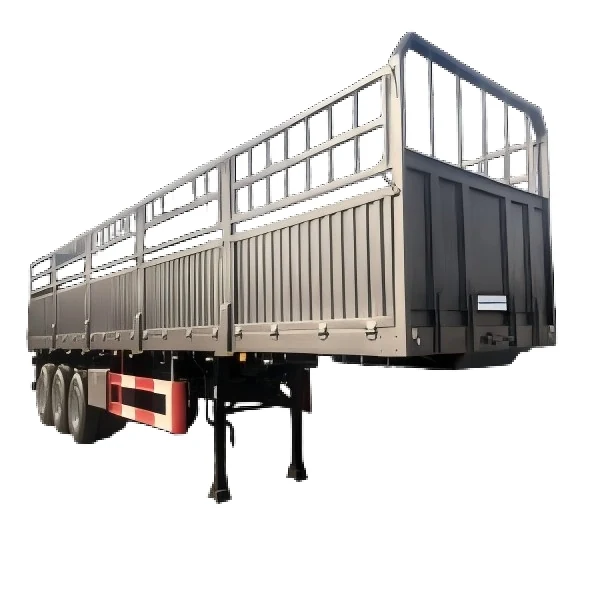
Fence Trailer Stake Cargo Semi-trailer High Fence Cargo 40ft Tri-axle Heavy Flatbed Truck Trailer
40ft tri-axle fence trailer, 12500*2500*1200mm, 60T payload on FUWA axles and 11R22.5 tires.
View Specification
For the same type of tire, service life differs markedly between trailers. Abnormal tire wear is usually blamed on driving or on the tires themselves, but a large part of it is decided at the factory, in the suspension design, the alignment process and the pre-delivery testing. Here is how SINOHENG addresses it at the production stage.
SINOHENG trailers are equipped with patented wear-resistant steel suspensions. The self-lubricating wear-resistant equalizing beams are formed by one-time stamping, with oil storage and wear-resistant plates on the inner side that keep the spring plates self-lubricating over a long period. The wear-resistant steel torsion seats replace the casting process with wear-resistant steel welding, and maintenance-free equalizing beam pins are high-frequency quenched and repeatedly precision ground so they adapt better to complex road conditions.
The pull rod sleeves of these suspensions are composite sleeves made of imported PLE materials with high toughness and good resilience. They greatly enhance the protection for pull rods, bracket lugs and torsion seats, and improve internal force distribution. Traditional suspensions use rubber and nylon sleeves with poor toughness that wear quickly, cause abnormal tire wear and need frequent replacement.
Dynamic tire alignment is an advanced international alignment method. The measurement is completed while the vehicle is moving on the ground, so it reflects the actual geometric and physical parameters in the driving state rather than at rest. Corresponding adjustments then bring the vehicle to an optimal driving state, which addresses the persistent problem of abnormal tire wear and extends tire life substantially.
Dynamic alignment monitoring detects problems in the suspension components themselves after assembly: abnormal axle bending, misaligned rims, abnormal tire geometry and bearing clearances. Using dynamic alignment test benches with advanced inspection technology provides a reliable guarantee of tire service life, because these faults are caught before the trailer leaves rather than after the tires are ruined.
During assembly, clearances form as parts are fitted together. The positioning state at initial assembly differs from the driving state, internal stresses build between parts, and phenomena such as incomplete resetting result. To make all trailer components more reliable, safer and more stable in driving, prevent tires from deforming, wearing and corroding abnormally, and reduce fuel consumption, trailers undergo S-road performance tests one by one before leaving the factory, followed by inspection, measurement and adjustment.
Once the trailer is yours, monitor wear patterns as the earliest signal of alignment drift. Uneven wear across an axle or between sides is telling you something changed. Correct it early: by the time the wear is obvious, the tires are already lost.
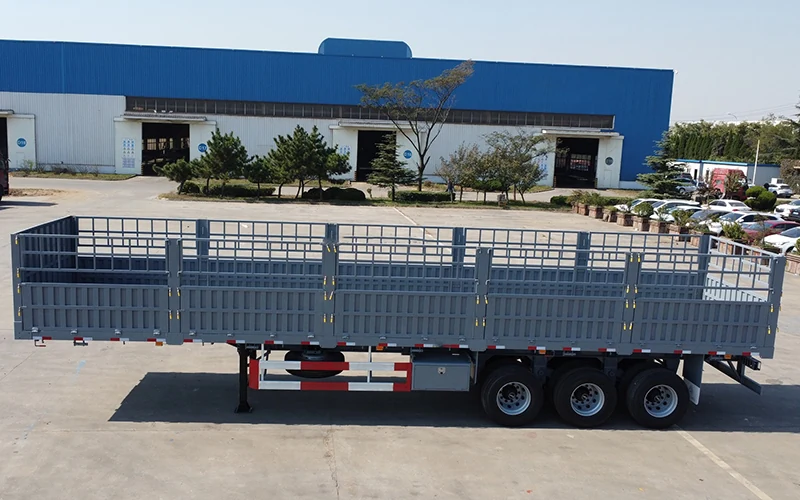
40ft tri-axle fence trailer, 12500*2500*1200mm, 60T payload on FUWA axles and 11R22.5 tires.
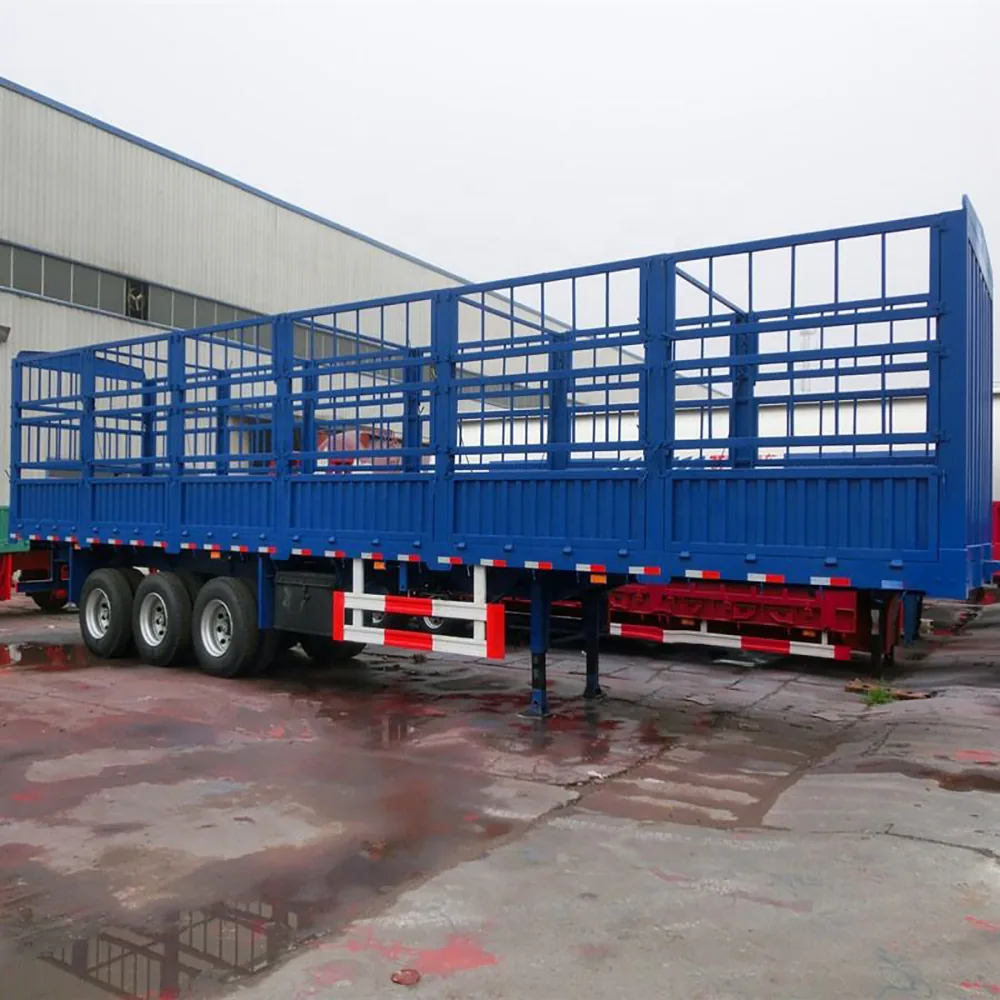
View SpecificationStorehouse fence trailer with 1600 to 2200mm fence height and 1 to 4 axle configuration.
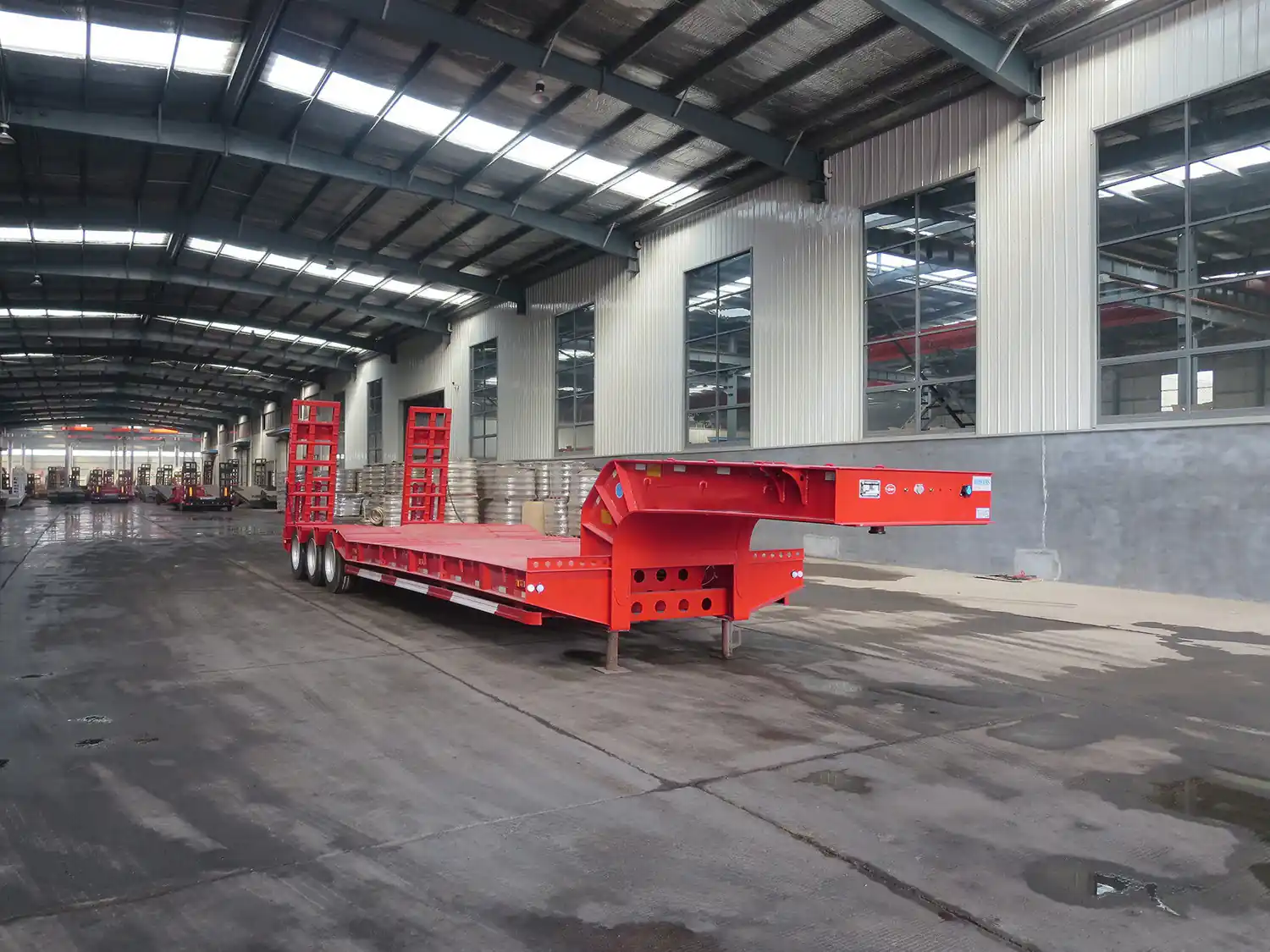
View SpecificationLHL9370TDP at 35000kg gross with a 10-leaf spring option and 850 or 980mm deck height.
View SpecificationHigh fence cattle transport trailer, 13000*2490*2860mm, 30T capacity with ventilated stake sides.
View SpecificationFence heights 1200-2200mm, cargo and dedicated livestock builds
Deck heights 700-1100mm, ramp angles 13-35 degrees, up to 120 tonnes
A working comparison of the ten semi-trailer types we build most often, what each is actually for, and how to pick the one that matches your cargo and your roads.
Flatbeds and lowbeds both have open platforms and are easily confused. The structural difference decides which one your cargo can legally travel on.
How trailer pricing actually works, what moves the number, and reference FOB prices for a range of SINOHENG models.
Usually not. It is a suspension, alignment or assembly problem showing up on the tires. Replacing the tires without correcting the cause simply repeats the failure.
Alignment measured while the vehicle is moving on the ground, so it reflects the real driving state rather than the static one. It catches axle bending, rim misalignment and bearing clearance issues.
A pre-delivery test where the trailer is driven through an S-shaped course so assembly clearances settle and internal stresses are revealed, followed by inspection, measurement and adjustment.
Check wear patterns across each axle and between sides at every service. A difference in pattern is an earlier warning than a difference in depth.
It is used across our range. Tell us your operating conditions and we will confirm the suspension and spring pack specification for the model you are considering.
Send your operating conditions and we will turn the guidance above into a configured trailer and a price.