
Wire Rope Sleeves Buying Guide
Aluminum and copper wire rope sleeves serve the same function but differ in weight, strength and environmental resistance. This guide explains where each material belongs, what the finish tells a buyer, and how to select the right sleeve for lifting, rigging or marine applications.
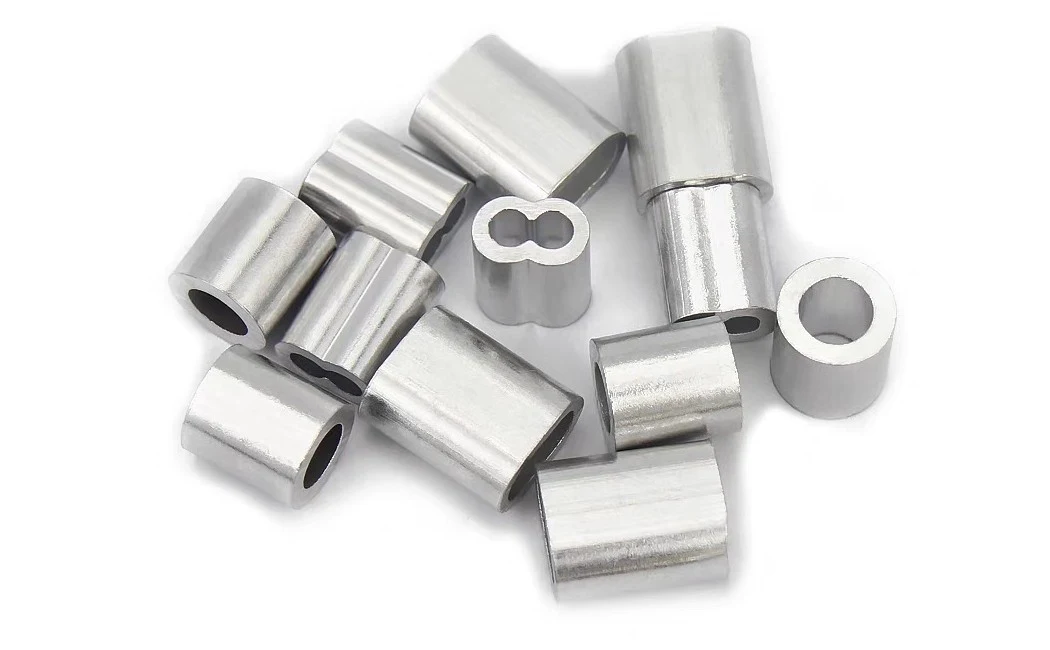
What Aluminum and Copper Wire Rope Sleeves Actually Are
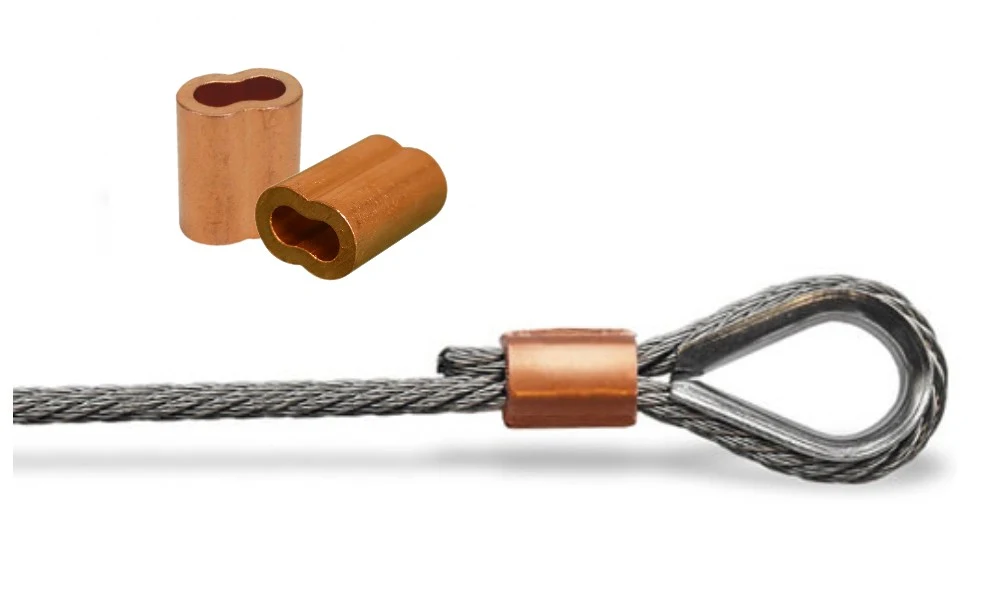
Both are crimped ferrules used to terminate or join wire rope ends, forming a secure loop or eye. They are not designed for load-bearing in the same way as rigging hardware, but they are critical to the integrity of the rope assembly. Aluminum sleeves are made from lightweight aluminum alloy, commonly used in applications where weight reduction is a priority. Copper sleeves are made from solid copper, offering higher strength and durability. The material choice affects handling, installation effort, and performance in harsh environments. Both are proof load tested and dimensionally checked before shipment.
Where Aluminum Sleeves Belong
Aluminum sleeves are best suited for lighter-duty applications where weight and ease of handling are important. They are commonly used in adventure parks, temporary rigging, marine mooring systems, and general construction site setups. Their corrosion resistance in wet and saltwater environments makes them ideal for coastal or offshore installations. They are also easier to crimp with standard tools, reducing installation time. For distributors, aluminum sleeves are a good fit for general rigging suppliers, rental companies, and marine equipment providers who need reliable, low-weight termination solutions.
Steel Cable Fasteners Wire Rope Clamp &Thimble & Sleeve Set- Customizable Packaging
Where Copper Sleeves Belong
Copper sleeves are engineered for high-load, high-stress environments where strength and long-term durability are essential. They are used in oil and gas operations, heavy construction, industrial lifting systems, and high-pressure rigging applications. Their ability to withstand high temperatures and resist wear under constant load makes them suitable for critical safety systems. Copper also maintains integrity under repeated stress cycles. For buyers, copper sleeves are the preferred choice when the application involves sustained heavy loads, high vibration, or exposure to extreme conditions.
Steel Cable Fasteners Wire Rope Clamp &Thimble & Sleeve Set- Customizable Packaging
The Direct Comparison
On material, aluminum is lightweight and corrosion resistant; copper is heavier and stronger. On strength, aluminum suits light to medium duty; copper suits heavy duty. On environment, aluminum excels in marine and wet settings; copper performs well in industrial and high-temperature zones. On installation, aluminum is easier to crimp with standard tools; copper requires more force and may need specialized equipment. On cost, aluminum is more economical; copper is higher priced for the added strength. On typical wire rope size, aluminum covers 3/16 inch to 1/2 inch; copper covers 1/4 inch to 5/8 inch. On buyer, aluminum fits general rigging suppliers and marine installers; copper fits industrial contractors and offshore project teams.
Wire Rope Clamp And Thimble Set Customizable Packaging
How to Read the Material on Arrival
The material is visible by color and weight. Aluminum sleeves are silver-white and noticeably lighter than copper. Copper sleeves are reddish-brown and heavier. This is a quick field check, but it is not a substitute for the grade marking. Always verify the sleeve material on the product drawing or in the order documentation. Ask for the Material Test Certificate if the application is safety-critical. A mismatched sleeve on a high-load rope can compromise the entire assembly.
Wire Rope Clamp And Thimble Set Customizable Packaging
Matching the Sleeve to the Wire Rope
The sleeve must be compatible with the wire rope diameter and construction. Using a sleeve that is too small or too large reduces the termination strength. Aluminum sleeves are typically used with 3/16 inch to 1/2 inch wire rope; copper sleeves with 1/4 inch to 5/8 inch. The sleeve length and crimping method must match the rope diameter. We provide sleeve size charts for each wire rope diameter. Always confirm the correct sleeve size before ordering, and ensure the crimping tool matches the sleeve type.
Wire Rope Clamp And Thimble Set Customizable Packaging
How to Split the Range as a Distributor
Most rigging distributors carry both materials, weighted by customer demand. Stock aluminum sleeves in smaller sizes for marine, adventure parks and general rigging applications. Stock copper sleeves in mid to large sizes for industrial, construction and oil and gas projects. Keep the most common sizes in both materials-such as 1/4 inch and 3/8 inch-on hand for fast fulfillment. Specialized patterns like swivel or threaded sleeves can be ordered on demand. Avoid mixing materials in the same bin to prevent installation errors.
Fist Grip Clamp G-429 US Type Drop Forged Wire Rope Termination
What to Ask a Supplier Before You Order
Ask which wire rope diameter the sleeve is designed for and confirm the size range. Ask whether the sleeve is proof load tested and if the batch includes a Material Test Certificate. Ask for the crimping method recommended for each sleeve type. Ask whether the supplier can quote sleeves with matching wire rope and crimping tools as a kit. And ask if custom sizes or markings are available, especially for traceability in regulated environments.
Fist Grip Clamp G-429 US Type Drop Forged Wire Rope Termination
Ordering note. Aluminum sleeves are lightweight and corrosion resistant; best for marine, adventure parks and light-duty rigging Copper sleeves are stronger and more durable; best for heavy industrial, oil and gas, and high-load applications Aluminum suits 3/16 inch to 1/2 inch wire rope; copper suits 1/4 inch to 5/8 inch wire rope The sleeve material must match the wire rope diameter and application duty Always