
Key Factors to Consider When Selecting Mining Chains for Different Applications
Mining chains are not interchangeable. Choosing the right chain for a specific application depends on material, strength grade, size, surface treatment, and environmental exposure. This guide breaks down the key factors a procurement engineer must evaluate before placing an order.
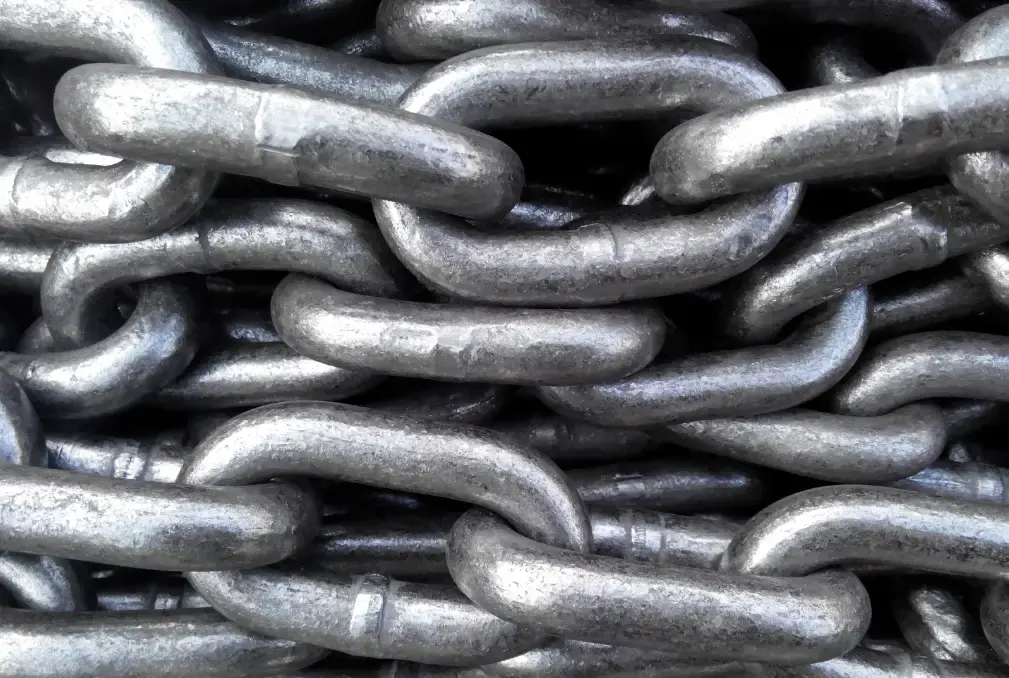
What is a Mining Chain
A mining chain is a heavy-duty industrial component used in material handling systems across mining, ports, metallurgy, and construction. It is designed to withstand high tensile loads, abrasive wear, and harsh environmental conditions. Unlike general-purpose chains, mining chains are built for continuous operation under extreme stress. Their performance directly affects safety, uptime, and maintenance costs. The chain must be selected not just for its load capacity, but for how it performs over time in the specific conditions of the site.
Strength Grades Class B C and D
Mining chains are classified by strength level into Class B, Class C, and Class D. These grades define the chain's tensile strength and are tied to the material used. Class B is the lowest strength grade, suitable for light to medium-duty applications. Class C is for moderate to heavy loads, and Class D is for the most demanding environments with high shock loads and continuous operation. The grade must match the application's expected load and duty cycle. Using a lower grade than required risks premature failure. Always confirm the grade marking on the chain and verify it with the batch certificate.
Tow Chain V Bridle with Large Shank J Hooks and Grab Hooks WLL 4700 lbs
Material Composition and Its Impact
Common materials for mining chains include carbon steel, alloy steel, stainless steel, and in some cases cast steel. Carbon steel offers good strength at lower cost but limited corrosion resistance. Alloy steel provides higher tensile strength and better wear resistance, making it suitable for high-load applications. Stainless steel is used where corrosion resistance is critical, especially in wet or chemically aggressive environments. The material choice affects not only strength but also service life, maintenance frequency, and total cost of ownership. For abrasive or wet conditions, alloy or stainless steel is preferred over plain carbon steel.
Tow Chain V Bridle with Large Shank J Hooks and Grab Hooks WLL 4700 lbs
Chain Size and Load Capacity
Chain size is measured by the diameter of the chain link, with common sizes including 16mm, 18mm, 20mm, and 30mm. Larger chain sizes carry higher load capacities and are used in heavy-duty systems like conveyor drives, dragline buckets, and haulage systems. The size must be selected based on the maximum expected load and the mechanical design of the system. A chain that is too small will stretch or fail under load. A chain that is oversized may not fit the sprockets or sheaves. Always match the chain size to the system's design and verify compatibility with the drive components.
Towing Chain Bridle With Forged 4 Inch Mini J Hooks
Surface Treatment and Corrosion Resistance
Surface treatments such as galvanizing, spray painting, and hot-dip galvanizing are applied to improve corrosion resistance. Hot-dip galvanizing provides the most durable protection, especially in wet or humid environments. Galvanized chains are commonly used in underground mines, port operations, and coastal sites. Spray painting offers basic protection and is suitable for indoor or dry environments. The finish also affects wear resistance and visual inspection. A damaged coating can expose the base metal to rust, so inspect chains regularly and replace those with compromised surface integrity.
Towing Chain Bridle With Forged 4 Inch Mini J Hooks
Wear Resistance and Fatigue Performance
Mining chains operate in abrasive conditions where constant friction from coal, ore, and rock causes rapid wear. Chains with hardened links or specialized coatings resist wear better and extend service life. Fatigue resistance is critical because chains undergo repeated loading and unloading cycles. A chain that fails due to fatigue can cause system downtime or safety incidents. Choose chains designed for cyclic loading, and ensure they are proof load tested. Regular inspection and maintenance are essential to detect early signs of fatigue, such as elongation or surface cracking.
Towing Chain Bridle With Forged 4 Inch Mini J Hooks
Temperature and Environmental Conditions
Mining chains may be exposed to extreme temperatures, from sub-zero conditions in arctic mines to high heat near processing plants. Materials and coatings must retain their integrity across the expected temperature range. Some materials lose strength at high temperatures or become brittle in cold. Chains used in high-temperature environments should be made from heat-resistant alloys. In cold climates, ensure the chain does not become brittle. Always confirm that the chain's material and finish are suitable for the site's environmental conditions.
How to Match Chain to Application
Start by defining the load, duty cycle, environment, and system design. For example, a 20mm Class C alloy steel chain with hot-dip galvanizing is suitable for a conveyor system in a wet underground mine. A 30mm Class D chain in stainless steel may be needed for a high-load haulage system in a coastal port. Never assume that a chain from one application can be reused in another. Confirm the grade, material, size, and finish with the system's engineering specifications. If in doubt, request a material test certificate and proof load test report for the batch.
What to Ask a Supplier Before Ordering
Ask for the chain's strength grade, material composition, and surface treatment. Confirm the chain size and whether it matches the sprocket or sheave pitch. Request a Material Test Certificate to EN 10204 3.1 for the batch. Ask if the chain is proof tested and if the WLL is stamped on the part. Confirm whether the supplier can supply matched assemblies with chain, sprockets, and fittings. If the application is high-risk or safety-critical, ask for third-party inspection before shipment.
Ordering note. Mining chains are classified into Class B, Class C, and Class D based on strength level; select the grade to match the expected load and duty cycle Material choice—carbon steel, alloy steel, stainless steel, or cast steel—affects strength, wear resistance, and corrosion performance Chain sizes of 16mm, 18mm, 20mm, and 30mm are common; larger sizes carry higher load capacities and suit heavier appl