
The Basics of Wire Rope Clamps
Wire rope clamps are essential for creating secure terminations and loops in wire rope, but incorrect installation can compromise safety. This guide explains how to select, position and tighten clamps according to wire rope diameter, spacing rules and load path orientation, with no room for assumptions.
How Wire Rope Clamps Work
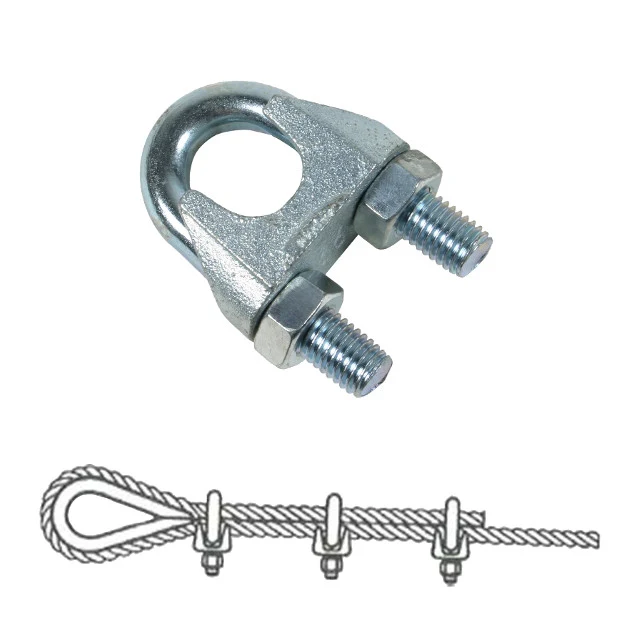
Wire rope clamps secure the end of a wire rope by compressing the rope between the clamp body and the U-bolt. The clamp body fits over the main rope, and the U-bolt and nut are tightened to press the rope into the saddle. This creates a mechanical grip that resists pull-out under load. The system relies on friction and deformation of the rope to hold. Without proper installation, the clamp can slip, leading to rope failure. The clamp is not a substitute for a proper terminal fitting like a thimble or swage, but it is a field-usable solution for temporary or semi-permanent terminations.
Clamp Count Based on Wire Rope Diameter
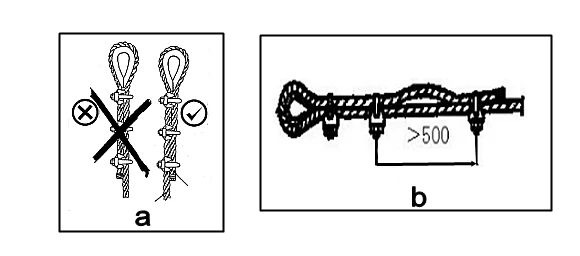
The number of clamps required depends on the wire rope diameter. For ropes 19mm and under, use at least three clamps. For 19-32mm, use four. For 32-38mm, use five. For 38-44mm, use six. For 44-60mm, use seven. These numbers are based on industry practice and ensure sufficient clamping force across the rope's cross-section. Using fewer clamps than recommended reduces the joint's strength and increases the risk of failure under load. Always follow the minimum count for the rope size, and never assume a smaller clamp count is acceptable just because the rope is light-duty.
Steel Cable Fasteners Wire Rope Clamp &Thimble & Sleeve Set- Customizable Packaging
Spacing Between Clamps
The distance between clamps should be at least six times the diameter of the wire rope. This spacing allows the rope to deform properly under load without overlapping compression zones. If clamps are too close, the rope may not flatten evenly, and stress concentrations can develop. If spaced too far apart, the joint may not hold under dynamic loads. For example, a 20mm rope requires at least 120mm between clamps. This rule applies to all clamps in the series, including the last one before the rope end.
Steel Cable Fasteners Wire Rope Clamp &Thimble & Sleeve Set- Customizable Packaging
Positioning the U-Bolt and Saddle
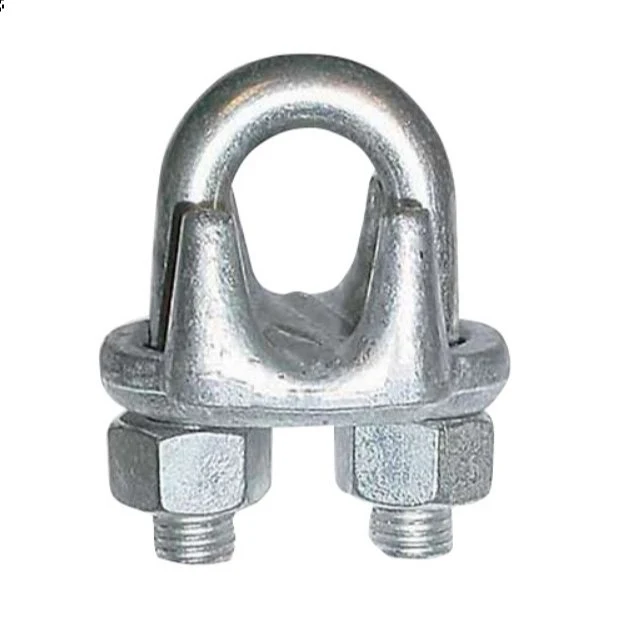
The U-bolt must always face the live end of the rope, not the dead end. The saddle (clamp body) should rest on the main rope, and the U-bolt should clamp the rope head. If the U-bolt is placed on the main rope, the rope head will be crushed when loaded, leading to wire breakage. The U-bolt is designed to bear the load, not the main rope. Misalignment is a common cause of joint failure. Always check the orientation before tightening. The saddle should be in direct contact with the main rope, and the U-bolt should be in contact with the rope end.
Wire Rope Clamp And Thimble Set Customizable Packaging
Tightening Procedure and Rope Compression
Tighten the bolts gradually and evenly, working from the center clamp outward. The goal is to flatten the rope by one-third to one-quarter of its original diameter. This deformation creates the necessary friction to hold the rope. After initial tightening, apply the full load to the joint and re-tighten all clamps. This second pass ensures the rope has settled and the clamps are fully engaged. Never assume the first tightening is sufficient. Over-tightening can damage the rope or deform the clamp, reducing its effectiveness. Use a torque wrench if available, or tighten by hand until the rope is compressed to the correct depth.
Wire Rope Clamp And Thimble Set Customizable Packaging
Safety Bend and Final Check
After the last clamp, install a final clamp about 500mm behind it, and form a safety bend in the rope end. This bend acts as a visual indicator: if the joint begins to slip, the safety bend will straighten first. This gives the operator time to stop the operation and inspect the joint before failure occurs. The safety bend is not a load-bearing feature but a detection mechanism. It is especially important in applications with high dynamic loads or where inspection is infrequent. Always check the safety bend before use and after any load cycle.
Wire Rope Clamp And Thimble Set Customizable Packaging
Clamp Sizing and Clearance
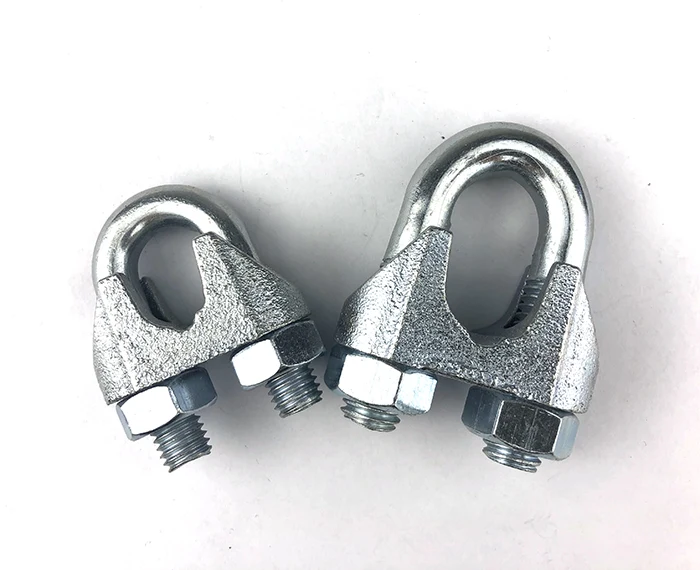
The inner diameter of the U-bolt must be 1 to 3mm larger than the wire rope diameter. If the clearance is too small, the clamp cannot fit over the rope. If too large, the clamp will not grip the rope effectively. The clamp body must fit snugly around the rope without gaps. Use a caliper to measure the rope diameter and select a clamp that matches. Never force a clamp onto a rope that is too large. The fit is critical to the joint's integrity. A poorly sized clamp may appear to work but will fail under load.
Fist Grip Clamp G-429 US Type Drop Forged Wire Rope Termination
When to Use Clamps and When Not To
Use wire rope clamps for temporary or semi-permanent terminations in rigging, construction, marine, and industrial applications. They are not suitable for overhead lifting, where alloy Grade 80 or Grade 100 components are required. They are not a substitute for swaged or forged terminals in high-stress or safety-critical applications. If the duty involves suspended loads, dynamic motion, or high shock loads, consult the rigging hardware catalog for approved terminal fittings. Clamps are for restraint and tie-down, not for lifting.
Fist Grip Clamp G-429 US Type Drop Forged Wire Rope Termination
Ordering note. Use at least three clamps for ropes up to 19mm, increasing by one for each size range up to seven clamps for 44–60mm ropes Space clamps at least six times the rope diameter apart, with the last clamp at least 140mm from the rope end Position the U-bolt on the rope end and the saddle on the main rope to prevent crushing Tighten clamps gradually, compressing the rope by 1/3 to 1/4 of its diameter, a