
Design Guide
Guide Sinker Tongue And Trick Plate
These four parts meet at the same point in the machine, which is why a fault in one looks like a fault in the others. Telling them apart is most of the diagnosis.
Each One In Turn
The guide is a thin blade with an eye at the tip. It carries the warp end, swings through the needle line and shogs sideways. The combination of swing and shog is the lapping, and the lapping is the fabric structure.
The sinker holds the fabric down while the needle rises and supports the loop during knock-over. The tongue closes the compound needle hook so the old loop can be cast off. The trick plate carries the slots that hold the needles in line and fixes the spacing.
Reading The Fabric
A single vertical line down the piece is one element at one needle position — most often a guide with a worn or chipped eye.
Press-off at one place across the width is a bent or broken sinker at that position, letting the fabric lift with the needle.
An occasional dropped stitch on one repeat is usually a worn tongue on a compound needle machine.
Uneven loop length across the whole width, with no single line, points at the trick plate or the separators rather than at any one element.
Checking Without Guesswork
For the trick plate, fit a new needle in the suspect slot with the machine stopped and feel for sideways play. If a new needle still moves, the slot is worn and the needle is not the problem.
For the tongue, look at the needle groove. A tongue that stands proud scores the groove, so a scored needle is evidence about the tongue.
For the guide, run a thread through the eye by hand and feel for a groove or a sharp edge.
Replace The Unit, Not The Element
All four are supplied as cast units on this catalogue. Replacing the unit preserves the setting across the block. Straightening a bent element or fitting a single replacement into a worn body puts the machine back into the same fault within days.
More Guides
Parts Discussed In This Guide
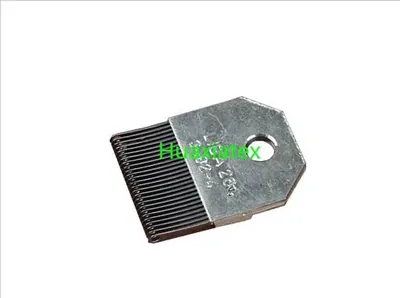
Guide Units
Cast guide units that lap the yarn around the needle.
52 parts listed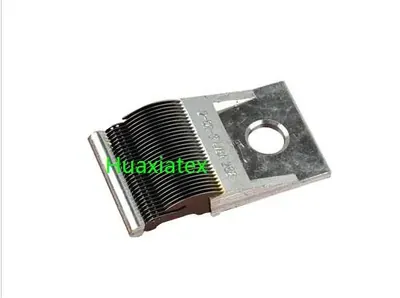
Sinker Units
Cast sinker units that hold the fabric during knock-over.
62 parts listed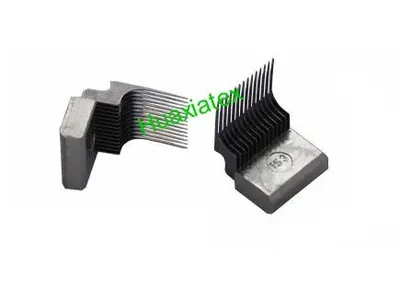
Tongue Units
Cast tongue units that close the needle hook.
30 parts listed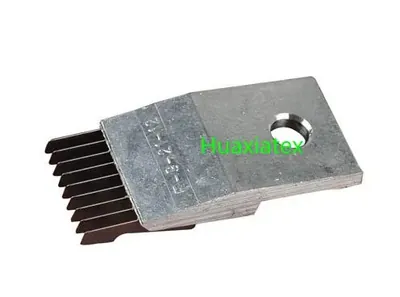
Trick Plate Units
Cast trick plate units that guide and space the needles.
19 parts listed
Separators
Separator units that keep needles apart across the width.
12 parts listedFrequently Asked Questions
How do I tell a guide fault from a sinker fault?
A guide fault is a line down the fabric. A sinker fault is a press-off at that position.
The machine drops a stitch every few repeats. What is that?
On a compound needle machine, most often a worn tongue.
Should I straighten a bent element?
No. Replace the unit. A straightened element rarely holds its setting.
Need One Of These Parts
Send the machine brand, machine type, gauge and a photograph of the worn part.