
Thermoelectric Modules
TEG Thermoelectric Power Generators
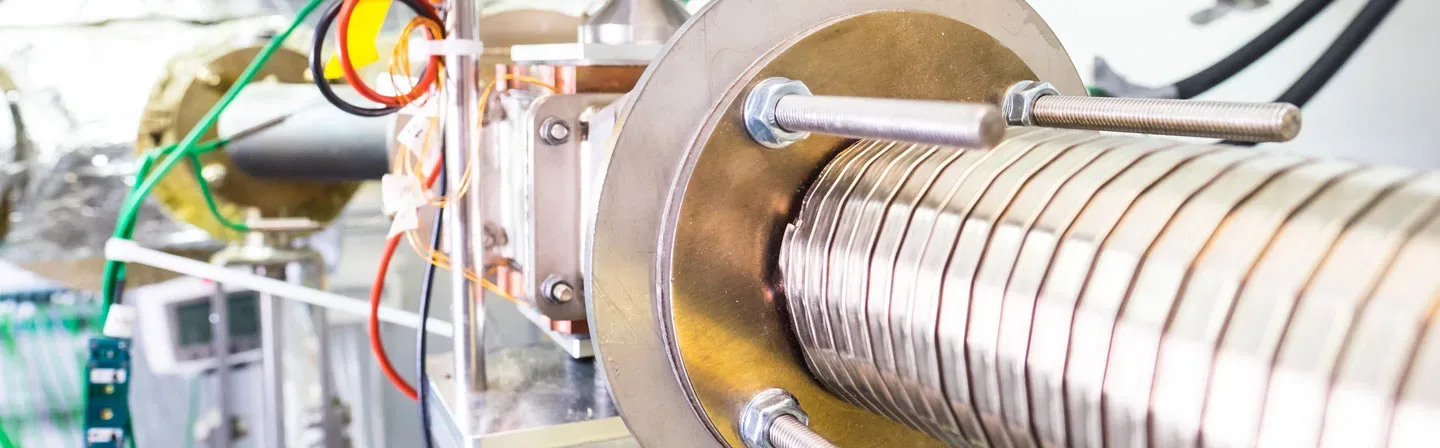
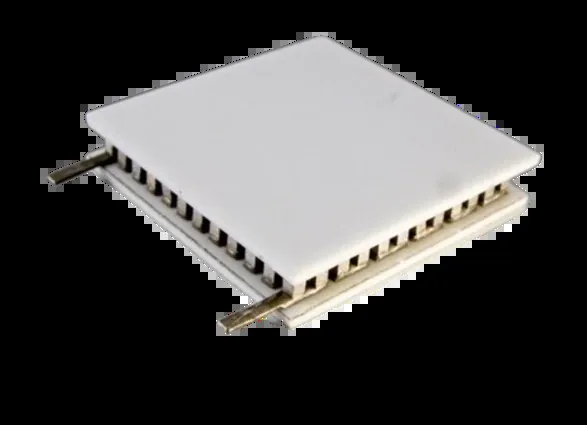
Solid state modules that turn a temperature difference straight into DC power. No moving parts, no working fluid, no noise, and nothing to service.
Product Overview
Fifteen Years Of Generator Materials Research
EVERREDtronics has been working on research and development of thermoelectric materials for thermoelectric generators since 2005. We run an independent research center led by company professionals together with professors from the schools of materials science and engineering of Fudan University, Zhejiang University and Central South University.
Through years of immersion we have become a leading innovator and manufacturer of thermoelectric materials, both Bi2Te3 based and PbTe based, and of thermoelectric generators.
We are developing products and heat reclamation systems for household and industrial applications, converting waste heat from power plants, automotive exhaust systems, metal refining, cement manufacturing and oil refinery factories into electricity, and harnessing geothermal energy with the same technology.
Key Benefits
Why A Solid State Generator
No Moving Parts
A thermoelectric generator has no rotating machinery, no working fluid and no seals, so it is silent and there is nothing to wear out or service.
Works Where Nothing Else Fits
Any surface with a usable temperature difference can become a power source: an exhaust pipe, a flue, a burner wall or a process line.
Scales By Adding Modules
Output is set by module count and by the delta-T you can hold, so the same building block covers a sensor supply and a multi hundred watt array.
Who It Is For
Engineers Who Specify Generators
- Energy teams recovering waste heat from power plants, metal refining, cement manufacturing and oil refineries
- Automotive engineers evaluating exhaust heat recovery
- Remote monitoring designers who need power where no grid or solar option exists
- Off grid product designers building stove, burner or flue powered chargers and controllers
- Research groups characterising thermoelectric materials and module level performance
Problems It Solves
What A Generator Solves
- Heat is being thrown away that could run instrumentation or trickle charge a battery
- A site has no grid connection and solar is unreliable or unavailable
- Rotating machinery is not acceptable because of maintenance, noise or safety
- Sensors need a power source that survives for years without intervention
- A process already produces a stable temperature gradient that is simply not being used
Technical Features
Generator Module Characteristics
Catalogue values are stated at defined hot and cold side temperatures. Read the class heading in the table before comparing two codes.
Matched Output Power
From 2.64 W for TEG31-2.8-1.3 up to 21.7 W for TEG126-60HT, always quoted at the stated hot and cold side temperatures.
Two Live Temperature Classes
A 210 °C class specified at Th 160 °C and Tc 50 °C, and a 320 °C class specified at Th 300 °C and Tc 50 °C.
Bi2Te3 And PbTe Materials
Low temperature Bi2Te3 based material up to around 450 K, and PbTe based material for intermediate temperatures up to 850 K.
30 To 90 mm Footprints
Hot side sizes from 30×30 mm to 90×80 mm, so an array can be tiled along a duct or a pipe flat.
Matched Load Design
Every code lists open circuit voltage, matched load resistance, matched voltage and matched power so the electrical design can start from real numbers.
Same Factory And Test Regime
Generators are built on the same line, with the same plating, soldering and 100 % test discipline as our cooling modules.
Specifications
Full TEG Catalogue
The three groups below use different reference temperatures. The 500 °C class is discontinued and is listed for reference only.
| TEG Code | Hot Side (mm) | Cold Side (mm) | V/K | Open Circuit V | Matched Load (Ω) | Matched V | Matched Power (W) | Heat Flow (W) | Datasheet |
|---|---|---|---|---|---|---|---|---|---|
| Max. 210 Celsius Degree/ 410F / 483.15K / 869.67Ra | |||||||||
| TEG31-2.8-1.3 | 30×30 | 30×30 | 0.0118 | 1.3 | 0.16 | 0.65 | 2.64 | 89.0 | On request |
| TEG49-4.5-2.0 | 62×62 | 62×62 | 0.03091 | 2.0 | 0.15 | 1.33 | 6.67 | 166.0 | On request |
| TEG127-1.4-1.0 | 40×40 | 40×40 | 0.05818 | 6.4 | 1.8 | 3.2 | 5.2 | 104.0 | On request |
| TEG127-2.0-1.3 | 50×50 | 50×54 | 0.05818 | 6.4 | 1.3 | 3.2 | 7.9 | 143.6 | On request |
| TEG127-2.0-1.6 | 50×50 | 50×54 | 0.05818 | 6.4 | 1.6 | 3.2 | 6.4 | 114.3 | On request |
| TEG241-1.0-0.8 | 40×40 | 40×40 | 0.11000 | 10.0 | 5.9 | 6.0 | 4.24 | 87.0 | On request |
| TEG241-1.4-1.0 | 55×55 | 55×55 | 0.10455 | 11.5 | 3.7 | 7.0 | 6.76 | 120.7 | On request |
| TEG254-1.4-1.2 | 40×80 | 44×80 | 0.10455 | 11.5 | 4.8 | 7.0 | 7.0 | 125.0 | On request |
| TEG127-08 | 40×40 | 40×40 | 0.0409 | 4.5 | 1.65 | 2.3 | 3.5 | 81.0 | On request |
| TEG199-13 | 50×50 | 50×50 | 0.0655 | 7.2 | 2.65 | 3.5 | 6.3 | 132.0 | On request |
| Max. 320 Celsius Degree/ 608F / 593.15K / 1067.67Ra | |||||||||
| TEG126-30A | 30 | 30 | 0.03963 | 9.91 | 5.3 | 5.1 | 4.9 | 120.4 | On request |
| TEG126-40A | 40 | 40 | 0.03963 | 9.91 | 5.3 | 5.2 | 5 | 120.4 | On request |
| TEG126-60A | 56 | 56 | 0.03111 | 7.78 | 1.6 | 4 | 13.2 | 338.0 | |
| TEG241-60A | 56 | 56 | 0.06519 | 16.30 | 4.1 | 8.5 | 16.5 | 362.0 | |
| TEG126-30B | 30 | 30 | 0.03333 | 8.33 | 2.5 | 4.4 | 6.7 | 144.4 | On request |
| TEG126-40B | 40 | 40 | 0.02667 | 6.67 | 1.7 | 3.58 | 6.8 | 137.0 | On request |
| TEG126-60B | 56 | 56 | 0.03111 | 7.78 | 0.8 | 4.12 | 18 | 357.4 | |
| TEG241-60B | 56 | 56 | 0.05333 | 13.33 | 2.3 | 7 | 19.7 | 387.0 | |
| Max. 500 Celsius Degree/ 932F / 773.15K / 1391.67Ra ( DISCONTINUED ) | |||||||||
| TEG070-40HT | 70 | 60 | 0.0142 | 8.2 | 1.1 | 4.2 | 14.8 | 215 | On request |
| TEG126-60HT | 90 | 80 | 0.02369 | 13.5 | 2.0 | 6.6 | 21.7 | 300 | On request |
Catalogue Notes
| Data reference | All catalogue values are measured at a hot side temperature Th = 30 °C |
| Flatness | ±0.05 mm |
| Height tolerance | ±0.2 mm |
| Maximum compressive load | 1 MPa |
| Lead wire | 150 mm as default, other lengths and terminations on request |
| Sealing | Silicone gel seal. Specify if you do not want the module sealed |
Symbol Definitions
| Imax | Maximum input current in amperes at Qc = 0 and ΔTmax |
| Vmax | Maximum DC input voltage in volts at Qc = 0 and Imax |
| ΔTmax | Maximum temperature differential in °C at Qc = 0 and Imax |
| QcMax | Maximum heat pumping capacity in watts at Imax and ΔT = 0 |
| Th | Temperature of the hot side during operation |
| Tc | Temperature of the cold side during operation |
Materials And Construction
What The Generator Is Made Of
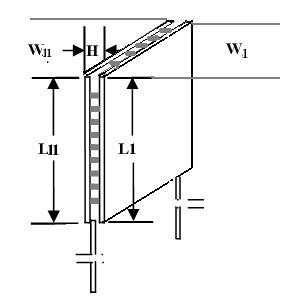
| Low temperature material | Bi2Te3 based, useful up to around 450 K |
| Intermediate temperature material | PbTe based, useful up to 850 K |
| Purity | 99.99 % for both P-type and N-type material |
| Solder class | Selected for the hot side temperature, up to the 320 °C class in production |
| Substrate | Ceramic, specified for the working temperature |
| Research partners | Fudan University, Zhejiang University and Central South University |
Manufacturing Process
From Ingot To Finished Module
- Material development in our own research center, Bi2Te3 and PbTe systems
- Crystal growth and ingot production in house
- Wire electrical discharge machining of pellets to size
- High temperature soldering matched to the module class
- Assembly, electrical characterisation at the stated hot and cold side temperatures
- 100 % test and inspection before dispatch
Quality Control
Every Module Is Tested Before It Leaves The Line
Quality control runs from raw material procurement through crystal growth, pellet selection and module assembly to the dispatch of the finished product. All products are 100 % tested and inspected using test equipment sourced from an American thermoelectric company.
ISO 9001
Quality management system certified
SGS
European Union certification held by the manufacturing company
RoHS
All thermoelectric modules are RoHS compliant
100 % tested
Every module is tested and inspected before dispatch
Customization Options
Custom Power Generators
Looking for custom power generators to fit your specific quality, performance and cost targets? Send us the duty point.
Material Selection
Bi2Te3 or PbTe chosen for your hot side temperature and duty cycle.
Footprint And Array
Module size and tiling arranged to cover the heat exchanger surface you have.
Electrical Matching
Series and parallel arrangement designed around your converter input window.
Comparison With Other Products
Generator Classes Compared
Choose the class from the hot side temperature you can actually deliver and hold.
| 210 °C class | 320 °C class | 500 °C class | |
|---|---|---|---|
| Reference condition | Th 160 °C, Tc 50 °C | Th 300 °C, Tc 50 °C | Th 600 °C, Tc 30 °C |
| Catalogue codes | 10 | 8 | 2, discontinued |
| Matched output power | 2.64 to 7.9 W | 4.9 to 19.7 W | 14.8 to 21.7 W |
| Typical heat flow per module | 87 to 166 W | 120 to 387 W | 215 to 300 W |
| Status | In production | In production | Discontinued, reference only |
| Typical source | Low grade waste heat, flue gas | Exhaust, burners, process heat | High temperature research |

Use Guide
Designing A Generator Into A System
- Measure the hot side temperature you can actually hold under load, not the peak gas temperature. Catalogue power assumes the stated Th.
- Size the cold side first. In most failed TEG projects the cold side, not the module, is the limit.
- Read the matched load resistance from the table and design the converter input to sit near it. A mismatched load throws away most of the available power.
- Check the heat flow through module column. That heat has to pass through the cold side path as well as the module.
- Clamp evenly and allow for differential expansion across a hot to cold interface. Uneven clamping is the main mechanical failure mode.
- Tile modules in series and parallel groups so a single open circuit module does not take the whole array down.
- Confirm the maximum continuous hot side temperature with us before you commit to a class.
Related Products
Other Parts Of The Range
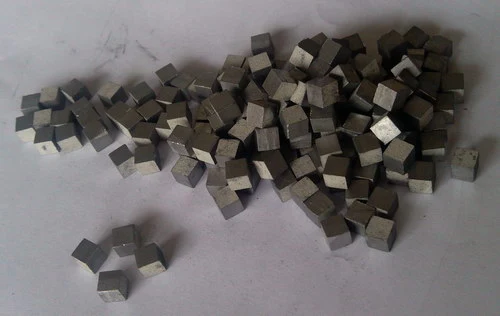
Thermoelectric Materials
Bi2Te3 and PbTe P-type and N-type ingots, wafers, pellets and taped reels.
Learn more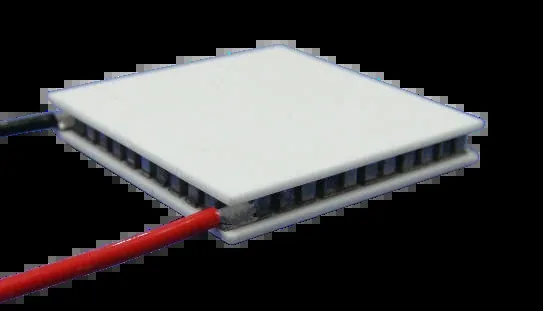
TEC Standard Peltier Modules
158 catalogue sizes from 10×10 mm to 80×120 mm, Qmax 1.6 to 480 W.
Learn more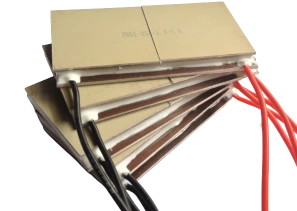
TEA Aluminium Substrate Modules
A 122 W/m·K substrate that raises efficiency 30 to 50 %.
Learn moreRelated Applications And Guides
Where This Product Is Used
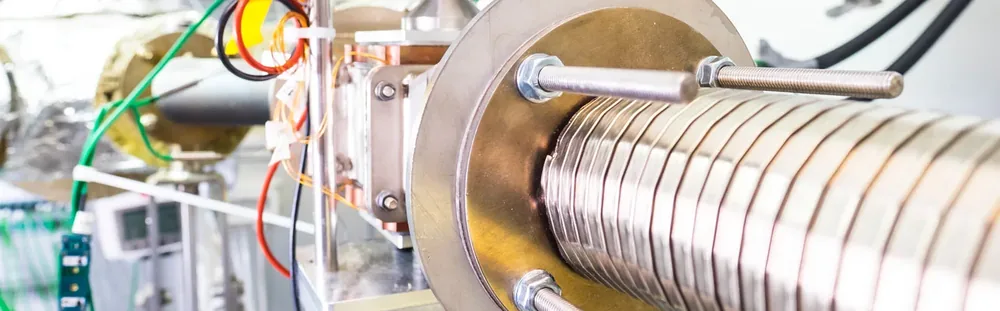
Thermoelectric Generator Design Guide
Hot side interface, cold side sizing, clamping and electrical matching.
Learn more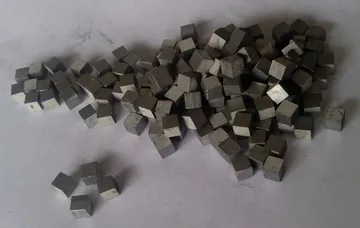
What Is A Thermoelectric Module
Peltier and Seebeck effects, and where each one is useful.
Learn more
Automotive Thermal Management
Battery packs, climate seats and exhaust heat recovery.
Learn moreFAQ
Frequently Asked Questions About Thermoelectric Generators
How much power can one module produce?
Between 2.64 W and 21.7 W of matched output power depending on the code and the temperature class. TEG126-60B produces 18 W at Th 300 °C and Tc 50 °C, with 357.4 W of heat flowing through the module to do it.
What efficiency should I expect?
Compare the matched output power column with the heat flow through module column in the table. That ratio is the module level conversion for the stated conditions, and it is the honest number to design with.
Why is the 500 degree class discontinued?
It is listed for reference only. If you have a genuine high temperature requirement, contact us and we will discuss what is currently possible with PbTe based material rather than quote a discontinued part.
Can I use a cooling module as a generator?
Physically it will produce a voltage, but a cooling module is not built for the solder temperatures and thermal stress of a generator duty. Use a TEG code so the solder class and construction match the hot side.
What limits the lifetime of a generator module?
Hot side temperature excursions above the class rating, uneven clamping and thermal cycling. Hold the hot side inside the rated class, clamp evenly, and manage the cold side and the module will run for years with no maintenance.
Do you supply the heat exchangers as well?
We supply the generator modules and can advise on the interface. For a complete recovery system, describe the heat source and we will tell you what we can support directly and what needs a systems partner.
Tell Us About Your Heat Source
Hot side temperature, available surface area, cold side option and the power you want. That is enough for us to suggest a class, a code and an array layout.
No forms. Messages reach our engineering desk directly. Reply within 24 hours, Monday to Friday, 9:00 to 17:00 Beijing time.