
Products
Thermoelectric Modules
Thermoelectric modules, also called Seebeck or Peltier modules, are small solid state devices that work as coolers or as power generators. 295 catalogue part numbers across four families.
What A Thermoelectric Module Is
A Sandwich Of Two Plates And A Pellet Array
A typical unit is a few millimetres thick by a few millimetres to a few centimetres square. It is a sandwich formed by two ceramic plates with an array of P-type and N-type semiconductor materials, commonly bismuth telluride alloys, in between.
As solid state energy converters, thermoelectric modules have several advantages over competing technologies: high reliability potential, noise free operation, vibration free operation, scalability, orientation independence and compactness. Those advantages are why modules dominate temperature stabilisation, heat pumping, large delta-T work and small scale power generation.
Module Features
What Is Common To Every Module We Build
300,000 Hour Design Life
Effective anti-copper element diffuse technology prolongs module life from the normal 200,000 hours to 300,000 hours, and lets modules endure frequent forward and reverse pulse strikes.
Five Temperature Classes
Nickel and stannum electroplating and patented soldering techniques allow work in normal, medium and high temperature ranges, at maximum 139, 183, 235, 320 and 500 °C.
Vacuum Anti-Humidity Process
Guards module components against water and moisture penetration, which allows applications in rigorous conditions.
RoHS Compliant
All EVERREDtronics thermoelectric modules are RoHS compliant and 100 % tested before dispatch.
Consistent Mechanical Limits
Flatness ±0.05 mm, height tolerance ±0.2 mm, maximum compressive load 1 MPa, 150 mm lead wire as default.
Our Own Material
Bi2Te3 and PbTe pellets grown, cut and graded in house, which is what makes the catalogue consistent from batch to batch.
Product Category
Choose By Family
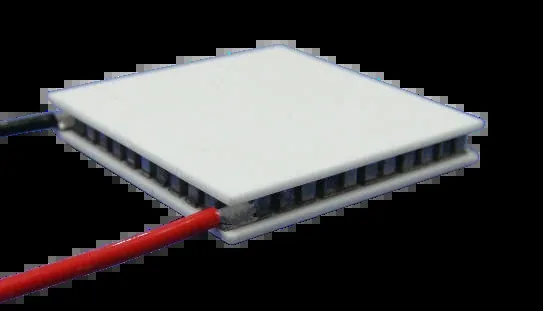
TEC Standard Peltier Modules
158 codes from 10×10 to 80×120 mm, Qmax 1.6 to 480 W. The default starting point.
Learn more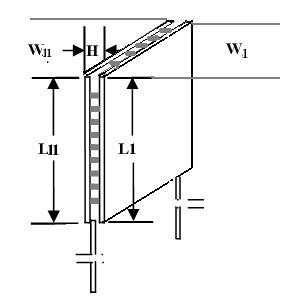
TES Micro Thermoelectric Modules
90 codes built on 0.45 to 1.0 mm pellets, footprints from 1.8×3.4 mm, round outlines available.
Learn more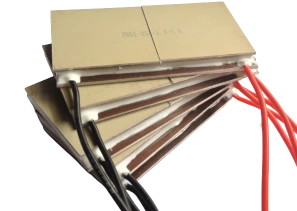
TEA Aluminium Substrate Modules
27 codes on a 122 W/(m·K) metallic substrate, 30 to 50 % more efficient and breakage free.
Learn more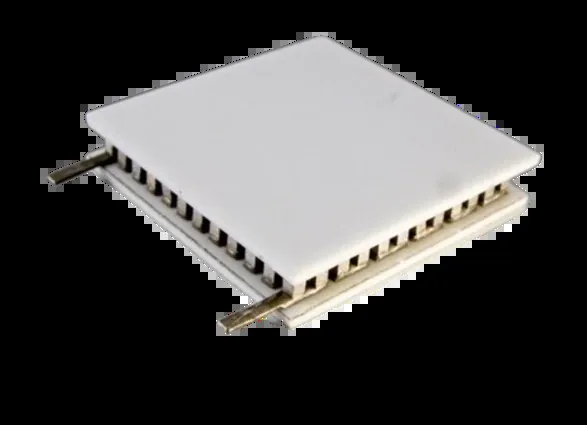
TEG Thermoelectric Power Generators
20 codes in 210 and 320 °C classes, matched output 2.64 to 21.7 W.
Learn more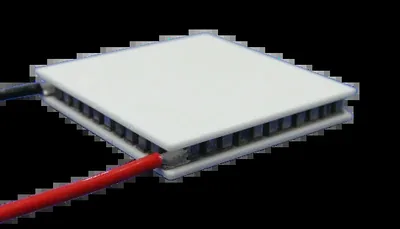
TEC Miniature Modules
The compact end of the catalogue, for instruments, optics and small cooled compartments.
Learn more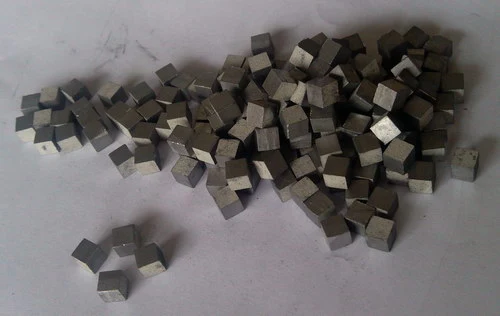
TEC Multi-Stage Modules
Cascaded stages when a single stage cannot deliver the temperature differential you need.
Learn more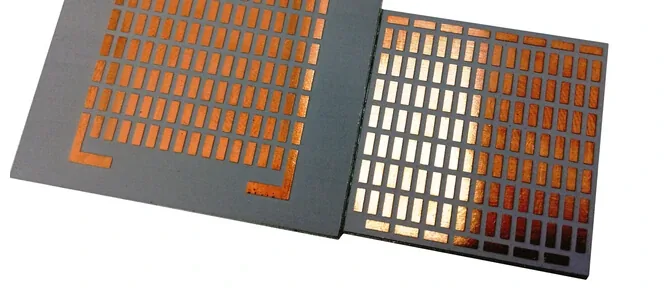
TEC Custom Modules
Your footprint, height, electrical rating and lead-out. Over one hundred specifications produced.
Learn more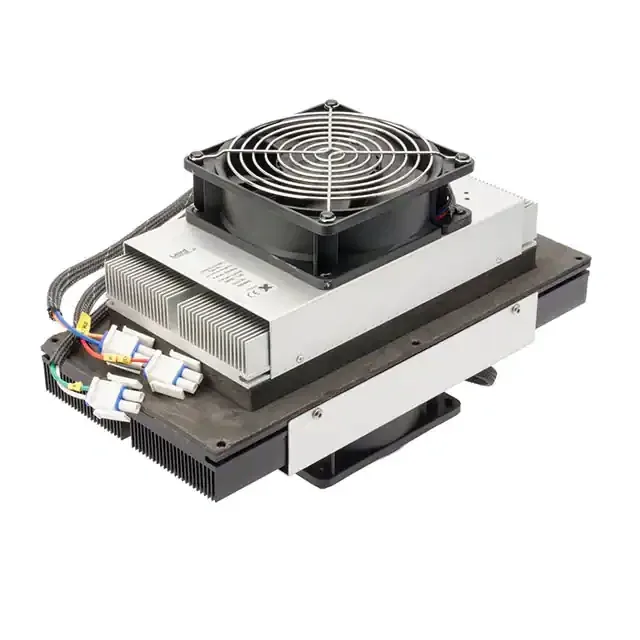
Thermal Management Assemblies
Air to air, air to liquid, liquid to liquid and plate to plate configurations.
Learn more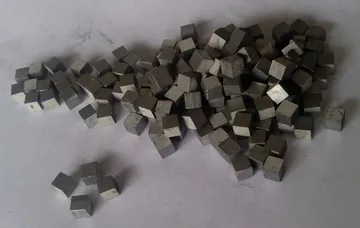
Thermoelectric Materials
Bi2Te3 and PbTe P-type and N-type at 99.99 % purity, in four supplied forms.
Learn moreApplications
A Full But Inexhaustive List Of Uses For Thermoelectric Modules
Taken from our own application register. If your use is on this list, we have almost certainly supplied something similar.
TE Accessories
The Supporting Parts
Power Supply And Controller
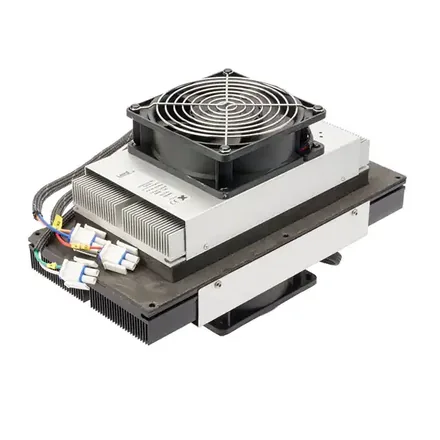
Sized on the module Vmax and Imax, with proportional control for a set point that is held rather than merely reached.
Learn more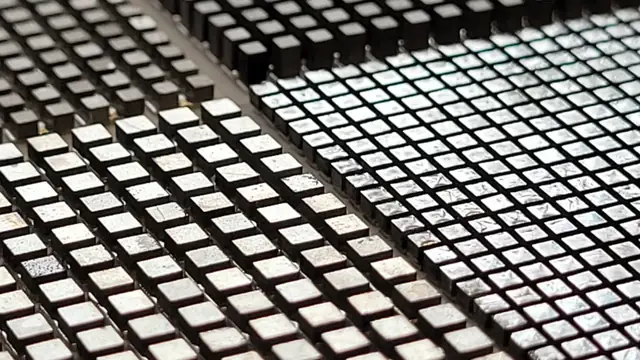
Thermistor And Sensing
No feedback means no control loop. Sensor placement matters as much as sensor choice.
Learn moreThermal Grease And Graphite Sheet
Thin, even and repeatable. The interface is where most disappointing results are created.
Learn moreFAQ
Frequently Asked Questions About Thermoelectric Modules
Cooler or generator, which do I need?
If you are supplying electricity to move heat, you need a cooling module (TEC, TES or TEA). If you have a temperature difference and want electricity out of it, you need a generator (TEG). The physics is the same effect running in opposite directions, but the construction differs.
Which family should I start from?
Start with TEC1. It has the widest size and power coverage. Move to TES1 if the footprint is under 10 mm, to TEA1 if you need more efficiency or a breakage free substrate, and to TEG if you want power out.
What does ΔTmax mean in the tables?
The maximum temperature differential in degrees Celsius at zero heat load and maximum current, with the hot side held at 30 °C. It is a limit, not an operating point. At ΔTmax the module pumps no heat.
Do all modules have a datasheet?
Not yet. Where a datasheet exists it is linked from the part number in the catalogue table and collected in the Download Center. For any other code, ask us and we will send the data.
Can a module heat as well as cool?
Yes. Reverse the polarity of the supply and the cold side becomes the hot side. Many appliance and outdoor cabinet designs use exactly this to heat in winter and cool in summer.
Not Sure Which Family Fits
Send us the heat load, the temperatures and the space you have. We will name the family and the part numbers, and say so plainly if thermoelectric is not the right technology for your case.
No forms. Messages reach our engineering desk directly. Reply within 24 hours, Monday to Friday, 9:00 to 17:00 Beijing time.