
Markets
Thermoelectric Modules For Automotive Applications
Vehicles combine everything difficult: vibration, thermal cycling, tight packaging, wide ambient range and a cost target. Aluminium substrate modules were developed for exactly this.
Industry Pain Points
What Vehicles Do To Thermal Hardware
- Continuous vibration cracks brittle ceramic assemblies over a vehicle lifetime
- Thermal cycling from cold start to full load happens thousands of times
- Packaging space is contested and every component fights for millimetres
- The same hardware has to cool in summer and heat in winter
- Battery cells need a narrow temperature band for life and safety
- Exhaust systems throw away a very large amount of energy as heat
Customer Requirements
What Automotive Engineers Ask Us For
Breakage Free Modules
Aluminium substrate modules are metallic rather than brittle, which is why they suit vibration and shock.
Heating And Cooling
Climate seats and cabin comfort devices need both modes from one module by reversing polarity.
Waste Heat Recovery
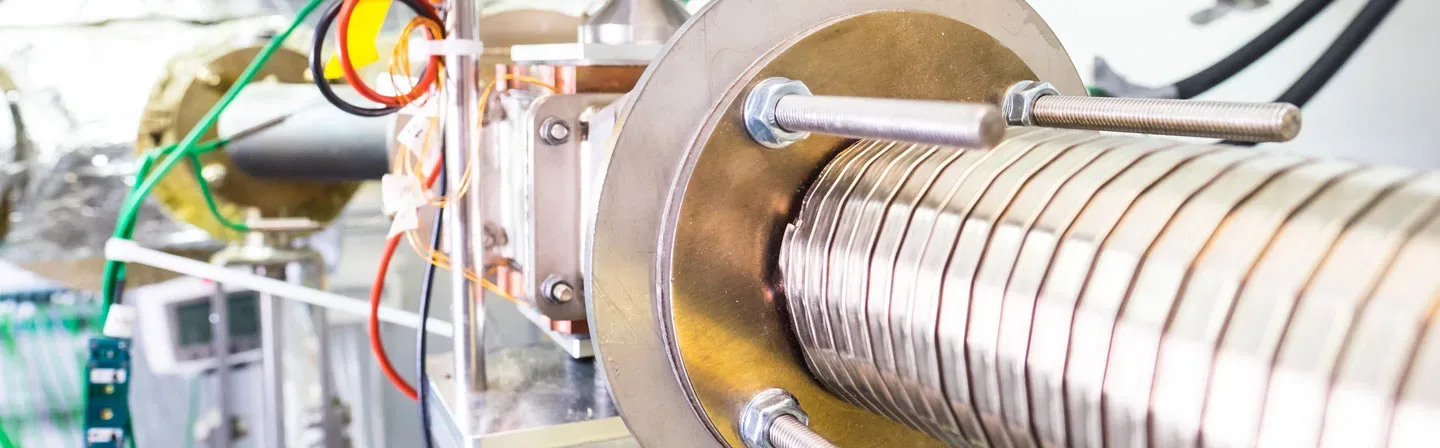
TEG modules turning exhaust heat into DC power, with matched load data published per code.
Suitable Products
What We Would Put In Front Of You First
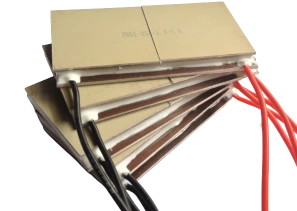
TEA Aluminium Substrate Modules
122 W/(m·K) substrate, 30 to 50 % more efficient, breakage free.
Learn more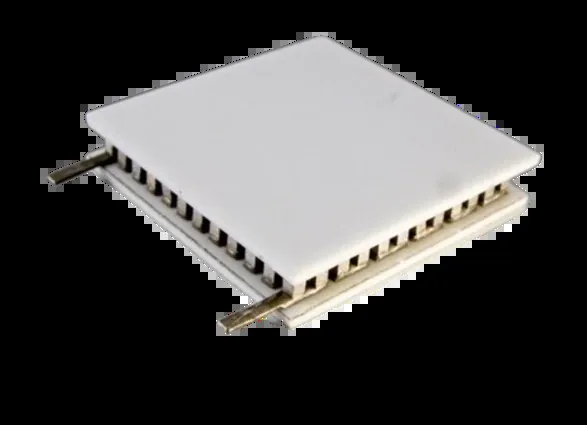
TEG Thermoelectric Power Generators
210 and 320 °C classes, matched output 2.64 to 21.7 W.
Learn more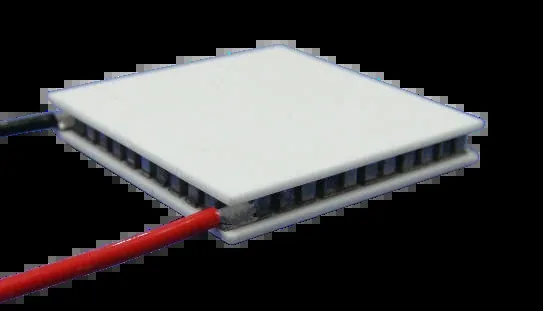
TEC Standard Peltier Modules
158 codes, 10×10 to 80×120 mm, Qmax 1.6 to 480 W.
Learn moreTypical Application Scenarios
Automotive Applications
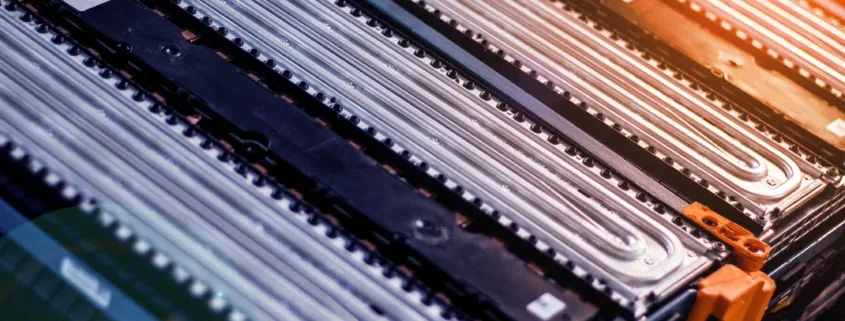
Battery Pack Conditioning
Holding cells inside their preferred temperature band, where thermoelectric modules can both cool and warm without a separate heater.
Climate Seats
Seat modules that cool and heat by reversing current, with no refrigerant and no compressor in the cabin.
Portable Automotive Refrigerators
12 V cool boxes that must work at any angle and survive road vibration, where a compressor would not.
Exhaust Heat Recovery
TEG modules converting exhaust heat into electricity, a target application we are actively developing.
Auto Cooling Systems
Small dedicated cooling loops for electronics and sensors in the vehicle.
Sensor And Camera Cooling
Holding sensor temperature stable so calibration and image quality do not drift with under bonnet heat.
Solution Process
How A Project In This Market Usually Runs
Delivery Capability
What We Can Commit To
Figures below are our own plant data, not industry averages.
Related Guides
Reading That Helps On This Kind Of Project
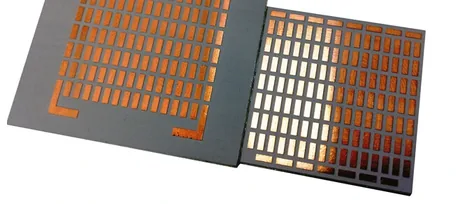
Aluminium Versus Ceramic Substrate
What a 122 W/(m·K) substrate changes in practice.
Learn more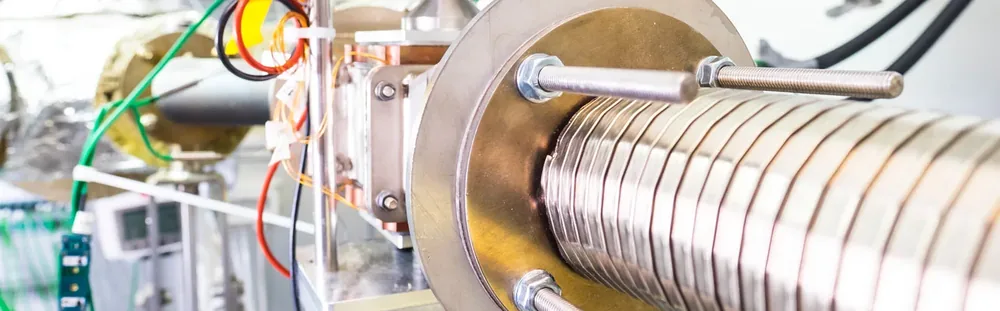
Thermoelectric Generator Design Guide
Hot side, cold side, clamping and electrical matching.
Learn more
Thermoelectric Module Reliability
What takes a module from 200,000 to 300,000 hours.
Learn moreFAQ
Frequently Asked Questions About Automotive
Why aluminium substrate for automotive?
Because it is metallic and breakage free. Ceramic plates are brittle and vibration plus uneven clamping is what cracks them. The aluminium substrate also conducts 122 W/(m·K) against 12 for ceramic, so cooling and heating efficiency rises by 30 to 50 %.
Can thermoelectric modules condition a battery pack?
They can cool and heat the same surface by reversing polarity, which is attractive for holding cells in a narrow band. The engineering question is always the heat load and the interface, so send the duty point.
How much power can exhaust heat recovery produce?
Per module, our catalogue lists matched output power from 2.64 W to 21.7 W depending on the class and the hot and cold side temperatures. System output is a function of the array size and how well the cold side is managed.
Do you supply automotive customers today?
Our published partner list includes Magna International, Hyundai Motor and Yanmar, and our products are used in portable automotive refrigerators and climate seats.
What documentation can you provide?
The company holds ISO 9001 certification and SGS European Union certification, and all modules are RoHS compliant and 100 % tested. Programme specific documentation is agreed case by case.
Talk To Us About A Vehicle Application
Send the temperature band, the vibration profile and the packaging envelope. We will tell you which substrate and which module family will survive the vehicle life.
No forms. Messages reach our engineering desk directly. Reply within 24 hours, Monday to Friday, 9:00 to 17:00 Beijing time.