

Markets
Thermoelectric Cooling For Telecommunications
Telecom equipment sits outdoors, unattended, for years. It has to survive summer sun and winter frost in a sealed box that nobody visits.
Industry Pain Points
What Outdoor Telecom Sites Demand
- Cabinets are sealed against rain, dust and insects, so ventilation is not an option
- Solar gain can push an enclosure far above ambient on a clear day
- Winter starts require heating, not cooling, from the same equipment
- Sites are remote and a service visit costs more than the hardware
- Optical modules and laser diodes drift in wavelength with temperature
- Equipment must run for years without intervention or scheduled maintenance

Customer Requirements
What Telecom Engineers Ask Us For
Sealed Air To Air Cooling
Internal and external air paths kept completely separate so nothing gets into the cabinet.
Heat And Cool In One Unit
Polarity reversal covers both the summer and the winter duty at a single site.
Optical Stability
TES micro modules hold laser diode and optical module temperature so wavelength stays where it should.
Suitable Products
What We Would Put In Front Of You First
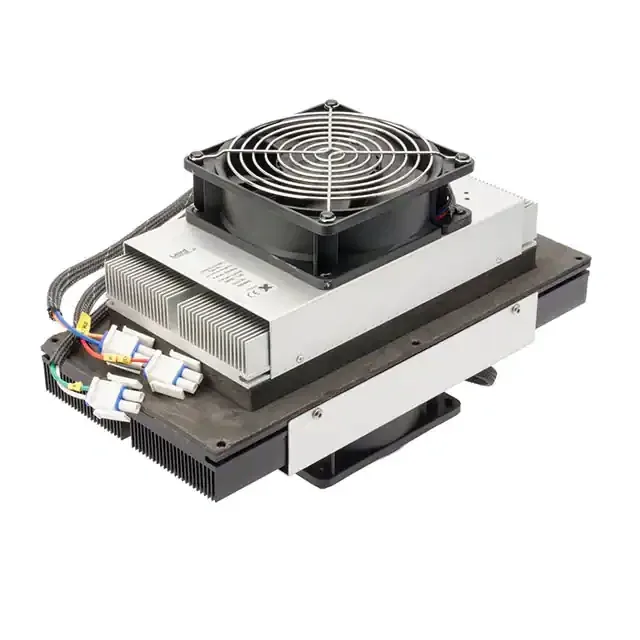
Thermal Management Assemblies
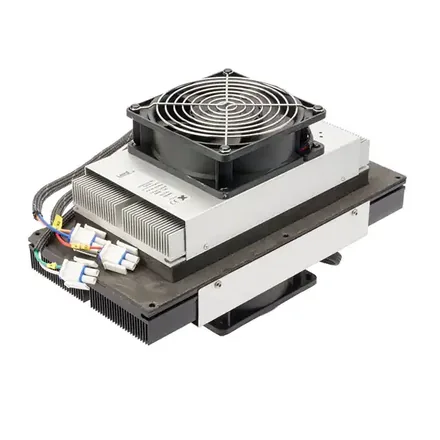
Air to air, air to liquid, liquid to liquid and plate to plate.
Learn more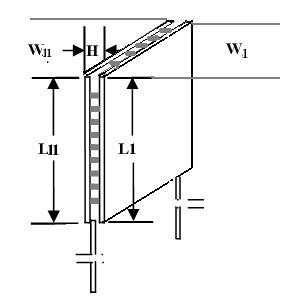
TES Micro Thermoelectric Modules
90 codes on sub millimetre pellets, footprints from 1.8×3.4 mm.
Learn more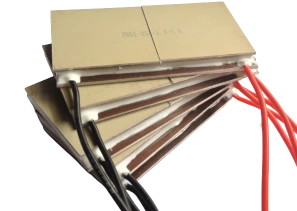
TEA Aluminium Substrate Modules
122 W/(m·K) substrate, 30 to 50 % more efficient, breakage free.
Learn moreTypical Application Scenarios
Telecom Applications
Outdoor Cabinet Cooling
Sealed air to air assemblies keeping base station and transmission electronics below ambient without letting the outside in.
Laser Diode Coolers
TES micro modules with a thermistor and controller, holding emitter temperature so the wavelength stays inside its window.
Optical Module Stabilisation
Small footprint cooling on transceiver assemblies where drift translates directly into link margin.
Black Box And Electronics Package Cooling
Cooling sealed electronic packages where opening the enclosure is not an option.
Low Noise Amplifiers
Reducing thermal noise by holding the amplifier below ambient in a sealed housing.
Remote Site Power
Thermoelectric generators as a supplementary power source where a heat source is available and grid power is not.
Solution Process
How A Project In This Market Usually Runs
Delivery Capability
What We Can Commit To
Figures below are our own plant data, not industry averages.
Related Guides
Reading That Helps On This Kind Of Project
FAQ
Frequently Asked Questions About Telecommunications
Can a sealed cabinet really be cooled below ambient?
Yes, and that is the whole point of a thermoelectric assembly rather than a fan. How far below depends on the dissipation inside, the solar gain and the module count in the assembly.
What about winter?
Reverse the module polarity and the same assembly heats the cabinet. Outdoor telecom is the classic case where both duty modes are needed from one unit.
How reliable is this without maintenance?
Modules have no moving parts and are designed for 300,000 hours with our anti-copper diffusion technology. In air cooled assemblies the fans are the wear item, so specify fan life against your service interval.
Which module family suits an outdoor cabinet?
TEA aluminium substrate modules if shock and vibration are significant, because they are metallic and breakage free. TEC1 ceramic modules where the mounting is benign and the widest size choice matters.
Can you help with laser diode temperature control?
Yes. TES micro modules cover that duty, and the accessories page covers the controller and thermistor arrangement that makes the loop stable rather than merely cold.
Specify Cooling For An Outdoor Site
Send the enclosure size, the dissipation inside, the ambient extremes at the site and whether heating is needed. We will configure a sealed assembly around our own modules.
No forms. Messages reach our engineering desk directly. Reply within 24 hours, Monday to Friday, 9:00 to 17:00 Beijing time.