
Materials
Thermoelectric Materials
We grow our own thermoelectric material. Bi2Te3 based alloys for cooling and low temperature generation, PbTe based alloys for intermediate temperature generation, both P-type and N-type at 99.99 % purity.
Product Overview
Materials That Convert Heat Directly Into Electricity
Thermoelectric materials are substances that generate an electrical voltage when subjected to a temperature gradient. They convert heat directly into electricity, or the reverse, without moving parts and without environmentally harmful emissions.
Our advanced research in thermoelectric materials has led to more efficient and more cost effective materials and modules, which has increased their use across industries. Challenges remain in scaling thermoelectric technology, and research continues on performance and reliability.
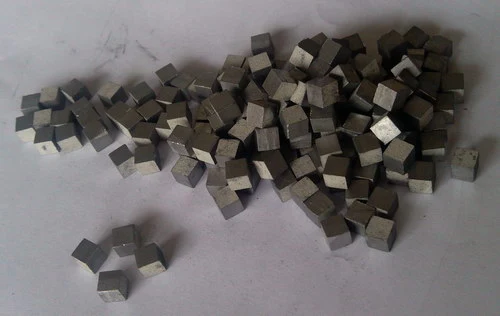
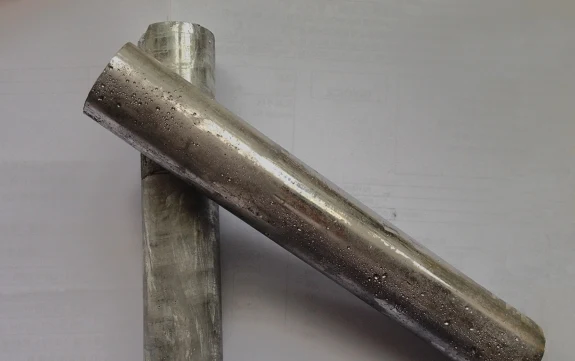
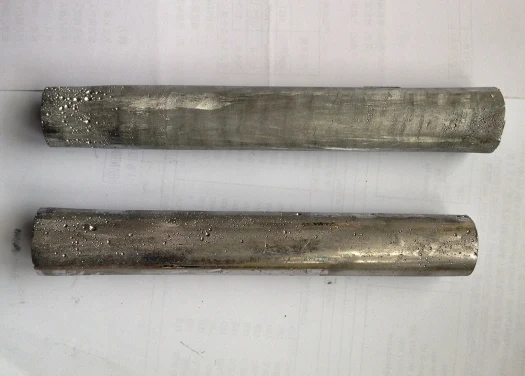
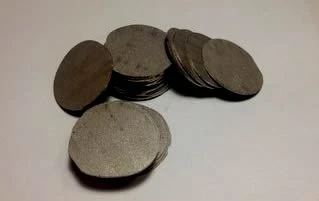
We currently offer Bi2Te3 based and PbTe based thermoelectric materials, in both P-type and N-type, supplied as pellets, ingots, bars or wafers, and cut with wire electrical discharge machining for dimensional precision.
Key Benefits
Two Material Systems, Two Temperature Ranges
Bi2Te3 Based, Low Temperature
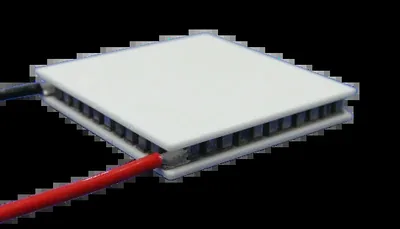
High quality and reliable for both cooling and power generation, useful up to around 450 K. This is the material inside our TEC, TES and TEA modules.
PbTe Based, Intermediate Temperature
For power generation up to 850 K, with a published datasheet covering P-type and N-type properties.
Cut To Your Dimensions
Pellets, ingots, bars and wafers, cut by wire electrical discharge machining. Custom element sizes are welcome, with a minimum order weight.
Who It Is For
Who Buys Material Rather Than Modules
- Module manufacturers who assemble their own devices and buy graded pellets
- Research groups characterising thermoelectric materials and device concepts
- Companies developing generator systems that need material qualified for a hot side temperature
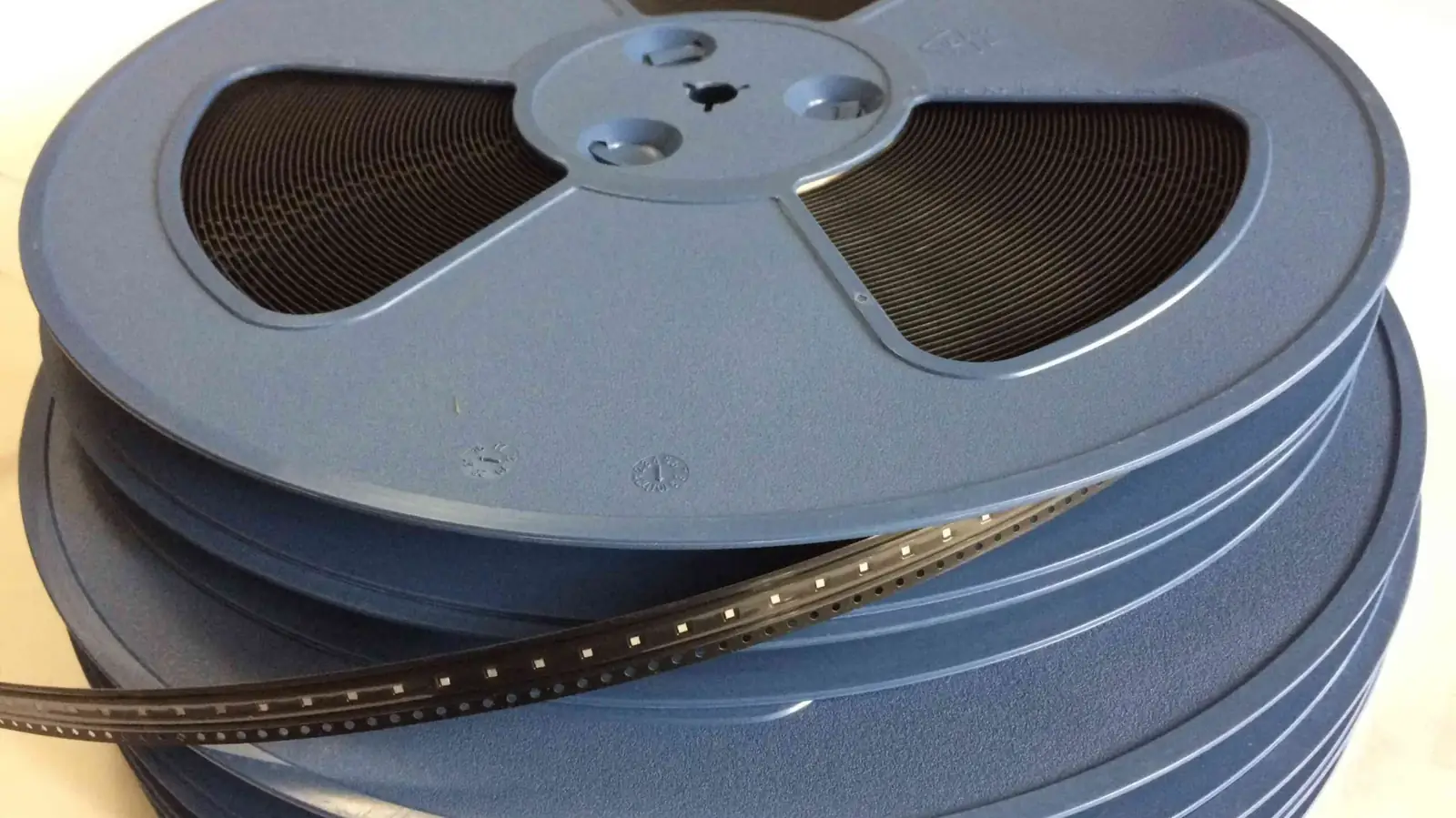
- Automated assembly lines that need material presented on SMT compatible taped reels
- Customers who have supplied us before, including Magna International, Tempronics and 3M Singapore
Problems It Solves
What Buying Material Solves
- A module supplier cannot deliver the exact element geometry your device needs
- Material properties have to be known and consistent for a research programme
- An assembly line needs elements presented for automatic pick and place, not loose in a box
- The application temperature is above the useful range of Bi2Te3 and needs PbTe
- Element dimensions must be held tightly, which WEDM cutting delivers
Technical Features
Published Material Properties
Values below are the properties published by our materials team for the two systems, P-type and N-type separately.
Bi2Te3 P-Type
Purity 99.99 %. Thermal conductivity 1.2 to 1.6 W/m·K, Seebeck 200 to 230 µV, electrical conductivity 850 to 1250, figure of merit Z 2.55 to 3.4 × 10⁻³ K⁻¹, ZT ≥ 1.1 at 300 K.
Bi2Te3 N-Type
Purity 99.99 %. Thermal conductivity 1.2 to 1.6 W/m·K, Seebeck 205 to 235 µV, electrical conductivity 950 to 1250, figure of merit Z 2.34 to 3.2 × 10⁻³ K⁻¹, ZT ≥ 1.0 at 300 K.
PbTe P-Type
Purity 99.99 %. Thermal conductivity 1.1 to 2.0 W/m·K, Seebeck 100 to 180 µV, electrical conductivity 900 to 1200, ZT ≥ 0.9 at 650 K.
PbTe N-Type
Purity 99.99 %. Thermal conductivity 2.2 to 3.0 W/m·K, Seebeck 250 to 350 µV, electrical conductivity 900 to 1200, ZT ≥ 1.1 at 650 K.
Forms Supplied
Pellets, ingots, bars and wafers in different sizes, cut with wire electrical discharge machining to assure precision.
Packaging
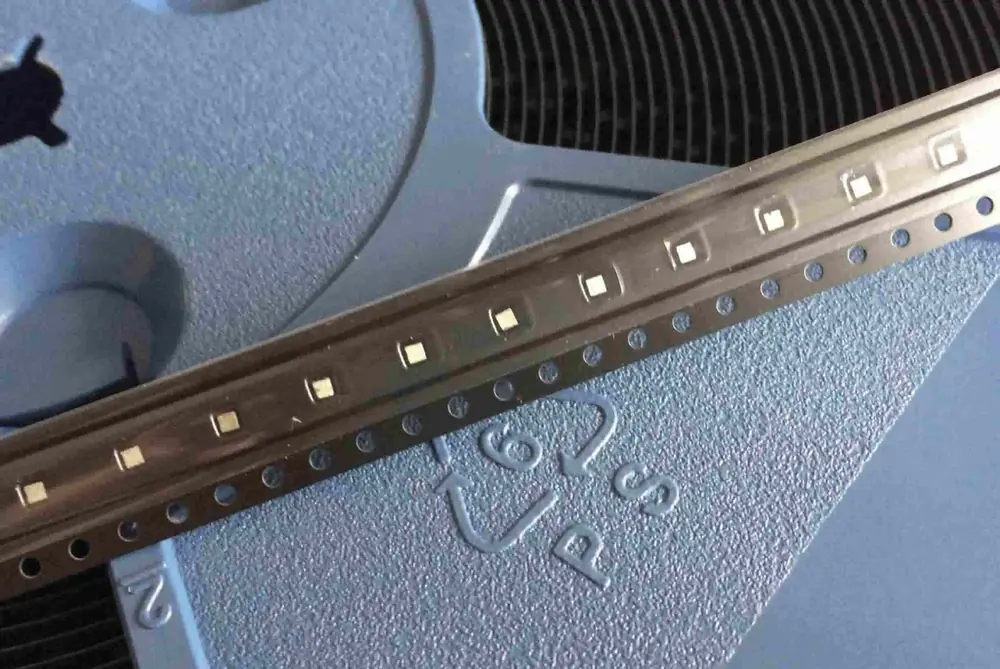
Bulk material packed and placed in a white foam box. Taped reel packaging is available, designed to mount on SMT and SMD machines for automatic production lines.
Specifications
Material Datasheets And Sizes
The PbTe based generation material has a published datasheet. Bi2Te3 data is issued on request against your element geometry.
A. Bi2Te3 Based, Low Temperature
High quality and reliable for both cooling and power generation, useful up to around 450 K. P-type and N-type properties are listed above.
B. PbTe Based, Intermediate Temperature
High quality and reliable for power generation, useful up to 850 K.
Catalogue Notes
| Data reference | All catalogue values are measured at a hot side temperature Th = 30 °C |
| Flatness | ±0.05 mm |
| Height tolerance | ±0.2 mm |
| Maximum compressive load | 1 MPa |
| Lead wire | 150 mm as default, other lengths and terminations on request |
| Sealing | Silicone gel seal. Specify if you do not want the module sealed |
Symbol Definitions
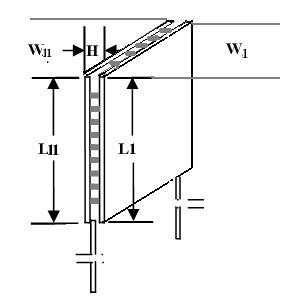
| Imax | Maximum input current in amperes at Qc = 0 and ΔTmax |
| Vmax | Maximum DC input voltage in volts at Qc = 0 and Imax |
| ΔTmax | Maximum temperature differential in °C at Qc = 0 and Imax |
| QcMax | Maximum heat pumping capacity in watts at Imax and ΔT = 0 |
| Th | Temperature of the hot side during operation |
| Tc | Temperature of the cold side during operation |
Materials And Construction
Forms, Cutting And Packaging
| Forms | Pellets, ingots, bars and wafers in different sizes |
| Cutting | Wire electrical discharge machining (WEDM) for dimensional precision |
| Custom sizes | Custom element sizes are welcome. A minimum order weight applies |
| Bulk packaging | Carefully packed in bulk, then placed in a white foam box |
| Reel packaging | Taping package in reel, designed to mount on SMT and SMD machines |
| Supplied to | Magna International, Tempronics and 3M Singapore among others |
Manufacturing Process
From Ingot To Finished Module
- Feedstock purity verification before crystal growth
- Crystal growth of Bi2Te3 and PbTe based alloys in our own furnaces
- Ingot slicing into bars and wafers
- Wire electrical discharge machining to final element dimensions
- Grading on Seebeck coefficient and electrical resistivity
- Bulk or taped reel packaging for manual or automatic assembly
Quality Control
Every Module Is Tested Before It Leaves The Line
Quality control runs from raw material procurement through crystal growth, pellet selection and module assembly to the dispatch of the finished product. All products are 100 % tested and inspected using test equipment sourced from an American thermoelectric company.
ISO 9001
Quality management system certified
SGS
European Union certification held by the manufacturing company
RoHS
All thermoelectric modules are RoHS compliant
100 % tested
Every module is tested and inspected before dispatch
Customization Options
Custom Material Supply
Element geometry, packaging format and grading limits are all specified per customer.
Element Geometry
Pellet cross section and height cut by WEDM to your drawing.
Packaging Format
Bulk in foam boxes, or taped reels for SMT and SMD pick and place.
Grading
Selection windows on Seebeck coefficient and resistivity for demanding assembly lines.
Comparison With Other Products
Bi2Te3 Against PbTe
| Property | Bi2Te3 based | PbTe based |
|---|---|---|
| Useful temperature | Up to around 450 K | Up to 850 K |
| Primary use | Cooling and low temperature generation | Power generation |
| Purity | 99.99 % | 99.99 % |
| P-type Seebeck | 200 to 230 µV | 100 to 180 µV |
| N-type Seebeck | 205 to 235 µV | 250 to 350 µV |
| P-type ZT | ≥ 1.1 at 300 K | ≥ 0.9 at 650 K |
| N-type ZT | ≥ 1.0 at 300 K | ≥ 1.1 at 650 K |
| Datasheet | On request | Published PDF |
Use Guide
Buying Thermoelectric Material
- State the working temperature first. It decides Bi2Te3 or PbTe before anything else is discussed.
- Give the element cross section and height, and the tolerance you actually need rather than a default.
- Say whether you need P-type only, N-type only or a matched set, and in what ratio.
- Tell us the assembly method. Automatic pick and place needs taped reels, manual assembly does not.
- Confirm the quantity in weight as well as in pieces, because minimum order weight applies at material level.
- Ask for the grading window if your assembly process depends on consistent element resistance.
Related Products
Other Parts Of The Range
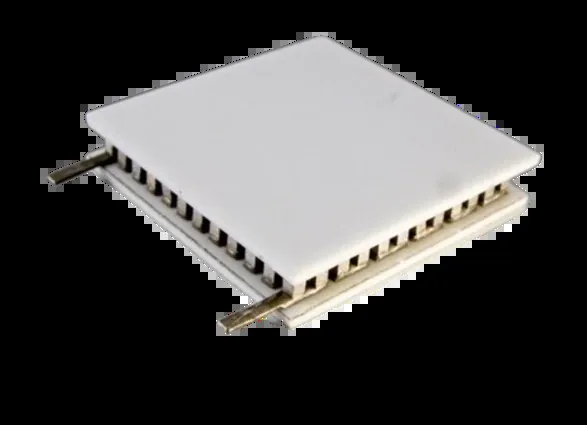
TEG Power Generators
Convert waste heat into DC power, 210 °C and 320 °C classes.
Learn more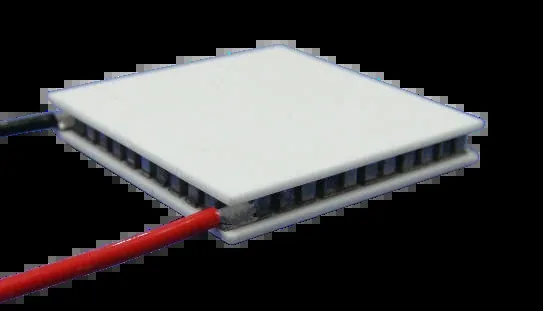
TEC Standard Peltier Modules
158 catalogue sizes from 10×10 mm to 80×120 mm, Qmax 1.6 to 480 W.
Learn more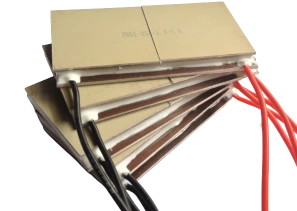
TEA Aluminium Substrate Modules
A 122 W/m·K substrate that raises efficiency 30 to 50 %.
Learn more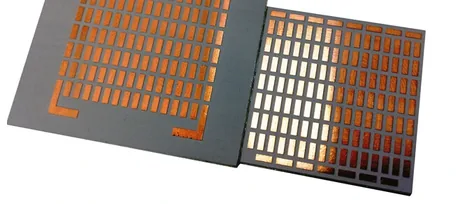
FAQ
Frequently Asked Questions About Thermoelectric Materials
What purity do you supply?
99.99 % for both P-type and N-type material, in both the Bi2Te3 based and PbTe based systems.
Which material do I need for a generator?
Bi2Te3 based material works up to around 450 K, so it suits low grade waste heat. Above that, PbTe based material is used, up to 850 K. The PbTe datasheet is published as a PDF.
Can I buy material in reels for automated assembly?
Yes. We provide a taping package in reel designed to mount on SMT and SMD machines and for automatic production lines. Material can also be supplied in bulk in a white foam box.
How are the elements cut?
With wire electrical discharge machining, which assures precision on the cross section and height of each element.
Is there a minimum order?
Yes, a minimum order weight applies at material level. Custom sizes of elements are welcome within that.
Who else buys your material?
We have supplied Magna International, Tempronics and 3M Singapore, among others.
Ask For A Material Quotation
Tell us the material system, the element geometry, the quantity by weight and the packaging format. We will come back with a quotation and the applicable minimum order.
No forms. Messages reach our engineering desk directly. Reply within 24 hours, Monday to Friday, 9:00 to 17:00 Beijing time.