
Thermoelectric Modules
TEC Custom Modules
Our company can provide standard modules and micro modules in more than one hundred different specifications, and can produce modules with specific specifications and applications as per the client's requirements.
Product Overview
When The Catalogue Is Close But Not Right
Most custom work starts from a catalogue module. A footprint that is 3 mm too wide, a height that will not clear a housing, a supply voltage that does not match, or leads that exit on the wrong side are all changes we make routinely.
We build custom modules from the same pellet library, the same plating and soldering processes and the same test regime as the catalogue, which is why a custom part carries the same expectations for life and reliability as a standard one.
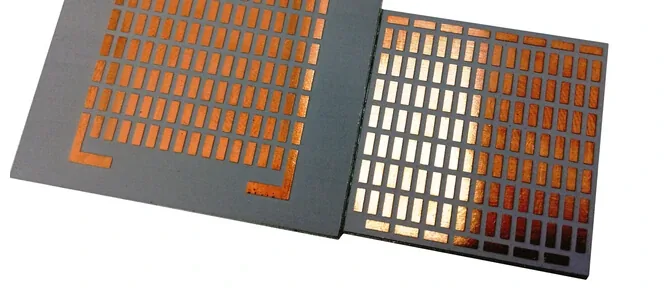
Aluminium substrate tooling takes one to two weeks against four weeks for ceramic, so if the change is a new footprint, an aluminium build is often the faster route to a working prototype. Custom sizes of elements are welcome, and a minimum order weight applies at the material level.
Key Benefits
What We Change
Geometry
Footprint, height, stepped or annular outlines, and shapes that match your thermal interface exactly.
Electrical Rating
Couple count set so Vmax and Imax land on the supply you already have, instead of adding a converter.
Interface And Lead-Out
Lead length and gauge, exit side, connectors, sealing options and surface preparation.
Who It Is For
Who Asks For A Custom Module
- OEMs whose mechanical design is fixed and cannot be moved around a catalogue footprint
- Teams replacing a discontinued module from another supplier and needing a drop-in equivalent
- Designers who want to run from an existing rail rather than add a converter
- Programmes where the module must match the cold plate exactly to avoid an interface loss
- Customers moving from ceramic to aluminium substrate on an existing product
Problems It Solves
What Custom Solves
- No catalogue code fits the available space
- The nearest catalogue code needs a supply you do not have
- The previous supplier discontinued the part and the product still ships
- Leads exit into a wall or a connector on the wrong side of the assembly
- The cold plate is an unusual shape and a square module wastes contact area
Technical Features
How A Custom Build Runs
Start From A Reference
We pick the closest catalogue code as the electrical starting point.
Drawing Review
Footprint, height, tolerances and clamping reviewed against the 1 MPa load limit.
Material And Class
Bi2Te3 for cooling duty, PbTe for higher temperature generation, solder class fixed by hot side temperature.
Tooling
Aluminium substrate tooling in one to two weeks, ceramic in about four weeks.
Sampling
Prototypes tested on the same equipment used for 100 % production test.
Production
Annual capacity has reached 3.0 million devices, so a qualified custom part scales.
Specifications
The Specification Sheet We Work From
Send as much of this as you have. Anything you leave blank we will come back and ask about.
Thermal
- Heat load Qc in watts at the working point
- Required cold side temperature Tc
- Hot side temperature Th you can hold, and how heat is rejected
- Ambient range and duty cycle
Mechanical
- Cold face and hot face dimensions, and whether they may differ
- Maximum assembled height
- Clamping method and available force
- Substrate preference: alumina ceramic or aluminium
Electrical
- Supply voltage and maximum current
- Driver type: linear, PWM or on and off control
- Whether the module must also heat by reversing polarity
- Lead length, gauge, exit side and termination
Commercial
- Prototype quantity and target date
- Annual quantity once qualified
- Any certification or documentation you need with the parts
- Packaging, marking and labelling requirements
Catalogue Notes
| Data reference | All catalogue values are measured at a hot side temperature Th = 30 °C |
| Flatness | ±0.05 mm |
| Height tolerance | ±0.2 mm |
| Maximum compressive load | 1 MPa |
| Lead wire | 150 mm as default, other lengths and terminations on request |
| Sealing | Silicone gel seal. Specify if you do not want the module sealed |
Symbol Definitions
| Imax | Maximum input current in amperes at Qc = 0 and ΔTmax |
| Vmax | Maximum DC input voltage in volts at Qc = 0 and Imax |
| ΔTmax | Maximum temperature differential in °C at Qc = 0 and Imax |
| QcMax | Maximum heat pumping capacity in watts at Imax and ΔT = 0 |
| Th | Temperature of the hot side during operation |
| Tc | Temperature of the cold side during operation |
Materials And Construction
What Stays The Same On A Custom Part
| Thermoelectric material | Bi2Te3 based or PbTe based, purity 99.99 %, grown in house |
| Plating | Nickel and stannum electroplating |
| Solder class | 139, 183, 235, 320 or 500 °C, selected for your hot side |
| Sealing | Vacuum anti-humidity process and silicone gel seal |
| Test | 100 % electrical test and inspection, the same as catalogue parts |
| Compliance | RoHS compliant, produced under our ISO 9001 certified system |
Manufacturing Process
From Ingot To Finished Module
- Bi2Te3 or PbTe crystal growth in our own furnaces
- Wire electrical discharge machining of wafers and pellets for dimensional precision
- Pellet grading, nickel and stannum electroplating
- Patented soldering matched to the working temperature class
- Substrate metallisation and pellet placement
- Vacuum anti-humidity process and silicone gel sealing
- Electrical test of every module, then marking and packing
Quality Control
Every Module Is Tested Before It Leaves The Line
Quality control runs from raw material procurement through crystal growth, pellet selection and module assembly to the dispatch of the finished product. All products are 100 % tested and inspected using test equipment sourced from an American thermoelectric company.
ISO 9001
Quality management system certified
SGS
European Union certification held by the manufacturing company
RoHS
All thermoelectric modules are RoHS compliant
100 % tested
Every module is tested and inspected before dispatch
Customization Options
Development Steps
A typical custom module moves through four stages. We will tell you at the review stage if what you have asked for is not physically sensible.
1. Requirement Review
We read your drawing and duty point and propose a build, or explain why a catalogue part is better.
2. Tooling And Sample
Aluminium tooling in one to two weeks, ceramic in about four, then sample modules for your rig.
3. Qualification And Supply
You qualify the sample in the product, then we release the part into production.
Comparison With Other Products
Custom Against Catalogue
| Catalogue module | Custom module | |
|---|---|---|
| Lead time to first parts | From stock or short production run | Tooling 1 to 2 weeks aluminium, about 4 weeks ceramic |
| Fit to your assembly | Your design adapts to the module | The module matches your interface |
| Electrical match | Choose the nearest Vmax and Imax | Couple count set to your rail |
| Documentation | Published datasheet where available | Specification issued for the part |
| Minimum quantity | Low | Set at quotation, material level work carries a minimum order weight |
| Quality regime | 100 % tested | 100 % tested, identical process |
Application Scenarios
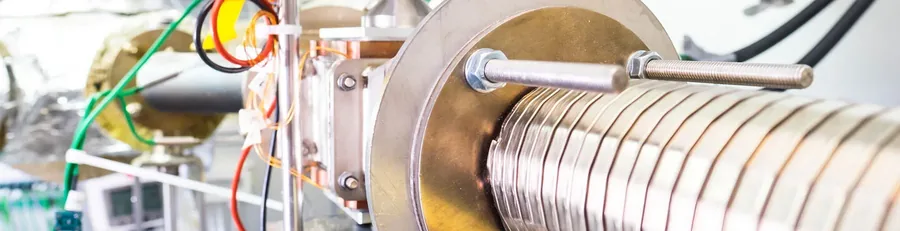
Custom Work We Have Done

Use Guide
Getting A Good Custom Result
- Send the mechanical envelope and the duty point together. Either one alone is not enough to design a module.
- Say what is fixed and what is negotiable. A 2 mm change in a housing sometimes removes the need for a custom part entirely.
- Tell us the supply you must use. It is usually the constraint that decides the couple count.
- Describe the environment honestly, particularly humidity and condensation, because it decides the sealing option.
- Give a realistic annual quantity so tooling and process choices match the volume.
- Plan for a sample round. Almost every custom part improves after the first rig test.
Related Products
Other Parts Of The Range
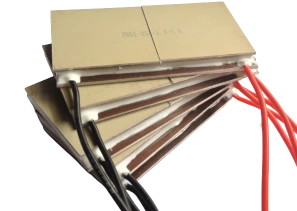
TEA Aluminium Substrate Modules
A 122 W/m·K substrate that raises efficiency 30 to 50 %.
Learn more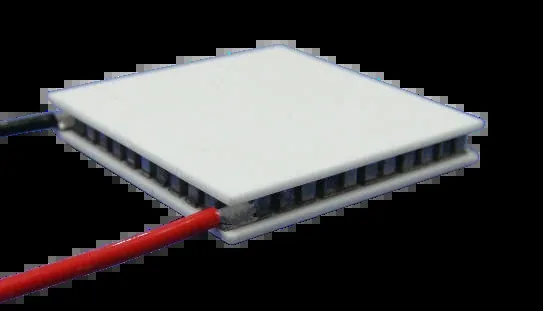
TEC Standard Peltier Modules
158 catalogue sizes from 10×10 mm to 80×120 mm, Qmax 1.6 to 480 W.
Learn moreTEC Multi-Stage Modules
Cascaded stages when one stage cannot reach your delta-T.
Learn moreRelated Applications And Guides
Where This Product Is Used
How To Select A Peltier Module
Turn a heat load and a delta-T into a shortlist of part numbers.
Learn more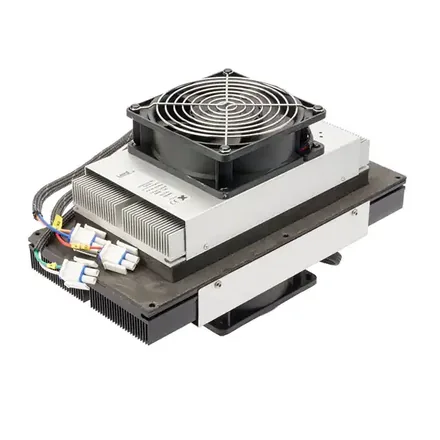
Peltier Module Installation Guide
Mounting force, flatness, thermal interface and sealing.
Learn more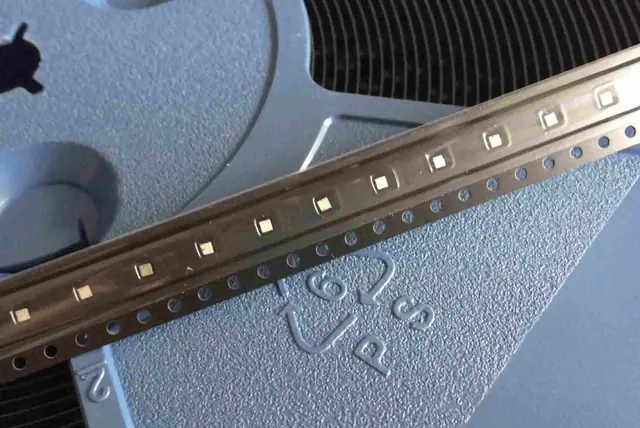
Thermoelectric Module Reliability
Why our modules reach 300,000 hours and what shortens that.
Learn moreFAQ
Frequently Asked Questions About Custom Modules
How many custom specifications have you built?
Our company can provide standard modules and micro modules in more than one hundred different specifications, and produces modules to specific customer requirements as a normal part of the business.
How long does tooling take?
Aluminium substrate tooling takes one to two weeks. Ceramic modules take about four weeks. That difference is often the reason an aluminium build wins on a tight project schedule.
Is there a minimum order?
Minimums are set at quotation and depend on how deep the change goes. Custom sizes of thermoelectric elements are welcome, and a minimum order weight applies at the material level.
Will a custom part be as reliable as a catalogue part?
It is built on the same pellets, the same plating and soldering processes and the same 100 % test regime. The anti-copper diffusion technology that extends life to 300,000 hours applies to custom parts too.
Can you copy a competitor part we already use?
Send the dimensions and the electrical rating and we will tell you honestly whether we can match it, improve it, or whether a different catalogue code is the better answer.
Send Your Drawing
Attach a drawing or a photograph with dimensions on WhatsApp, or e-mail the specification. An engineer will reply, not a form auto-responder.
No forms. Messages reach our engineering desk directly. Reply within 24 hours, Monday to Friday, 9:00 to 17:00 Beijing time.